Welcome to the September 2026 edition of our monthly vibe coding roundup covering selected August announcements. The ecosystem continues to evolve rapidly with significant updates from major players focusing heavily on workflow integration and security.
Retrospective edition for August 2026. Researched and published September 9, 2026. Product details reflect documentation checked at publication unless explicitly identified as historical.
Top of mind for the vibe coding community in August
August 2026 shifted the focus from raw intelligence to deep workflow integration. The announcements raise the question of how to connect their AI tools directly to their daily environments rather than treating them as isolated chat interfaces. The releases emphasize making agents more capable of handling end to end tasks without requiring manual context gathering.
This shift ties heavily into what is context engineering 2026 as engineering teams realize that feeding the right data to the model is often more important than the underlying model itself. The ability to pull context from external documents emails and calendars directly into the development environment is changing how we approach problem solving. Whether this reduces context switching is something to measure in your own workflow.
Major model launches and updates across the ecosystem
Google made waves with the launch of Gemini 3.7 Flash. According to their September 1 recap Google AI Updates this model is positioned as the new workhorse for coding and agent tasks. It introduces introductory lower pricing relative to the previous 3.6 version making it highly attractive for high volume automated workflows.
| August development | What to evaluate |
|---|---|
| Gemini 3.7 Flash | Accepted task cost under the applicable introductory rates |
| Workspace plugins | Authorized document scope and source freshness |
| Repository-free starting flow | Ownership, deployment account, and handoff to source control |
The model announcement supplies positioning and pricing context, not an independent performance comparison with every earlier model.
The introduction of Gemini 3.7 Flash means that teams rolling out AI coding engineering team structures will find the cost efficiency incredibly appealing. When you are running hundreds of automated test generations or code reviews per day the cost per token becomes a critical metric. Lower unit rates can help, but longer outputs and retries can change the cost per accepted task.
Developer tool launches and critical workspace updates
Cursor had a remarkably busy August. On August 3 they released Google Workspace plugins allowing direct integration with Gmail Drive and Calendar as noted in the Cursor Changelog Page 2. This means your editor can now pull context directly from a product requirements document in Drive or a project timeline in Calendar.
This is a massive step forward for managing context budgets multi file projects where external documentation is just as crucial as the source code.
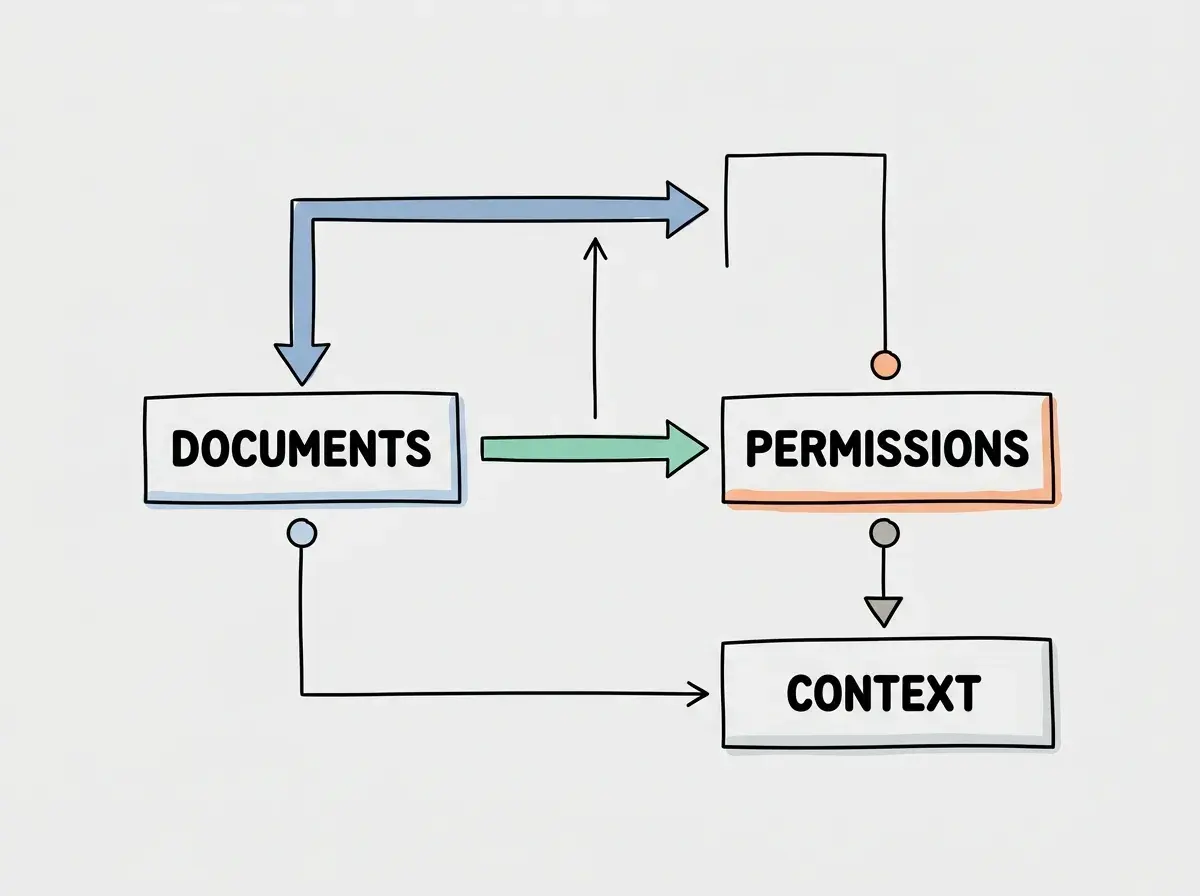
Later in the month on August 27 Cursor introduced a new way to start projects without an existing repository. Using Cursor Origin developers can scaffold an application and publish it directly via Vercel requiring a linked Vercel account Cursor Changelog. This rapid prototyping capability complements the clean room technique starting fresh without losing progress by allowing developers to bypass the usual boilerplate setup and get straight to writing business logic.
The integration of Google Workspace directly into the IDE means developers no longer need to copy and paste requirements from external documents. You can reference a Drive document directly in your prompt then verify the retrieved document’s identity, revision, and access scope.
Use a small, reviewable task to check how this applies in your own project before expanding the workflow.
Explore clear explanations of AI coding tools, project context, and reliable development workflows.
Explore the blogNotable shipped work and practical developer exercises
The verified shipped work in this source set is the vendor functionality described above. The following are proposed exercises, not claims about independent project launches. With the new Cursor Workspace plugins you can build an automated meeting summarizer that pulls notes from your Calendar and drafts follow up code tasks.
For example you can prompt Cursor to read the meeting notes from your last architecture review in Google Drive and propose requirements and then generate a reviewable implementation for the discussed API endpoints. This is similar to how you might cursor automations automate skill computer use for repetitive administrative tasks.
Another practical exercise involves setting up a fresh project with Cursor Origin. Try scaffolding a simple Next.js application without touching your terminal. Review the generated project and deployment target before publishing through the documented flow. This exercise demonstrates how quickly you can move from an idea to a live URL testing the limits of modern rapid application development.
Security updates failures and protocol migration concerns
August was not without its challenges and growing pains. Following the incidents disclosed in July Anthropic released an update on August 31 detailing their improved alignment and security practices Anthropic Security Update. This update emphasizes the ongoing need for rigorous safety checks when deploying autonomous coding agents.
This serves as a stark reminder that enterprise AI coding governance policies are absolutely non negotiable. When agents have the ability to write and execute code ensuring they operate within strict safety boundaries is paramount.
Do not mix examples from different MCP specification versions. Check the version negotiated by your client and server, then test compatibility and the security properties your workflow requires. A newer specification does not by itself establish a universal migration deadline.
The July 28 MCP specification is a prior-month release that provides an August compatibility-review topic. For teams maintaining custom MCP connections, the useful action is to inventory supported protocol versions and test the intended client-server pairing. This roundup does not establish an August deadline requiring every server to migrate. Tool-specific checks, such as those discussed in our security-plugin coverage, remain separate from protocol-version compatibility.
Quiet but interesting developments under the radar
While the major model releases grabbed the headlines the subtle improvements to agent memory and decision tracking are incredibly worth noting. Establishing a robust decision log pattern stop ai re litigating is becoming much easier as tools integrate deeper into our workflows.
Relevant background includes how claude code team uses claude code to refine their own internal processes. By studying how the creators use their own tools developers are discovering new patterns for maintaining context across long running sessions. This is especially relevant when looking at claude code memory how memory command claude md work which provides a mechanism for agents to recall previous architectural decisions without needing them explicitly restated in every prompt.
What we are watching in the coming months of 2026
Moving forward we are keeping a very close eye on how the deep integration of workspace tools affects overall developer productivity. Will the ability to read emails directly in the IDE lead to faster resolution of bug reports or will it just introduce more distractions into the development environment?
We are also closely watching the adoption of skills slash commands subagents claude code primitives as developers look for more granular control over their AI assistants. The ability to chain specific subagents together to complete complex tasks is a frontier that is just beginning to be explored. Furthermore the ongoing evolution of google antigravity 2 vibecoders remains a key topic of interest as the landscape continues to shift toward more autonomous development workflows.
Make one document-driven change reviewable
For a Workspace plugin trial, use a short test requirements document with a visible revision and three acceptance criteria. Grant access only to the account and document needed for the exercise. Ask the assistant to identify the source before proposing a code change, and compare the retrieved requirements with the document in its original application.
Change one acceptance criterion and repeat the request in a fresh task. Check whether the new value is retrieved and whether the assistant distinguishes it from the earlier conversation. If it uses stale context, investigate retrieval and caching behavior before broadening access. A direct connector is useful only when the source identity and freshness remain understandable to the reviewer.
Include a sentence inside the test document that is clearly unrelated to the task, such as a request to send a message elsewhere. Verify that the assistant treats the document as source material rather than authority to take an unrelated action. Use dummy data and no external side effect in this exercise. The review should establish both what information is available and how the workflow handles instructions embedded in that information.
Keep the resulting diff, source revision, and test output together. That small record makes it easier to decide whether the integration saves work compared with supplying the same requirements manually. It also gives you a repeatable check after a plugin update or permission change.
What this means for your daily development workflow
The developments in August 2026 showed us that developer tools are getting significantly better at understanding not just our source code but our entire working context. The boundaries between the IDE the document repository and the calendar are dissolving.
You should take the time this week to evaluate the new Gemini 3.7 Flash for your automated background tasks to see if the cost savings align with your budget. Additionally experiment with the Cursor Workspace plugins to see if they streamline your workflow and reduce the friction of context switching. Finally, test the supported protocol versions of any custom MCP servers you maintain before changing dependencies or configuration.
Read more practical articles for choosing tools, reviewing changes, and shipping useful software.
Read more guides