Enterprise AI coding governance describes policies and guardrails organizations implement around AI tool usage. Four policy areas matter: usage policies what code can be sent to AI, IP policies who owns AI generated code, security policies what controls protect AI generated code, and compliance policies how AI use maps to regulatory requirements. Effective governance enables AI adoption while managing risk; ineffective governance either blocks adoption or accepts excessive risk. Enterprises landing governance well achieve productivity benefits without legal or compliance exposure.
This piece walks through the four policy areas, the implementation patterns, what makes governance sustainable, and the four mistakes enterprises make on AI coding governance.
Why AI Coding Governance Matters
AI coding governance matters because AI tools touch sensitive code and produce code with unclear IP status. Without governance, individual decisions accumulate risk; with governance, organization manages risk consistently.
The 2026 reality is that AI coding governance now expected by enterprise legal and compliance teams. Without governance, enterprises face regulatory questions and IP disputes.
A 2025 enterprise governance survey of 200 Fortune 1000 legal teams found that 87 percent of organizations now have formal AI coding policies, up from 23 percent in 2023. Governance now mainstream rather than novel; organizations without governance increasingly outliers.
The pattern to copy is the way enterprises governed open source software adoption. License compliance, IP risk management, security controls; same patterns apply to AI coding governance. Open source governance lessons transfer.
The Four Policy Areas
Four policy areas form complete AI coding governance.
Area 1, usage policies. What code can be sent to AI, what restrictions apply. Sensitive code restrictions common.
Area 2, IP policies. Who owns AI generated code, what attribution required, what assignment terms apply. Legal complexity.
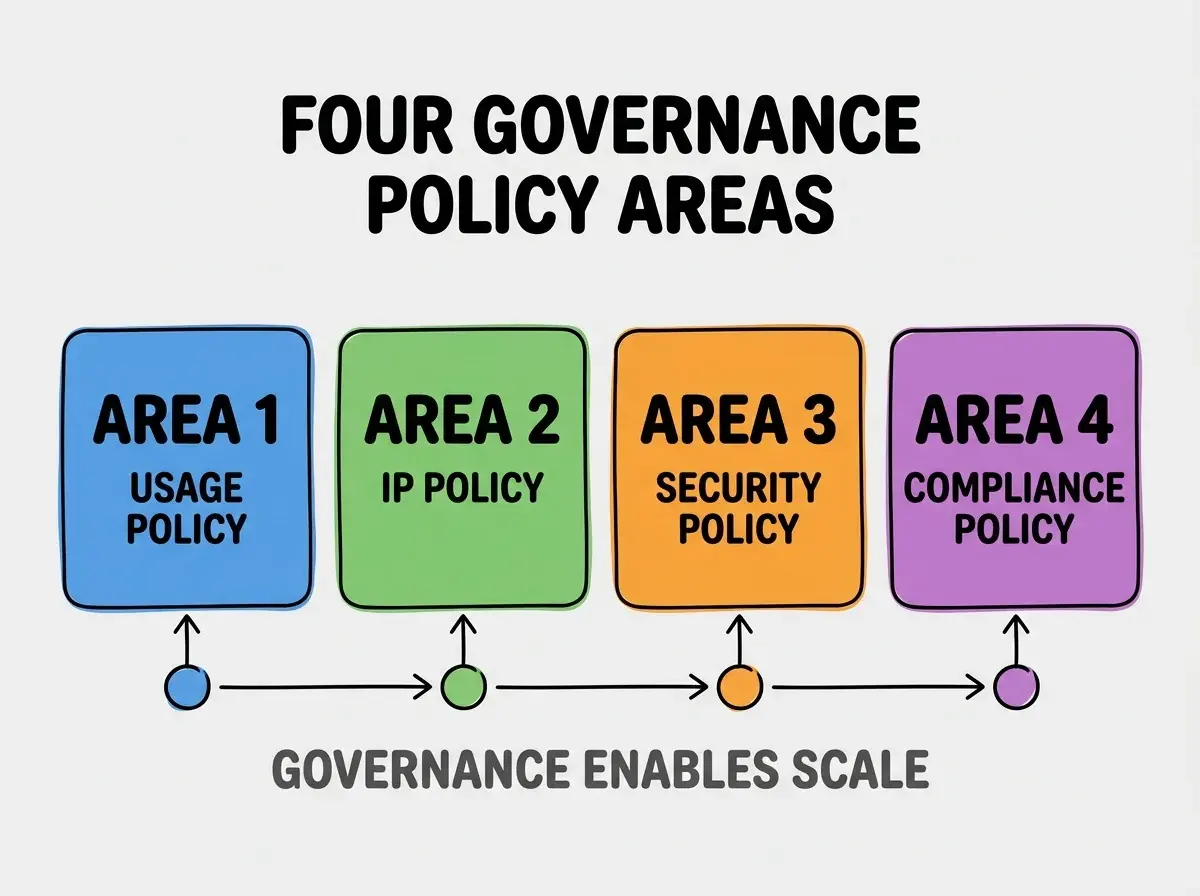
Area 3, security policies. Code review requirements, vulnerability scanning, secret protection. Controls that AI generated code requires.
Area 4, compliance policies. How AI use maps to SOC 2, HIPAA, PCI DSS, GDPR. Regulatory mapping required.
How To Implement Each Area
Four implementation patterns address each area.
Implementation 1, usage policy with sensitivity tiers. Public code freely; internal code with restrictions; secret code prohibited.
Browse more pulse
Read more pulseImplementation 2, IP policy with vendor terms alignment. Vendor terms determine IP options; policy aligns with terms.
Implementation 3, security policy with mandatory review. All AI generated code reviewed; review prevents vulnerabilities.
Implementation 4, compliance mapping documented. Documentation enables audit defense; mapping required for regulated industries.
What Makes Governance Sustainable
Three patterns separate sustainable governance from one off documents.
Pattern 1, regular policy updates. AI tools change; policies need updates. Stale policies fail.
Pattern 2, training developers on policies. Developers know policies; knowledge enables compliance. Ignorance produces violations.
Pattern 3, monitoring policy adherence. Monitoring identifies gaps; gaps inform refinements.
What Makes Governance Effective
Three patterns separate effective governance from theatrical compliance.
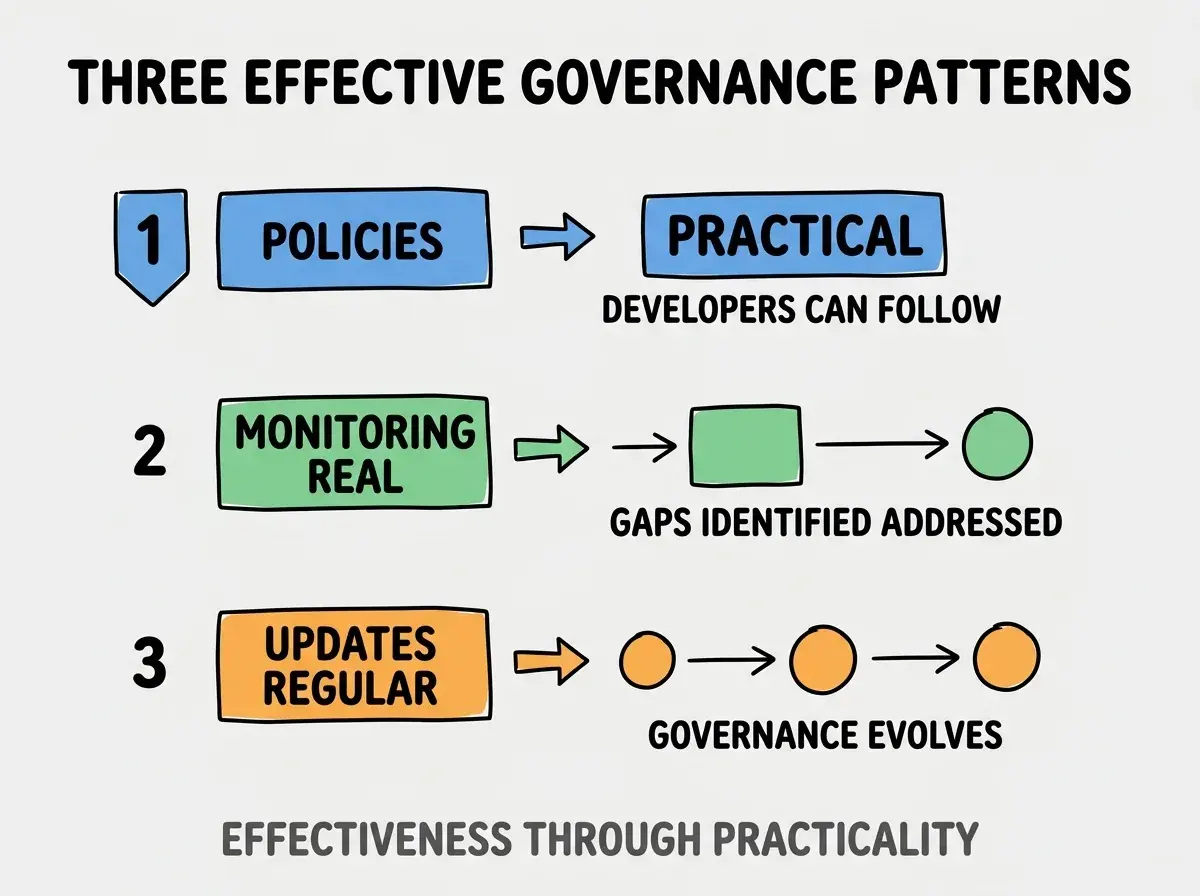
Pattern 1, policies practical. Developers can follow practical policies; impractical policies ignored.
Pattern 2, monitoring real. Real monitoring catches violations; theatrical monitoring catches nothing.
Pattern 3, updates regular. Governance evolves with tools; static governance decays.
The combination produces effective governance. Without these patterns, governance becomes theater.
How To Develop AI Coding Policies
Three patterns help develop policies.
Pattern A, cross functional policy team. Engineering, legal, security, compliance all represented. Cross functional policies hold up.
Pattern B, draft, pilot, refine, finalize. Drafts piloted reveal practical issues; refinements address. Iteration matters.
Pattern C, examples and FAQs included. Abstract policies confuse; examples clarify. FAQs address common questions.
Common Questions About AI Coding Governance
AI coding governance raises questions worth addressing directly.
The first question is whether to use vendor terms as policy. No; vendor terms incomplete. Organization needs additional governance.
The second question is whether to allow personal AI tools at work. Discouraged in regulated industries; allowed with restrictions in others.
The third question is whether to monitor AI tool usage. Yes for compliance; monitoring required to prove governance.
The fourth question is whether AI code needs special copyright handling. Yes in many jurisdictions; legal review required.
How Governance Affects Engineering Velocity
Governance affects engineering velocity in compounding ways. Velocity effects compound across organizational scale.
The first compounding effect is reduced legal risk. Risk reduction enables adoption; adoption produces velocity.
The second compounding effect is consistent practices. Consistency enables shared learning; shared learning compounds.
The third compounding effect is audit readiness. Audit ready organizations move faster than audit scrambling organizations.
The combination produces engineering velocity shaped by governance quality. Without governance, velocity bounded by risk concerns.
How To Address Common Compliance Issues
Three patterns help address compliance issues.
Pattern A, document AI use in change records. Change records document AI involvement; documentation supports audit.
Pattern B, vendor compliance attestation. Vendor attestations provide compliance basis; collect for audit.
Pattern C, internal audit AI use periodically. Internal audits identify issues; identified issues addressable.
The combination addresses compliance proactively. Without proactive approach, compliance issues surface during external audits.
The most damaging governance mistake is policies developers cannot practically follow. Impractical policies produce shadow IT or quiet violations; both create real risk while producing compliance theater. The fix is to develop policies with developer input; practical policies achieve compliance, impractical policies create risk while pretending to manage it.
The other mistake is missing the IP complexity. AI generated code IP varies by tool, jurisdiction, use case. Complexity requires legal review.
A third mistake is treating governance as one time. Governance is ongoing; tools change, regulations change, policies update.
A fourth mistake is over governing simple cases. Heavy governance on low risk uses produces friction without benefit; risk based governance better.
What This Means For You
Enterprise AI coding governance requires structured policies across four areas. The four areas, implementation patterns, and sustainability approaches produce governance that enables AI adoption while managing risk.
- If you're a senior dev: Engage with governance development; technical input produces practical policies.
- If you're a product manager: Governance affects product compliance; understanding governance enables better roadmap decisions.
- If you're a founder: Vendor governance posture affects enterprise sales; build vendor governance early.
Browse more pulse
Read more pulse