Rolling out AI coding across engineering team requires phased approach that balances enthusiasm with risk. Four rollout phases matter: pilot with small enthusiastic group, expansion to early adopters with documented patterns, broad rollout with mandatory training, and optimization with ongoing measurement and iteration. Successful rollouts complete in 6-12 months; failed rollouts produce shadow IT or stalled adoption. Engineering managers who understand phased rollout achieve better outcomes than managers attempting all at once.
This piece walks through the four rollout phases, the management patterns, what makes rollouts sustainable, and the four mistakes managers make on team AI rollouts.
Why Team Rollouts Matter For AI Coding
Team rollouts matter because individual adoption produces uneven results; team adoption compounds learning and outcomes. Without coordination, teams develop incompatible patterns; with coordination, teams develop shared expertise.
The 2026 reality is that enterprise engineering teams compete on AI tool fluency. Teams behind the curve face productivity gap with teams ahead.
A 2025 enterprise engineering study of 250 organizations found that engineering teams with structured AI rollouts achieved 47 percent productivity gains within 12 months, while teams with ad hoc adoption achieved only 12 percent gains over same period. Structure measurably affects rollout outcomes.
The pattern to copy is the way enterprises rolled out cloud computing. Pilot, expand, broad rollout, optimize. Same pattern applies to AI coding adoption; cloud rollout lessons transfer.
The Four Rollout Phases
Four phases describe complete rollout.
Phase 1, pilot with small enthusiastic group. 3-5 developers willing to learn. Pilots reveal patterns and produce internal advocates.
Phase 2, expansion to early adopters. 20-30 percent of team. Documented patterns enable broader adoption.
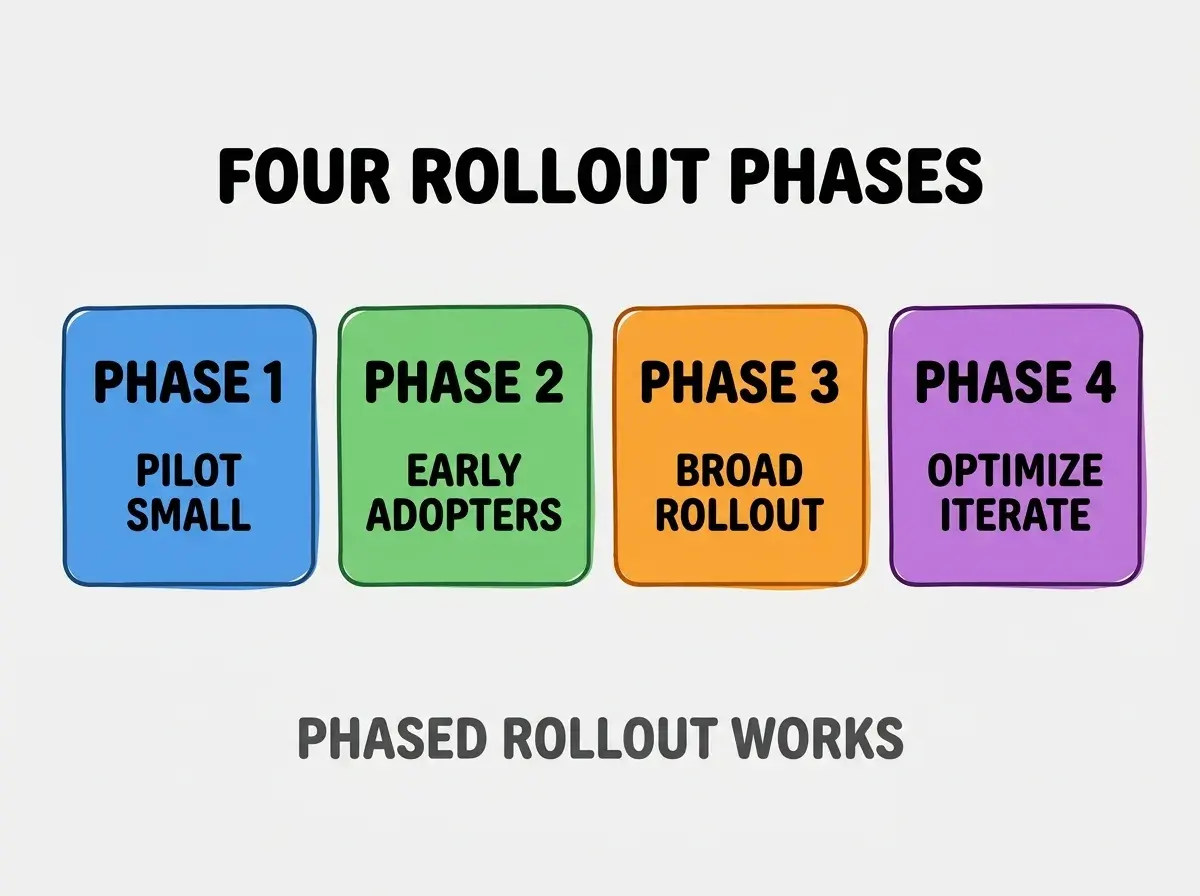
Phase 3, broad rollout with mandatory training. Whole team. Training compresses learning curve.
Phase 4, optimization with ongoing measurement. Continuous improvement. Optimization compounds outcomes.
How To Manage Each Phase
Four management patterns address each phase.
Management 1, pilot success criteria explicit. What does pilot success look like; criteria guide pilot decisions.
Browse more pulse
Read more pulseManagement 2, early adopters as champions. Early adopters teach broader team; multiplies impact.
Management 3, mandatory training with practical exercises. Theory plus practice; both required for adoption.
Management 4, metrics that drive optimization. PR throughput, cycle time, defect rates. Metrics inform iteration.
What Makes Rollouts Sustainable
Three patterns separate sustainable rollouts from initial enthusiasm.
Pattern 1, ongoing training program. Tools change; training keeps team current. One off training decays.
Pattern 2, internal best practice sharing. Patterns that work in your context shared internally; shared patterns compound.
Pattern 3, regular tool evaluation. New tools emerge; evaluation prevents falling behind. Stagnant rollouts decay.
What Makes Team AI Adoption Compound
Three patterns separate compounding adoption from flat plateaus.
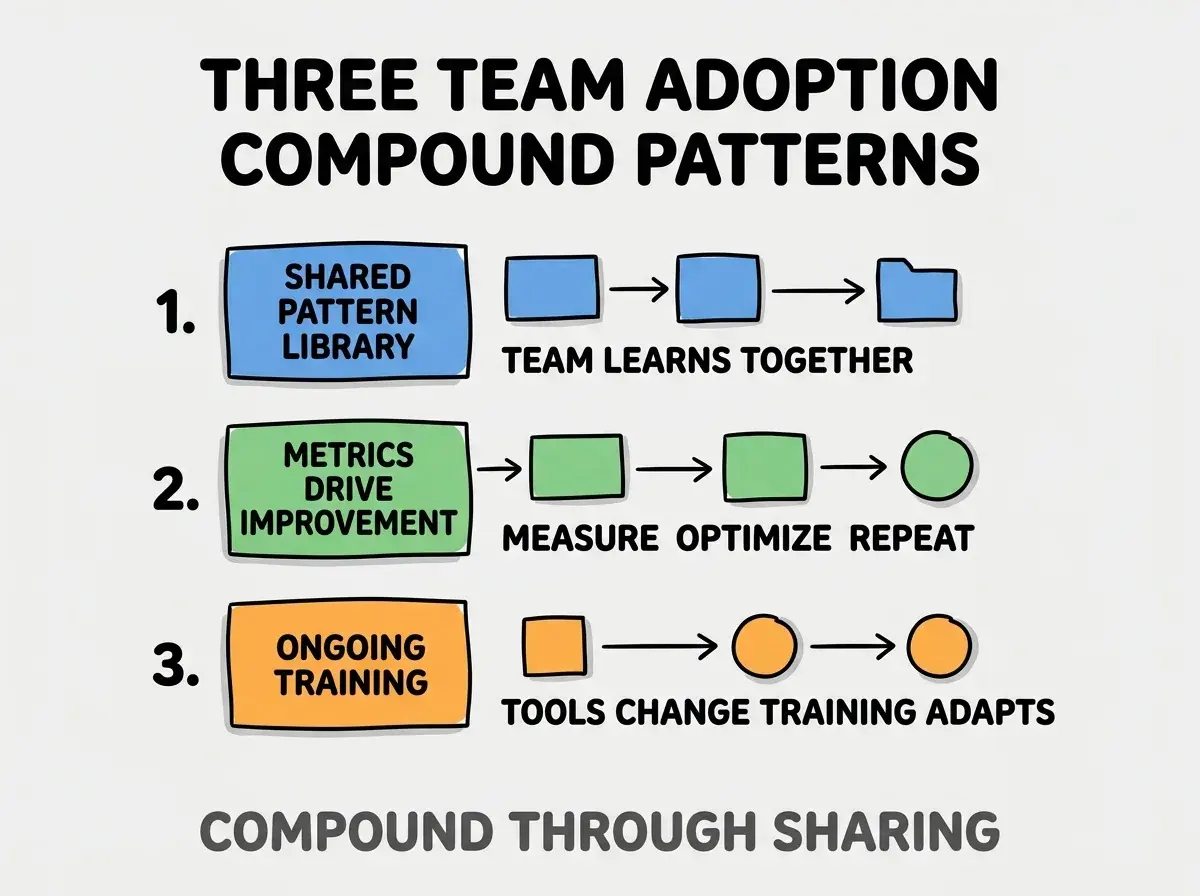
Pattern 1, shared pattern library. Team patterns documented; documentation compounds learning.
Pattern 2, metrics drive improvement. Measure, identify gaps, address. Cycle compounds outcomes.
Pattern 3, ongoing training. Continuous learning matches continuous tool evolution.
The combination produces compounding adoption. Without these patterns, adoption plateaus.
How To Choose Pilot Group
Three patterns help choose effective pilots.
Pattern A, mix of seniority levels. Senior plus junior reveals patterns at both levels.
Pattern B, mix of project types. Different projects reveal different applicability.
Pattern C, voluntary not assigned. Volunteers learn faster; assigned members may resist.
Common Questions About AI Rollout
AI rollout raises questions worth addressing directly.
The first question is whether to mandate or encourage. Mandate after early phases prove value; encouragement first.
The second question is what tools to start with. Most popular among similar teams; familiarity reduces friction.
The third question is whether to measure individual or team productivity. Team; individual measurement produces gaming.
The fourth question is how to handle resisters. Listen first; resistance often reveals legitimate concerns. Address concerns before mandating.
How Rollout Affects Engineering Culture
Rollout affects engineering culture in compounding ways. Culture effects compound across years.
The first compounding effect is technology adoption capability. Teams that adopt one tool well adopt next tool faster.
The second compounding effect is shared vocabulary. Common AI vocabulary enables team conversations; isolation produces silos.
The third compounding effect is competitive position. Teams ahead of curve attract talent; teams behind lose talent.
The combination produces engineering cultures shaped by rollout success. Without thoughtful rollout, culture suffers.
How To Handle Resistance
Three patterns help managers handle rollout resistance.
Pattern A, listen to concerns first. Resistance often reveals legitimate concerns; address those.
Pattern B, demonstrate value with concrete examples. Abstract benefits unconvincing; specific time savings convincing.
Pattern C, mandate after persuasion fails for material concerns. Some adoption requires mandate; mandate after persuasion legitimate.
The combination addresses resistance constructively. Without engagement, resistance compounds.
The most damaging rollout mistake is mandating tool adoption without addressing concerns. Mandates without buy in produce malicious compliance and quiet sabotage; both reduce productivity. The fix is to engage developers, address concerns, demonstrate value before mandating. Managers who engage achieve genuine adoption; managers who mandate achieve compliance theater.
The other mistake is treating rollout as one off project. Rollout is ongoing program; tools change, training updates, metrics inform. One off treatment fails.
A third mistake is missing the cultural component. Tools change requires cultural change; cultural alignment compounds tool adoption.
A fourth mistake is over indexing on tool selection. Tool matters; rollout matters more. Mediocre tool with great rollout beats great tool with poor rollout.
What This Means For You
Rolling out AI coding across engineering team requires phased approach across four phases. The four phases, management patterns, and sustainability approaches produce rollouts that achieve sustained adoption.
- If you're a senior dev: Lead pilot in your team; demonstrating success shapes broader rollout.
- If you're a product manager: Engineering rollout affects product velocity; understanding rollout informs roadmap planning.
- If you're a founder: Rollout strategy affects competitive position; serious investment in rollout pays off.
Browse more pulse
Read more pulse