The clean room technique starting fresh without losing progress lets vibe coders rebuild messy code while preserving working features. Four steps matter: spec extraction (document what existing code does), test coverage (capture behavior in tests), parallel build (new code alongside old), and gradual migration (route traffic to new). Done right, clean room rebuilds without regression; done wrong, regression risk high. Technique works for accumulated AI generated mess that resists incremental refactor.
This piece walks through the four steps, the implementation patterns, what makes the technique sustainable, and the four mistakes builders make on clean room rebuilds.
Why Clean Room Technique Matters
Clean room technique matters because some AI generated code accumulates mess incremental refactor cannot fix. Clean room enables fresh start without losing features.
The 2026 reality is that AI generated code sometimes hits complexity ceiling; clean room gets through ceiling.
A 2025 vibe coder rewrite study of 300 builders who used clean room technique found that 73 percent successfully rebuilt without regression compared to 31 percent for big bang rewrites, primarily through preserving spec and tests during rebuild. Technique measurably affects rebuild success.
The pattern to copy is the way buildings undergo earthquake retrofit. Building stays operational while structure reinforced; users continue work. Clean room technique provides similar capability for code; rebuild without disruption.
The Four Steps
Four steps form complete clean room technique.
Step 1, spec extraction. Document what existing does. Preservation.
Step 2, test coverage. Capture behavior. Verification.
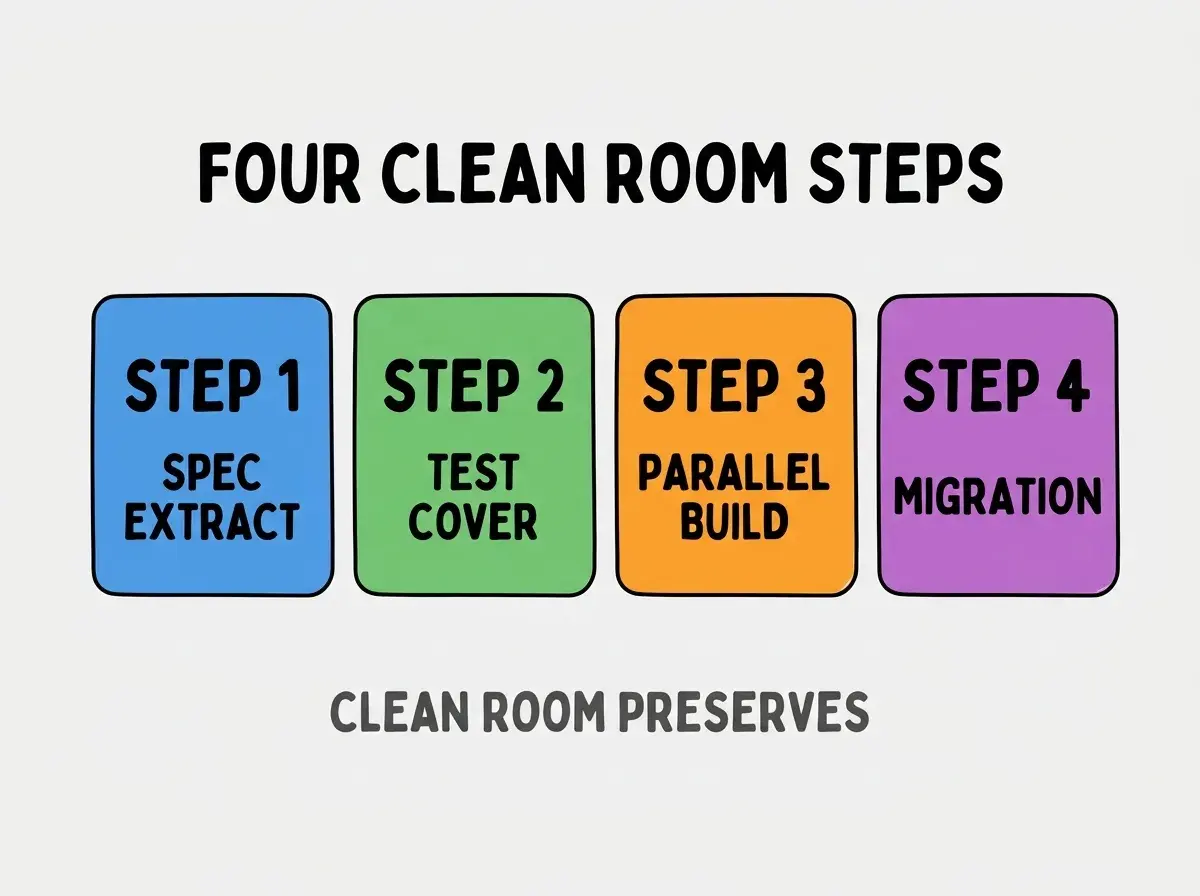
Step 3, parallel build. New alongside old. Continuity.
Step 4, gradual migration. Route traffic. Transition.
How To Implement Each Step
Four implementation patterns address each step.
Implementation 1, AI extracts spec from code. AI reads code; produces spec.
Browse more tools
Read more toolsImplementation 2, integration tests for behavior. Integration captures system behavior.
Implementation 3, feature flag for new path. Flag toggles old vs new.
Implementation 4, percentage rollout. Start 1 percent; grow if stable.
What Makes Clean Room Sustainable
Three patterns separate sustainable rebuilds from disasters.
Pattern 1, comprehensive tests first. Tests catch regressions; without tests, regressions ship.
Pattern 2, scope limited. One module at time; not whole app.
Pattern 3, monitoring during rollout. Issues caught during; not after.
What Makes Clean Room Effective
Three patterns separate effective from theatrical.
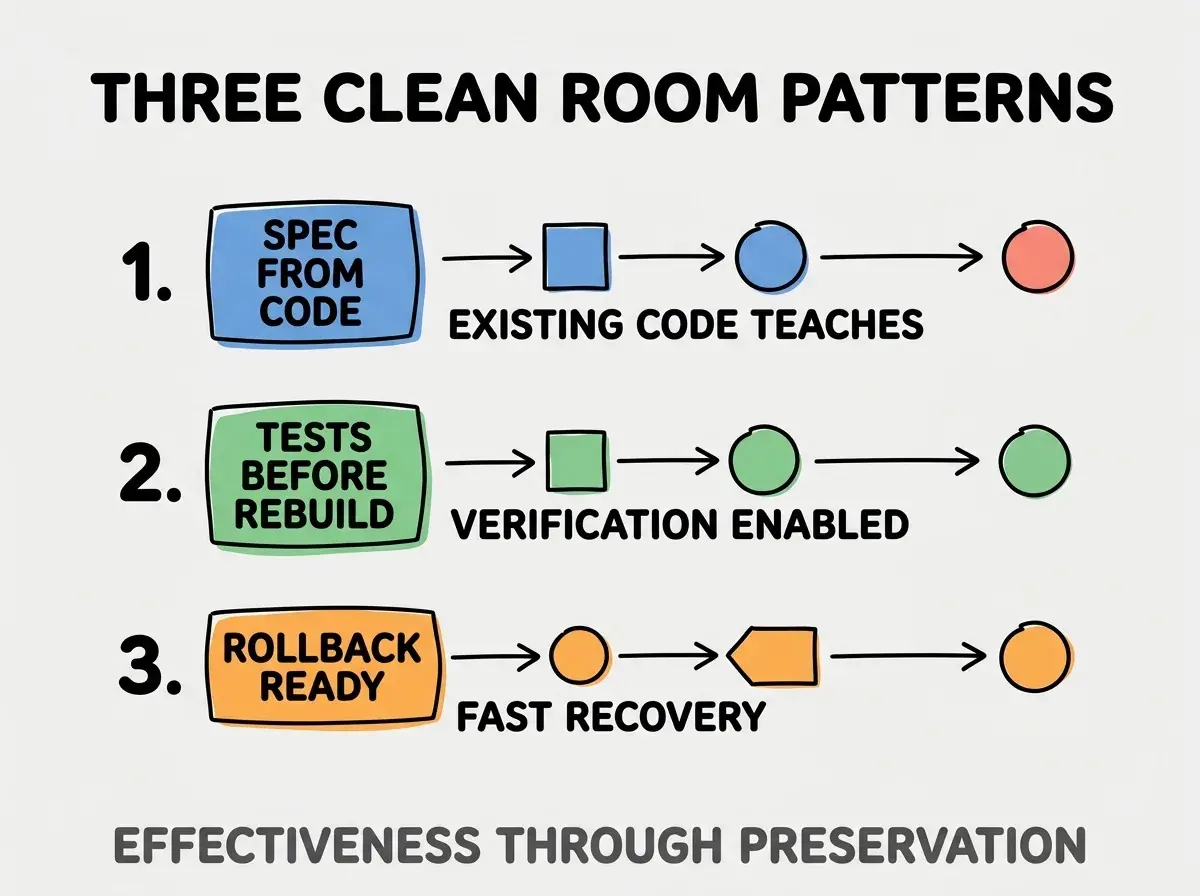
Pattern 1, spec from code. Existing code teaches; spec captures.
Pattern 2, tests before rebuild. Verification enabled; without tests, blind.
Pattern 3, rollback ready. Fast recovery if issues.
The combination produces effective clean room. Without these patterns, rebuilds risky.
How To Decide When To Clean Room
Three patterns help decision.
Pattern A, complexity ceiling reached. Refactor cannot improve; clean room option.
Pattern B, technical debt accumulated. Debt overwhelming; clean room option.
Pattern C, modern stack benefits. Old stack limits; rebuild on modern.
Common Questions About Clean Room
Clean room raises questions worth addressing directly.
The first question is when refactor vs clean room. Refactor when scope small; clean room when scope large.
The second question is how long clean room takes. 2-4x estimate; rebuilds notoriously slow.
The third question is whether AI helps. Yes substantially; AI accelerates rebuild.
The fourth question is what about partial clean room. Common; rebuild worst, refactor rest.
How Clean Room Affects Project Trajectory
Clean room affects trajectory in compounding ways. Trajectory effects compound after rebuild.
The first compounding effect is reduced complexity. Cleaner code easier maintenance.
The second compounding effect is faster development. Less mess means faster.
The third compounding effect is team morale. Clean code morale boost.
The combination produces trajectory shaped by rebuild quality. Without quality, rebuild wastes time.
How To Test Clean Room Migration
Three patterns help testing.
Pattern A, parity tests. Old vs new behavior compared.
Pattern B, percentage rollout monitoring. Each percentage observed.
Pattern C, rollback drills. Practice rollback before need.
The combination produces tested migration. Without testing, edges ship.
The most damaging clean room mistake is rebuilding without preserving spec. Without spec, lost features ship as regressions. The fix is to extract spec before rebuilding; spec preserves features. Builders who preserve spec rebuild successfully; builders who skip spec lose features users notice.
The other mistake is over scoping rebuild. Rebuild module not app.
A third mistake is missing the parallel run. Big bang risky.
A fourth mistake is treating rebuild as opportunity to add features. Scope creep kills rebuilds.
What This Means For You
The clean room technique enables rebuilds without losing working features. The four steps, implementation patterns, and sustainability approaches produce rebuilds that capture clean room benefits.
- If you're a senior dev: Clean room fluency for legacy work; valuable.
- If you're a founder: Rebuild capability enables tech debt resolution; investment justified.
- If you're changing careers: Migration expertise marketable; rebuild patterns transferable.
Browse more tools
Read more tools