Multi site management with one codebase across many client brands lets agencies scale beyond per client custom builds. Four multi tenant patterns matter: tenant isolation (data separation per client), theme system (brand customization per tenant), shared infrastructure (one deploy serves many), and feature flags per tenant (custom behavior without code branches). Combined patterns produce multi site systems that scale agency operations; without these, each client requires separate codebase that drains team capacity.
This tutorial walks through the four patterns, the implementation approaches, what makes multi site management sustainable, and the four mistakes agencies make on multi tenant architecture.
Why Multi Site Management Matters For Agencies
Multi site management matters because agencies serving many clients face capacity ceiling with per client codebases. Each client codebase requires updates, security patches, hosting; capacity to scale clients limited.
The 2026 reality is that AI tools (Claude, GPT) make multi tenant architectures buildable in weeks that previously required dedicated platform engineering teams.
A 2025 agency operations study of 200 digital agencies found that agencies with multi tenant architecture supported 3.2x more clients per developer than agencies with per client codebases, primarily through shared infrastructure and consolidated maintenance. Architecture measurably affects agency capacity.
The pattern to copy is the way commercial real estate handles multi tenant buildings. Building shared; tenants customize their space; landlord maintains shared systems. Same patterns apply to multi site agency platforms; codebase shared, tenants customize their site, agency maintains platform.
The Four Multi Tenant Patterns
Four patterns form complete multi site management.
Pattern 1, tenant isolation. Data separation. Foundation.
Pattern 2, theme system. Brand customization. Differentiation.
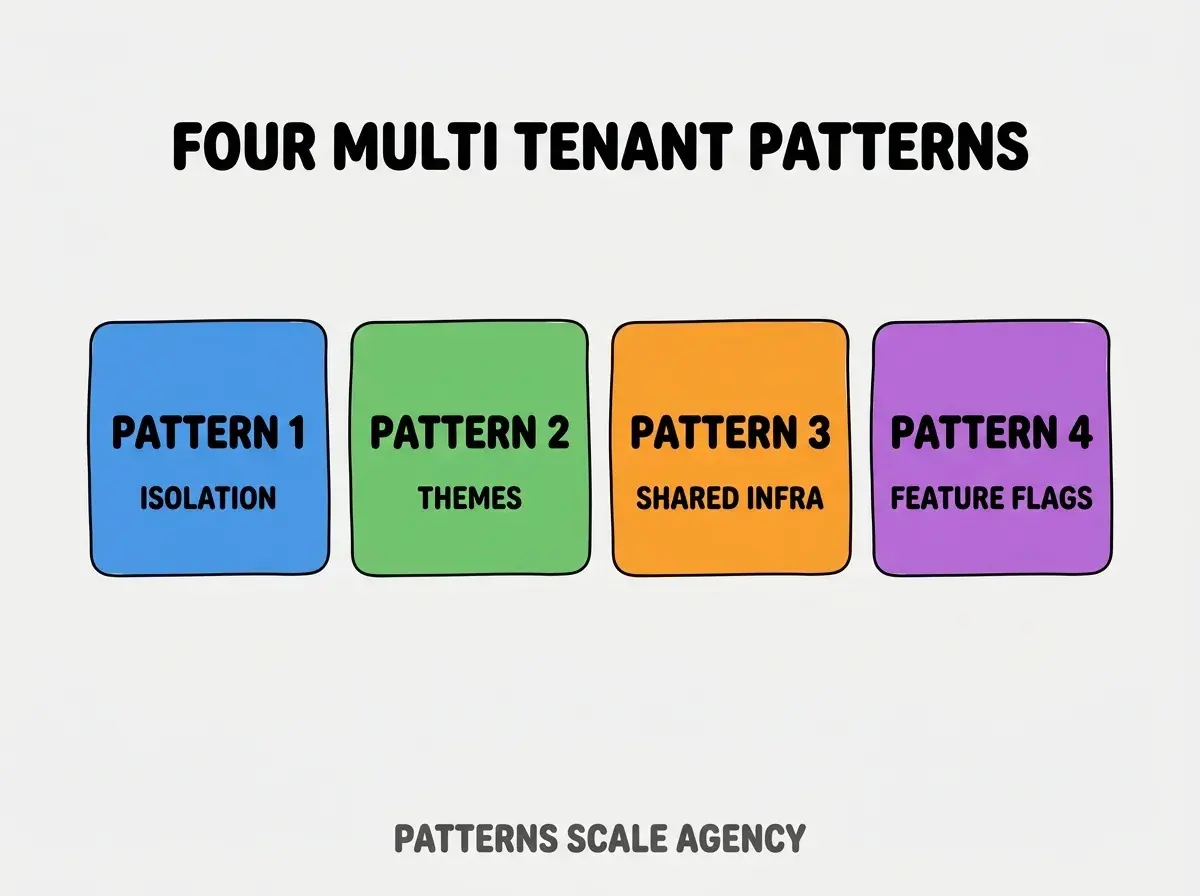
Pattern 3, shared infrastructure. One deploy serves many. Efficiency.
Pattern 4, feature flags per tenant. Custom behavior without branches. Flexibility.
How To Implement Each Pattern
Four implementation patterns address each pattern.
Implementation 1, schema based or row level isolation. Database isolates per tenant; queries scoped automatically.
Browse more build
Read more buildImplementation 2, CSS variables plus theme config per tenant. Tenant config drives CSS vars; brand colors customize.
Implementation 3, single deploy with tenant routing. Domain or subdomain routes to tenant config.
Implementation 4, feature flag system per tenant. LaunchDarkly or custom flags per tenant.
What Makes Multi Site Management Sustainable
Three patterns separate sustainable from chaos.
Pattern 1, tenant onboarding automated. New client onboards self serve or via simple admin.
Pattern 2, monitoring per tenant. Tenant level dashboards; not aggregate only.
Pattern 3, billing integrated. Per tenant billing; revenue tracking automatic.
What Makes Multi Site Strategy Effective
Three patterns separate effective from theatrical.
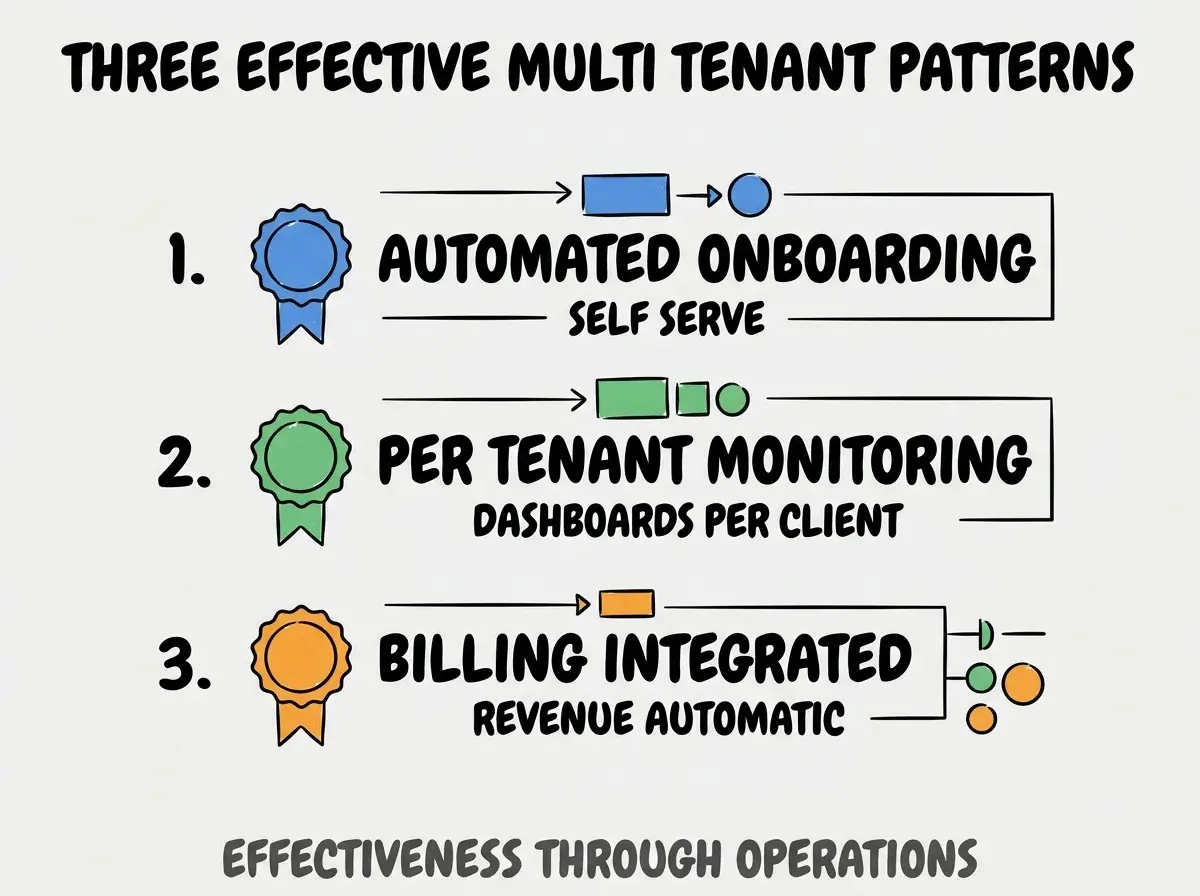
Pattern 1, automated onboarding. Self serve.
Pattern 2, per tenant monitoring. Dashboards per client.
Pattern 3, billing integrated. Revenue automatic.
The combination produces effective multi tenant. Without these patterns, multi tenant becomes operational burden.
How To Choose Tenant Isolation
Three patterns help isolation choice.
Pattern A, schema per tenant for high isolation. Each tenant own schema; strong isolation.
Pattern B, row level for low isolation overhead. Tenant ID column; simpler ops.
Pattern C, hybrid for selective isolation. Sensitive tenants schema; rest row level.
Common Questions About Multi Tenant
Multi tenant raises questions worth addressing directly.
The first question is whether to handle large tenants. Sometimes; very large tenants may need dedicated.
The second question is what about data export. Per tenant export; tenants can leave with their data.
The third question is how to handle tenant specific features. Feature flags; not code branches.
The fourth question is whether to use Postgres row level security. Yes; database enforces isolation.
How Multi Site Affects Agency Economics
Multi site affects economics in compounding ways. Economics effects compound across clients.
The first compounding effect is per client cost reduction. Shared infrastructure cheaper than per client.
The second compounding effect is faster client onboarding. Onboarding hours not weeks.
The third compounding effect is consistent quality. Updates apply across; quality scales.
The combination produces economics shaped by multi tenant adoption. Without adoption, economics linear.
How To Migrate From Per Client Codebases
Three patterns help migration.
Pattern A, tenant abstract over existing. Add tenant layer over existing codebase incrementally.
Pattern B, migrate clients one at a time. Big bang migration risky; incremental safer.
Pattern C, sunset per client codebases gradually. Old codebases sunset as clients migrate.
The combination produces successful migration. Without patterns, migration stalls.
The most damaging multi tenant mistake is leaking tenant data across boundaries. Bug that shows tenant A data to tenant B catastrophic; trust destroyed permanently. The fix is to enforce tenant isolation at database level via Postgres RLS or equivalent; defense in depth. Agencies that enforce database isolation maintain trust; agencies relying on application code alone risk catastrophic data leak that ends client relationships.
The other mistake is missing the per tenant monitoring. Aggregate dashboards hide tenant issues.
A third mistake is over customization per tenant. Heavy customization defeats multi tenant purpose.
A fourth mistake is treating multi tenant as one time architecture. Architecture evolves with client base.
Dig deeper
A few hand-picked sources if you want to go further.
What This Means For You
Multi site management with one codebase across many client brands enables agencies to scale beyond per client capacity ceiling. The four patterns, implementation approaches, and sustainability approaches produce architecture that compounds agency economics.
- If you're an agency: Multi tenant central to scaling; investment in architecture pays back through client capacity.
- If you're a senior dev: Multi tenant patterns valuable beyond agency; transferable to SaaS platforms generally.
- If you're a founder: Multi tenant patterns enable B2B SaaS; foundation for many product categories.
Browse more build
Read more build