Freelance vibe coders building businesses in 2026 fall into four business model patterns that dramatically outperform traditional freelance development models. The patterns include productized services, AI accelerated agencies, retainer plus rebuild flips, and outcome based pricing. Combined they enable freelance vibe coders to earn 2-4x what traditional freelance developers earn while working similar hours. Understanding the patterns helps new freelancers position for the AI era market.
This piece walks through the four business model patterns, what makes each work, what the market dynamics mean for new freelancers, and the four mistakes when interpreting freelance vibe coder businesses.
Why Freelance Vibe Coder Models Matter
Freelance vibe coder models matter because traditional freelance economics break down with AI productivity gains. AI lets one freelancer do work of three traditional freelancers; pricing models must adapt to capture the value.
The 2026 reality is that hourly billing increasingly disadvantages skilled freelance vibe coders. Hours decrease while output increases; hourly billing leaves money on the table that outcome based billing captures.
A 2025 freelance market survey of 600 freelance developers found that vibe coder freelancers using productized or outcome based pricing models earned 2.7x what hourly billing vibe coders earned for similar work output. Pricing model choice now matters more than skill level for income outcomes.
The pattern to copy is the way photographers shifted from hourly assistant rates to project pricing decades ago. The shift required positioning as professional with deliverables, not labor with time. Vibe coder freelancers are making the equivalent shift.
The Four Business Model Patterns
Four patterns characterize freelance vibe coder businesses.
Pattern 1, productized services. Fixed scope, fixed price, fixed timeline offerings. "Landing page in 5 days for $5K" packaged as product not project.
Pattern 2, AI accelerated agencies. Solo or small team operations using AI for 5x output of traditional agencies. Position on speed and cost.
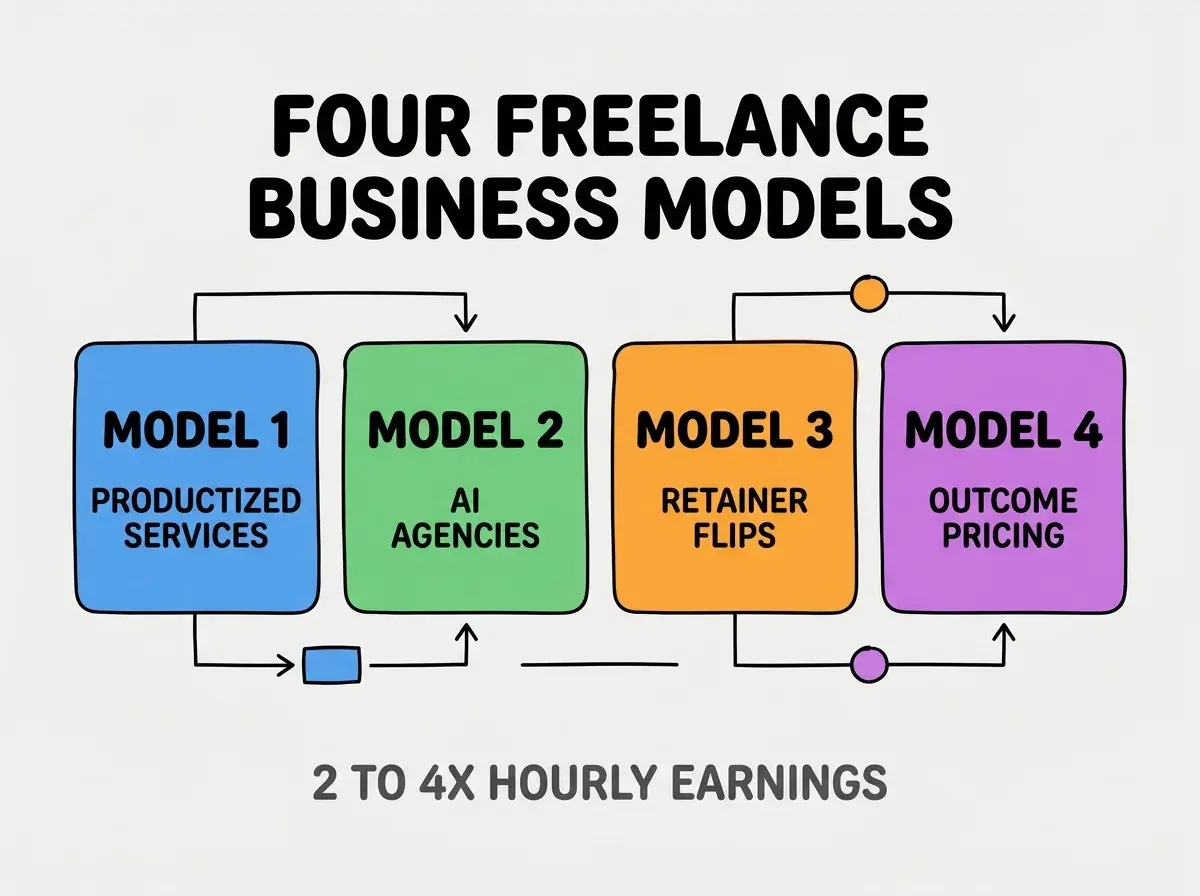
Pattern 3, retainer plus rebuild flips. Initial engagement on retainer; identify rebuild opportunities; flip rebuilds for premium pricing.
Pattern 4, outcome based pricing. Charge for results not time. "Land 10 customers from this app" pricing aligns incentives with client outcomes.
What Makes Each Pattern Work
Four success factors vary by pattern.
Productized services work when scope is genuinely repeatable and freelancer has specialty expertise. Productization requires expertise depth.
Browse more pulse
Read more pulseAI agencies work when marketing reaches clients who value speed over cost. Speed positioning differentiates from traditional agencies.
Retainer flips work when trust building during retainer reveals rebuild opportunities. Trust enables larger engagements.
Outcome based pricing works when outcomes are measurable and freelancer has confidence in results delivery. Risk transfer requires confidence.
What The Market Dynamics Mean For New Freelancers
Three market patterns shape freelancer positioning.
Pattern 1, traditional hourly freelancing is commoditizing. Race to bottom on hourly rates as supply expands; new freelancers struggle to differentiate on hourly.
Pattern 2, productized and outcome based command premiums. Differentiation on packaging and results commands premiums regardless of freelancer experience.
Pattern 3, niche specialization beats generalist positioning. Specialists in specific industries or specific tool stacks outearn generalists.
What Makes Freelance Vibe Coder Businesses Sustainable
Three patterns separate sustainable businesses from temporary projects.
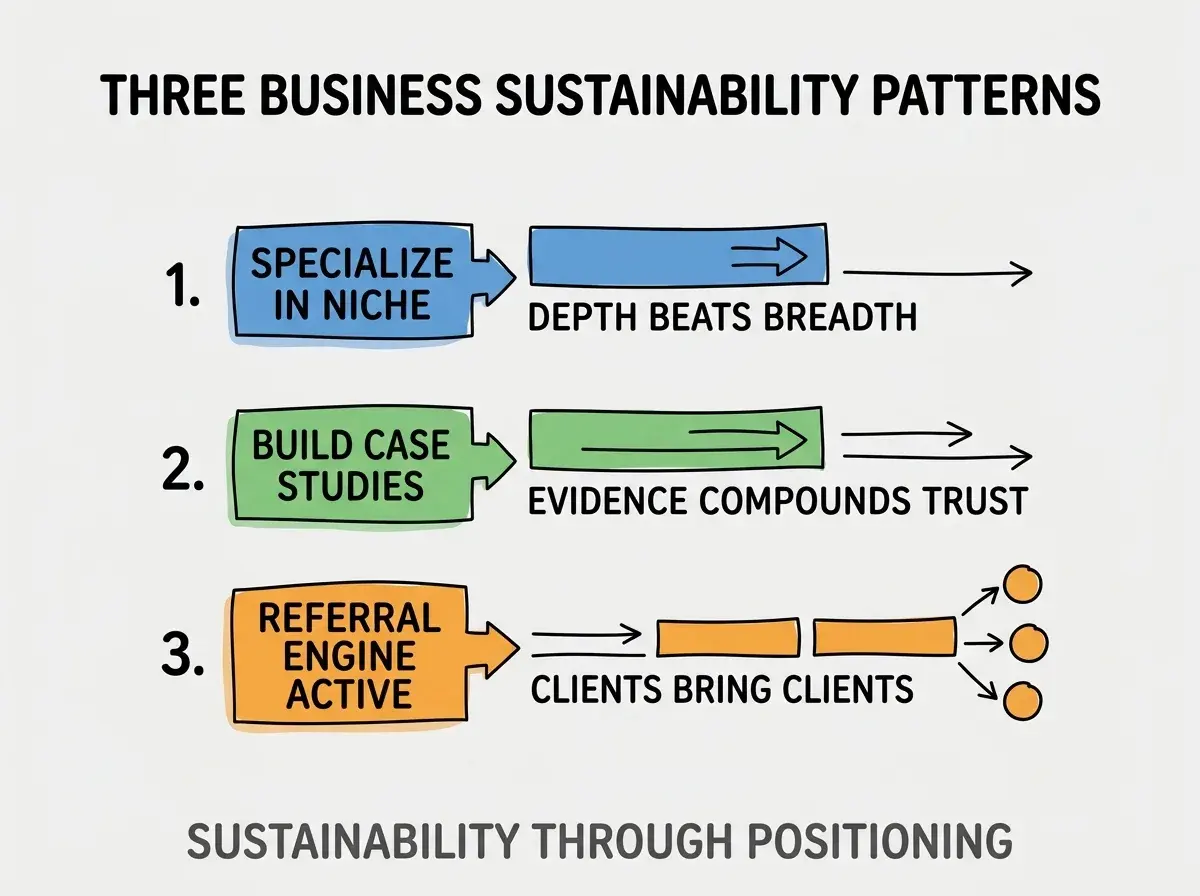
Pattern 1, specialize in niche. Industry niche or tool stack niche; depth produces premium pricing.
Pattern 2, build case studies systematically. Each project becomes case study; case studies compound credibility.
Pattern 3, referral engine active. Happy clients refer; structured asks for referrals; referrals reduce sales cost.
The combination produces sustainable freelance businesses. Without these patterns, freelancers depend on constant cold outreach.
How To Position For The AI Freelance Market
Three positioning patterns help new freelancers enter the market.
Pattern A, lead with productized service. Initial offering as productized package; productization simplifies sales.
Pattern B, build proof through personal projects. Personal apps demonstrate capability before clients trust you with theirs.
Pattern C, choose niche by intersection of interest and demand. Niche must have client demand; interest sustains motivation; intersection enables both.
Common Questions About Freelance Vibe Coder Businesses
Freelance vibe coder businesses raise questions worth addressing directly.
The first question is whether freelance vibe coding is sustainable long term. Yes for skilled positioning; commodity hourly work less sustainable.
The second question is whether to specialize early or stay generalist. Specialize within first year; generalist positioning increasingly unsustainable.
The third question is how to set productized service prices. Start at $2-5K for landing pages, $5-15K for SaaS prototypes; adjust based on demand.
The fourth question is whether to take equity instead of cash. Equity for established companies sometimes; equity for startups rarely beats cash.
How Freelance Vibe Coders Affect Industry
Freelance vibe coders affect industry in compounding ways. Industry effects compound across years.
The first compounding effect is agency competition. Solo vibe coders compete with agencies on speed and cost; agencies must adapt.
The second compounding effect is freelance market segmentation. Skilled vibe coders earn agency rates; commodity hourly freelancers face downward pressure.
The third compounding effect is client expectation evolution. Clients learn faster delivery is possible; expectations shift across all freelance interactions.
The combination produces industry dynamics that continue evolving. Without awareness, freelancers face market shifts unprepared.
How To Build Productized Services
Three patterns help build productized service offerings.
Pattern A, identify repeatable demand. Look for problems clients ask about repeatedly; repeated demand is productization opportunity.
Pattern B, document the delivery process. Productization requires repeatable process; documentation enables consistency.
Pattern C, create sales page with clear scope. Sales page lists what is included, what is excluded, timeline, price. Clarity enables sales.
The combination produces productized services that scale beyond hourly limits. Without productization, freelance income stays time bound.
The most damaging freelance vibe coder business mistake is competing on hourly rates against the global market. Hourly competition leads to race to bottom; vibe coders cannot win race to bottom against lower cost markets. The fix is to compete on outcomes, productization, or specialization where local context and proximity matter. Freelancers who differentiate compete on dimensions where they win; freelancers who commodity compete on dimensions where they lose.
The other mistake is undercharging for AI accelerated work. AI productivity should increase rates, not enable lower rates; capture value created.
A third mistake is missing the case study opportunity. Each project should produce shareable case study; case studies compound future sales.
A fourth mistake is treating freelance as solo forever. Successful freelancers eventually build small teams or transition to product businesses.
What This Means For You
Freelance vibe coders building businesses use four business model patterns that capture AI productivity value. The four patterns, success factors, and positioning approaches produce framework for freelance career building.
- If you're an indie hacker: Consider freelance work as bridge to product income; freelance income funds product building.
- If you're a career changer: Freelance vibe coder market is more accessible than traditional employment; entry barrier lower.
Browse more pulse
Read more pulse