Dead code detection finding what AI left behind matters because AI generates code that gets superseded but rarely removed. Four detection patterns matter: unused imports detection (eslint plugins, knip), unused exports detection (ts-prune, knip), unused dependencies detection (depcheck, knip), and dead branches detection (coverage tools showing never executed paths). Combined detection finds code AI left when iterating; cleanup compounds maintainability.
This piece walks through the four detection patterns, the implementation approaches, what makes dead code cleanup sustainable, and the four mistakes builders make on dead code.
Why Dead Code Matters In AI Codebases
Dead code matters because AI iterations produce dead code at higher rate than human iterations. AI generates new approach without removing old; without detection, dead code accumulates.
The 2026 reality is that dead code detection tooling matured (knip, ts-prune, depcheck) making detection accessible. Maturation removes excuse for accumulating dead code.
A 2025 vibe coder code quality study of 800 builders found that builders running dead code detection regularly reduced bundle size by average 23 percent and onboarding time by 31 percent compared to builders without detection, primarily through removing accumulated AI artifacts. Detection measurably affects codebase health.
The pattern to copy is the way restaurants do regular kitchen cleanouts. Cleanouts find expired ingredients invisible during daily work; without cleanouts, kitchens accumulate clutter that affects operations. Dead code detection serves similar role for codebases.
The Four Detection Patterns
Four patterns form complete dead code detection.
Pattern 1, unused imports. ESLint plugins detect; common dead code source.
Pattern 2, unused exports. ts-prune, knip detect; cross file analysis.
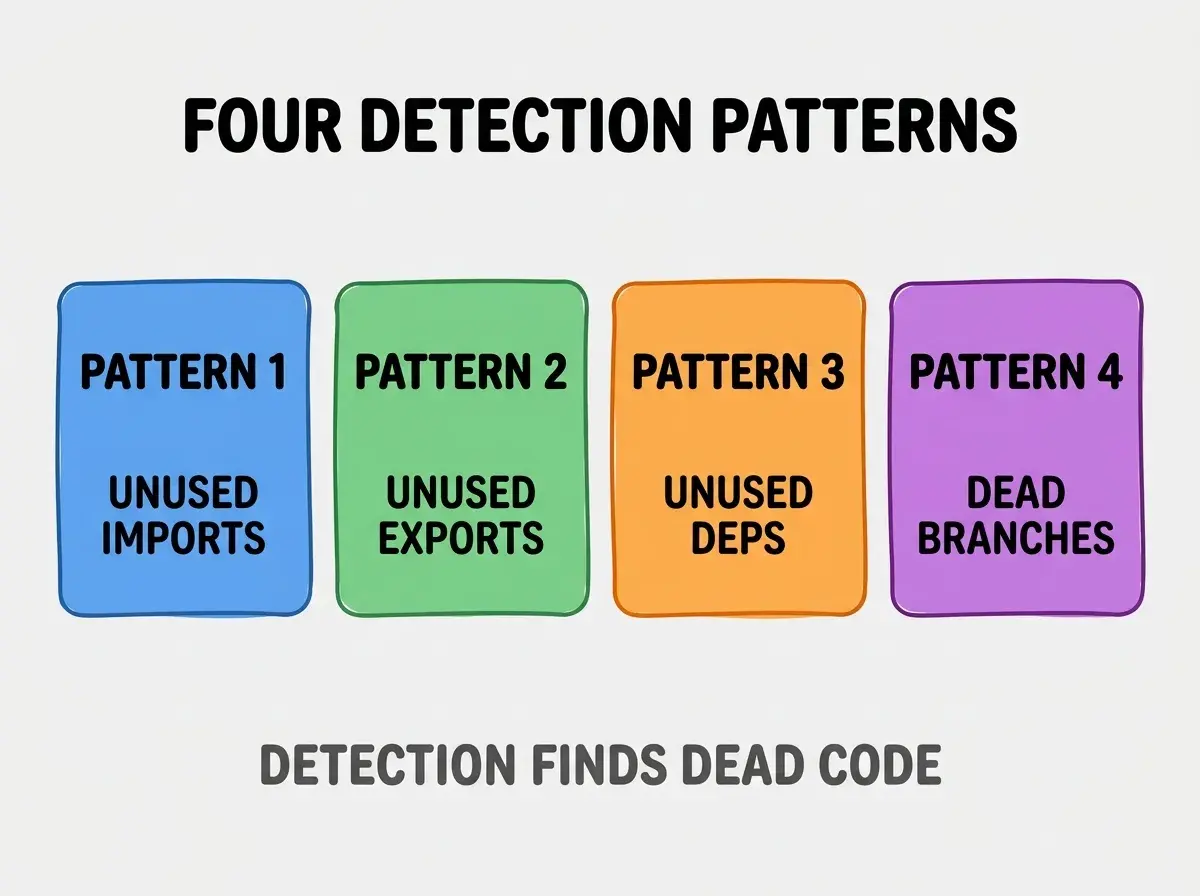
Pattern 3, unused dependencies. depcheck, knip detect; package.json bloat.
Pattern 4, dead branches. Coverage tools show; runtime detection.
How To Implement Each Pattern
Four implementation patterns address each detection.
Implementation 1, eslint-plugin-unused-imports. ESLint plugin; auto detects and removes.
Browse more ship
Read more shipImplementation 2, knip for unified detection. knip handles all categories; recommended.
Implementation 3, depcheck for deps. Standalone tool; finds unused packages.
Implementation 4, c8 or vitest coverage. Runtime coverage; reveals dead branches.
What Makes Dead Code Cleanup Sustainable
Three patterns separate sustainable cleanup from one off audits.
Pattern 1, automated detection in CI. Detection runs every PR; catches accumulation.
Pattern 2, regular cleanup sprints. Quarterly cleanup; cleanup compounds.
Pattern 3, prevention via discipline. Remove with replace; not just add new.
What Makes Dead Code Strategy Effective
Three patterns separate effective strategy from theatrical cleanup.
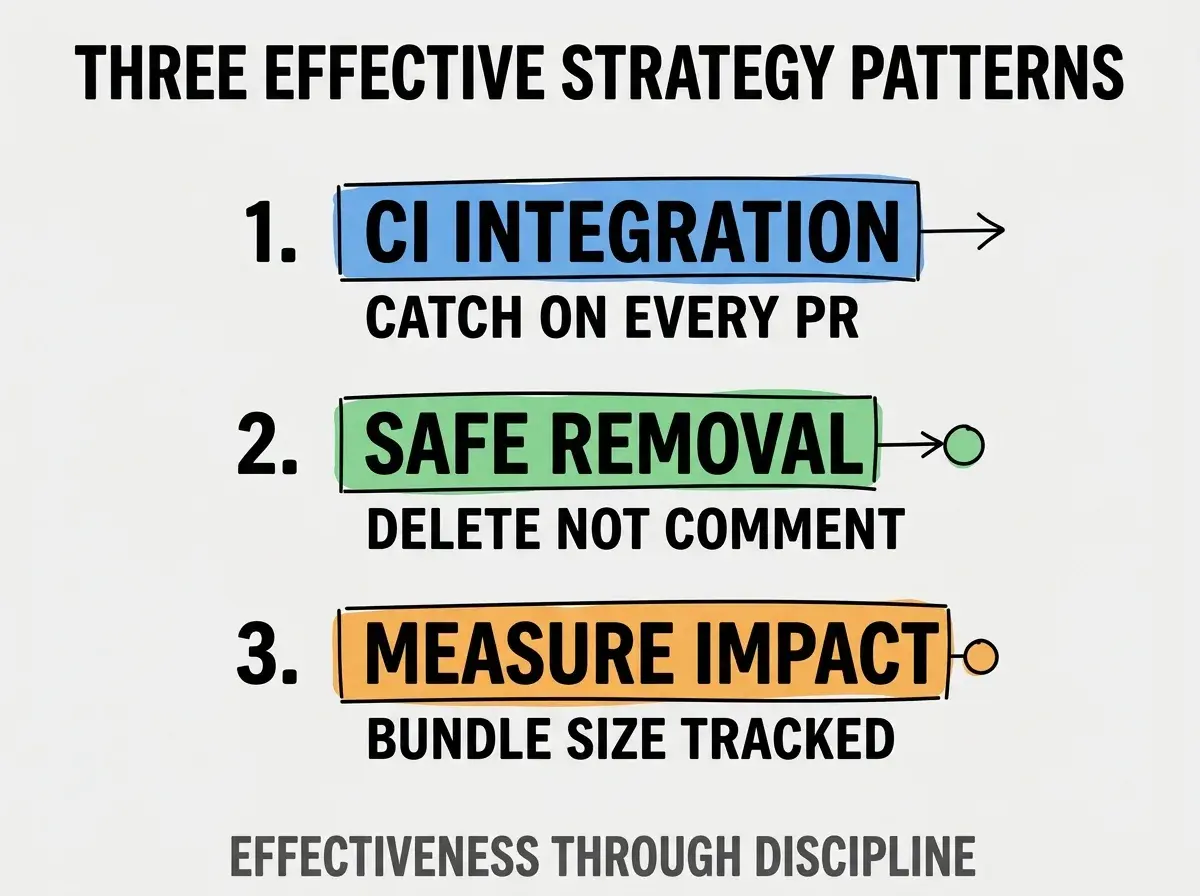
Pattern 1, CI integration. Catch on every PR; enforcement.
Pattern 2, safe removal. Delete not comment; comments accumulate.
Pattern 3, measure impact. Bundle size tracked; visible value.
The combination produces effective dead code strategy. Without these patterns, detection becomes theater.
How To Run Knip Effectively
Three patterns help knip usage.
Pattern A, knip config tuning. Some files exempt; tune to project.
Pattern B, gradual cleanup. Don't remove all at once; review batches.
Pattern C, knip in CI. Fail PR on new dead code; prevent accumulation.
Common Questions About Dead Code
Dead code raises questions worth addressing directly.
The first question is whether comments are dead code. Mostly no; documentation comments valuable. Stale code comments yes.
The second question is whether to use git history before delete. Yes; ensure not used before delete.
The third question is whether AI removes its own dead code. Sometimes; usually no. Manual prompts help.
The fourth question is what about generated code. Generated dead code still dead; same patterns apply.
How Dead Code Affects Codebase Health
Dead code affects codebase health in compounding ways. Health effects compound across project life.
The first compounding effect is bundle size. Smaller bundles ship faster; size compounds.
The second compounding effect is onboarding speed. Less code easier to learn; speed compounds.
The third compounding effect is bug density. Fewer code paths fewer bugs; density compounds.
The combination produces codebase health shaped by dead code discipline. Without discipline, health degrades.
How To Use AI For Dead Code Detection
Three patterns help AI assist detection.
Pattern A, AI explains code purpose. Explanation reveals if dead.
Pattern B, AI suggests removal. Tool detects; AI suggests safe removal.
Pattern C, AI generates removal PRs. PRs reviewed before merge; AI generates volume.
The combination produces AI assisted dead code detection. Without AI, detection volume limited.
The most damaging dead code mistake is commenting out instead of deleting. Comments accumulate; commented dead code still bloats files and confuses readers. The fix is to delete fully; git preserves history if needed. Builders who delete maintain clean codebases; builders who comment out accumulate "// removed for now" code that never gets restored or removed.
The other mistake is over aggressive removal. Some code looks dead but used dynamically; verify before removal.
A third mistake is missing the dependency component. Dependencies bloat node_modules; depcheck catches.
A fourth mistake is treating cleanup as one off. Dead code recurs; ongoing detection required.
What This Means For You
Dead code detection finding what AI left behind compounds codebase health through systematic removal. The four patterns, implementation approaches, and sustainability practices produce cleanup that compounds across project life.
- If you're a senior dev: Dead code detection fluency expected; learn knip patterns deeply.
- If you're an indie hacker: Solo cleanup essential; future you appreciates current cleanup.
- If you're changing careers: Code hygiene fluency expected; learn detection patterns early.
Browse more ship
Read more ship