Building a mobile app with offline first architecture means apps work without network and sync when connected. Four architectural patterns matter: local first data storage (SQLite, MMKV, Realm), sync engine (handles conflicts, retries, ordering), conflict resolution strategy (last write wins, manual resolve, merge), and network state management (UI adapts to connectivity). Apps with offline first architecture work reliably; without it, apps fail when networks fail.
This piece walks through the four architectural patterns, the implementation approaches, what makes offline first reliable, and the four mistakes builders make on offline first.
Why Offline First Matters For Mobile
Offline first matters because mobile users move through varying network conditions; tunnel, plane, basement all have no network. Apps requiring network during these times fail.
The 2026 reality is that mobile users expect offline functionality for core features. Without offline, apps lose user trust during real world usage.
A 2025 mobile app reliability study of 800 vibe coded mobile apps found that offline first apps maintained 89 percent user satisfaction during network issues vs 23 percent for online only apps, primarily through continued functionality during network gaps. Offline first measurably affects perceived reliability.
The pattern to copy is the way email clients work offline. Compose offline; send when connected. Same patterns apply to most mobile features; offline first compounds reliability across all features.
The Four Architectural Patterns
Four patterns form complete offline first architecture.
Pattern 1, local first data storage. SQLite, MMKV, Realm. Data on device first.
Pattern 2, sync engine. Handles conflicts, retries, ordering. Sync core.
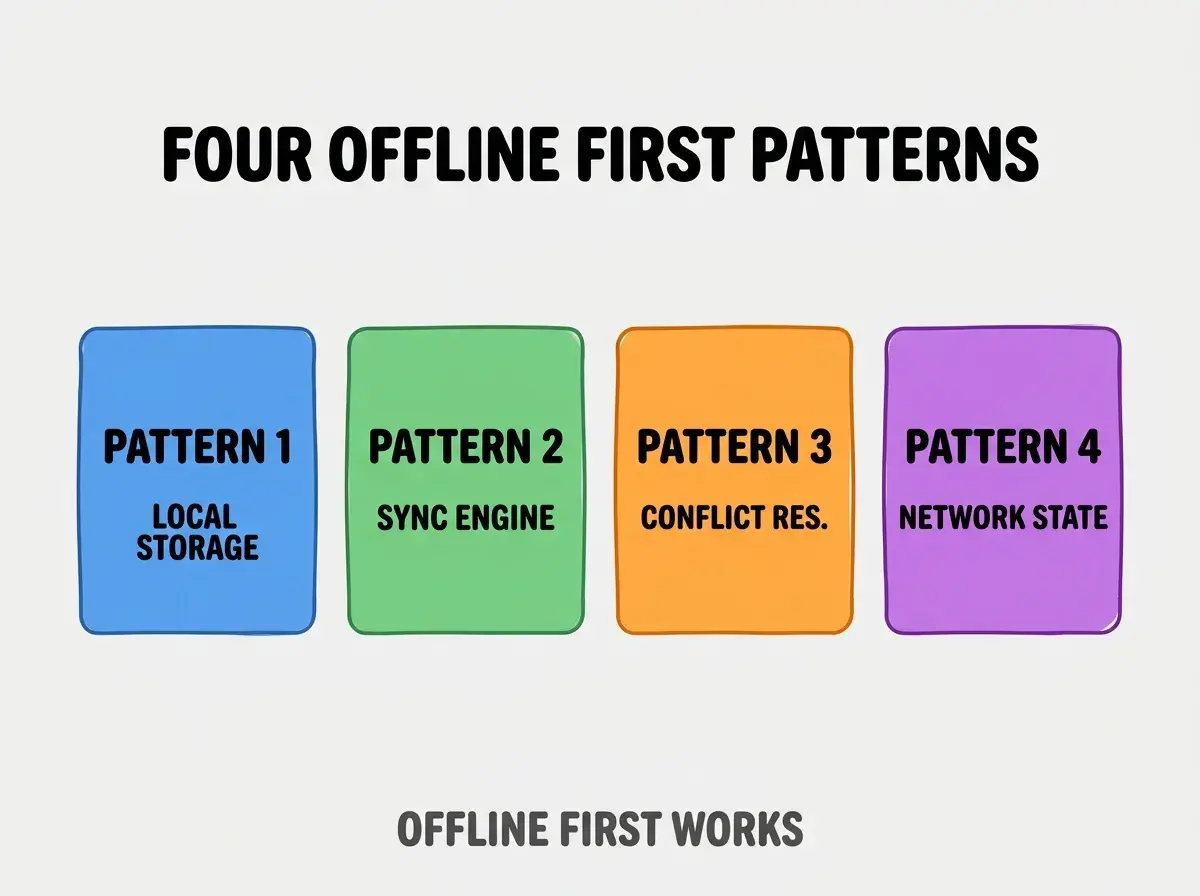
Pattern 3, conflict resolution. Last write wins, manual resolve, merge. Strategy needed.
Pattern 4, network state management. UI adapts to connectivity. UX adapts.
How To Implement Each Pattern
Four implementation patterns address each architectural concern.
Implementation 1, SQLite via expo-sqlite or watermelondb. Standard local database; SQLite mature.
Browse more build
Read more buildImplementation 2, custom sync or PowerSync. PowerSync handles complex sync; custom for simple.
Implementation 3, last write wins for most cases. LWW simple; works for non collaborative.
Implementation 4, NetInfo for connectivity state. React Native NetInfo; standard library.
What Makes Offline First Reliable
Three patterns separate reliable offline first from buggy implementations.
Pattern 1, all writes go local first. Local writes immediate; sync follows.
Pattern 2, retry logic robust. Network fails; retries handle.
Pattern 3, conflict UI clear. When conflicts surface, clear resolution.
What Makes Offline First Sustainable
Three patterns separate sustainable offline first from initial enthusiasm.
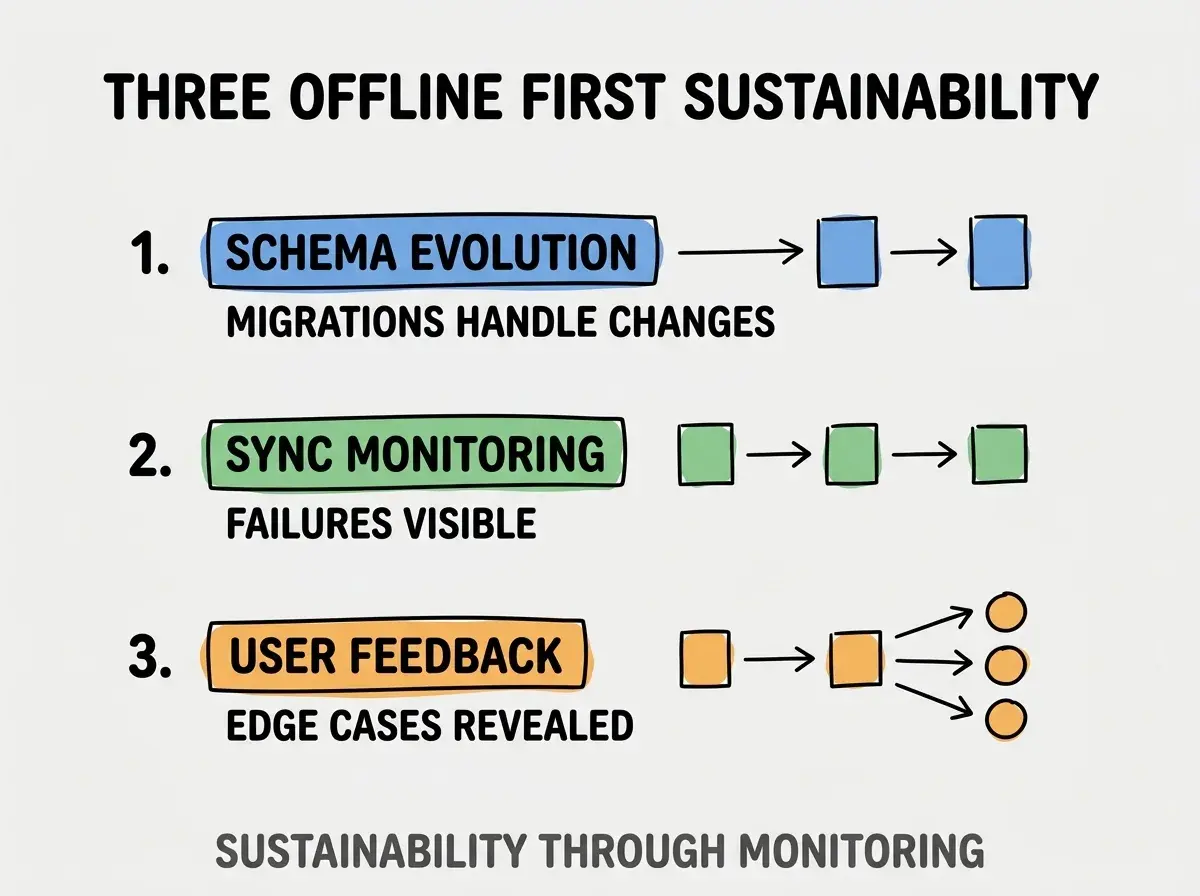
Pattern 1, schema evolution. Migrations handle changes; without migrations, schema breaks.
Pattern 2, sync monitoring. Failures visible; visibility informs fixes.
Pattern 3, user feedback. Edge cases revealed by users; feedback compounds quality.
The combination produces sustainable offline first. Without these patterns, offline first becomes burden.
How To Handle Sync Conflicts
Three patterns help conflict handling.
Pattern A, automatic LWW for simple data. Most data fine with LWW; auto handles.
Pattern B, manual resolution for important. Important conflicts surface to user; user decides.
Pattern C, append only avoids conflicts. Append only data can not conflict; design for append.
Common Questions About Offline First
Offline first raises questions worth addressing directly.
The first question is whether all features need offline. No; some features network only acceptable. Core features offline.
The second question is what storage to use. SQLite for relational; MMKV for key value; Realm for complex.
The third question is how to handle large data. Pagination plus lazy loading; download on demand.
The fourth question is whether to encrypt local storage. Sensitive data yes; default optional.
How Offline First Affects User Trust
Offline first affects user trust in compounding ways. Trust effects compound across user base.
The first compounding effect is reliability perception. Reliable apps trusted; trust compounds usage.
The second compounding effect is feature use. Trusted apps used more; use compounds engagement.
The third compounding effect is referrals. Trusted apps referred; referrals compound growth.
The combination produces trust shaped by offline reliability. Without offline first, trust bounded by network reliability.
How To Test Offline First Properly
Three patterns help offline testing.
Pattern A, airplane mode testing. Real offline testing; reveals issues.
Pattern B, network throttling. Slow networks reveal sync issues.
Pattern C, conflict scenario testing. Multiple devices, intentional conflicts; testing reveals handling.
The combination produces tested offline first. Without testing, edge cases ship as bugs.
The most damaging offline first mistake is treating it as bolt on. Offline first must be designed in; bolt on offline produces fragile sync that breaks routinely. The fix is to design data layer offline first from start; everything writes local then syncs. Builders who design offline first ship reliable apps; builders who bolt on offline ship apps that fail in airplane mode and tunnels.
The other mistake is over engineering conflict resolution. LWW works for most; complex resolution premature.
A third mistake is missing the user education. Users need to understand offline state; UI must communicate.
A fourth mistake is treating online as primary. Treating online as primary means offline as edge case; reverse for offline first.
What This Means For You
Building a mobile app with offline first architecture produces apps reliable across network conditions. The four patterns, implementation approaches, and sustainability practices produce mobile apps that compound user trust through reliability.
- If you're a senior dev: Offline first fluency increasingly expected for mobile; learn patterns deeply.
- If you're a founder: Offline first affects user perception; investment justified for mobile strategy.
- If you're changing careers: Mobile architecture expertise valued; offline first differentiates.
Browse more build
Read more build