Building an agentic workflow with tool use enables AI to autonomously execute multi step tasks via tools you provide. Four design components matter: tool definitions (what tools available, schema and descriptions), agent loop (LLM decides, tool executes, result feeds back), error handling (tool failures, retries, fallbacks), and termination logic (when agent done or max iterations). Agentic workflows automate work multi step but require careful design; without design, agents loop forever or take wrong actions.
This tutorial walks through the four components, the implementation patterns, what makes agentic workflows reliable, and the four mistakes builders make on agentic workflows.
Why Agentic Workflows Matter
Agentic workflows matter because some tasks require multi step execution that single LLM calls cannot. Agents enable autonomy; autonomy compounds productivity.
The 2026 reality is that AI APIs natively support tool use (OpenAI function calling, Claude tool use, Gemini). Capability removes integration barrier.
A 2025 production AI study of 300 vibe coded agentic apps found that apps with structured agentic workflows completed 67 percent more multi step tasks successfully than apps with single LLM calls, primarily through agent loops handling intermediate steps. Workflows measurably affect task completion.
The pattern to copy is the way restaurant kitchens execute multi step recipes. Recipe steps, ingredients, timing, all coordinated. Agentic workflows execute similar coordination for code; agents follow recipes you define.
The Four Design Components
Four components form complete agentic workflow.
Component 1, tool definitions. Schema and descriptions. Foundation.
Component 2, agent loop. LLM decides, tool runs, result feeds back. Core.
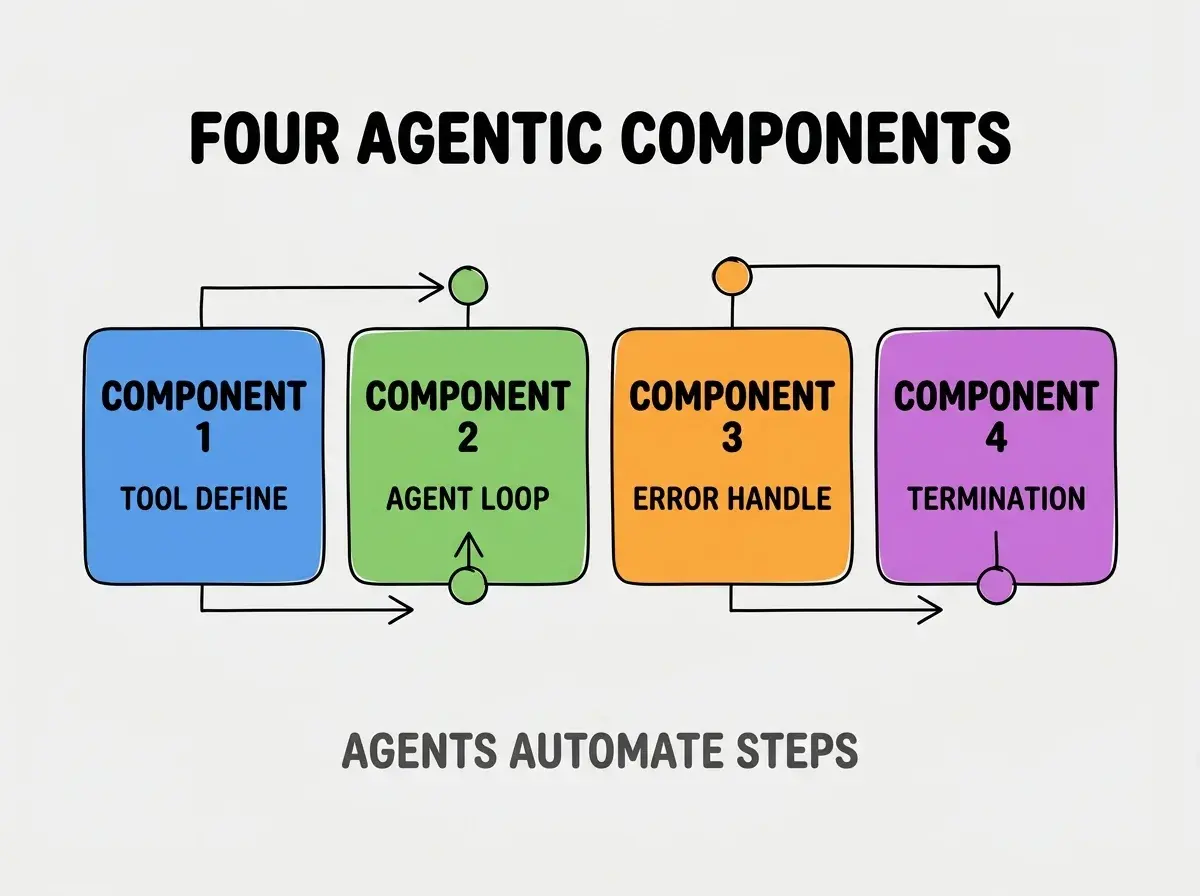
Component 3, error handling. Tool failures, retries. Resilience.
Component 4, termination logic. When done or max iterations. Safety.
How To Implement Each Component
Four implementation patterns address each component.
Implementation 1, JSON schema for tools. Standard format; AI APIs use schema.
Browse more build
Read more buildImplementation 2, while loop with tool execution. Standard agent pattern.
Implementation 3, try catch around tool calls. Errors caught; AI informed.
Implementation 4, max iterations plus task complete. Safety limits.
What Makes Agentic Workflows Reliable
Three patterns separate reliable from unreliable agents.
Pattern 1, clear tool descriptions. AI uses descriptions to choose; clear matters.
Pattern 2, comprehensive error feedback. Errors fed back to AI; AI adapts.
Pattern 3, termination conditions explicit. When done specified; without, infinite loops.
What Makes Agentic Production Sustainable
Three patterns separate sustainable production agents from initial demos.
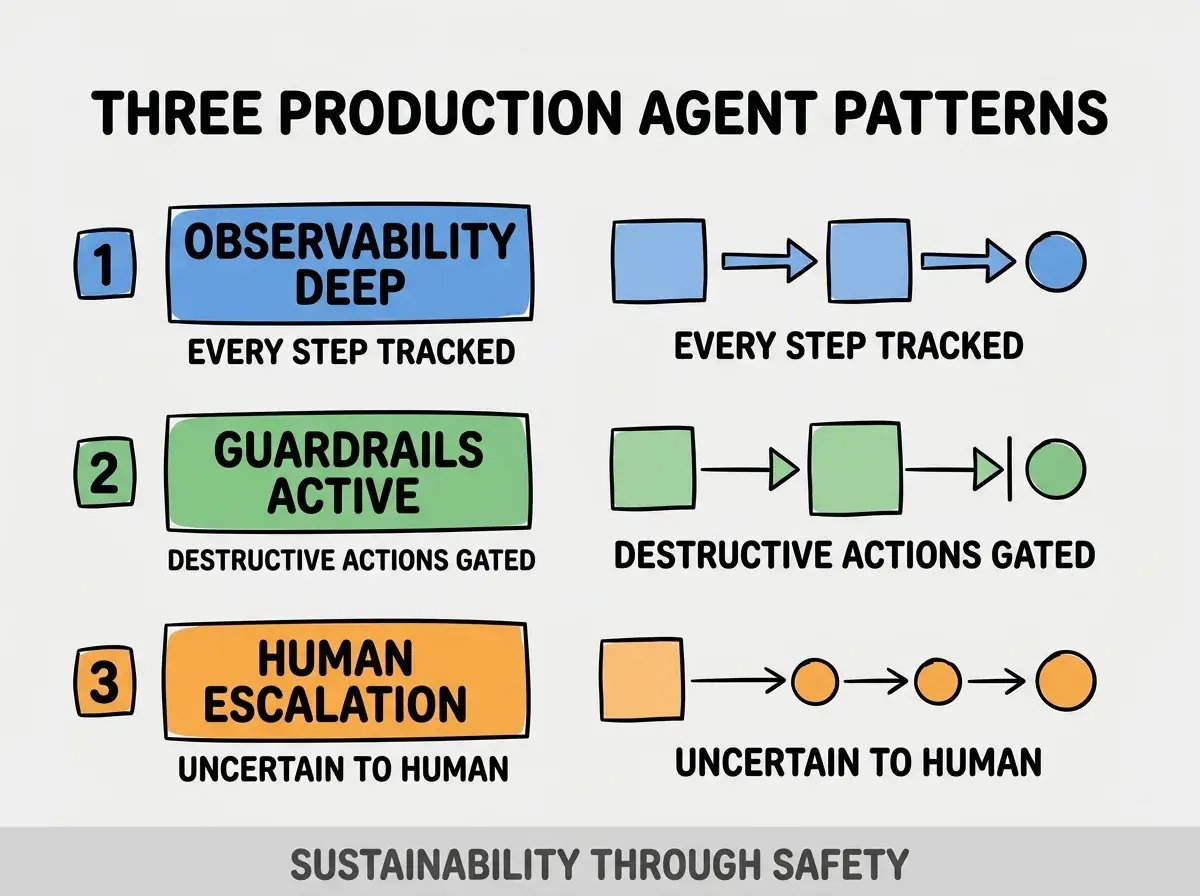
Pattern 1, observability deep. Every step tracked; debugging possible.
Pattern 2, guardrails active. Destructive actions gated; safety matters.
Pattern 3, human escalation. Uncertain cases to human; escalation matters.
The combination produces sustainable production agents. Without these patterns, agents become liabilities.
How To Define Tools Effectively
Three patterns help tool definitions.
Pattern A, narrow scoped tools. Each tool one job; narrow easier for AI.
Pattern B, descriptive parameters. Parameter descriptions guide AI usage.
Pattern C, examples in descriptions. Examples teach use; AI learns.
Common Questions About Agentic Workflows
Agentic workflows raise questions worth addressing directly.
The first question is whether to use frameworks (LangChain, AutoGen) or custom. Custom for control; frameworks for speed.
The second question is what about token costs. Agents use many tokens; budget carefully.
The third question is how to handle long running tasks. Async with status checks; not blocking.
The fourth question is whether to allow code execution. Sandbox required; risk otherwise.
How Agentic Workflows Affect Capability
Agentic workflows affect capability in compounding ways. Capability effects compound across tasks.
The first compounding effect is task complexity. More complex tasks possible; complexity compounds.
The second compounding effect is automation depth. Multi step automation; depth compounds.
The third compounding effect is user productivity. Users delegate more; productivity compounds.
The combination produces capability shaped by agentic design. Without agents, capability bounded by single call.
How To Test Agentic Workflows
Three patterns help testing.
Pattern A, scenario based testing. Define scenarios; test agent handling.
Pattern B, chaos testing tool failures. Inject failures; verify recovery.
Pattern C, max iteration verification. Force long tasks; verify safety stops.
The combination produces tested agents. Without testing, edges ship as production issues.
The most damaging agentic workflow mistake is no termination conditions. Agents loop forever; tokens burn. The fix is to always set max iterations plus explicit task complete signal; safety stops prevent infinite. Builders who set termination prevent runaway costs; builders who skip face surprise bills.
The other mistake is missing the observability layer. Agents do many steps; without observability, debugging impossible.
A third mistake is over indexing on autonomy. Some decisions need human; over autonomy risks.
A fourth mistake is treating agents as deterministic. Agents non deterministic; testing accommodates.
What This Means For You
Building agentic workflows with tool use enables AI autonomy for multi step tasks. The four components, implementation patterns, and sustainability approaches produce agentic workflows that compound automation capability.
- If you're a senior dev: Agentic fluency increasingly valuable; learn patterns deeply.
- If you're a founder: Agents enable product capabilities; consider for advanced features.
- If you're a student: Agent projects build cutting edge AI skills; valuable portfolio.
Browse more build
Read more build