Building an AI code review bot for your team automates first pass review on PRs, catching issues before human review. Four core capabilities matter: PR analysis (parse diff, understand context), issue detection (security vulnerabilities, performance, style), comment generation (helpful suggestions in PR), and learning from feedback (improve over time from team responses). Bot complements human review; without bot, human reviewers face all PRs alone.
This tutorial walks through the four capabilities, the implementation patterns, what makes review bots useful, and the four mistakes builders make on AI code review bots.
Why Build AI Code Review Bots
AI code review bots matter because team review capacity bounded by senior developer time. Bot extends capacity; capacity compounds team velocity.
The 2026 reality is that AI capable enough to provide useful review, especially for AI generated code. Capability enables bot adoption.
A 2025 team productivity study of 400 vibe coding teams found that teams with AI code review bots achieved 38 percent faster PR cycle time than teams relying on human review only, primarily through bots catching trivial issues humans then skip. Bots measurably affect velocity.
The pattern to copy is the way industrial QA combines automated and human inspection. Automated catches 80 percent; human catches what automation misses. AI code review bots provide same first pass for code; humans focus on judgment.
The Four Core Capabilities
Four capabilities form complete AI review bot.
Capability 1, PR analysis. Parse diff, understand context. Foundation.
Capability 2, issue detection. Security, performance, style. Detection scope.
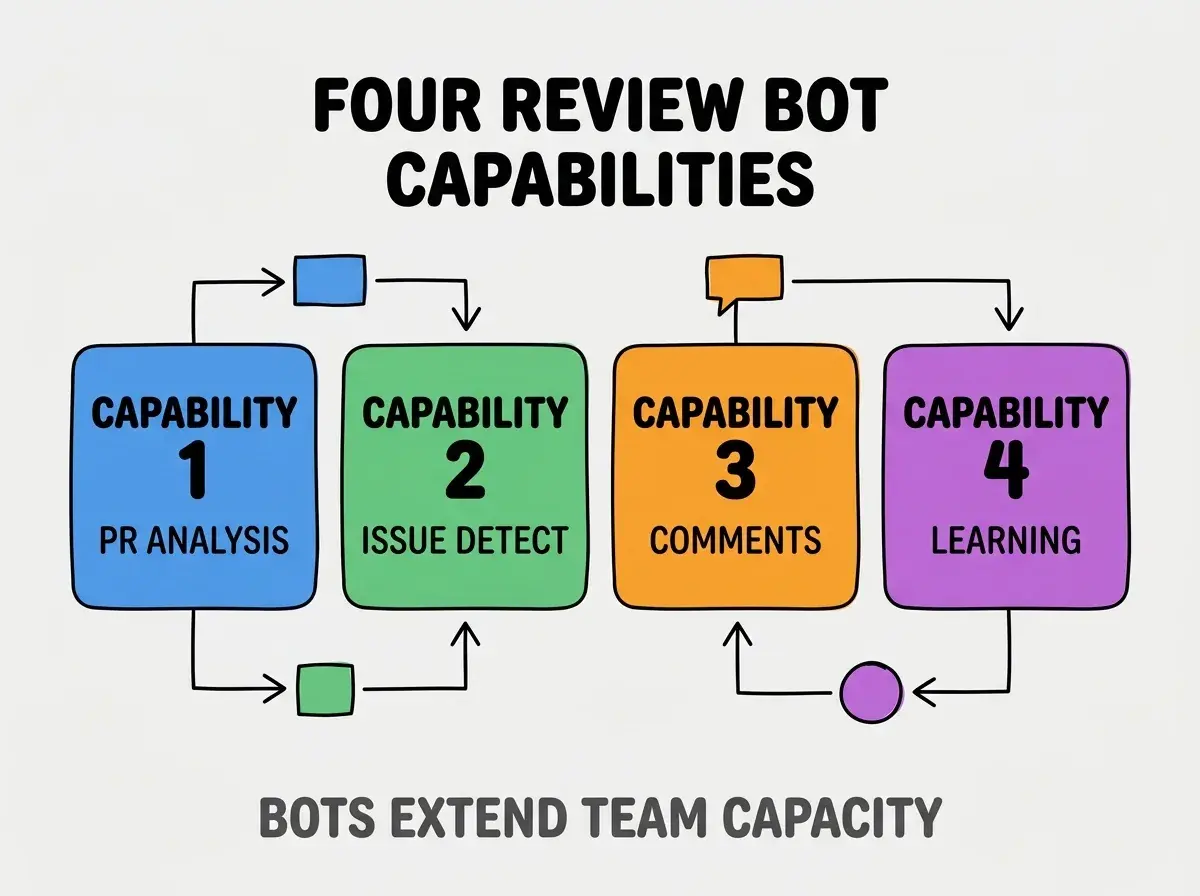
Capability 3, comment generation. Helpful suggestions in PR. Output.
Capability 4, learning from feedback. Improve over time. Adaptation.
How To Implement Each Capability
Four implementation patterns address each capability.
Implementation 1, GitHub webhook plus PR API. Webhook triggers bot; API reads PR.
Browse more build
Read more buildImplementation 2, AI prompt with code context. Provide diff plus surrounding code; AI analyzes.
Implementation 3, GitHub PR review API for comments. Bot posts review with line specific comments.
Implementation 4, feedback collection via reactions. Team reactions to comments; signal usefulness.
What Makes Review Bots Useful
Three patterns separate useful bots from noise generators.
Pattern 1, signal not noise. Bot focuses on real issues; without focus, bot becomes noise.
Pattern 2, helpful suggestions. Suggestions actionable; vague comments useless.
Pattern 3, integrates with workflow. Bot fits PR workflow; without integration, bot ignored.
What Makes Review Bots Sustainable
Three patterns separate sustainable bots from abandoned projects.
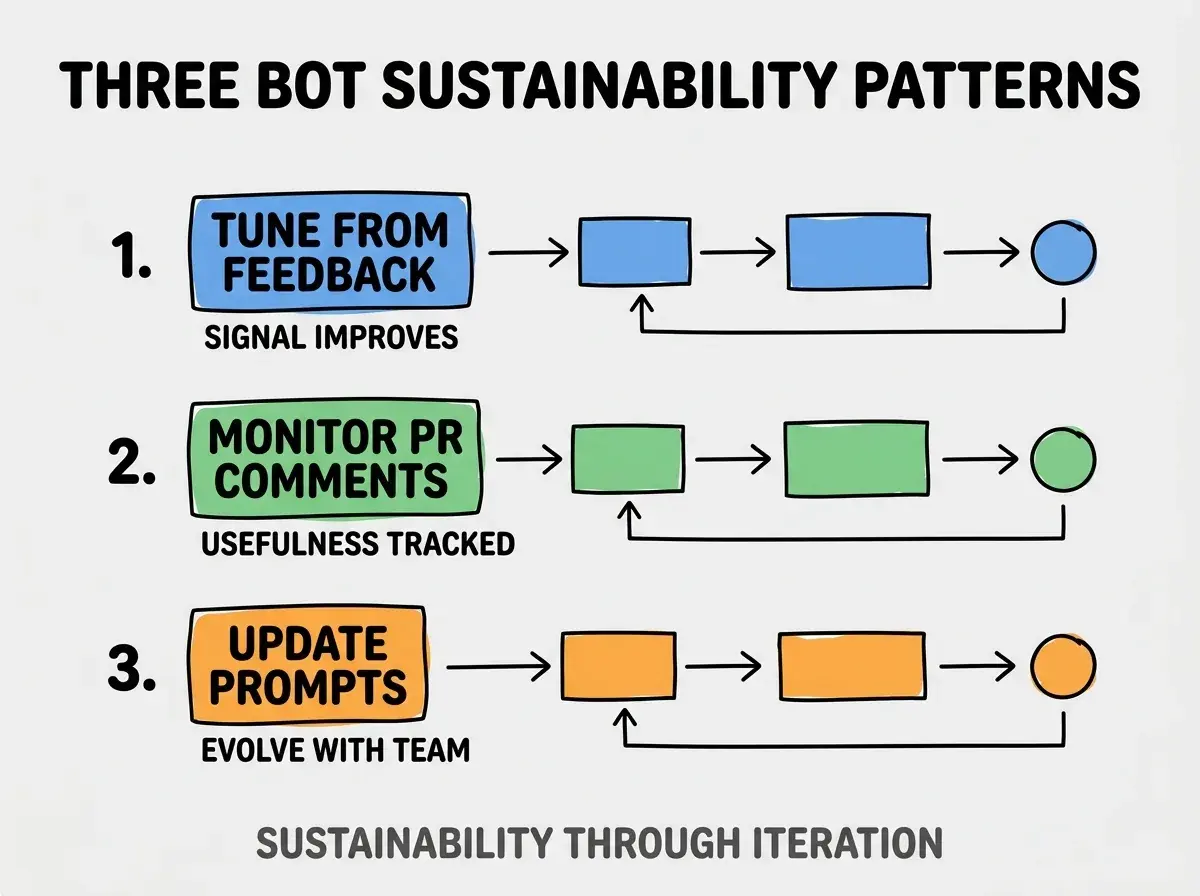
Pattern 1, tune from feedback. Signal improves; tuning compounds.
Pattern 2, monitor PR comments. Usefulness tracked; tracking informs.
Pattern 3, update prompts. Evolve with team; updates compound.
The combination produces sustainable bots. Without these patterns, bots get disabled.
How To Make Bot Comments Helpful
Three patterns help comment quality.
Pattern A, specific line references. Comments tied to lines; specificity matters.
Pattern B, code suggestions. Suggestion blocks; team accepts directly.
Pattern C, severity levels. Critical vs nice to have; severity helps prioritization.
Common Questions About Review Bots
Review bots raise questions worth addressing directly.
The first question is whether to use Claude or GPT or other. All work; Claude often best for code.
The second question is whether to comment on every issue. No; focus on important. Noise destroys.
The third question is whether bots replace human review. No; complement. Human judgment still needed.
The fourth question is how to handle false positives. Tune prompts; ignore patterns over time.
How Bots Affect Team Dynamics
Bots affect team dynamics in compounding ways. Dynamics effects compound across team.
The first compounding effect is reduced reviewer fatigue. Bot catches trivial; humans focus on important.
The second compounding effect is faster feedback. Bot reviews instantly; PR authors get feedback fast.
The third compounding effect is learning. Bot comments educate; team learns from patterns.
The combination produces team dynamics shaped by bot quality. Without quality, bots damage dynamics.
How To Train Team On Bot
Three patterns help team adoption.
Pattern A, document bot capabilities. Team knows what bot does; expectations set.
Pattern B, escalation path for disagreement. Team can override bot; override process clear.
Pattern C, retrospective on bot value. Periodic review; tune based on team.
The combination produces team bot adoption. Without patterns, bot ignored.
The most damaging review bot mistake is making bot comment on everything. Noise destroys signal; team disables bot. The fix is to focus bot on important issues only; nice to haves left to humans. Bots focused on critical thrive; bots commenting on style nits get disabled.
The other mistake is missing the team buy in. Bot imposed without buy in faces resistance.
A third mistake is over indexing on automated reactions. Some patterns need human judgment.
A fourth mistake is treating bot as one off. Bot prompts evolve; ongoing refinement required.
What This Means For You
Building an AI code review bot for your team extends review capacity beyond senior developer time. The four capabilities, implementation patterns, and sustainability approaches produce bots that compound team velocity.
- If you're a senior dev: Bot frees you for important review; investment compounds team output.
- If you're a founder: Bot scales team capability; consider for engineering operations.
- If you're changing careers: AI tooling fluency expected; building bots demonstrates capability.
Browse more build
Read more build