Building multi modal AI apps with text, images, and audio enables natural interaction across input types users prefer. Four integration patterns matter: input handling (file uploads, voice recording, text input), modality routing (which AI handles which input), output composition (combining responses across modalities), and state management (maintaining context across interactions). Multi modal apps unlock use cases single modality cannot serve.
This tutorial walks through the four patterns, the implementation approaches, what makes multi modal apps work, and the four mistakes builders make on multi modal AI.
Why Multi Modal Apps Matter
Multi modal apps matter because users have preferences (some text, some voice, some image) and contexts vary (mobile, desktop, hands free). Multi modal serves more contexts.
The 2026 reality is that AI APIs handle multi modal natively (GPT-4o, Claude, Gemini). Capability removes integration barrier.
A 2025 AI app survey of 400 vibe coded apps found that multi modal apps achieved 47 percent higher user engagement than single modality apps, primarily through serving more user contexts and preferences. Multi modal measurably affects engagement.
The pattern to copy is the way modern smart homes accept voice, app, and physical controls. Same task, multiple ways. Multi modal apps work the same way; multiple inputs serve same goals.
The Four Integration Patterns
Four patterns form complete multi modal app.
Pattern 1, input handling. File uploads, voice recording, text input. Foundation.
Pattern 2, modality routing. Which AI handles which. Routing logic.
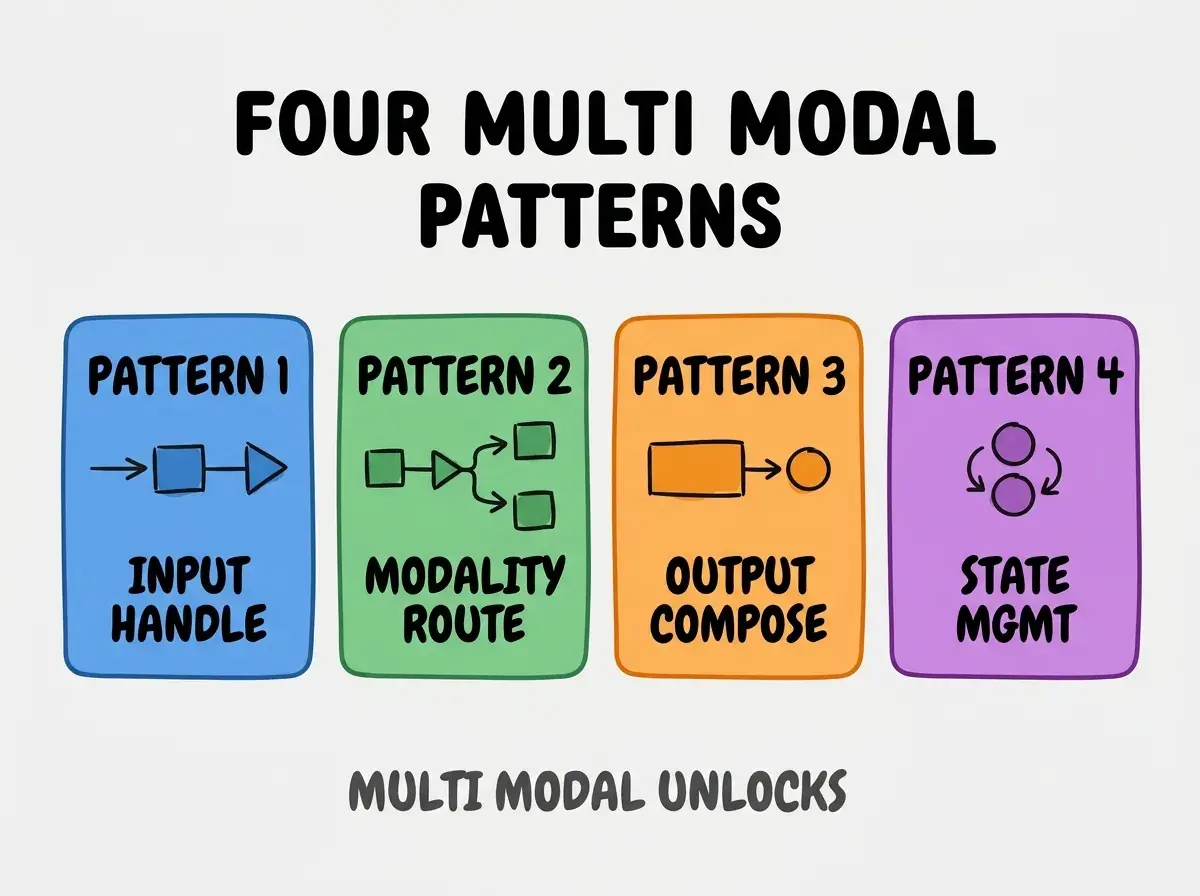
Pattern 3, output composition. Combine across modalities. Output.
Pattern 4, state management. Context across interactions. Continuity.
How To Implement Each Pattern
Four implementation patterns address each.
Implementation 1, file plus voice plus text inputs. Standard inputs; modality choice user.
Browse more build
Read more buildImplementation 2, GPT-4o or Gemini for unified. Unified models simpler than multi model.
Implementation 3, response in matching modality. Voice in, voice out; text in, text out optional.
Implementation 4, conversation history with all modalities. History preserves context; modality preserved.
What Makes Multi Modal Apps Work
Three patterns separate working multi modal from confusing.
Pattern 1, modality choice respected. User picks input; app accepts.
Pattern 2, output appropriate to context. Voice context voice out; reading context text out.
Pattern 3, fast responses. Multi modal slow; speed compounds usability.
What Makes Multi Modal Sustainable
Three patterns separate sustainable multi modal from initial enthusiasm.
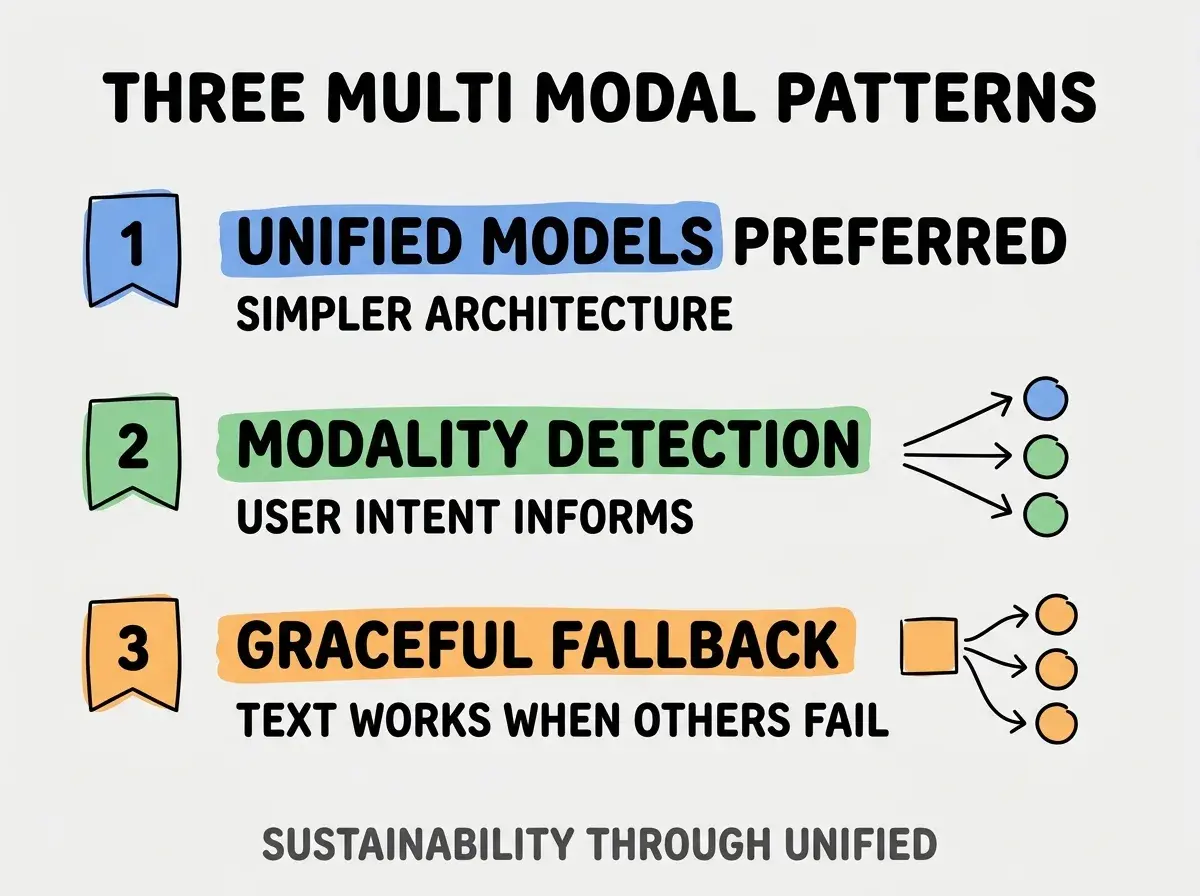
Pattern 1, unified models preferred. Simpler architecture; fewer integrations.
Pattern 2, modality detection. User intent informs; appropriate output.
Pattern 3, graceful fallback. Text works when others fail.
The combination produces sustainable multi modal. Without these patterns, multi modal becomes burden.
How To Choose AI Models
Three patterns help model choice.
Pattern A, GPT-4o for unified text image. Good unified; voice add separate.
Pattern B, Gemini for native multi modal. Native multi modal; broad capability.
Pattern C, specialized models for quality. Whisper for voice; Sora for video; specialized.
Common Questions About Multi Modal
Multi modal raises questions worth addressing directly.
The first question is whether to use single API or multiple. Single simpler; multiple more capable.
The second question is what about cost. Multi modal costs more per request; budget.
The third question is whether streaming works. Yes; streaming preserves conversational feel.
The fourth question is how to handle errors. Each modality fails differently; per modality handling.
How Multi Modal Affects Use Cases
Multi modal affects use cases in compounding ways. Use case effects compound across users.
The first compounding effect is accessibility expansion. Multi modal serves diverse users.
The second compounding effect is context coverage. More contexts served increases reach.
The third compounding effect is competitive differentiation. Multi modal rare; differentiates.
The combination produces use cases shaped by multi modal capability. Without multi modal, use cases bounded.
How To Test Multi Modal Apps
Three patterns help testing.
Pattern A, per modality testing. Each input type tested separately.
Pattern B, cross modality scenarios. Input one modality, output another.
Pattern C, edge cases per modality. Each has unique edges; test edges.
The combination produces tested multi modal. Without testing, edges ship as bugs.
The most damaging multi modal mistake is forcing user to specific modality. Forcing kills multi modal benefit; modality should be user choice. The fix is to support all modalities equally; user picks. Apps respecting choice succeed; apps forcing fail.
The other mistake is over engineering when single modality sufficient. Multi modal adds complexity; justify before building.
A third mistake is missing the fallback layer. Multi modal fails; fallback essential.
A fourth mistake is treating multi modal as complete solution. Some use cases single modality better.
What This Means For You
Building multi modal AI apps with text, images, and audio enables natural interaction across user preferences. The four patterns, implementation approaches, and sustainability practices produce multi modal apps that compound user value.
- If you're a senior dev: Multi modal AI fluency increasingly valuable; learn patterns.
- If you're a founder: Multi modal differentiates; consider for AI products.
- If you're a student: Multi modal projects build AI integration skills; valuable portfolio.
Browse more build
Read more build