The best vibe coding tool stack for marketers focuses on shipping landing pages, A/B tests, analytics dashboards, and email tools without engineering bottlenecks. The complete stack includes Lovable or v0 for UI building, Vercel for hosting, Posthog or GA4 for analytics, Resend for email, and Cursor for code adjustments. Total monthly cost ranges from $30-80 for marketing teams of 1-3 people.
This checklist walks through the five stack categories for marketers, the specific tools for each, what each enables, and the four mistakes marketers make when choosing tools.
Why Tool Stack Matters For Marketing Vibe Coders
The tool stack for marketing vibe coders matters because marketers ship more campaigns than engineers can support. AI tools remove the engineering bottleneck; the right stack enables marketing autonomy.
The 2026 reality is that marketers shipping their own pages and tools dramatically outperform marketers waiting for engineering. Bottleneck removal compounds campaign output.
A 2025 marketing operations survey of 400 marketing teams found that teams using vibe coding tools shipped 3x more landing pages and 5x more experiments than teams dependent on engineering. Tool autonomy produces measurable marketing output gains.
The pattern to copy is the way wedding photographers built independent businesses without studio infrastructure. Tools enabled professional output without professional support staff. Marketing vibe coding works the same way; tools enable engineering output without engineering teams.
The Five Stack Categories For Marketers
Five categories form the marketing vibe coding stack.
Category 1, UI building tool. Where landing pages and tools get built visually. Lovable or v0 handle marketing UIs without code knowledge.
Category 2, hosting platform. Where pages live publicly. Vercel free or pro tier handles marketing scale.
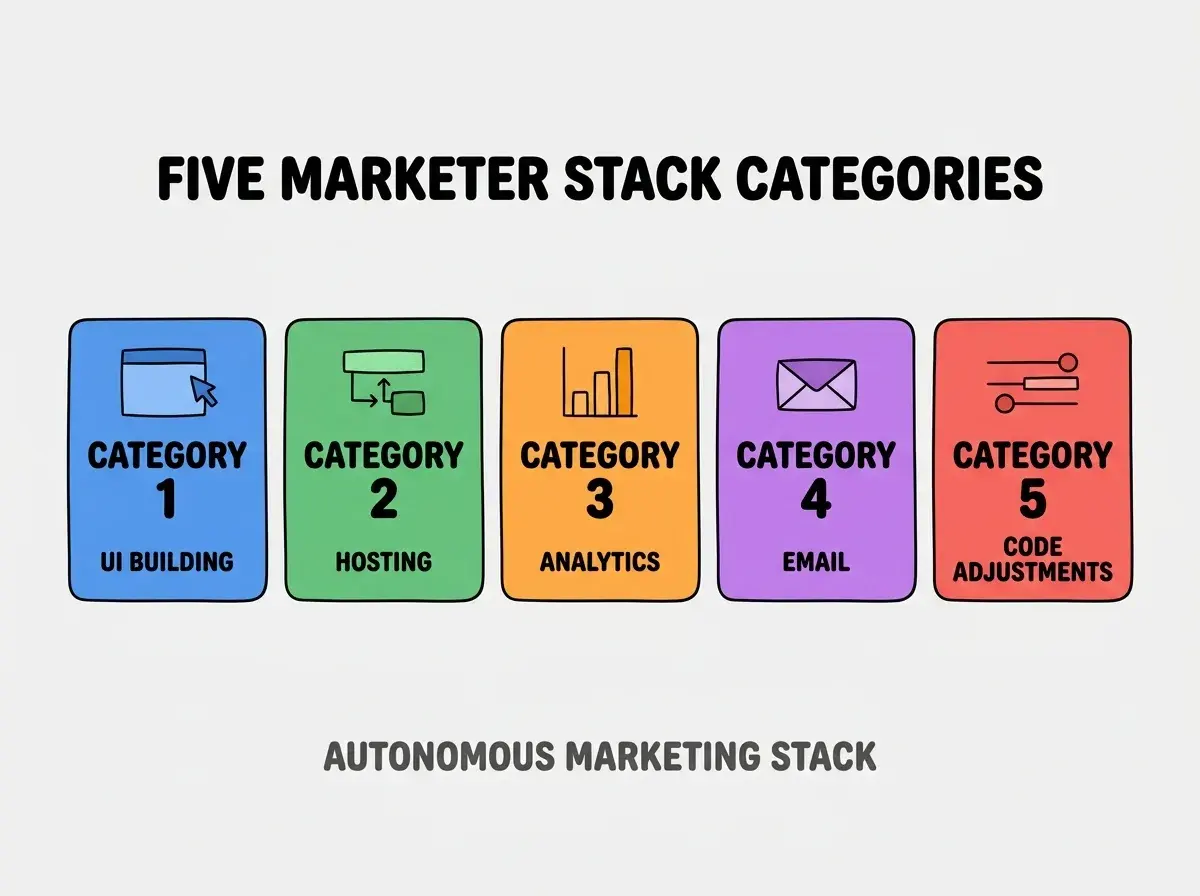
Category 3, analytics platform. Where conversion data lives. Posthog or Google Analytics 4 capture marketing metrics.
Category 4, email service. Where transactional and marketing emails come from. Resend or Postmark handle email reliably.
Category 5, code adjustments tool. Where marketers tweak code from AI tools. Cursor or VS Code with AI extensions enable refinement.
What Each Tool Enables For Marketing
Five tool capabilities shape what marketers can ship.
Lovable enables drag and drop landing page building with database backed forms. No code required for typical marketing pages.
Browse more tools articles
Read more toolsv0 enables component generation that integrates with existing Next.js sites. Best when marketing site shares stack with main product.
Vercel enables instant deployment with custom domains and preview URLs. Preview URLs help stakeholder review before launch.
Posthog enables event tracking, funnels, A/B tests, and session recording in single platform. Marketing operations consolidated.
Resend enables transactional emails with React based templates. Designer and marketer friendly email building.
How To Combine Tools For Common Marketing Tasks
Three combination patterns handle common marketing workflows.
Pattern 1, landing page launch with conversion tracking. Build in Lovable, deploy to Vercel, add Posthog tracking, send confirmations via Resend.
Pattern 2, A/B test execution. Posthog feature flags split traffic; both variants built in Lovable; results in Posthog analytics.
Pattern 3, email campaign with custom landing. Resend sends emails with custom URLs; Vercel hosts personalized landing pages; Posthog tracks campaign attribution.
What Makes Marketing Stacks Sustainable
Three patterns separate sustainable marketing stacks from temporary tool experiments.
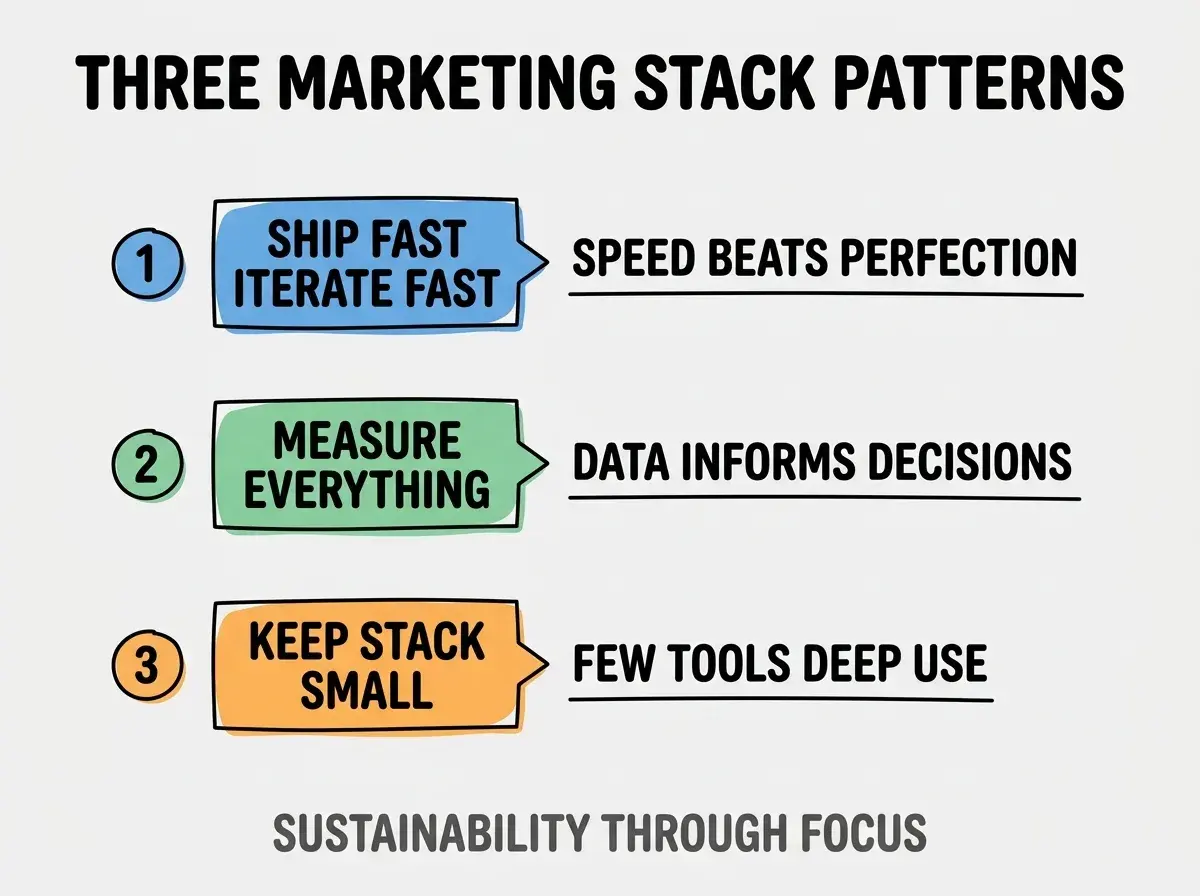
Pattern 1, ship fast iterate fast. Marketing learns from market response; speed to market beats perfection.
Pattern 2, measure everything. Conversion tracking, funnel analysis, A/B test results all matter for marketing decisions.
Pattern 3, keep stack small. Small stack used deeply beats large stack used shallowly. Few tools, deep knowledge.
The combination produces stacks that compound marketing output. Without these patterns, tool overhead dominates work.
How To Add Marketing Specific Tools
Three patterns extend the basic stack for advanced marketing needs.
Pattern A, CMS for content marketing. Add Sanity or Contentful when content volume justifies CMS overhead.
Pattern B, marketing automation for nurture. Add Customer.io or HubSpot for sequence based nurture campaigns.
Pattern C, attribution platform for paid spend. Add Triple Whale or similar when paid ad spend justifies attribution complexity.
The combination scales marketing capability with marketing budget. Without scaling, marketing hits ceiling at basic stack capacity.
Common Questions About Marketing Tool Stacks
Marketing tool stacks raise questions worth addressing directly.
The first question is whether to use marketing specific tools or general purpose ones. Mix both; general purpose for unique work, marketing specific for repetitive work.
The second question is whether marketers need code skills with vibe coding stacks. Light code skills help; deep skills not required. Tools handle most work; code skills handle edge cases.
The third question is whether to use the same stack as engineering. Sometimes yes (consistency), sometimes no (marketing needs differ). Decide per organization.
The fourth question is how to handle stakeholder review. Vercel preview URLs solve this; share preview URL for review, deploy on approval.
How Marketing Stacks Affect Campaign Output
Marketing stacks affect campaign output in compounding ways. Output effects compound across quarters.
The first compounding effect is campaign volume. Faster shipping enables more campaigns; more campaigns produce more learning.
The second compounding effect is experiment velocity. A/B test cycles compound faster with vibe coding stacks; faster cycles produce faster learning.
The third compounding effect is creative range. Tools that handle implementation enable creative ideas previously blocked by engineering availability.
The combination produces marketing trajectories that compound across years. Without stack autonomy, marketing creativity stays bottlenecked.
How To Train Marketing Teams On The Stack
Three training patterns help marketing teams adopt vibe coding stacks.
Pattern A, pair junior marketer with technical marketer. Pair training accelerates learning faster than solo learning.
Pattern B, ship one campaign per week as practice. Practice produces skill; weekly cadence prevents skill atrophy.
Pattern C, build internal documentation as you learn. Team documentation captures knowledge; knowledge compounds across team members.
The combination produces marketing teams capable of stack autonomy. Without training, individual marketers learn while team capability stays low.
The most damaging marketing stack mistake is choosing tools that need engineering oversight. Tools that require engineers to deploy or fix defeat the purpose of marketing autonomy. The fix is to choose tools designed for marketers; deployment, debugging, and iteration handled by marketers themselves. Marketing teams that achieve autonomy ship 3-5x more than teams dependent on engineering.
The other mistake is over engineering simple landing pages. Marketing pages do not need application architecture; simple pages with conversion tracking suffice.
A third mistake is missing the analytics integration. Pages without analytics produce no learning; analytics must be standard from page one.
A fourth mistake is treating vibe coding as one off rather than ongoing capability. Initial wins produce excitement; sustained adoption requires team training.
What This Means For You
The best vibe coding tool stack for marketers enables campaign autonomy that compounds output. The five categories, tool capabilities, and adoption patterns produce framework for marketing tool selection.
- If you're a marketer: Start with Lovable plus Vercel plus Posthog; ship one landing page this week to validate the workflow.
Browse more tools articles
Read more tools