The best tool stack for designers vibe coding in 2026 bridges design tools and AI coding tools. Four components matter: design tool (Figma, Sketch, or Penpot for design files), AI coding tool with design awareness (Claude Code, Cursor, or v0 understanding design context), bridge tools (Figma to code generators, design token sync), and prototyping tools (Framer, Webflow, or Subframe for interactive prototypes). Designers who add code to design fluency unlock new value commercial design alone cannot match.
This piece walks through the four stack components, the implementation patterns, what makes designer stacks sustainable, and the four mistakes designers make on coding tool stacks.
Why Designer Stacks Differ
Designer stacks differ because designers approach code from design tools, not editors. Design first workflow shapes tool selection; engineer first stacks miss designer needs.
The 2026 reality is that designer to code workflows have matured substantially. Maturation makes designer coding viable career path.
A 2025 designer career study of 600 designers who learned vibe coding found that designers with optimized stacks shipped 67 percent more product features than designers using engineer focused tools, primarily through design first workflow that matches existing skills. Stack matters for designer adoption.
The pattern to copy is the way illustrators chose between Procreate and Photoshop. Both produce illustrations; workflows differ. Designer coding stack benefits from similar workflow matching.
The Four Stack Components
Four components form complete designer vibe coding stack.
Component 1, design tool. Figma dominates; Sketch persists; Penpot open source. Design source of truth.
Component 2, AI coding tool with design awareness. Claude Code, Cursor, v0 all understand design context. Awareness matters.
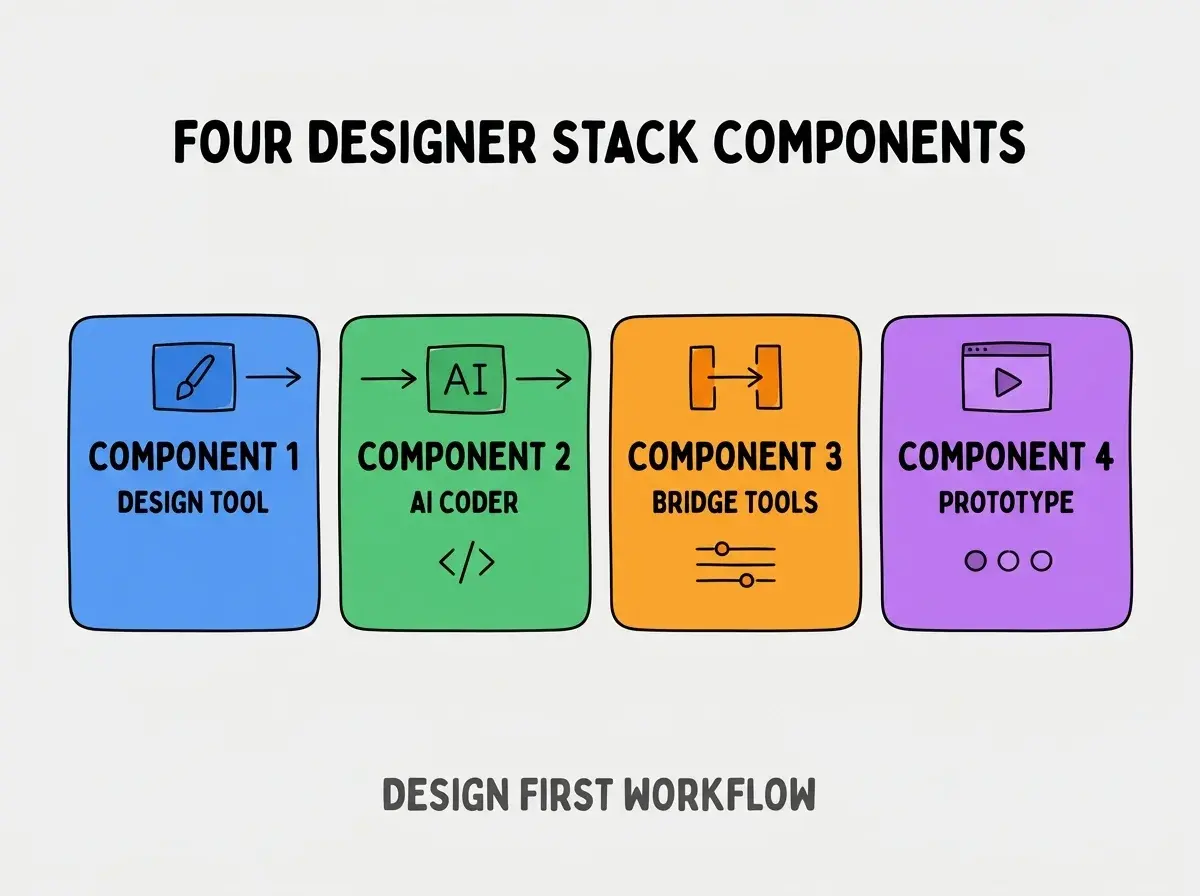
Component 3, bridge tools. Figma to code, design token sync. Bridges connect design and code.
Component 4, prototyping tools. Framer, Webflow, Subframe. Interactive prototypes before production code.
How To Implement Each Component
Four implementation patterns address each component.
Implementation 1, Figma plus components library. Component library shared with code; library compounds value.
Browse more tools
Read more toolsImplementation 2, AI coding tool selected for design integration. v0 strongest design integration; Cursor flexible; Claude Code terminal.
Implementation 3, design token sync via tools. Tokens Studio plus Style Dictionary; tokens flow design to code.
Implementation 4, Framer for prototypes. Framer prototype to production capable; reduces handoff.
What Makes Designer Stacks Sustainable
Three patterns separate sustainable stacks from initial enthusiasm.
Pattern 1, design system maintained. Design system shared across design and code; without system, drift.
Pattern 2, regular tool evaluation. Tools evolve; quarterly evaluation prevents falling behind.
Pattern 3, learning time scheduled. Designer coding requires learning; scheduled time enables.
What Makes Designer Coding Effective
Three patterns separate effective designer coding from frustrated abandonment.
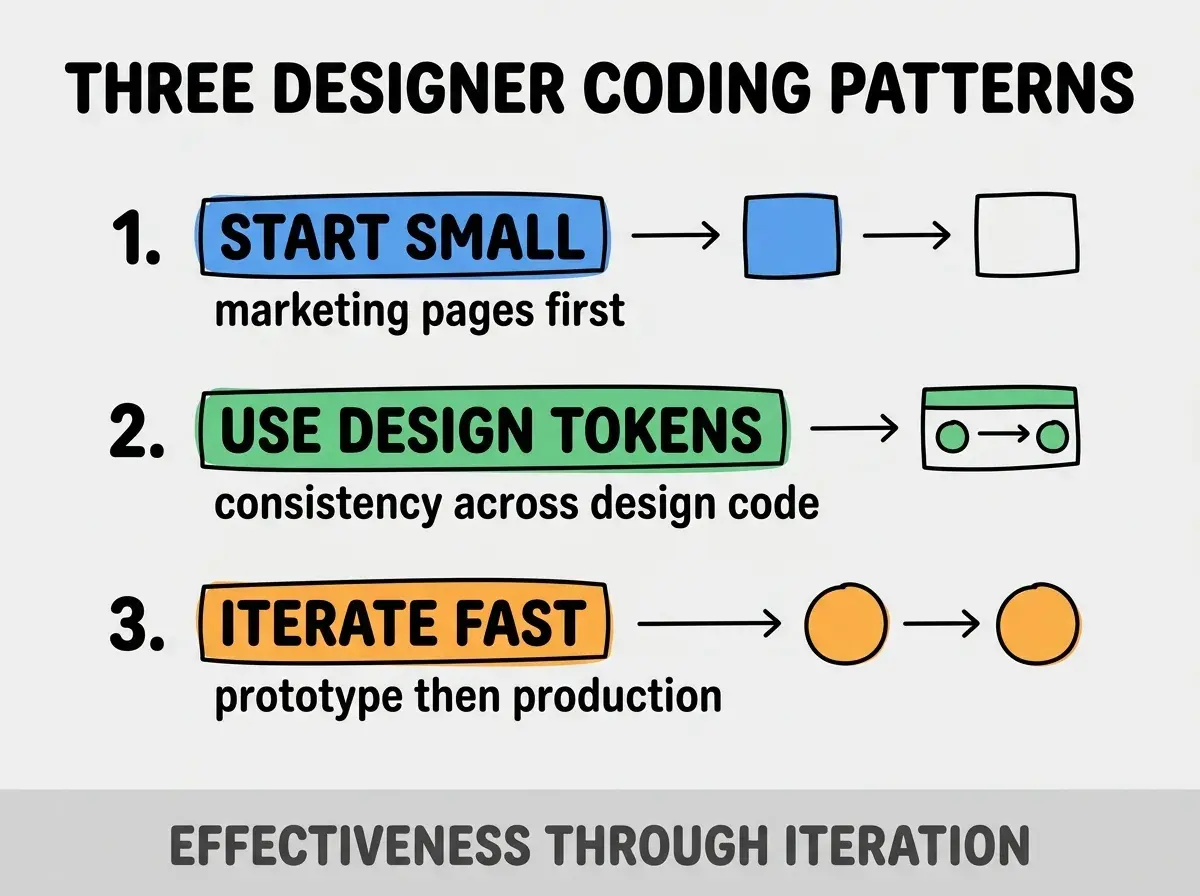
Pattern 1, start small. Marketing pages first; complex apps later. Progression builds confidence.
Pattern 2, use design tokens. Tokens enable consistency; consistency compounds.
Pattern 3, iterate fast. Prototype, refine, ship. Iteration compounds skill.
The combination produces effective designer coding. Without these patterns, frustration accumulates.
How To Choose AI Coding Tool For Design
Three patterns help tool choice.
Pattern A, evaluate v0 for visual generation. v0 generates from descriptions; designer friendly.
Pattern B, try Cursor with design context. Cursor flexible; design context supported.
Pattern C, try Subframe for design components. Subframe component design with code generation.
Common Questions About Designer Stacks
Designer stacks raise questions worth addressing directly.
The first question is whether to learn React or build with no code. Both viable; React opens more options. No code faster to start.
The second question is what total stack cost reasonable. $50-200 monthly typical; varies by tools.
The third question is whether to abandon Figma. No; Figma source of truth. Stack adds to Figma.
The fourth question is whether to learn JavaScript deeply. Helpful but not required initially. Tools handle some complexity.
How Designer Coding Affects Career
Designer coding affects career in compounding ways. Career effects compound across years.
The first compounding effect is product velocity. Designer to code shortens cycles; cycles compound.
The second compounding effect is opportunity expansion. Coding designers in demand; opportunities compound.
The third compounding effect is independence. Designers can ship without engineers; independence compounds.
The combination produces designer careers shaped by coding skill addition. Without coding, careers bounded by handoff to engineers.
How To Build Coding Confidence
Three patterns help confidence.
Pattern A, ship completed projects. Completion builds confidence; shipping compounds.
Pattern B, share work publicly. Public sharing reveals competence; reveals build confidence.
Pattern C, learn from designer coders. Designer coders share patterns; learning accelerates.
The combination builds coding confidence. Without confidence, designer coding stalls.
The most damaging designer stack mistake is using engineer focused tools without design integration. Engineer tools optimize for engineer workflow; designer workflow different. The fix is to choose tools with design integration; v0, Subframe, design aware Cursor. Designers using engineer tools struggle; designers using design integrated tools thrive.
The other mistake is over investing in tools before learning. Tools matter; skill matters more. Skill first, then tools.
A third mistake is missing the prototype to production bridge. Prototypes matter but production matters; bridge essential.
A fourth mistake is treating coding as separate from design. Coding extends design; integration multiplies value.
What This Means For You
The best tool stack for designers vibe coding in 2026 bridges design and code through design first workflow. The four components, implementation patterns, and sustainability approaches produce stacks that compound designer career through coding addition.
- If you're a designer: Coding adds career options; investment compounds across decade.
- If you're a founder: Designer coders ship faster; hiring designers with coding fluency accelerates.
- If you're changing careers: Designer to designer coder achievable transition; bridges design background.
Browse more tools
Read more tools