The best tool stack for ecommerce builders vibe coding handles store building, payments, inventory, and customer management. Four stack components matter: ecommerce platform (Shopify or custom Stripe based), AI coding tools for customizations (Cursor for theme work), inventory management (built in or specialized), and customer service tools (Help Scout, Zendesk, or simple email). Total monthly cost typically $100-$500. Right stack scales store growth; wrong stack constrains.
This piece walks through the four components, the implementation patterns, what makes ecommerce stacks sustainable, and the four mistakes builders make on ecommerce stacks.
Why Ecommerce Stacks Differ
Ecommerce stacks differ because ecommerce involves payments, inventory, taxes, shipping, customer service. Pure SaaS stacks miss commerce specifics.
The 2026 reality is that ecommerce platforms (Shopify, custom) plus AI coding enable indie ecommerce. Combination accessible.
A 2025 ecommerce survey of 200 vibe coded stores found that stores with optimized tool stacks achieved 41 percent higher conversion rates than stores with ad hoc tools, primarily through tool stack enabling smooth customer experience. Stack measurably affects revenue.
The pattern to copy is the way independent retailers select POS, inventory, payment systems carefully. Each system serves specific need; coordination matters. Same patterns apply to ecommerce; integration matters.
The Four Stack Components
Four components form complete ecommerce stack.
Component 1, ecommerce platform. Shopify or custom Stripe. Foundation.
Component 2, AI coding tools. Cursor for theme work. Customization.
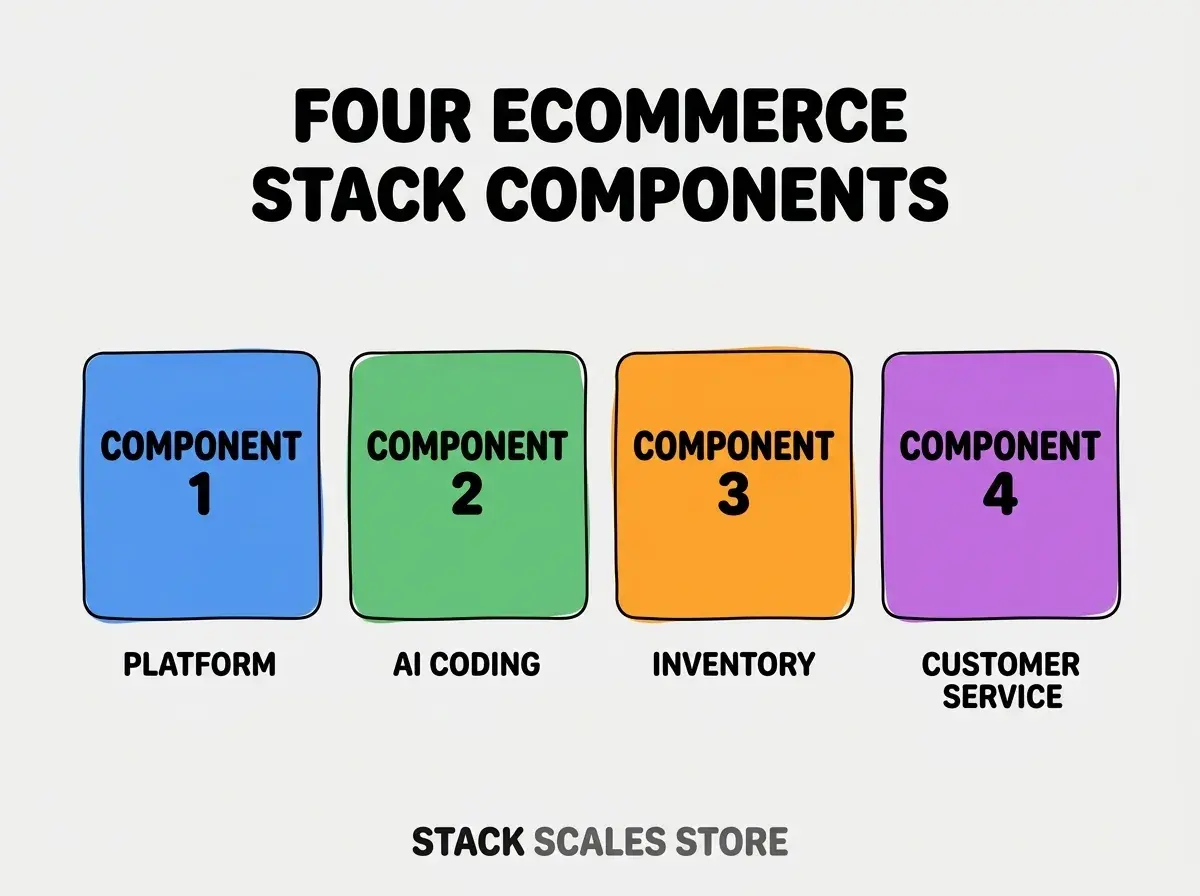
Component 3, inventory management. Built in or specialized. Operations.
Component 4, customer service tools. Help Scout, email. Support.
How To Implement Each Component
Four implementation patterns address each component.
Implementation 1, Shopify for fast start. Shopify quickest; custom for control.
Browse more tools
Read more toolsImplementation 2, Cursor for Liquid theme. Liquid Shopify language; AI assists.
Implementation 3, Shopify inventory built in. Shopify handles; specialized for complex.
Implementation 4, Shopify Inbox or Help Scout. Shopify Inbox simple; Help Scout scaled.
What Makes Ecommerce Stacks Sustainable
Three patterns separate sustainable stacks from operational nightmare.
Pattern 1, integration depth. Tools talk; without integration, manual work compounds.
Pattern 2, automation of routine. Order fulfillment, customer service automated.
Pattern 3, regular stack review. Stack evolves with store growth.
What Makes Ecommerce Stacks Effective
Three patterns separate effective stacks from theatrical.
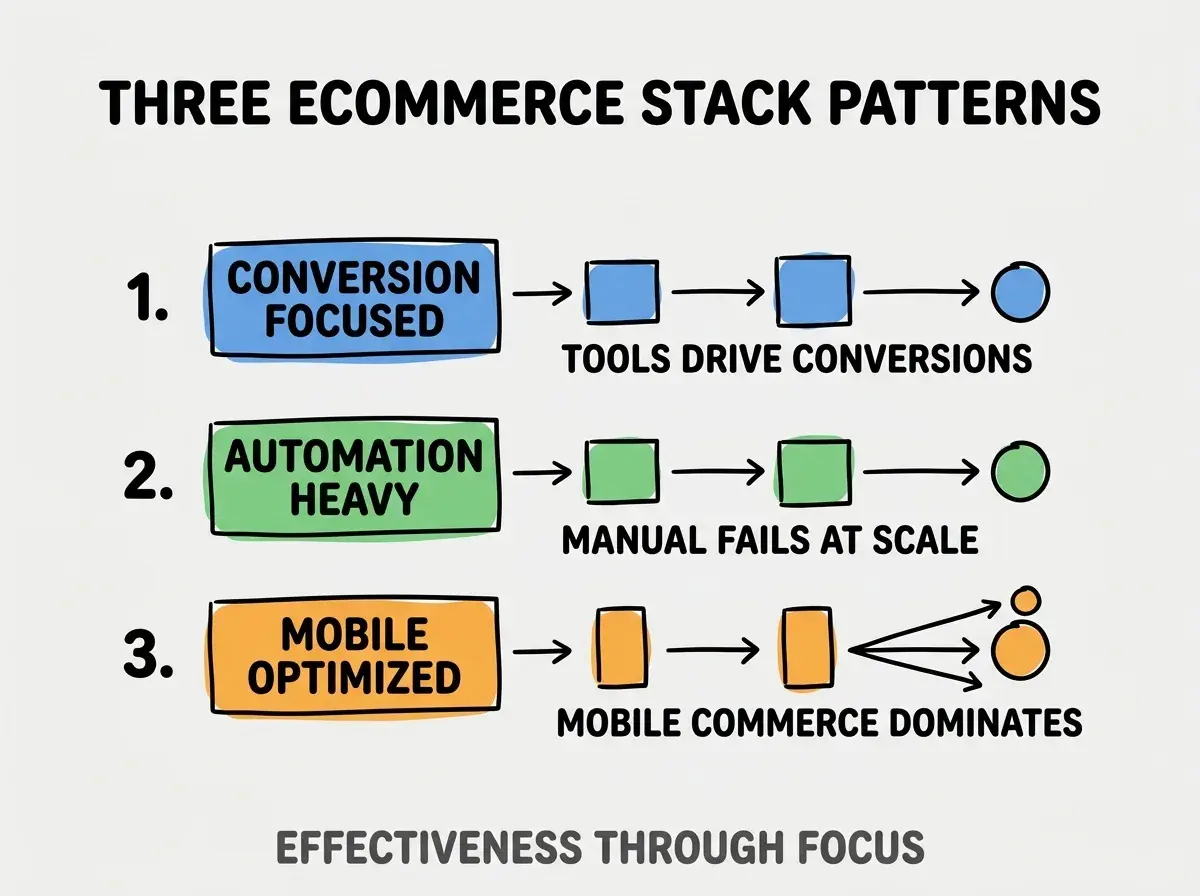
Pattern 1, conversion focused. Tools drive conversions; not just exist.
Pattern 2, automation heavy. Manual fails at scale; automation compounds.
Pattern 3, mobile optimized. Mobile commerce dominates; mobile matters.
The combination produces effective ecommerce stacks. Without these patterns, stacks become burden.
How To Choose Ecommerce Platform
Three patterns help platform choice.
Pattern A, Shopify for ease. Shopify accessible; ecosystem strong.
Pattern B, custom Stripe for control. Custom flexible; more work.
Pattern C, headless commerce for hybrid. Modern approach; flexibility plus tooling.
Common Questions About Ecommerce Stacks
Ecommerce stacks raise questions worth addressing directly.
The first question is whether Shopify or custom. Shopify for most; custom for unusual needs.
The second question is what about Amazon. Marketplace separate; complement own store.
The third question is whether to use BigCommerce or WooCommerce. Both viable; depends on needs.
The fourth question is how to handle international. Shopify supports; custom requires work.
How Ecommerce Stack Affects Revenue
Stack affects revenue in compounding ways. Revenue effects compound across orders.
The first compounding effect is conversion rate. Better stack converts better.
The second compounding effect is operational efficiency. Automation reduces per order cost.
The third compounding effect is scaling capability. Stack enables or constrains scale.
The combination produces revenue shaped by stack. Without thoughtful stack, revenue bounded.
How To Migrate Between Platforms
Three patterns help platform migration.
Pattern A, data export carefully. Data preservation matters.
Pattern B, parallel run during cutover. Both stores serve; gradual.
Pattern C, customer communication clear. Migration visible to customers; communicate.
The combination enables platform migration. Without patterns, migration risky.
The most damaging ecommerce stack mistake is over investing in features before validating product market fit. Complex stack on unvalidated product wastes money. The fix is to start simple (Shopify default); add complexity as scale justifies. Builders who validate first scale efficiently; builders who over invest before validation often abandon overinvested stack.
The other mistake is missing the mobile optimization. Mobile commerce 70 percent; missing wastes traffic.
A third mistake is treating ecommerce as web SaaS. Commerce specifics matter; treat seriously.
A fourth mistake is over indexing on tools without marketing. Tools enable; marketing drives traffic.
Dig deeper
A few hand-picked sources if you want to go further.
What This Means For You
The best tool stack for ecommerce builders enables store building plus operations efficiently. The four components, implementation patterns, and sustainability approaches produce stacks that compound store revenue.
- If you're an indie hacker: Ecommerce viable indie business; right stack enables.
- If you're a founder: Ecommerce stack informs product strategy; commerce specifics matter.
- If you're changing careers: Ecommerce expertise valuable; operations focus differentiates.
Browse more tools
Read more tools