The best tool stack for digital agencies vibe coding handles many concurrent client projects without coordination chaos. Four agency stack components matter: AI coding tools (team licenses, project isolation), client management (Notion, Linear per client workspace), shared infrastructure (template repos, deployment templates), and time tracking and billing (Harvest, Toggl plus Stripe). Total monthly cost typically $300-$1000 depending on team size. Agencies with right stack run more clients with same team.
This piece walks through the four components, the implementation patterns, what makes agency stacks sustainable, and the four mistakes agencies make on tool stacks.
Why Agency Stacks Differ
Agency stacks differ because agencies juggle 5-20 concurrent client projects while solo or small team stacks handle 1-3. Concurrency requires different stack design.
The 2026 reality is that agency tooling matured to handle multi project coordination. Maturation enables agency scale.
A 2025 agency operations survey of 200 vibe coding agencies found that agencies with optimized stacks managed 2.4x more concurrent projects per developer than agencies with ad hoc tools, primarily through stack enabling project isolation and client coordination. Stack measurably affects agency capacity.
The pattern to copy is the way professional law firms manage many concurrent clients with case management software. Each client isolated; firm scales. Same patterns apply to agencies; isolation enables scale.
The Four Agency Stack Components
Four components form complete agency stack.
Component 1, AI coding tools with team licenses. Cursor Business, Claude Code Team. Team coordination.
Component 2, client management. Notion or Linear per client workspace. Isolation.
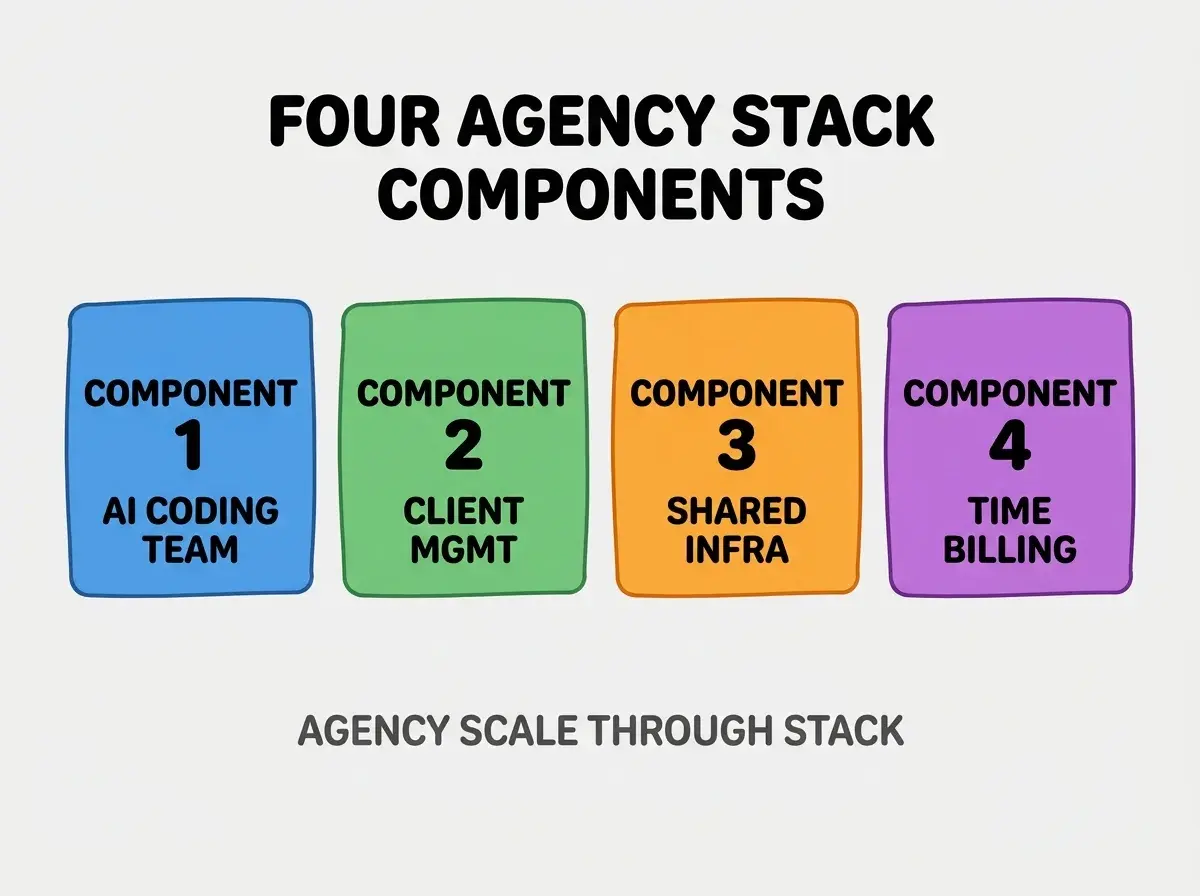
Component 3, shared infrastructure. Template repos, deployment templates. Reuse.
Component 4, time tracking and billing. Harvest plus Stripe. Revenue.
How To Implement Each Component
Four implementation patterns address each component.
Implementation 1, Cursor Business for AI. Team license; admin features for agency.
Browse more tools
Read more toolsImplementation 2, Linear projects per client. Each client own project; isolation.
Implementation 3, GitHub template repos. Templates accelerate new client setup.
Implementation 4, Harvest plus Stripe Invoicing. Time tracked; billed via Stripe.
What Makes Agency Stacks Sustainable
Three patterns separate sustainable stacks from constant churn.
Pattern 1, project isolation. Each client isolated; no cross contamination.
Pattern 2, template reuse. Templates compound across clients.
Pattern 3, automation of billing. Manual billing fails at agency scale.
What Makes Agency Stacks Effective
Three patterns separate effective stacks from theatrical.
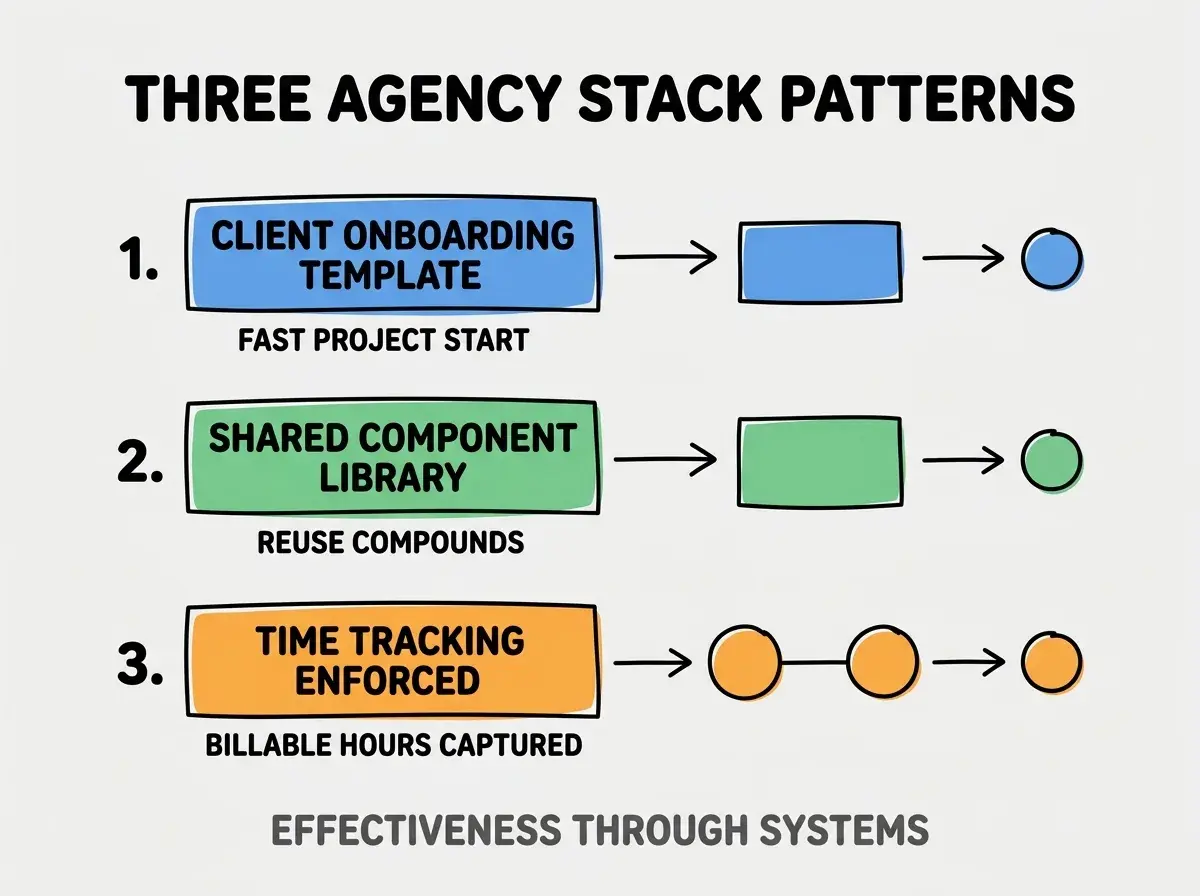
Pattern 1, client onboarding template. Fast project start; templates accelerate.
Pattern 2, shared component library. Reuse compounds; library matters.
Pattern 3, time tracking enforced. Billable hours captured; without tracking, revenue lost.
The combination produces effective agency stacks. Without these patterns, agencies struggle to scale.
How To Handle Multiple Clients
Three patterns help client juggling.
Pattern A, dedicated workspace per client. Slack channels, Notion pages, Linear projects.
Pattern B, context switching protocols. Routines that aid switching.
Pattern C, shared documentation patterns. Documentation across clients consistent.
Common Questions About Agency Stacks
Agency stacks raise questions worth addressing directly.
The first question is whether to use one tool per client or shared. Shared with isolation; per client tools fragment.
The second question is what total cost reasonable. $300-1000 per developer monthly typical at agency.
The third question is whether to use Slack Connect for clients. Yes; simpler than separate workspaces.
The fourth question is how to handle client tool requirements. Use client tools when required; standardize own.
How Stack Affects Agency Margins
Stack affects agency margins in compounding ways. Margin effects compound across projects.
The first compounding effect is billable utilization. Better tools enable higher utilization.
The second compounding effect is project velocity. Faster projects more revenue per project.
The third compounding effect is client satisfaction. Smooth delivery retains clients.
The combination produces margins shaped by stack. Without thoughtful stack, margins bounded.
How To Onboard New Clients To Workflow
Three patterns help onboarding.
Pattern A, kickoff meeting with workflow walkthrough. Set expectations early.
Pattern B, written workflow documentation. Documentation enables self serve.
Pattern C, regular check ins. Touch points maintain relationship.
The combination produces effective client onboarding. Without onboarding, friction surfaces.
The most damaging agency stack mistake is treating each client as separate project with separate stack. Tool fragmentation kills agency margins; standardized stack with client isolation enables scale. The fix is to standardize stack while isolating client work; standardization compounds, isolation prevents contamination. Agencies who standardize scale; agencies who fragment max out at small client counts.
The other mistake is missing the time tracking enforcement. Untracked hours unbilled.
A third mistake is over investing in tools per client. Tools should serve all clients; per client tools waste.
A fourth mistake is treating stack as static. Stack evolves with agency; ongoing evaluation matters.
What This Means For You
The best tool stack for digital agencies enables multi client coordination at scale. The four components, implementation patterns, and sustainability approaches produce stacks that compound agency capacity.
- If you're a senior dev: Agency stack expertise enables agency career; learn patterns.
- If you're a founder: Agency stack inform agency starting; templates accelerate launch.
- If you're an indie hacker: Agency style multi project skills compound; useful for serial projects.
Browse more tools
Read more tools