Automated maintenance scripts with AI assistance handle routine maintenance tasks that consume disproportionate time when done manually. Four script categories matter: cleanup scripts (old data, expired sessions, log rotation), backup scripts (database backups, file backups, verification), monitoring scripts (health checks, alerting, status reports), and dependency update scripts (security updates, version bumps, compatibility checks). AI accelerates script creation 5-10x compared to writing from scratch.
This piece walks through the four script categories, the implementation patterns, what makes maintenance automation sustainable, and the four mistakes builders make on automated maintenance.
Why Automated Maintenance Matters
Automated maintenance matters because manual maintenance steals time from features and gets neglected when busy. Automation reclaims time; reclaimed time compounds.
The 2026 reality is that AI generates maintenance scripts that previously required senior developer time. Generation democratizes automation.
A 2025 indie builder operations survey of 600 vibe coders found that builders with comprehensive automation scripts spent 71 percent less time on maintenance than builders relying on manual processes, primarily through AI accelerated script creation removing automation barriers. Automation measurably affects time allocation.
The pattern to copy is the way restaurants automate inventory ordering. Manual inventory steals time; automated reorders enable focus on cooking. Same patterns apply to app maintenance; automation enables focus on features.
The Four Script Categories
Four categories form complete maintenance automation.
Category 1, cleanup scripts. Old data, expired sessions, log rotation. Cleanup prevents bloat.
Category 2, backup scripts. Database, files, configuration. Backups enable recovery.
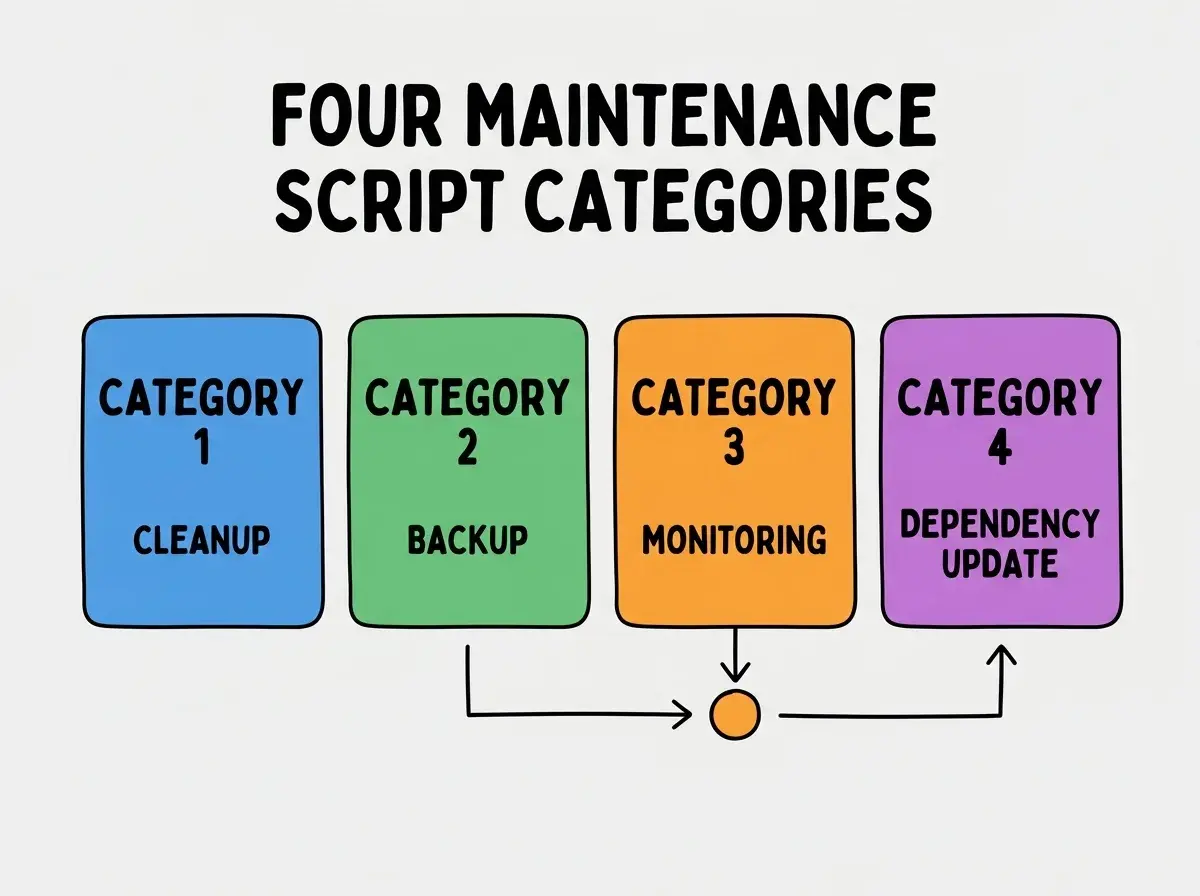
Category 3, monitoring scripts. Health checks, alerting, status reports. Monitoring catches issues early.
Category 4, dependency updates. Security updates, version bumps. Updates prevent vulnerabilities.
How To Implement Each Category
Four implementation patterns address each category.
Implementation 1, cleanup via cron jobs. Scheduled cleanup; cron standard tool. Daily or weekly cadence.
Browse more grow
Read more growImplementation 2, backup with verification. Backup scripts plus verification scripts. Verification proves backup useful.
Implementation 3, monitoring with alerts. Health checks plus notification on failure. Alerts route to phone or Slack.
Implementation 4, Dependabot for dependencies. Automated dependency updates; reviews and merges automated.
What Makes Automation Sustainable
Three patterns separate sustainable automation from script graveyards.
Pattern 1, scripts documented. Documentation enables future you; without docs, scripts become mysteries.
Pattern 2, scripts tested. Tested scripts trustworthy; untested scripts risky.
Pattern 3, scripts monitored. Failures alert; without monitoring, silent failures.
What Makes Maintenance Scripts Effective
Three patterns separate effective scripts from theatrical automation.
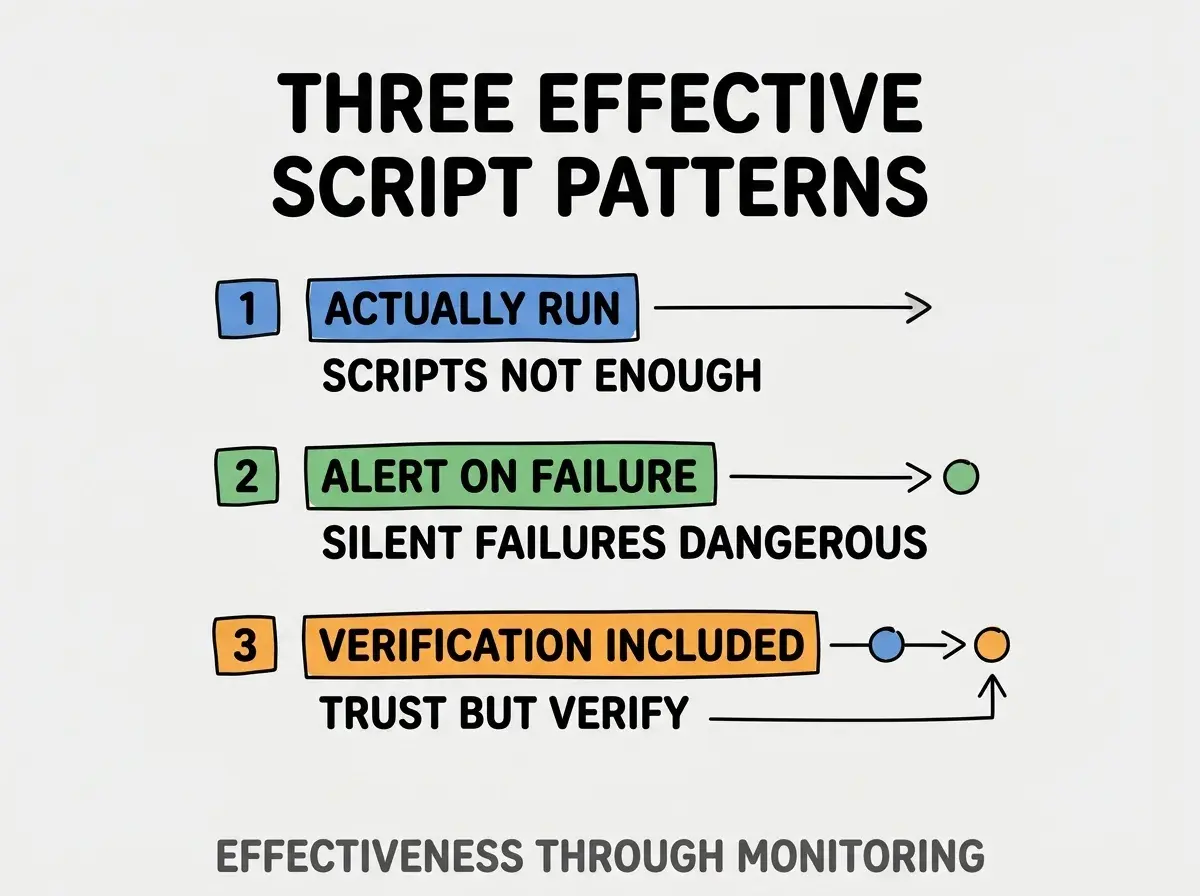
Pattern 1, actually run. Scripts written but not run produce nothing; running matters.
Pattern 2, alert on failure. Silent failures dangerous; alerts inform.
Pattern 3, verification included. Trust but verify; verification proves outcome.
The combination produces effective automation. Without these patterns, scripts become theater.
How To Use AI For Script Generation
Three patterns help AI assist scripting.
Pattern A, AI generates from description. Describe task; AI writes script.
Pattern B, AI explains existing scripts. Inherited scripts; AI documents them.
Pattern C, AI suggests improvements. Review existing; AI suggests optimization.
Common Questions About Maintenance Automation
Maintenance automation raises questions worth addressing directly.
The first question is what scheduler to use. cron for Unix; GitHub Actions for portable; Cloudflare Workers Cron Triggers for edge.
The second question is whether to centralize all scripts. Sometimes; small projects centralize, large projects distribute.
The third question is whether to test scripts in production. No; staging first. Production testing risky.
The fourth question is how to handle script failures. Alert plus retry plus escalate. Layered handling.
How Automation Affects Operational Quality
Automation affects operational quality in compounding ways. Quality effects compound across project life.
The first compounding effect is reduced incidents. Automated maintenance prevents incidents; prevention compounds reliability.
The second compounding effect is faster recovery. Automated recovery faster than manual; speed compounds during incidents.
The third compounding effect is team capacity. Automated tasks free team; freed time compounds output.
The combination produces operational quality shaped by automation. Without automation, quality bounded by manual capacity.
How To Build Script Library Over Time
Three patterns help library growth.
Pattern A, document scripts in repo. Documentation grows with library; library grows with use.
Pattern B, refactor scripts when patterns emerge. Patterns abstract into helpers; helpers compound.
Pattern C, share scripts across projects. Shared scripts compound; shared scripts maintained collaboratively.
The combination grows script library. Without patterns, libraries fragment.
The most damaging automation mistake is writing scripts without monitoring. Scripts run but failures unnoticed; failures accumulate until major incident. The fix is to monitor every script; failures alert immediately. Builders who monitor catch failures early; builders who skip monitoring discover failures during incidents.
The other mistake is over engineering simple scripts. Simple cron with shell often sufficient; complex orchestration premature.
A third mistake is missing the verification step. Backups without verification useless; verification proves backup works.
A fourth mistake is treating scripts as one off. Scripts evolve; ongoing maintenance compounds quality.
What This Means For You
Automated maintenance scripts with AI assistance reclaim time previously spent on manual maintenance. The four categories, implementation patterns, and sustainability approaches produce automation that compounds operational quality.
- If you're a senior dev: Automation fluency expected; AI accelerates script creation. Investment compounds.
- If you're an indie hacker: Solo operations require automation; without automation, time consumed by maintenance.
- If you're changing careers: Operations skills marketable; automation expertise differentiates.
Browse more grow
Read more grow