To implement a technical debt paydown schedule using the 20 percent rule, recognize the four allocation patterns the rule supports (dedicate one day per week to debt paydown, allocate 20 percent of every sprint to debt work, designate every fifth sprint as debt focused, or hybrid combining the patterns), see how regular paydown produces sustainable codebases compared to crisis driven paydown, and apply the patterns that make 20 percent rule work in practice. The paydown schedule matters because it determines whether codebase becomes more or less maintainable over time.
This piece walks through the four allocation patterns, what makes the 20 percent rule work, the metrics that prove debt paydown value, and the four mistakes that produce debt paydown failure.
Why Technical Debt Paydown Scheduling Matters
Technical debt paydown scheduling determines long term codebase health. The scheduling matters; codebases without regular paydown accumulate debt that eventually makes feature development impossible while codebases with regular paydown maintain feature velocity over years.
The 2026 reality is that AI accelerated feature development accelerates debt accumulation proportionally. Without scheduled paydown, AI built codebases reach unmaintainable states faster than human written codebases reached the same state.
A 2025 engineering productivity study of 300 software teams found that teams allocating 20 percent of capacity to debt paydown maintained feature velocity 2.4x longer than teams allocating less than 10 percent. The compounding produces dramatic differences over multi year project timelines.
The pattern to copy is the way fitness routines work. Daily moderate exercise produces sustainable fitness; sporadic intense workouts often produce injuries and abandonment. Technical debt paydown follows similar pattern; regular small efforts produce sustainable health while sporadic intense efforts often fail.
The Four Allocation Patterns
Four patterns implement the 20 percent rule effectively.
Pattern 1, dedicate one day per week to debt paydown. Friday debt day, Monday cleanup day, or other consistent dedication. Single dedicated day produces consistent paydown rhythm.
Pattern 2, allocate 20 percent of every sprint to debt work. Sprint planning includes debt items alongside feature items. Distributed allocation embeds debt thinking in regular work.
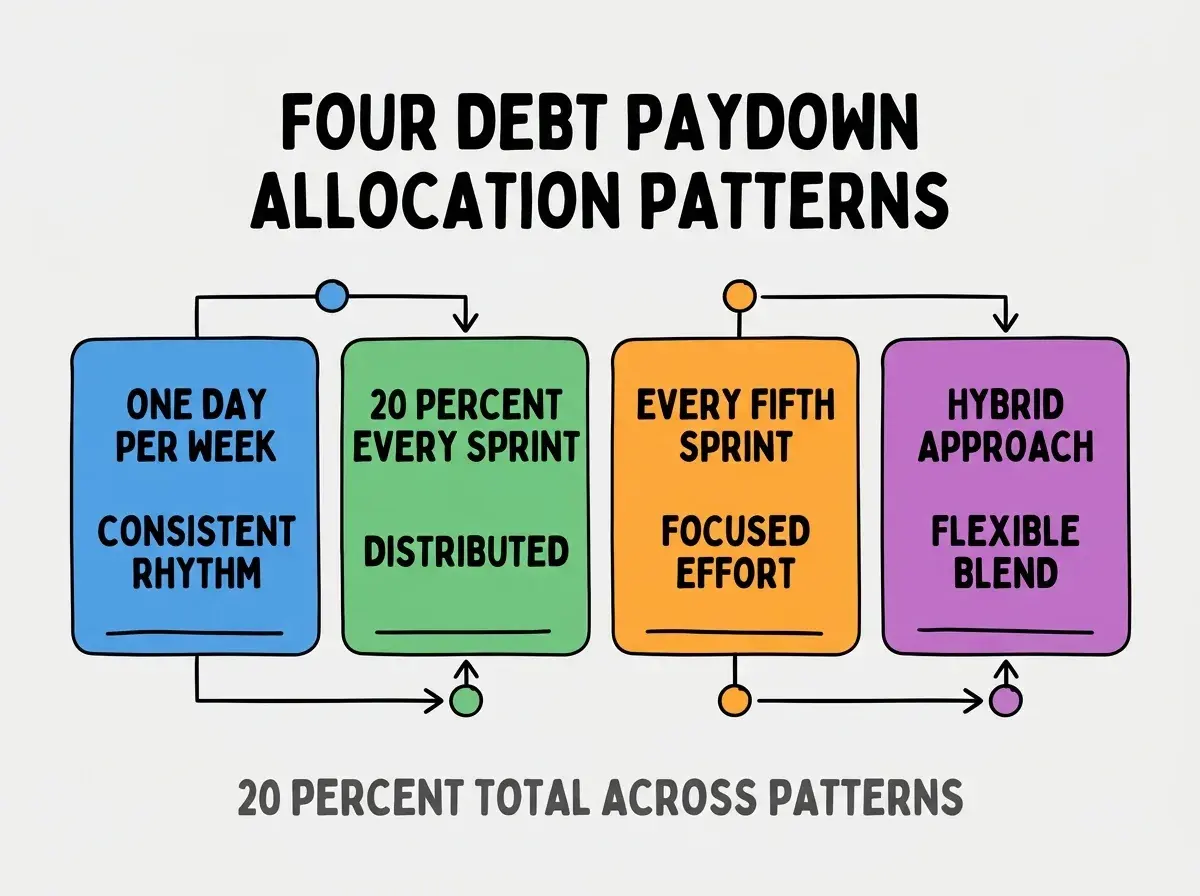
Pattern 3, designate every fifth sprint as debt focused. Four feature sprints followed by one debt sprint. Concentrated approach produces deep paydown work that distributed approaches cannot match.
Pattern 4, hybrid approach combining the patterns. Some teams blend daily debt time with quarterly debt sprints. Hybrid suits teams with mixed needs.
What Makes The 20 Percent Rule Work
Three patterns make 20 percent rule work in practice rather than just theory.
Pattern 1, debt items tracked alongside feature items. Debt backlog visible alongside feature backlog. Without tracking, debt work feels invisible compared to feature work.
Browse more grow articles
Read more grow articlesPattern 2, debt prioritization based on impact analysis. Not all debt is equal; impact analysis directs paydown to highest leverage debt. Without prioritization, paydown often addresses wrong debt.
Pattern 3, debt paydown completion celebrated equally with features. Recognition matters for sustained motivation. Without recognition, debt work feels less valuable than feature work even when impact is greater.
The Metrics That Prove Debt Paydown Value
Three metrics demonstrate debt paydown value and justify continued investment.
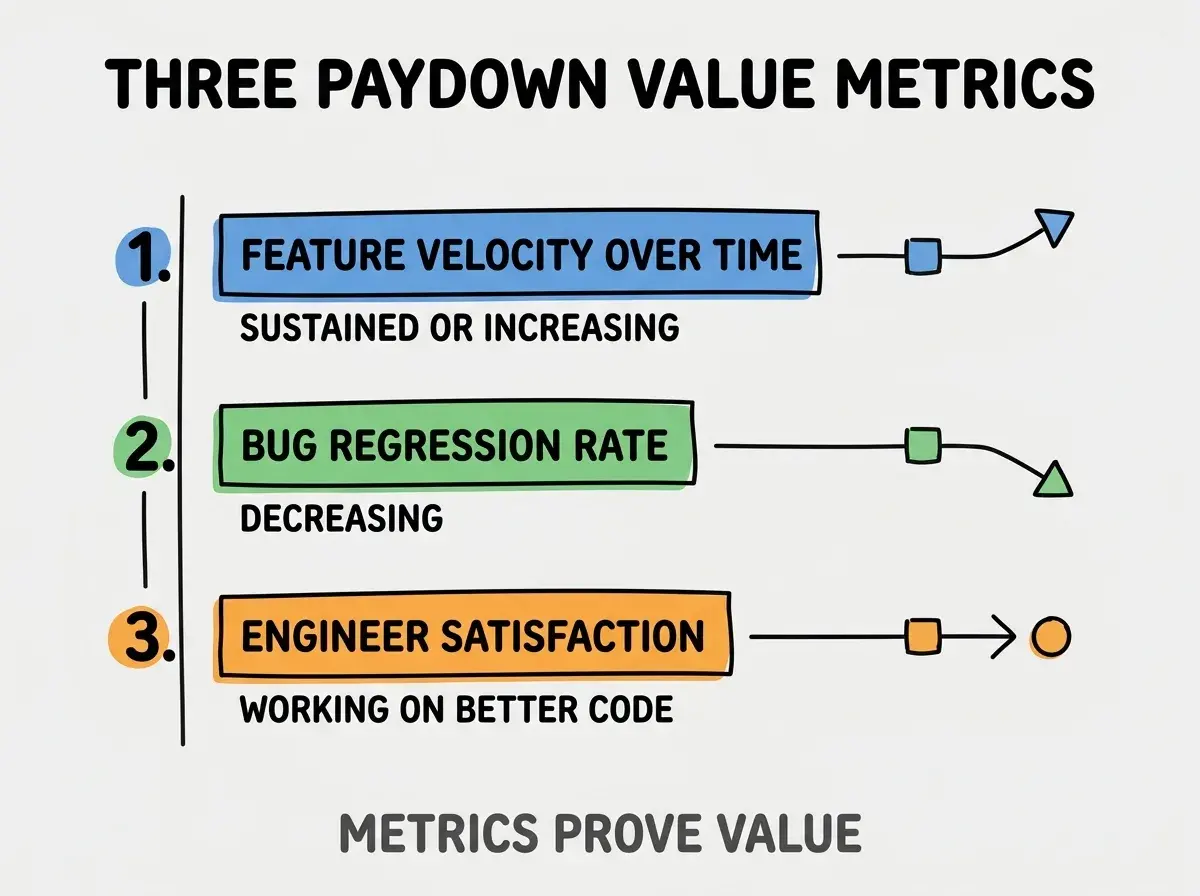
Metric 1, feature velocity over time. Sustained or increasing velocity proves paydown value. Decreasing velocity signals insufficient paydown.
Metric 2, bug regression rate. Decreasing regression rates prove paydown reduces underlying issues. Increasing regression signals debt accumulating faster than paydown.
Metric 3, engineer satisfaction with codebase. Working on better code increases job satisfaction. Without paydown, codebase quality erodes engineer satisfaction over time.
How To Implement The 20 Percent Rule
Three implementation patterns help teams apply 20 percent rule successfully.
Pattern A, start with single sprint at full 20 percent. Single sprint validates approach before broader commitment. Without validation, broader commitment may face resistance.
Pattern B, instrument the metrics from start. Velocity, regression, satisfaction baseline measurement enables value demonstration. Without measurement, value claims stay anecdotal.
Pattern C, communicate the rule to stakeholders. Product managers, executives, customers benefit from understanding paydown investment. Without communication, paydown looks like delayed feature work.
The combination produces 20 percent rule implementations that succeed where ad hoc paydown attempts fail. Without implementation patterns, the rule often fails despite team intentions.
The most damaging debt paydown mistake is treating 20 percent allocation as flexible time that gets reallocated to features under pressure. Pressure always exists; allocation that bends under pressure becomes zero in practice. The fix is to treat 20 percent as protected time equivalent to vacation or training time; reallocation requires explicit decision rather than default response to pressure. Teams that protect paydown time succeed; teams that flex paydown time fail.
The other mistake is not measuring paydown impact. Without measurement, paydown investment looks like cost rather than investment. The fix is to instrument metrics from start.
A third mistake is treating all debt equally. Impact varies dramatically; high impact debt deserves prioritization while low impact debt can wait.
A fourth mistake is large debt items without breakdown. Large items often defer indefinitely; breakdown into smaller items enables incremental paydown.
How To Handle Specific Debt Categories
Three debt categories deserve dedicated approaches.
Category 1, duplicated code requiring extraction. AI accumulated duplication addresses through extraction to shared utilities. Pattern recognition tools identify duplication candidates.
Category 2, missing tests requiring addition. Test coverage gaps identified through coverage tools. Tests added during paydown prevent future regression.
Category 3, outdated dependencies requiring upgrades. Dependency upgrades during paydown prevent security debt accumulation. Without scheduled upgrades, dependencies become unmaintainable.
The combination produces debt paydown that addresses different debt categories appropriately. Without category specific approaches, paydown often addresses wrong debt.
How Debt Paydown Practices Will Likely Evolve
The 20 percent rule will likely remain stable as practice while implementation tools improve.
The first likely evolution is AI tools developing better debt detection. Future AI tools may identify debt automatically, reducing manual identification effort. Detection enables more efficient paydown.
The second likely evolution is metrics tooling improving. Better tools for measuring paydown impact enable better justification. Justification reduces business pressure against paydown.
The third likely evolution is industry practices spreading. As 20 percent rule spreads, business stakeholders develop better understanding of paydown value. Understanding reduces need to justify paydown each time.
The combination suggests debt paydown will become more standard and tooled over time. Teams adopting 20 percent rule now build practices that remain valuable as tooling matures.
Common Questions About Debt Paydown
Technical debt paydown raises questions worth addressing directly.
The first question is whether 20 percent is the right number. The answer is approximately; some teams need 30 percent, some need 15 percent. Adjust based on observed velocity changes. The 20 percent figure is starting point not destination.
The second question is whether early stage projects should pay down debt. The answer is yes; debt accumulates from day one. Even early stage projects benefit from paydown rhythm establishment.
What This Means For You
The 20 percent rule produces sustainable codebase health when implemented consistently. The four patterns, implementation strategies, and metrics produce framework for sustained debt paydown.
- If you're a senior dev: Advocate for debt paydown allocation explicitly. Without advocacy, business pressure produces zero paydown despite engineering preferences.
- If you're a product manager: Understanding debt paydown value enables better prioritization. PMs who treat paydown as investment rather than cost produce healthier products.
- If you're an indie hacker: Solo builders need paydown discipline most because pressure for features comes from same person making paydown decisions. Schedule paydown explicitly.
Browse more grow articles
Read more grow articles