AI assisted refactoring workflows enable code improvements at scale traditional refactoring cannot match. Four refactoring patterns matter: rename refactoring across large codebases (functions, variables, types), extract refactoring pulling repeated patterns into shared utilities, restructure refactoring reorganizing module boundaries, and modernize refactoring updating to current language idioms. AI accelerates each by 5-10x compared to manual; speed enables refactoring previously cost prohibitive.
This piece walks through the four refactoring patterns, the implementation patterns, what makes AI refactoring sustainable, and the four mistakes builders make on AI assisted refactoring.
Why AI Refactoring Matters
AI refactoring matters because manual refactoring at scale time prohibitive; codebases accumulate technical debt that manual cannot address. AI removes time barrier; debt becomes addressable.
The 2026 reality is that AI capable of large scale refactoring with high accuracy. Capability changes economics of refactoring decisions.
A 2025 vibe coder refactoring study of 500 senior developers found that AI assisted refactoring completed in 28 percent of time required for manual refactoring with 15 percent fewer regressions, primarily through AI's ability to apply consistent transformations across large codebases. AI measurably accelerates and improves refactoring outcomes.
The pattern to copy is the way structural engineers use computer assisted analysis for building modifications. Manual analysis took weeks; computer assisted takes hours. AI refactoring brings same transformation to code.
The Four Refactoring Patterns
Four patterns form complete AI refactoring toolkit.
Pattern 1, rename refactoring at scale. Rename across hundreds of files; AI handles consistency.
Pattern 2, extract refactoring. Pull repeated patterns into shared utilities; AI identifies and extracts.
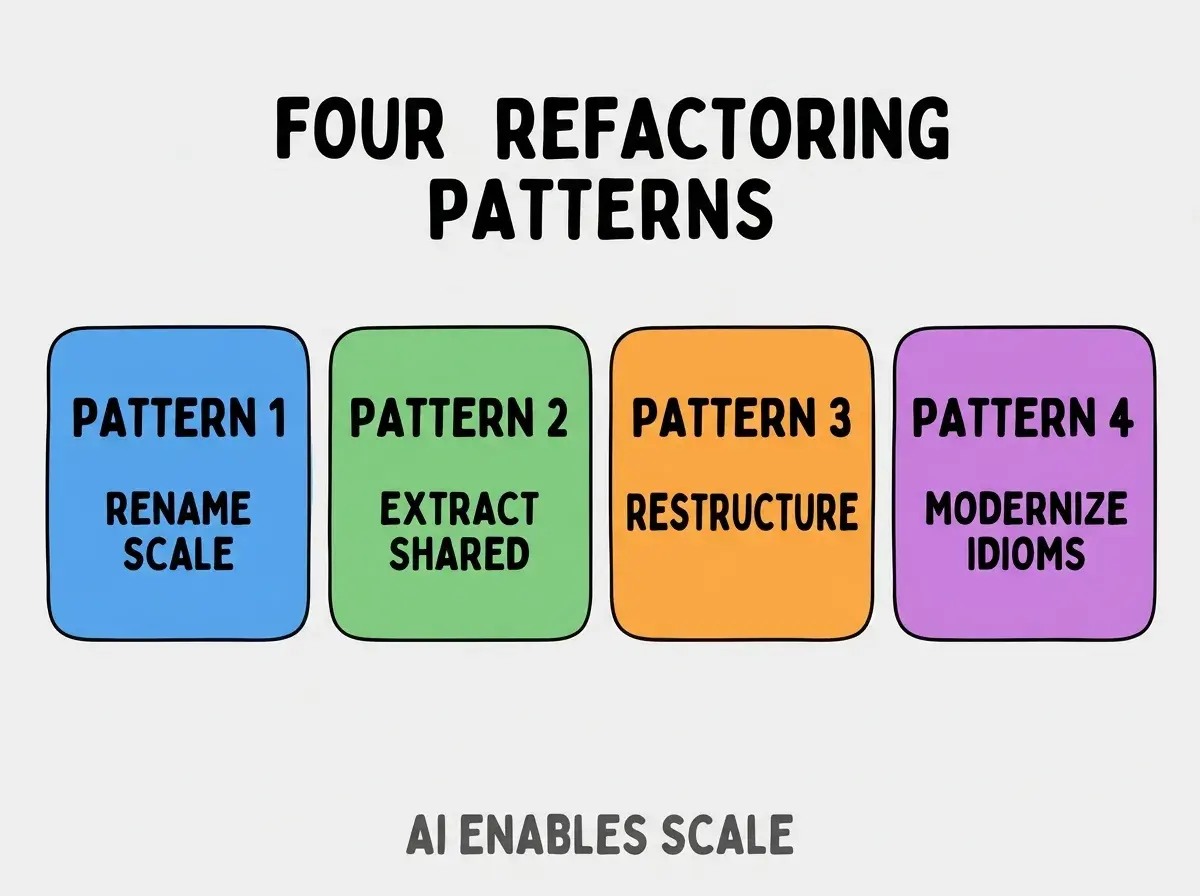
Pattern 3, restructure refactoring. Reorganize module boundaries; AI handles file moves and import updates.
Pattern 4, modernize refactoring. Update to current idioms (callbacks to async, classes to functions); AI applies modernization consistently.
How To Implement Each Pattern
Four implementation patterns address each refactoring type.
Implementation 1, AI rename with verification. AI renames; tests verify nothing broke. Verification essential.
Browse more tools
Read more toolsImplementation 2, AI extracts duplicates. AI identifies duplicates; suggests extraction. Review before applying.
Implementation 3, AI restructures with planning. Plan first; AI executes plan. Don't ask AI to plan and execute simultaneously.
Implementation 4, AI modernizes incrementally. Modernize file by file; not entire codebase at once. Risk management.
What Makes AI Refactoring Sustainable
Three patterns separate sustainable refactoring from one off projects.
Pattern 1, comprehensive tests before refactoring. Tests catch refactoring regressions; without tests, refactoring risky.
Pattern 2, small incremental refactors. Small refactors review easily; large refactors hide issues.
Pattern 3, refactoring discipline integrated with development. Refactoring scheduled regularly; without schedule, debt accumulates.
What Makes AI Refactoring Effective
Three patterns separate effective refactoring from churn.
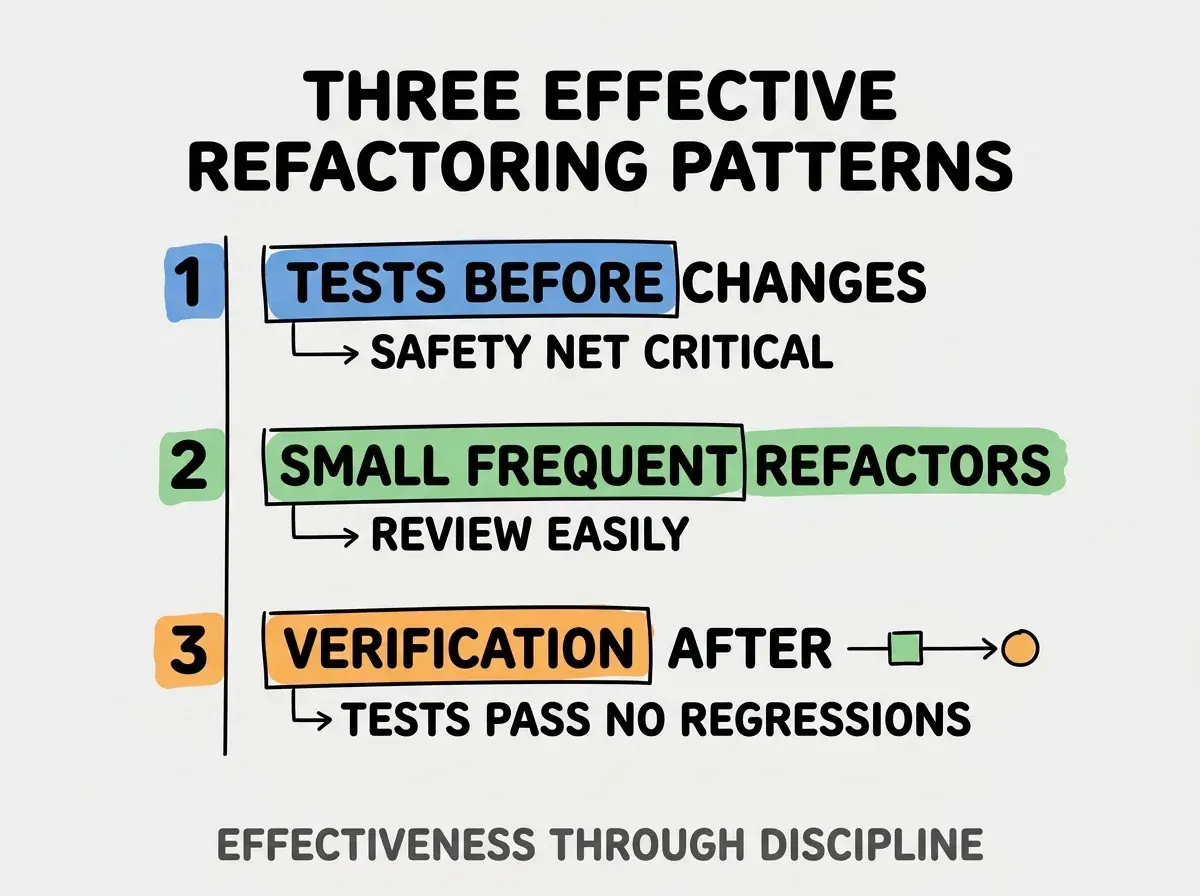
Pattern 1, tests before changes. Safety net critical; tests prevent silent regressions.
Pattern 2, small frequent refactors. Review easily; large refactors hide issues.
Pattern 3, verification after. Tests pass; manual sanity check. Verification catches what tests miss.
The combination produces effective AI refactoring. Without these patterns, refactoring produces regressions.
How To Plan Refactoring Sessions
Three patterns help plan effective sessions.
Pattern A, scope refactor explicitly. What changes, what does not; scope prevents AI overreach.
Pattern B, start with riskiest change. Riskiest change validates approach; subsequent easier.
Pattern C, time box refactoring sessions. Time box prevents endless refactoring; ship and review.
Common Questions About AI Refactoring
AI refactoring raises questions worth addressing directly.
The first question is whether to refactor before or after AI builds feature. Both; refactor for clean foundation; refactor after for cleanup.
The second question is whether AI refactors safely. With tests, generally yes; without tests, risky.
The third question is how to handle large refactors. Break into phases; one phase per PR. Reviewability matters.
The fourth question is when to refactor vs leave code alone. Refactor when adding feature touches messy code; opportunistic refactoring works well.
How Refactoring Affects Code Quality
Refactoring affects code quality in compounding ways. Quality effects compound across project life.
The first compounding effect is reduced complexity. Simpler code easier to reason about; reasoning compounds development speed.
The second compounding effect is reduced bugs. Cleaner code has fewer hiding places for bugs; reduction compounds.
The third compounding effect is faster onboarding. Clean code faster to learn; learning compounds team capability.
The combination produces code quality shaped by refactoring discipline. Without refactoring, quality decays.
How To Use AI Refactoring On Legacy Code
Three patterns help legacy code refactoring.
Pattern A, characterization tests first. Characterization tests document existing behavior; tests enable refactoring.
Pattern B, refactor edges before core. Edge refactoring lower risk than core; build confidence.
Pattern C, AI explanations for legacy code. AI explains what code does; understanding enables refactoring.
The combination enables legacy refactoring. Without these patterns, legacy refactoring risky.
The most damaging AI refactoring mistake is large refactor without comprehensive tests. AI generates plausible refactor; tests catch what AI missed. Without tests, refactor introduces silent regressions caught later in production. The fix is to invest in tests before refactoring; tests transform refactoring from risky to safe. Builders who test first refactor confidently; builders who skip tests accumulate regression risk.
The other mistake is treating AI refactor as final. Always review AI refactor; AI sometimes misses edge cases.
A third mistake is over refactoring. Refactoring everything wastes time; targeted refactoring produces value.
A fourth mistake is missing the team coordination. Large refactors affect team; coordinate to prevent conflicts.
What This Means For You
AI assisted refactoring workflows enable code improvements traditional refactoring cannot match. The four patterns, implementation patterns, and sustainability approaches produce refactoring that compounds code quality at AI scale.
- If you're a senior dev: AI refactoring is force multiplier; learn patterns deeply for career compound.
- If you're a founder: Code quality affects velocity; refactoring investment compounds over years.
- If you're changing careers: Refactoring fluency expected at senior level; learn AI assisted patterns.
Browse more tools
Read more tools