To use AI for code review effectively, follow the four pattern approach (configure AI to focus on patterns AI catches well rather than full review replacement, integrate AI review into PR workflow without disrupting human review, calibrate AI review noise levels through prompt and configuration, and monitor AI review effectiveness over time), recognize what makes AI code review useful versus noisy, and apply the patterns that produce sustainable AI assisted review. The AI review capability matters because it catches issues human reviewers miss while requiring careful setup to avoid review noise.
This piece walks through the four review patterns, what makes AI review effective, the specific tooling, and the four mistakes that produce AI review friction.
Why AI Code Review Matters
AI code review matters because it catches issues human reviewers miss while operating at scales human review cannot match. The complement matters; AI review augments human review rather than replacing it.
The 2026 reality is that AI code review has matured from gimmick to legitimate review tool. Properly configured AI review catches real issues; improperly configured AI review produces noise that erodes trust in review process.
A 2025 engineering productivity study of 200 teams using AI code review found that teams with structured AI review setups caught 34 percent more bugs in pre merge review compared to teams using human only review. The bug catching difference reflects how much AI review augments human review when configured properly.
The pattern to copy is the way modern medicine combines AI imaging analysis with radiologist judgment. AI catches patterns radiologists miss; radiologists catch patterns AI misses; combined they produce better outcomes than either alone. Code review follows similar pattern; AI plus human review produces better outcomes than either alone.
The Four AI Review Pattern Approach
Four patterns produce effective AI code review.
Pattern 1, focus AI on patterns AI catches well. Common bugs, security patterns, style consistency. Focus prevents AI from attempting reviews it cannot do well.
Pattern 2, integrate AI review into PR workflow. AI review as automated check, not human replacement. Integration determines workflow disruption.
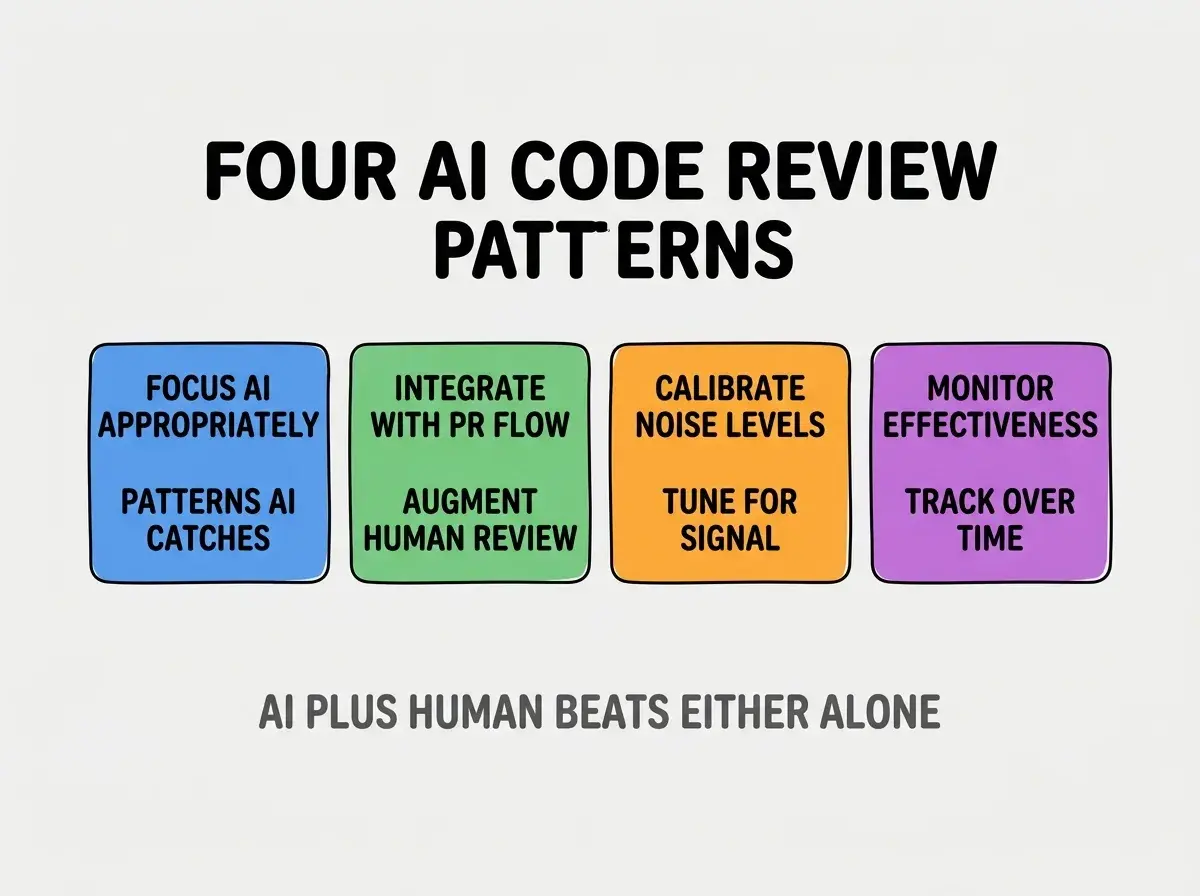
Pattern 3, calibrate noise levels through configuration. Too much AI feedback overwhelms; too little misses issues. Calibration matters dramatically.
Pattern 4, monitor effectiveness over time. Bug catch rates, false positive rates, developer satisfaction. Monitoring catches drift from value.
What Makes AI Code Review Effective
Three patterns characterize effective AI code review.
Pattern 1, AI review focused on specific concerns. Security, performance, common bugs. Focused review produces signal where broad review produces noise.
Browse more tools articles
Read more toolsPattern 2, AI review explanations enabling learning. Explaining why something matters, not just flagging. Explanations enable developer learning from AI review.
Pattern 3, AI review respecting team conventions. Custom prompts capturing team specific patterns. Generic prompts miss team specific concerns.
The Specific Tooling That Works
Three tool categories combine effectively for AI code review.
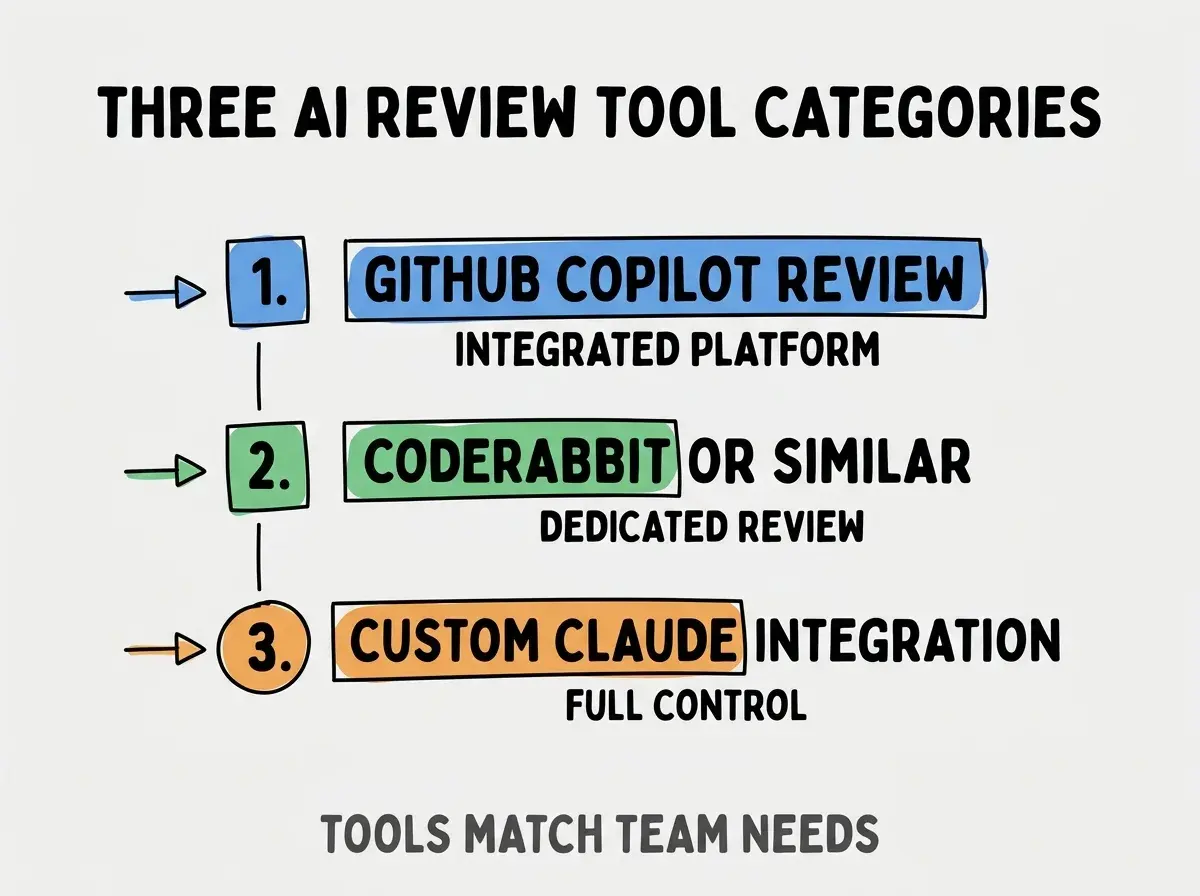
Tool 1, GitHub Copilot Review for integrated platform. Built into GitHub PR workflow; minimal setup. Best for GitHub teams wanting low friction.
Tool 2, CodeRabbit or similar dedicated review. Specialized features, configurable prompts. Best for teams wanting more review capability.
Tool 3, custom Claude integration for full control. Custom prompts, full output control. Best for teams with capacity to maintain integration.
What Makes AI Review Sustainable
Three patterns separate sustainable AI review from problematic patterns.
Pattern 1, AI review configured for team standards. Prompts and rules matching team conventions. Generic configuration produces friction.
Pattern 2, regular review of AI review effectiveness. Periodic check of catch rates, false positives. Without review, AI review drifts from value.
Pattern 3, developer feedback integrated into AI review tuning. Developer signals refine AI review prompts. Without feedback loop, AI review stays static.
The combination produces AI review that maintains value over time. Without these patterns, AI review often loses value as codebase and team evolve.
How To Configure AI Review For Specific Concerns
Three concern categories deserve specific configuration.
Concern A, security pattern catching. AI prompts focused on common security issues. Security review benefits from AI pattern recognition.
Concern B, performance regression catching. AI prompts focused on common performance issues. Performance review benefits from AI's broad pattern knowledge.
Concern C, style consistency enforcement. AI prompts focused on team style standards. Style review automates consistency that human review struggles with.
The combination produces concern specific configuration. Without specific configuration, generic AI review misses opportunities for specific value.
The most damaging AI code review mistake is treating AI review as replacement for human review rather than augmentation. AI review misses important patterns that human review catches; pure AI review produces gaps. The fix is to position AI review as augmentation; AI catches what AI catches well, humans catch what humans catch well, combined they produce better review than either alone. Teams that augment with AI succeed; teams that replace with AI miss issues that proper review structure prevents.
The other mistake is not tuning AI review for false positives. False positives erode developer trust; without tuning, AI review becomes noise that gets ignored. The fix is to tune aggressively for signal over noise.
A third mistake is missing the team learning opportunity. AI review explanations teach developers patterns; without leveraging this, learning opportunity is lost.
A fourth mistake is treating AI review as set and forget. Codebase evolves; AI review configuration must evolve. Without ongoing tuning, AI review drifts from value.
How To Handle Specific AI Review Challenges
Three challenges deserve specific approaches.
Challenge 1, false positives generating review noise. Tune prompts, exclude patterns, calibrate severity. Tuning reduces noise dramatically.
Challenge 2, missing context for codebase specific patterns. Include codebase context in prompts. Context enables AI review of codebase specific concerns.
Challenge 3, AI review slowing down PR workflow. Run AI review in parallel with human review. Parallel execution prevents AI review from blocking workflow.
The combination produces approaches handling real AI review challenges. Without specific approaches, common challenges produce predictable failures.
How AI Code Review Will Likely Evolve
AI code review will likely continue evolving as AI capabilities mature.
The first likely evolution is context understanding deepening. AI review that understands codebase context, team conventions, project history. Deeper context improves review quality.
The second likely evolution is integration with development workflow expanding. AI review during development, not just at PR time. Earlier integration reduces rework.
The third likely evolution is review explainability improving. Better explanations of AI review decisions enabling learning. Explainability improves developer learning from AI review.
The combination suggests AI review will become more capable. Developers learning patterns now build skills that remain valuable as AI review matures.
Common Questions About AI Code Review
AI code review raises questions worth addressing directly.
The first question is whether AI review can replace human review entirely. No; AI review and human review catch different issues. Combination beats either alone consistently.
The second question is how to handle AI review on legacy codebases. Configure AI prompts with legacy context; without context, AI suggestions miss legacy constraints. Configuration matters dramatically for legacy codebases.
What This Means For You
AI code review augments human review when configured properly. The four patterns, tooling categories, and configuration approaches produce framework for effective AI review.
- If you're a senior dev: AI code review setup affects review quality dramatically. Invest in setup; properly configured AI review catches real issues.
- If you're a tech lead: Help team configure AI review effectively. Configuration matters more than tool choice.
- If you're an indie hacker: Solo developers benefit dramatically from AI review since human review unavailable. Configure AI review carefully for solo workflow.
Browse more tools articles
Read more tools