Deciding when to fix it, when to rebuild it, and when to let it go is fundamental product management for vibe coded projects. Four decision factors matter: usage signals (active users vs declining), market fit signals (revenue, retention, NPS), technical health (debt, bug rate, ops burden), and personal energy (excitement, opportunity cost). Combined factors inform decision; intuition alone misleads.
This piece walks through the four factors, the decision approaches, what makes decisions sustainable, and the four mistakes builders make on lifecycle decisions.
Why Lifecycle Decisions Matter
Lifecycle decisions matter because builders cling to dying projects or abandon promising ones based on emotion not data. Decisions shape career.
The 2026 reality is that vibe coders produce many projects; lifecycle discipline essential.
A 2025 indie builder career study of 800 builders found that builders applying lifecycle frameworks made decisions 38 percent faster than builders without frameworks, primarily through clear criteria preventing emotional dragging. Frameworks measurably affect decision time.
The pattern to copy is the way orchards prune trees deliberately. Some trees produce more with pruning; some never produce; orchard decides systematically. Same patterns apply to projects; systematic decision compounds.
The Four Decision Factors
Four factors inform lifecycle decisions.
Factor 1, usage signals. Active users; trends.
Factor 2, market fit. Revenue, retention, NPS.
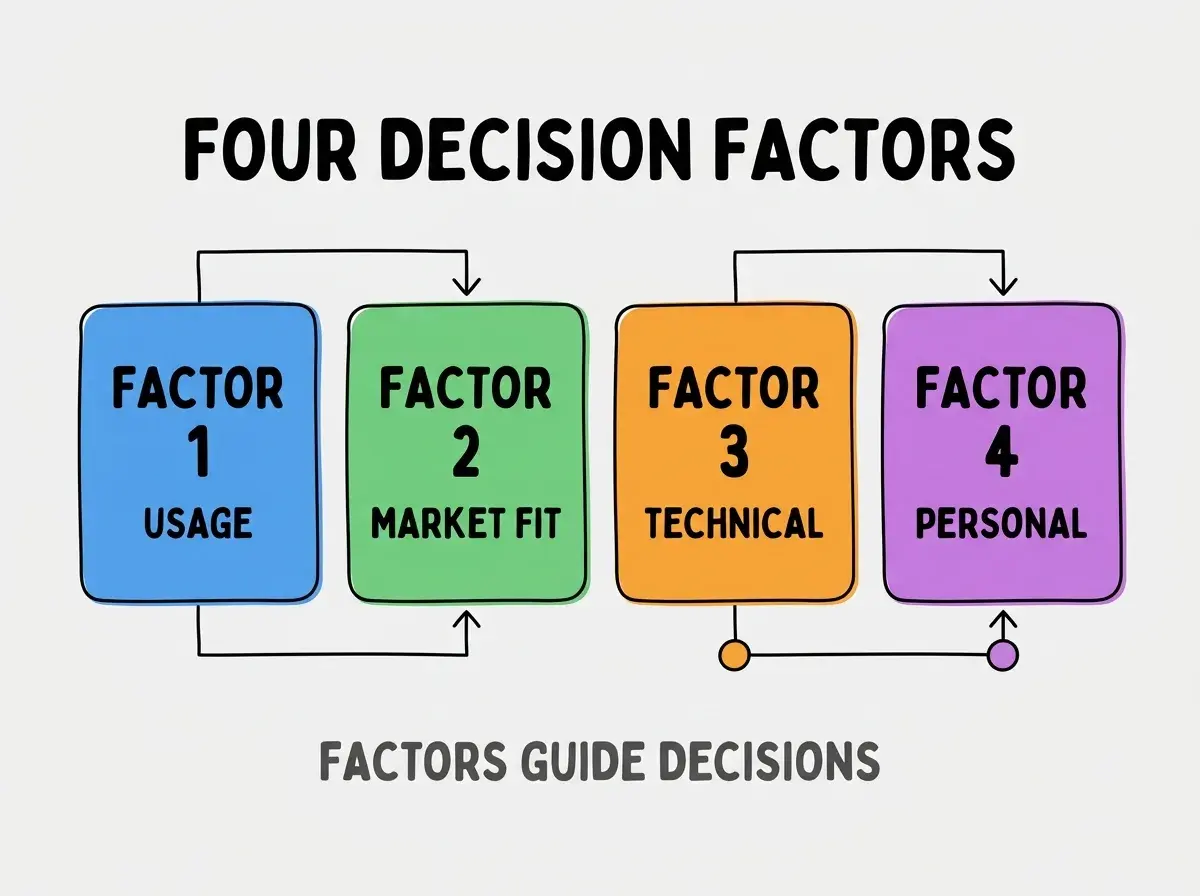
Factor 3, technical health. Debt, bugs, ops.
Factor 4, personal energy. Excitement, opportunity cost.
How Each Factor Influences Decision
Four implementation patterns address each factor.
Implementation 1, usage trends signal vitality. Growing usage favors fix; declining favors rebuild or let go.
Browse more grow
Read more growImplementation 2, market fit informs investment. Strong fit fix; weak fit rebuild or let go.
Implementation 3, technical debt informs effort. High debt favors rebuild or let go.
Implementation 4, energy informs sustainability. Low energy hard to maintain.
What Makes Decisions Sustainable
Three patterns separate sustainable decisions from regret.
Pattern 1, data informed. Data overrides emotion.
Pattern 2, time bounded reviews. Quarterly review; not constant.
Pattern 3, document reasoning. Reasoning preserved; review later.
What Makes Lifecycle Strategy Effective
Three patterns separate effective from theatrical.
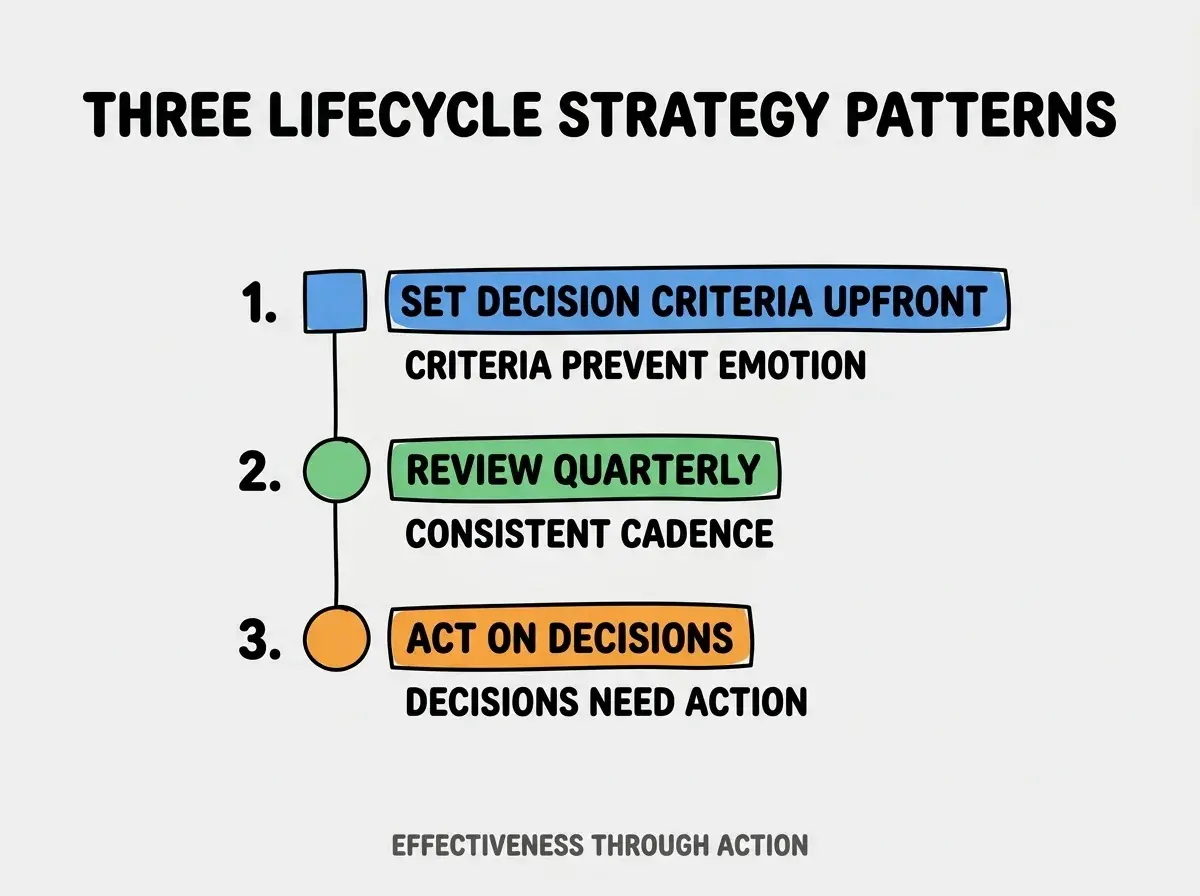
Pattern 1, set decision criteria upfront. Criteria prevent emotion.
Pattern 2, review quarterly. Consistent cadence.
Pattern 3, act on decisions. Decisions need action.
The combination produces effective lifecycle. Without these patterns, decisions stay theoretical.
How To Decide Per Factor
Three patterns help per factor.
Pattern A, usage growth fix; decline rebuild or let go. Trends matter.
Pattern B, market fit strong fix; weak rebuild or let go. Fit matters.
Pattern C, energy high fix; low let go. Energy sustains.
Common Questions About Lifecycle Decisions
Lifecycle decisions raise questions worth addressing directly.
The first question is whether to sell vs let go. Sell if value remains; let go if not.
The second question is how to handle sunk cost. Ignore; future cost informs.
The third question is whether to maintain in low gear. Sometimes; if low maintenance and some value.
The fourth question is how to handle public projects. Communicate clearly to users.
How Lifecycle Decisions Affect Career
Decisions affect career in compounding ways. Decisions effects compound across years.
The first compounding effect is energy allocation. Right projects get energy.
The second compounding effect is portfolio quality. Killing dying projects reveals winners.
The third compounding effect is psychological health. Stuck projects drain.
The combination produces career shaped by lifecycle discipline. Without discipline, career stagnates.
How To Communicate Decisions To Users
Three patterns help communication.
Pattern A, sunset announcement clear. Date, reason, what users do.
Pattern B, data export enabled. Users get their data.
Pattern C, gracious tone. Thank users; community remains.
The combination produces clean transitions. Without patterns, transitions damage relationships.
The most damaging lifecycle mistake is keeping projects alive past sustainability. Sunk cost fallacy keeps zombie projects; zombies drain energy that could go to winners. The fix is to apply criteria honestly; let go when criteria say. Builders who let go efficiently focus on winners; builders who keep zombies dilute focus and drain energy that compounds across portfolio.
The other mistake is letting go too quickly. Some projects need patience; criteria help.
A third mistake is rebuilding without learning. Rebuilds repeat mistakes if no learning.
A fourth mistake is treating decisions as final. Decisions revisable with new data.
What This Means For You
Deciding when to fix it, when to rebuild it, and when to let it go is fundamental product management. The four factors, decision approaches, and sustainability practices produce lifecycle discipline that compounds career outcomes.
- If you're a founder: Lifecycle discipline affects portfolio; investment justified.
- If you're changing careers: Decision frameworks valuable in new career.
- If you're a marketer: Marketing dying products wastes; lifecycle awareness matters.
Browse more grow
Read more grow