Automated health checks and self healing patterns let solo operators run production reliably without human intervention for every issue. Four monitoring layers matter: infrastructure health (CPU, memory, disk), application health (HTTP endpoints, response time), dependency health (database, third party APIs), and business logic health (key flows succeed). Combined with self healing actions (auto restart, auto scale, failover), apps recover automatically; without automation, every incident requires human response.
This tutorial walks through the four layers, the implementation patterns, what makes self healing sustainable, and the four mistakes operators make on health checks.
Why Self Healing Matters For Solo Operators
Self healing matters because solo operators sleep, vacation, focus on building. Without automation, every issue blocks; with automation, system recovers and reports.
The 2026 reality is that health check tools (Kubernetes probes, AWS health checks, custom) make self healing accessible without infrastructure expertise.
A 2025 solo operator study of 300 indie SaaS builders found that builders with self healing automation experienced 71 percent fewer middle of night pages than builders relying on manual remediation, primarily through auto restart of crashed services. Automation measurably affects on call burden.
The pattern to copy is the way home thermostats automatically maintain temperature without human adjustment. Sense, decide, act loop runs continuously. Same patterns apply to production systems; sense health, decide action, heal.
The Four Monitoring Layers
Four layers form complete health monitoring.
Layer 1, infrastructure health. CPU, memory, disk. Foundation.
Layer 2, application health. Endpoints, response time. App level.
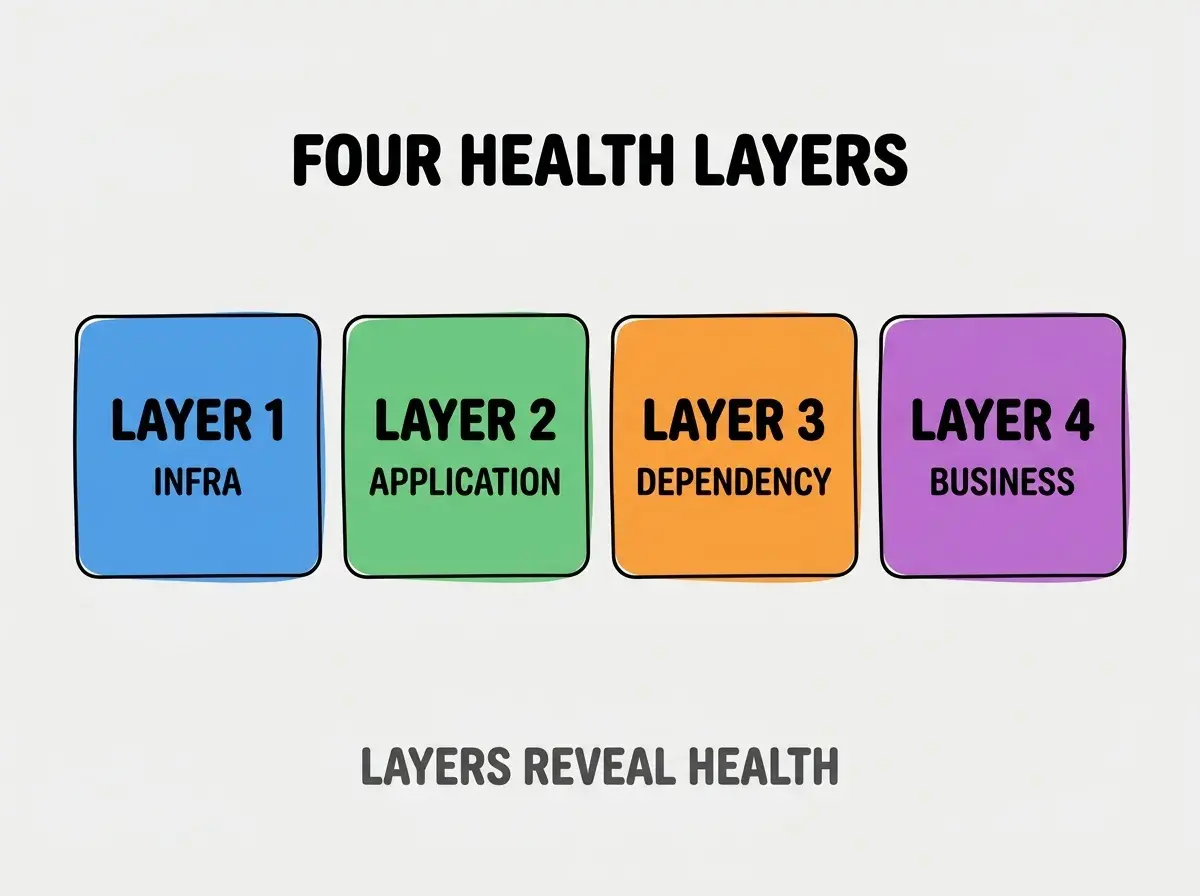
Layer 3, dependency health. Database, third party APIs. External.
Layer 4, business logic health. Key flows succeed. End to end.
How To Implement Each Layer
Four implementation patterns address each layer.
Implementation 1, infrastructure metrics from cloud. AWS CloudWatch, GCP Monitoring; built in.
Browse more grow
Read more growImplementation 2, application HTTP probes. Liveness and readiness endpoints; standard Kubernetes pattern.
Implementation 3, dependency check endpoints. Aggregate downstream health into single endpoint.
Implementation 4, synthetic transactions. Run key flow continuously; alert on failure.
What Makes Self Healing Sustainable
Three patterns separate sustainable from theatrical.
Pattern 1, auto restart on failure. Process crashes restart automatically.
Pattern 2, circuit breakers on dependencies. Failing dependencies isolated; not cascade.
Pattern 3, escalation when healing fails. Repeated failures escalate to human.
What Makes Self Healing Effective
Three patterns separate effective from theatrical.
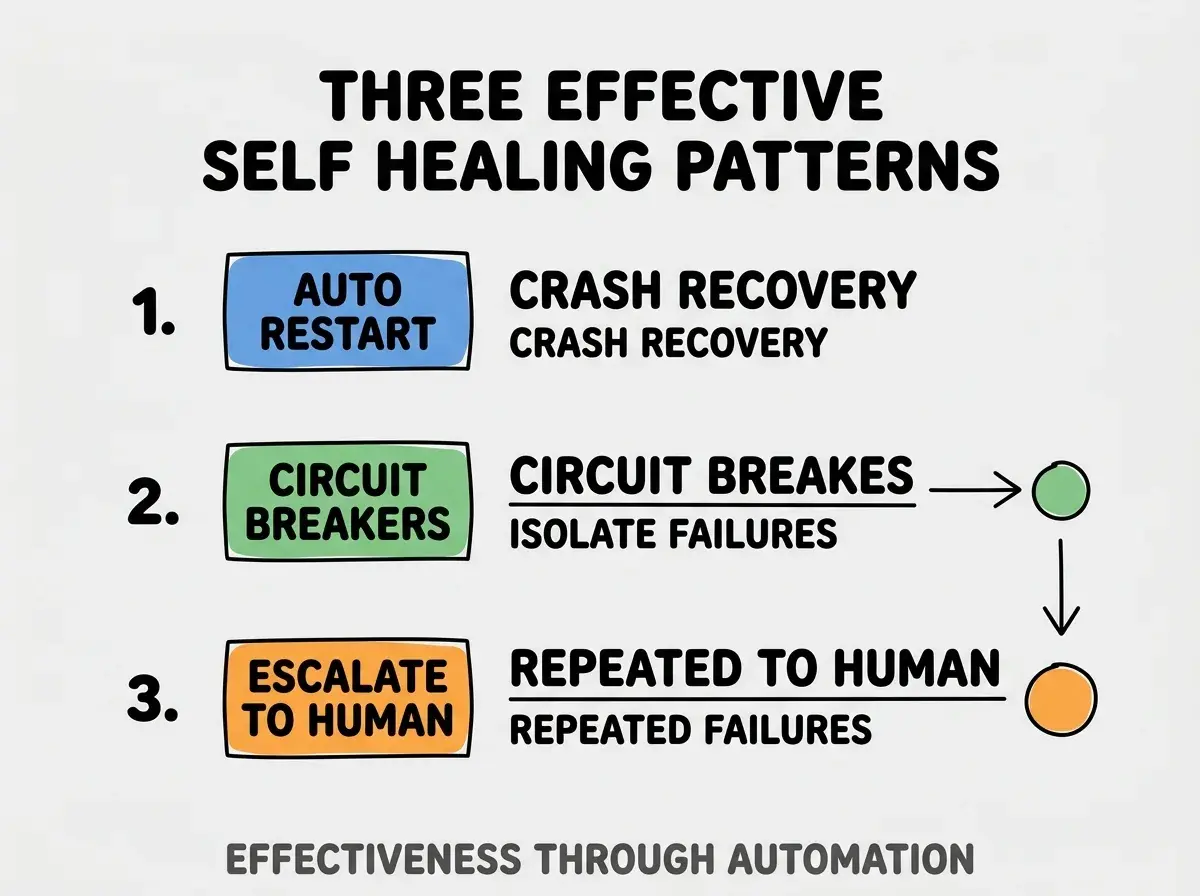
Pattern 1, auto restart. Crashes recover automatically.
Pattern 2, circuit breakers. Failures isolated.
Pattern 3, escalate to human. When healing insufficient.
The combination produces effective self healing. Without these patterns, healing either insufficient or runaway.
How To Choose Health Check Frequency
Three patterns help frequency selection.
Pattern A, infrastructure every minute. Slow to change; minute resolution sufficient.
Pattern B, application every 10-30 seconds. Faster detection valuable.
Pattern C, business logic every 1-5 minutes. Synthetic costs; balance frequency with cost.
Common Questions About Self Healing
Self healing raises questions worth addressing directly.
The first question is whether self healing replaces monitoring. No; healing acts on monitoring data.
The second question is what about silent failures. Synthetic transactions catch silent failures.
The third question is whether to auto scale or auto fix. Both; different remediation strategies.
The fourth question is how to test self healing. Chaos engineering practices; intentional failures.
How Self Healing Affects Operations
Self healing affects operations in compounding ways. Operations effects compound across incidents.
The first compounding effect is on call reduction. Auto recovery means fewer pages.
The second compounding effect is reliability metrics. SLOs improve with auto recovery.
The third compounding effect is operator focus. Less firefighting, more building.
The combination produces operations shaped by automation. Without automation, operations consume builder time.
How To Implement Circuit Breakers
Three patterns help circuit breakers.
Pattern A, library based. Hystrix, resilience4j; battle tested.
Pattern B, threshold based. Failure rate triggers open.
Pattern C, half open recovery. Test recovery before full close.
The combination produces circuit breaker discipline. Without patterns, breakers half implemented.
The most damaging self healing mistake is masking root causes. Auto restart on crash hides bug; restart works but bug remains. The fix is to instrument restarts; alert when restart frequency exceeds threshold. Operators who instrument find root causes; operators who only auto heal accumulate hidden bugs that eventually overwhelm healing capacity.
The other mistake is missing the human escalation. Some failures need human; healing should know when.
A third mistake is over engineering for small scale. Solo SaaS often needs simple healing; complex defeats purpose.
A fourth mistake is treating healing as set and forget. Healing patterns evolve with system; review periodically.
What This Means For You
Automated health checks and self healing patterns reduce operational burden for solo operators while improving reliability. The four layers, implementation patterns, and sustainability approaches produce systems that recover automatically and compound time savings.
- If you're a senior dev: Self healing operational expertise; learn patterns deeply.
- If you're a founder: Self healing affects customer experience and operator capacity; investment justified.
- If you're an indie hacker: Solo operations require automation; self healing is force multiplier.
Browse more grow
Read more grow