API versioning maintaining backwards compatibility lets APIs evolve without breaking existing clients. Four versioning strategies matter: URL path versioning (api/v1, v2 in URL), header versioning (Accept header specifies version), query parameter versioning (version in query string), and content negotiation (Accept-Version header). Each has tradeoffs; choice affects API consumer experience. Done right, APIs evolve smoothly; done wrong, clients break and trust damaged.
This piece walks through the four strategies, the implementation patterns, what makes API versioning sustainable, and the four mistakes builders make on API versioning.
Why API Versioning Matters
API versioning matters because clients depend on API stability; breaking changes damage trust. Without versioning, evolution risky.
The 2026 reality is that API consumers expect stability; breaking without warning unprofessional. Versioning enables evolution.
A 2025 API design study of 300 vibe coded products with public APIs found that products with proper versioning maintained 76 percent more long term integrations than products without versioning, primarily through clients trusting API stability. Versioning measurably affects integration retention.
The pattern to copy is the way phone systems support old number formats while introducing new. Old numbers work; new numbers added. Same patterns apply to APIs; old versions work; new added.
The Four Versioning Strategies
Four strategies dominate API versioning.
Strategy 1, URL path. /api/v1, /api/v2. Visible in URL.
Strategy 2, header versioning. Accept header specifies. Cleaner URLs.
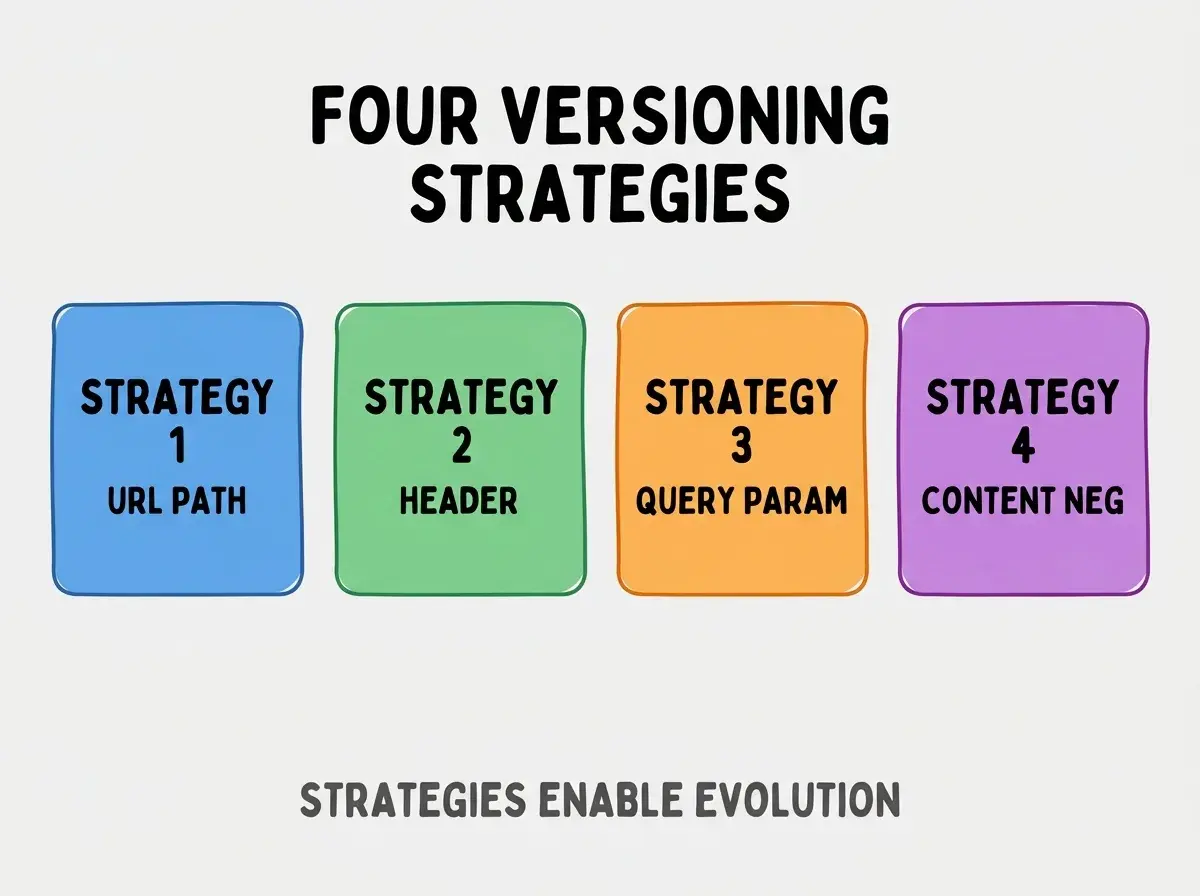
Strategy 3, query parameter. ?version=2. Simple.
Strategy 4, content negotiation. Accept-Version header. RESTful.
How To Implement Each Strategy
Four implementation patterns address each strategy.
Implementation 1, URL path most common. Most popular; visible in logs.
Browse more grow
Read more growImplementation 2, header versioning for cleaner URLs. Accept: application/vnd.api+json;version=2.
Implementation 3, query param for simple. Quick to implement.
Implementation 4, content negotiation for REST purists. Strict REST.
What Makes API Versioning Sustainable
Three patterns separate sustainable versioning from version sprawl.
Pattern 1, deprecation policy clear. Old versions sunset clearly; clients informed.
Pattern 2, change log maintained. What changed when; communication.
Pattern 3, automated testing per version. Each version tested; regressions caught.
What Makes Versioning Effective
Three patterns separate effective versioning from theatrical.
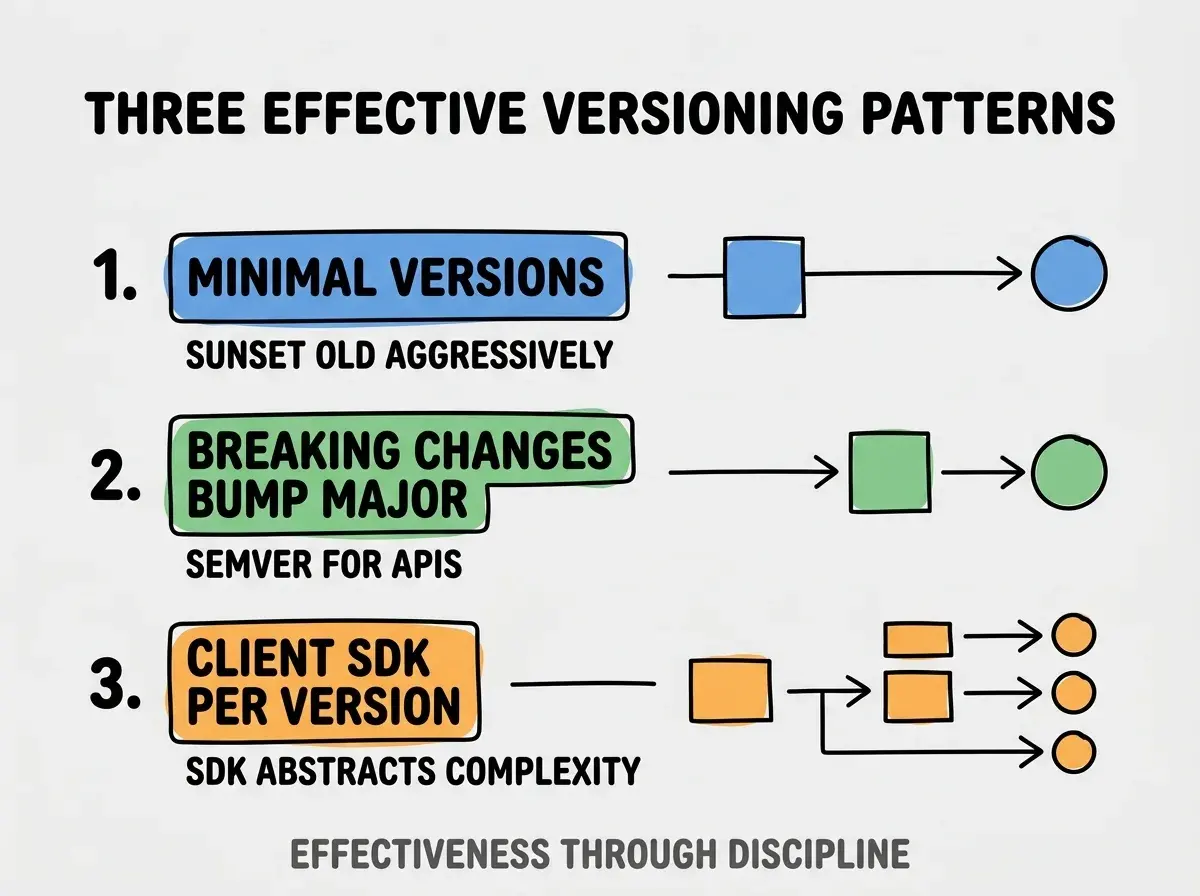
Pattern 1, minimal versions. Sunset old aggressively; complexity manageable.
Pattern 2, breaking changes bump major. SemVer for APIs.
Pattern 3, client SDK per version. SDK abstracts complexity.
The combination produces effective versioning. Without these patterns, version sprawl.
How To Handle Breaking Changes
Three patterns help breaking changes.
Pattern A, deprecation period announced. 6-12 months typical.
Pattern B, migration guide provided. How to migrate; specific.
Pattern C, monitoring of old version use. When safe to sunset.
Common Questions About API Versioning
API versioning raises questions worth addressing directly.
The first question is whether to version from start. Yes; versioning from start easier than retrofit.
The second question is which strategy best. URL path most common; header cleaner.
The third question is how long to support old versions. 1-2 years for major versions typical.
The fourth question is how to handle internal APIs. Less rigorous; iteration faster.
How API Versioning Affects Integration Quality
Versioning affects integration in compounding ways. Effects compound across clients.
The first compounding effect is client trust. Stable APIs trusted; trust compounds.
The second compounding effect is integration retention. Stable APIs retained.
The third compounding effect is API quality. Versioning forces thoughtful changes.
The combination produces integration quality shaped by versioning discipline. Without discipline, integrations break.
How To Communicate Version Changes
Three patterns help communication.
Pattern A, dedicated changelog page. Single source of truth.
Pattern B, deprecation notices in responses. Headers warn of deprecation.
Pattern C, email to integrators. Direct communication for breaking.
The combination produces effective communication. Without communication, surprises break trust.
The most damaging API versioning mistake is making breaking changes without versioning. Breaking changes damage clients; clients lose trust; integrations abandoned. The fix is to always version breaking changes; even minor breaking changes need new version. Builders who version maintain trust; builders who break ship abandoned integrations.
The other mistake is supporting too many versions. Each version maintenance burden; consolidate.
A third mistake is missing the migration tooling. Migration tools help adoption.
A fourth mistake is treating versioning as optional. Versioning standard for production APIs.
What This Means For You
API versioning maintaining backwards compatibility enables API evolution without breaking clients. The four strategies, implementation patterns, and sustainability approaches produce versioning that compounds integration quality.
- If you're a senior dev: API versioning fluency expected; learn patterns deeply.
- If you're a founder: API stability affects partner trust; investment justified.
- If you're changing careers: API design expertise valuable; versioning specialty.
Browse more grow
Read more grow