When your prototype becomes the product, PM to engineering transition requires explicit phases rather than ad hoc handoffs. Four transition phases matter: acknowledgment phase (recognize prototype is now product), audit phase (assess what carries forward), rewrite phase (production grade replacement of prototype code), and ownership phase (engineering owns going forward, PM owns intent). Combined phases produce smooth transition; without phases, prototype drift creates technical debt that compounds.
This piece walks through the four phases, the implementation patterns, what makes the PM to engineering transition sustainable, and the four mistakes teams make on prototype to product transitions.
Why Prototype To Product Transition Matters
Prototype to product transition matters because AI built prototypes increasingly become actual products as they validate user demand. Without explicit transition, prototype shortcuts become production constraints that compound technical debt for years.
The 2026 reality is that PM built prototypes shipping to users is common; transition discipline determines whether prototype validates product or burdens engineering with shortcuts.
A 2025 product engineering study of 200 teams found that teams with explicit prototype to product transitions saw production code quality 53 percent better than teams treating transition as continuous evolution, primarily through dedicated rewrite phases that addressed prototype shortcuts. Phase discipline measurably affects code quality.
The pattern to copy is the way construction handles prefab structures becoming permanent. When prefab becomes permanent, foundation gets reinforced, systems get inspected, code gets brought to standard. Same patterns apply to prototype to product; when prototype becomes product, code needs equivalent reinforcement to standards.
The Four Transition Phases
Four phases form complete prototype to product transition.
Phase 1, acknowledgment. Recognize prototype now product. Foundation.
Phase 2, audit. Assess what carries forward. Assessment.
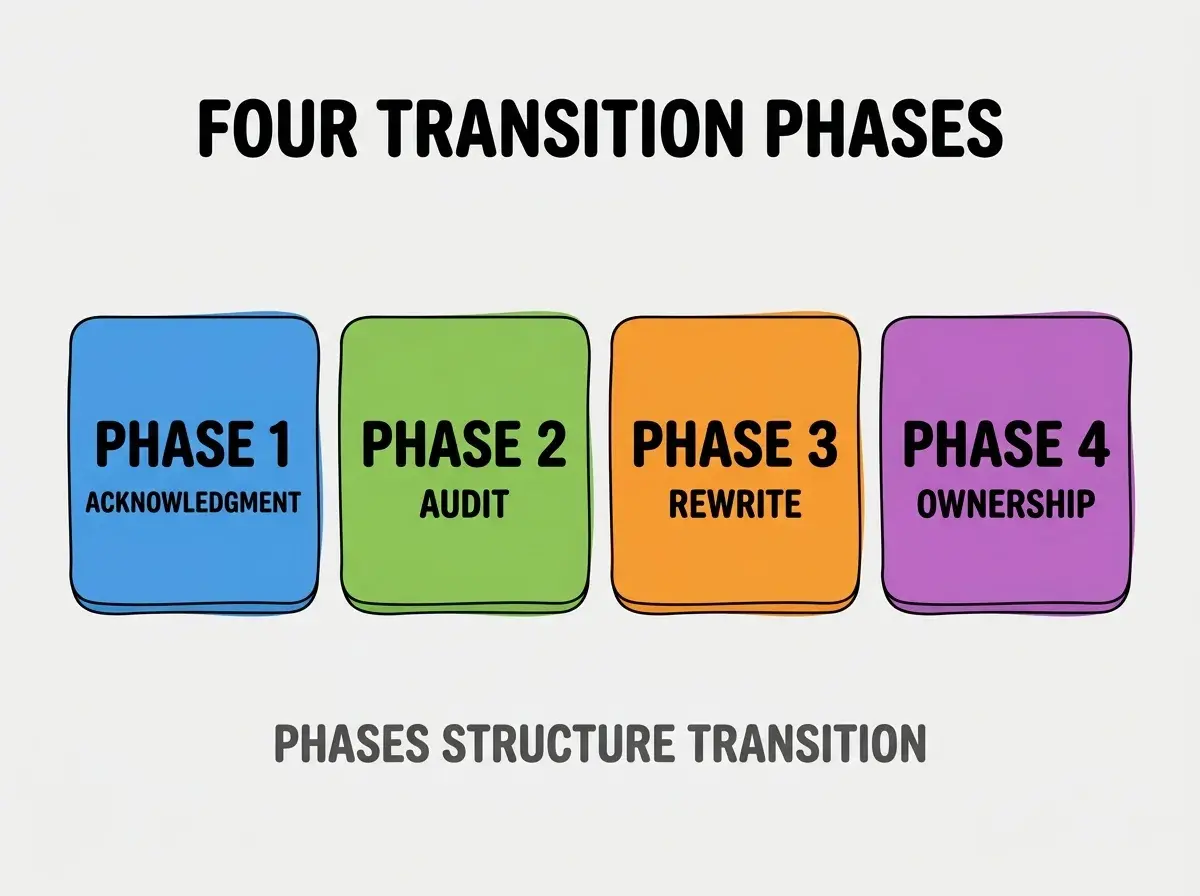
Phase 3, rewrite. Production grade replacement. Quality.
Phase 4, ownership. Engineering owns; PM owns intent. Boundary.
How To Implement Each Phase
Four implementation patterns address each phase.
Implementation 1, formal acknowledgment meeting. Stakeholders agree prototype now product; mark transition.
Browse more build
Read more buildImplementation 2, audit document with line by line. Walk through prototype; mark keep, rewrite, delete per area.
Implementation 3, rewrite phased over sprints. Don't rewrite everything; phase over months.
Implementation 4, ownership doc explicit. Document who owns what going forward; clarity prevents conflicts.
What Makes Transition Sustainable
Three patterns separate sustainable from chaotic.
Pattern 1, transition timeline realistic. Rewrite takes months not weeks; plan realistically.
Pattern 2, user impact minimized. Transition invisible to users; production stable throughout.
Pattern 3, learning captured. Document what worked, what didn't; future prototypes benefit.
What Makes Transition Strategy Effective
Three patterns separate effective from theatrical.
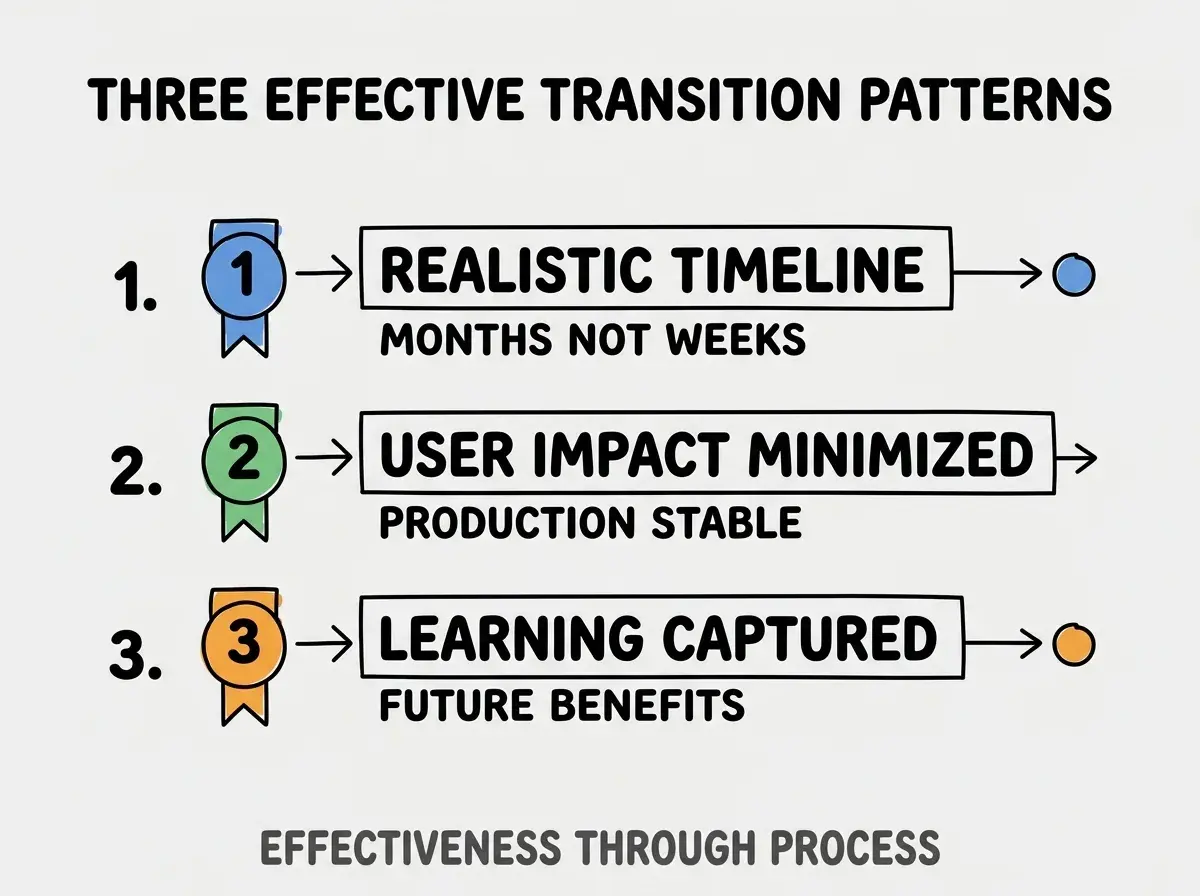
Pattern 1, realistic timeline. Months not weeks.
Pattern 2, user impact minimized. Production stable.
Pattern 3, learning captured. Future benefits.
The combination produces effective transition. Without these patterns, transition damages.
How To Choose Rewrite Approach
Three patterns help approach choice.
Pattern A, strangler pattern for incremental. Replace prototype piece by piece with production code.
Pattern B, parallel build for safety. Build production version alongside; cut over when ready.
Pattern C, big rewrite for fundamental issues. Sometimes prototype too compromised; rewrite cleaner.
Common Questions About Prototype To Product
Prototype to product raises questions worth addressing directly.
The first question is whether PM should keep coding. Sometimes; depends on team and PM capability.
The second question is what about prototype users. Continuity matters; transition invisible to users.
The third question is how to handle disagreement on rewrite scope. Joint scoping; engineers and PM align.
The fourth question is whether to throw away prototype. Code yes often; learnings always preserved.
How Transition Affects Product Velocity
Transition affects velocity in compounding ways. Velocity effects compound across years.
The first compounding effect is technical debt avoided. Clean transition prevents debt.
The second compounding effect is engineering trust. Smooth transition builds PM credibility.
The third compounding effect is future prototype openness. Engineering more open to next prototype if first transition went well.
The combination produces velocity shaped by transition discipline. Without discipline, velocity decays.
How To Communicate Transition To Stakeholders
Three patterns help communication.
Pattern A, executive transition memo. Stakeholders informed; expectations set.
Pattern B, engineering team kickoff. Engineering aligned on phases.
Pattern C, user communication if needed. If user impact possible, communicate.
The combination produces aligned transition. Without communication, surprise damages relationships.
The most damaging prototype to product mistake is treating transition as continuous evolution rather than explicit phases. Continuous evolution means prototype shortcuts never get rewritten; they compound. The fix is to mark transition explicitly; allocate dedicated rewrite time. Teams with explicit transition build sustainable products; teams with continuous evolution accumulate prototype debt that becomes constraint years later when refactor cost exceeds rewrite cost.
The other mistake is missing the realistic timeline. Rewrite always takes longer than estimated.
A third mistake is over investing in prototype rewrite. Sometimes prototype code worth keeping with cleanup.
A fourth mistake is treating transition as one time event. Transition is process; evolves with product.
What This Means For You
When your prototype becomes the product, explicit PM to engineering transition phases prevent prototype shortcuts from becoming permanent production constraints. The four phases, implementation patterns, and sustainability approaches produce transitions that compound product quality.
- If you're a product manager: Transition central to PM craft when prototype validates; investment in process pays back.
- If you're a senior dev: Transition shapes engineering quality for years; advocate for explicit phases.
- If you're a founder: Transition discipline affects engineering velocity; investment in process compounds across product evolution.
Browse more build
Read more build