Handing off an AI built prototype to engineering requires translating exploratory code into a foundation engineers can build on. Four handoff artifacts matter: working prototype (functional reference), product spec (intent and edge cases), data model documentation (schema and relationships), and known limitation list (what works, what does not). Combined artifacts give engineering context; without them, handoff produces friction and rework.
This piece walks through the four artifacts, the handoff patterns, what makes prototype handoffs sustainable, and the four mistakes PMs make on AI prototype handoffs.
Why Prototype Handoff Matters For PMs
Prototype handoff matters because PMs increasingly use AI tools to build prototypes that engineers later productionize. Without thoughtful handoff, engineers either rebuild from scratch (waste) or inherit messy code (technical debt baked in).
The 2026 reality is that AI built prototypes are now common in product organizations; handoff discipline determines whether prototypes accelerate or slow engineering.
A 2025 product organization study of 250 teams found that PMs with structured prototype handoff processes saw engineering rework drop 52 percent compared to teams handing off code without context, primarily through documented intent that engineers can build on. Process measurably affects engineering velocity.
The pattern to copy is the way architects hand off building plans to construction. Plans show intent, dimensions, materials; construction interprets and builds. Same patterns apply to AI prototypes; PMs document intent so engineers build with context rather than reverse engineering decisions from messy code.
The Four Handoff Artifacts
Four artifacts form complete prototype handoff.
Artifact 1, working prototype. Functional reference. Foundation.
Artifact 2, product spec. Intent and edge cases. Why and what.
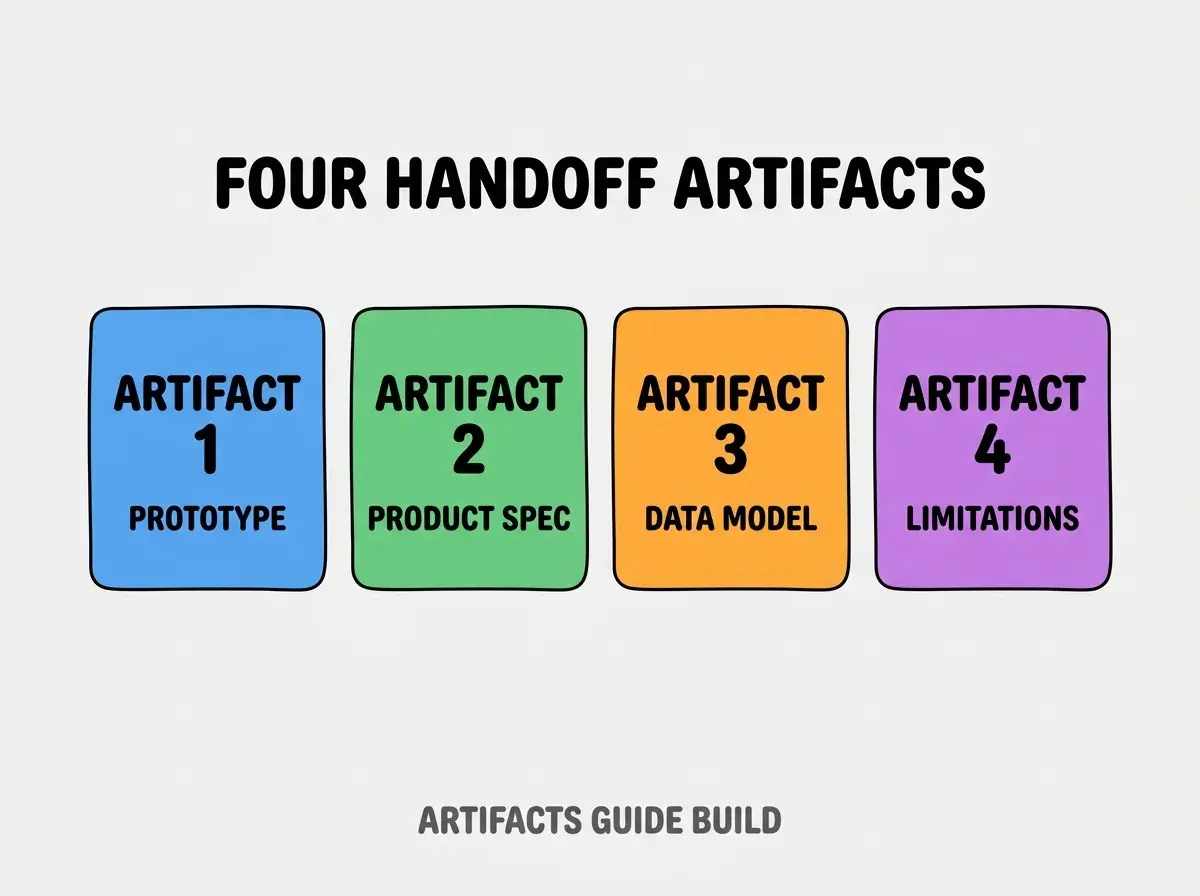
Artifact 3, data model documentation. Schema, relationships. Engineering foundation.
Artifact 4, known limitations. What works, what does not. Honest scope.
How To Prepare Each Artifact
Four implementation patterns address each artifact.
Implementation 1, prototype with realistic data. Don't ship prototype with fake data; engineers need realistic edge cases.
Browse more build
Read more buildImplementation 2, spec with user stories and edge cases. Standard PM artifact; AI prototype reveals edges to document.
Implementation 3, schema diagram from AI prototype. Tools extract; document relationships explicitly.
Implementation 4, limitation list with severity. What is broken, what is half built, what is mocked.
What Makes Handoff Sustainable
Three patterns separate sustainable handoff from one off chaos.
Pattern 1, handoff template across team. Consistent format reduces cognitive load on engineers.
Pattern 2, engineering review before scoping. Engineers review before estimating; surface gaps early.
Pattern 3, prototype maintained until cutover. PM updates prototype as spec evolves; engineering gets current.
What Makes Handoff Strategy Effective
Three patterns separate effective from theatrical.
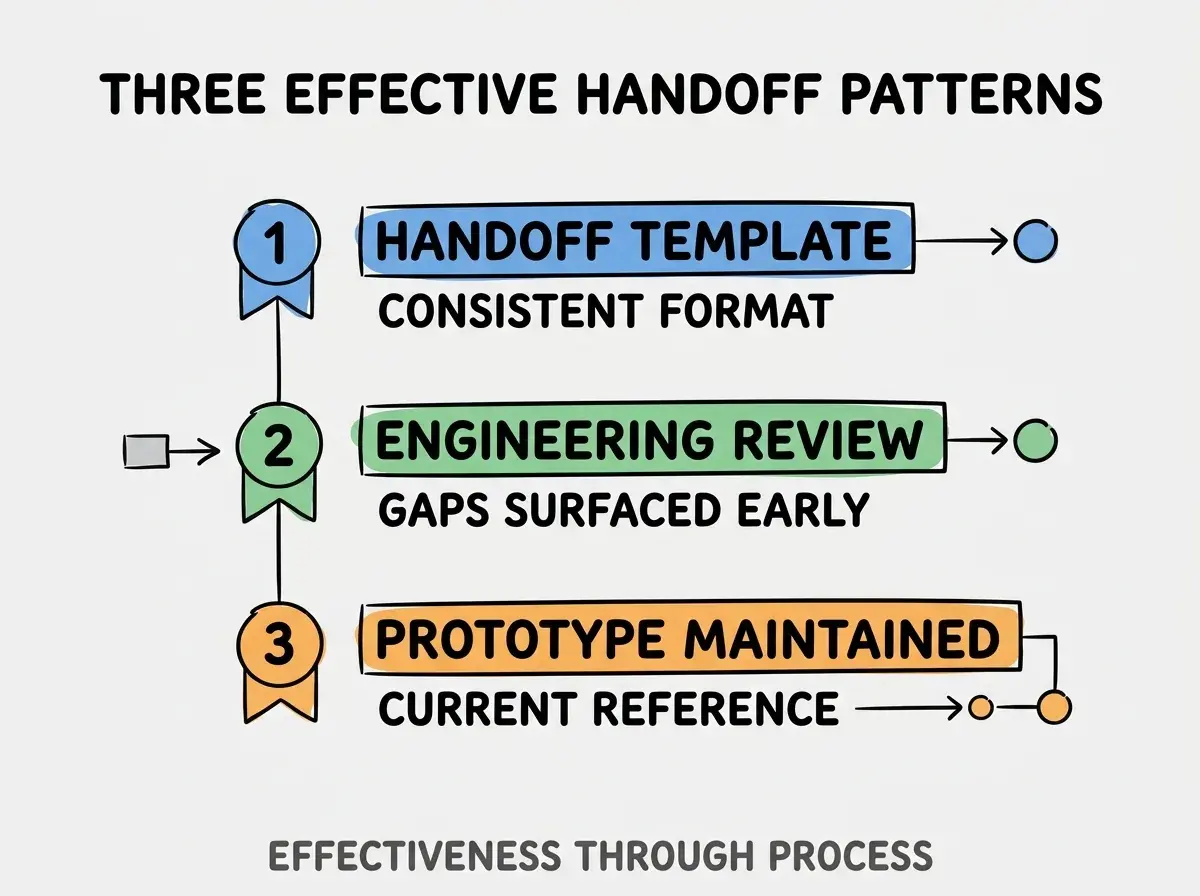
Pattern 1, handoff template. Consistent format.
Pattern 2, engineering review. Gaps surface early.
Pattern 3, prototype maintained. Reference stays current.
The combination produces effective handoff. Without these patterns, handoff stays painful.
How To Choose Handoff Format
Three patterns help format choice.
Pattern A, written spec primary. Async accessible.
Pattern B, video walkthrough secondary. Captures decisions.
Pattern C, live demo for kickoff. Q and A in real time.
Common Questions About Prototype Handoff
Prototype handoff raises questions worth addressing directly.
The first question is whether engineers should reuse prototype code. Sometimes; depends on quality and architectural fit.
The second question is how much polish prototype needs. Functional over polished; engineers care about intent.
The third question is what about UI design. Designs separately handed off; prototype shows interaction.
The fourth question is how to handle scope creep during build. Spec is contract; changes need explicit decision.
How Handoff Affects PM Engineering Relationship
Handoff affects relationship in compounding ways. Relationship effects compound across projects.
The first compounding effect is trust building. Quality handoff builds engineering trust in PM work.
The second compounding effect is velocity. Less rework means faster delivery.
The third compounding effect is collaboration. Smooth handoff invites engineering early in process.
The combination produces relationship shaped by handoff discipline. Without discipline, relationship strained.
How To Handle Handoff Pushback
Three patterns help pushback.
Pattern A, acknowledge prototype limitations. Don't oversell prototype.
Pattern B, separate spec from implementation. Spec is what; implementation is how.
Pattern C, propose collaborative scoping. Engineers and PM decide together.
The combination produces productive pushback. Without patterns, pushback becomes conflict.
The most damaging prototype handoff mistake is treating AI generated code as production ready. Prototype code optimized for speed of exploration, not maintainability; engineers expecting production patterns find decisions made for convenience. The fix is to explicitly label prototype as exploratory; spec carries production intent. PMs who label clearly maintain engineering trust; PMs who handoff prototype as production force engineers into rework that damages relationship.
The other mistake is missing the data realistic. Fake data hides important edge cases.
A third mistake is over investing in prototype polish. Polished prototypes still need rebuild for production patterns.
A fourth mistake is treating handoff as one time event. Handoff is start of collaboration, not end of PM involvement.
What This Means For You
Handing off an AI built prototype to engineering requires four artifacts and process discipline. The patterns produce handoffs that compound PM engineering velocity rather than create friction.
- If you're a product manager: Handoff fluency increasingly central to PM craft; learn patterns deeply.
- If you're a senior dev: Help PMs structure handoffs; benefits engineering productivity.
- If you're a founder: Handoff process affects time to production; investment in process pays back.
Browse more build
Read more build