Getting engineering buy in for an AI built proof of concept requires understanding what engineers worry about and addressing concerns directly rather than oversell. Four buy in factors matter: technical credibility (acknowledge prototype limitations honestly), code reusability (some prototype code reusable, most not), production gap clarity (production work scope explicit), and respect for engineering judgment (engineers shape implementation, PMs shape intent). Combined factors produce buy in; without these, engineers resist or rebuild silently.
This piece walks through the four factors, the implementation patterns, what makes buy in sustainable, and the four mistakes PMs make on engineering buy in.
Why Engineering Buy In Matters For AI Built Prototypes
Engineering buy in matters because engineers ultimately ship the production version. Without buy in, engineers either resist the prototype openly or rebuild from scratch silently, both wasting the prototype investment.
The 2026 reality is that AI built prototypes are common in product organizations; PMs who handle handoff well accelerate engineering, PMs who handle it poorly damage relationships and slow shipping.
A 2025 product engineering collaboration study of 300 teams found that PMs with engineering buy in patterns saw prototype to production timelines 56 percent shorter than PMs without buy in patterns, primarily through reduced rework and explicit alignment on production scope. Buy in measurably affects timeline.
The pattern to copy is the way movie producers handle script to screen with directors. Producer brings story; director brings craft; both respect the other's expertise. Same patterns apply to PM engineering collaboration; PM brings product intent, engineering brings craft, mutual respect produces shipped products.
The Four Buy In Factors
Four factors form complete engineering buy in.
Factor 1, technical credibility. Acknowledge prototype limits. Foundation.
Factor 2, code reusability framing. What carries forward, what does not. Honesty.
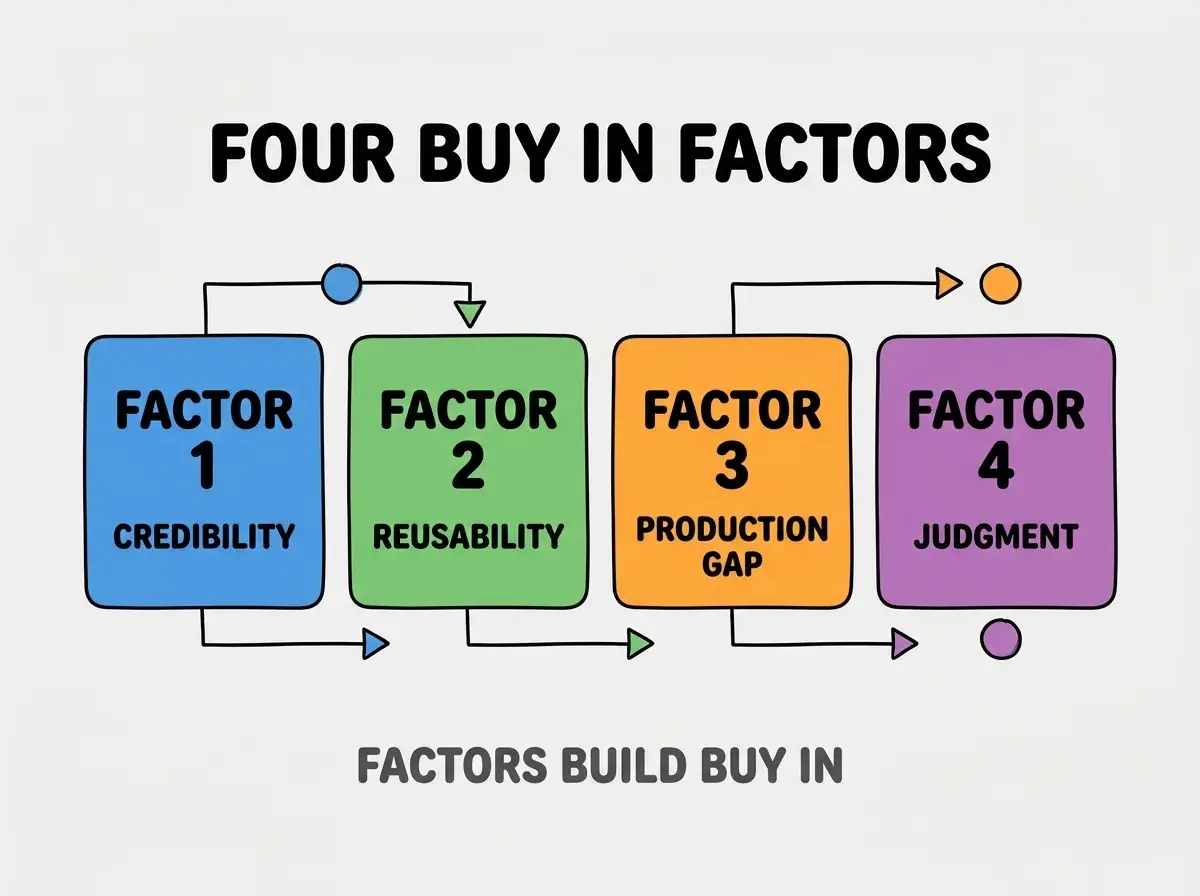
Factor 3, production gap clarity. Production work scope explicit. Scope.
Factor 4, judgment respect. Engineering shapes implementation. Collaboration.
How To Implement Each Factor
Four implementation patterns address each factor.
Implementation 1, prototype as exploration explicitly. Frame prototype as exploration, not production blueprint.
Browse more build
Read more buildImplementation 2, explicit reusability assessment. Walk through what is reusable, what needs rebuild.
Implementation 3, production scope estimate jointly. Engineers estimate production work; not PM estimate.
Implementation 4, implementation decisions to engineering. PM owns what; engineering owns how.
What Makes Buy In Sustainable
Three patterns separate sustainable from one off acceptance.
Pattern 1, transparent about AI limitations. AI tools have limits; honesty maintains trust.
Pattern 2, engineering involved in scoping. Engineering shapes scope; not just executes PM scope.
Pattern 3, post launch retrospective. Learn from launch; improve next handoff.
What Makes Buy In Strategy Effective
Three patterns separate effective from theatrical.
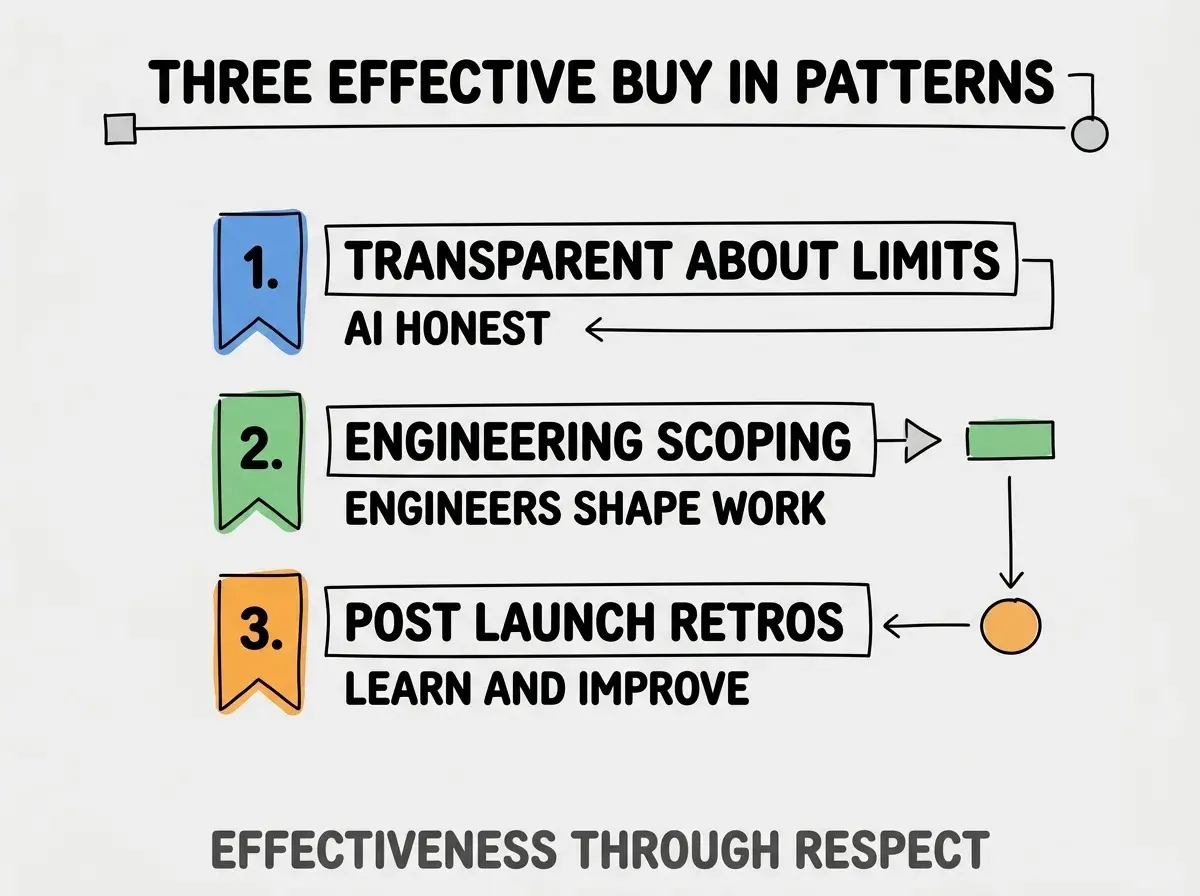
Pattern 1, transparent about limits. AI honest.
Pattern 2, engineering scoping. Engineers shape work.
Pattern 3, post launch retros. Learn and improve.
The combination produces effective buy in. Without these patterns, buy in stays theatrical.
How To Handle Engineering Skepticism
Three patterns help skepticism.
Pattern A, acknowledge skepticism directly. Don't dismiss; engage.
Pattern B, separate concerns explicitly. Code quality vs feature scope vs timeline.
Pattern C, propose collaboration approach. Joint problem solving not adversarial.
Common Questions About Engineering Buy In
Engineering buy in raises questions worth addressing directly.
The first question is whether engineers should reuse prototype code. Sometimes; depends on quality.
The second question is what about timeline pressure. Pressure for product not implementation; engineering owns implementation timeline.
The third question is how to handle disagreement on architecture. Joint design; PM not architect unless former engineer.
The fourth question is whether to skip prototype entirely. Sometimes; not always prototype valuable.
How Engineering Buy In Affects PM Effectiveness
Engineering buy in affects PM effectiveness in compounding ways. Effectiveness effects compound across projects.
The first compounding effect is shipping velocity. Buy in accelerates.
The second compounding effect is product quality. Engineering invested in quality.
The third compounding effect is PM credibility. Successful collaborations build PM track record.
The combination produces PM effectiveness shaped by engineering relationship. Without relationship, PM effectiveness bounded.
How To Recover From Lost Buy In
Three patterns help recovery.
Pattern A, acknowledge mistakes openly. Don't double down on bad framing.
Pattern B, reset with smaller commitment. Rebuild trust on smaller project.
Pattern C, ask engineering to design handoff. Engineering designs process; ownership follows.
The combination produces recovery. Without patterns, lost buy in stays lost.
The most damaging engineering buy in mistake is overselling prototype as production ready. Overselling damages credibility immediately when engineers see prototype reality; future PM claims discounted permanently. The fix is to undersell prototype; engineers discover capability beyond claims rather than disappointment below claims. PMs who undersell build credibility; PMs who oversell damage relationship that never fully recovers across many projects.
The other mistake is missing the engineering scoping involvement. Scope without engineering creates resentment.
A third mistake is treating engineering as implementation only. Engineers shape product through implementation choices.
A fourth mistake is treating buy in as one time event. Buy in renewed every project.
What This Means For You
Getting engineering buy in for AI built proof of concept requires honest framing and respect for engineering craft. The four factors, implementation patterns, and sustainability approaches produce buy in that compounds PM effectiveness.
- If you're a product manager: Engineering buy in central to PM craft; AI prototypes raise stakes.
- If you're a founder: PM engineering relationship affects shipping; investment in collaboration patterns pays back.
- If you're a senior dev: Helping PMs structure handoffs benefits engineering; partnership not protection.
Browse more build
Read more build