Code is a set of instructions written in a language that computers can follow. Think of it as a recipe: you list the steps, the computer executes them exactly as written. When you vibe code, AI writes these instructions for you based on your plain English descriptions. You don't need to memorize syntax, but understanding what code is and how it works will make you a dramatically better builder.
That matters more than you might think. Sixty-three percent of people using vibe coding tools today are not developers. They are founders, marketers, designers, and career changers who describe what they want and let AI translate it into working software. Understanding the raw material AI works with gives you a real advantage.
Why Code Matters Even When AI Writes It For You
Code matters because it is the actual substance of your app. When you tell Claude or Cursor to "build me a signup page," the AI translates your words into hundreds of lines of instructions the computer follows. Those instructions determine whether your page loads fast or slow, whether user data stays safe or leaks, and whether the whole thing breaks when someone enters an unexpected email format.
You don't need to write those instructions yourself. But knowing what they are, at a conceptual level, changes the conversation you have with AI. Instead of saying "make it better," you can say "the form should validate email addresses before submitting." Instead of accepting whatever AI gives you, you can spot when something looks off.
36.4% of vibe coding users are founders building their first product. You don't need to become a programmer, but understanding what code is puts you in the top tier of non-technical builders.
Think of it this way. If you hire a contractor to renovate your kitchen, you don't need to know how to install plumbing. But knowing what a P-trap does helps you ask better questions, catch mistakes, and avoid getting overcharged. Code knowledge works the same way with AI.
How Code Actually Works
Imagine you are writing instructions for a very literal assistant. This assistant will do exactly what you say, nothing more, nothing less. If you write "put the cup on the table," the assistant does it. If you forget to say "pick up the cup first," the assistant just stares at you.
That is code in a nutshell. It is a sequence of precise instructions that a computer follows without guessing, improvising, or reading between the lines.
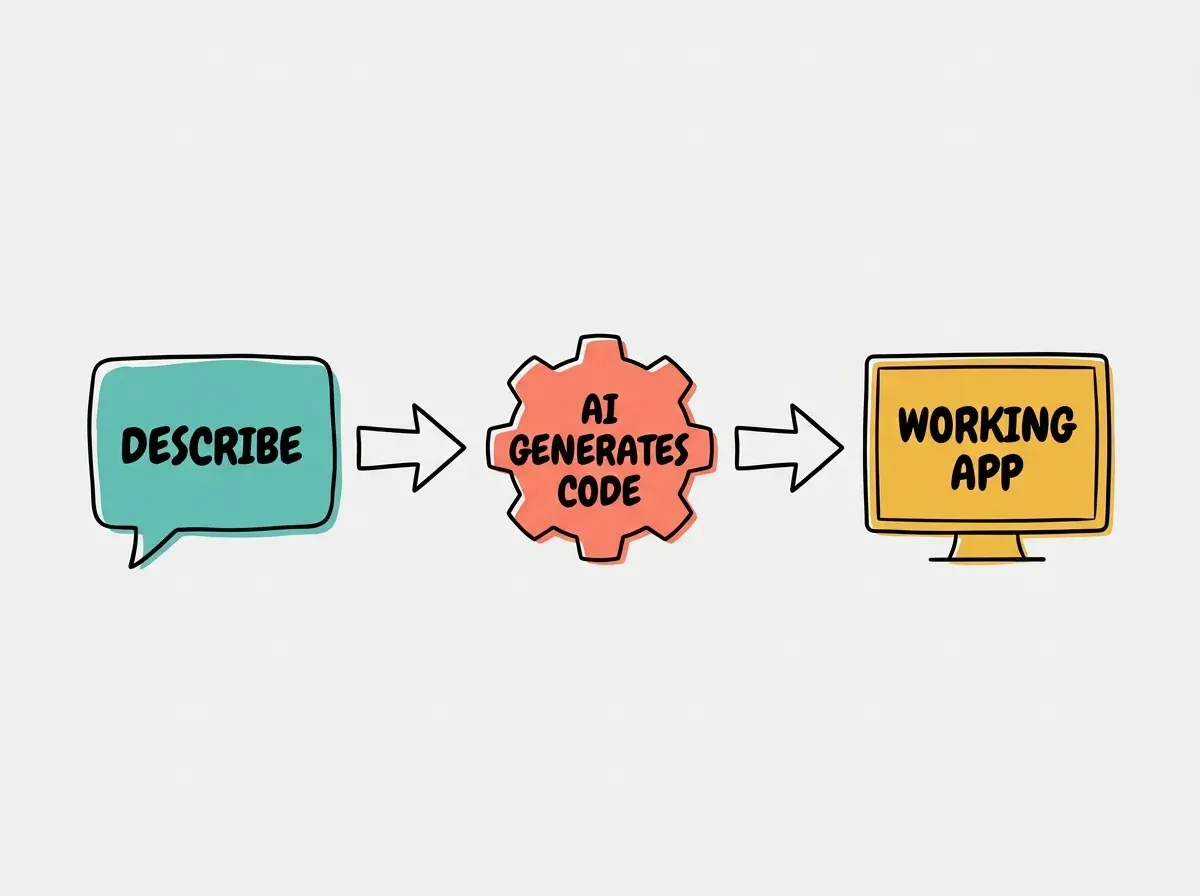
Every app you use, from Instagram to your banking app, is built from these instructions. The instructions might say things like "when the user taps this button, show the next screen" or "save this form data to the database" or "if the password is wrong, show an error message."
In traditional coding, developers type these instructions by hand in languages like JavaScript, Python, or Swift. In vibe coding, you describe what you want and AI writes the instructions for you. The code is the same either way. The difference is who writes it.
The Building Blocks
Every piece of code, no matter how complex, boils down to a few simple concepts:
- Variables store information (like a user's name or a shopping cart total)
- Conditions make decisions ("if the user is logged in, show the dashboard; otherwise, show the login page")
- Loops repeat actions ("for each item in the cart, calculate the price")
- Functions group instructions together so you can reuse them ("the checkout process" bundles dozens of steps into one action)
You don't need to memorize any of this. But when AI generates code and you see the word "function" or "if," you now know what those building blocks are doing.
Start with the basics and build your first app this week.
Read the introCan You Vibe Code Without Understanding Code
Yes, and millions of people do. But there is a ceiling.
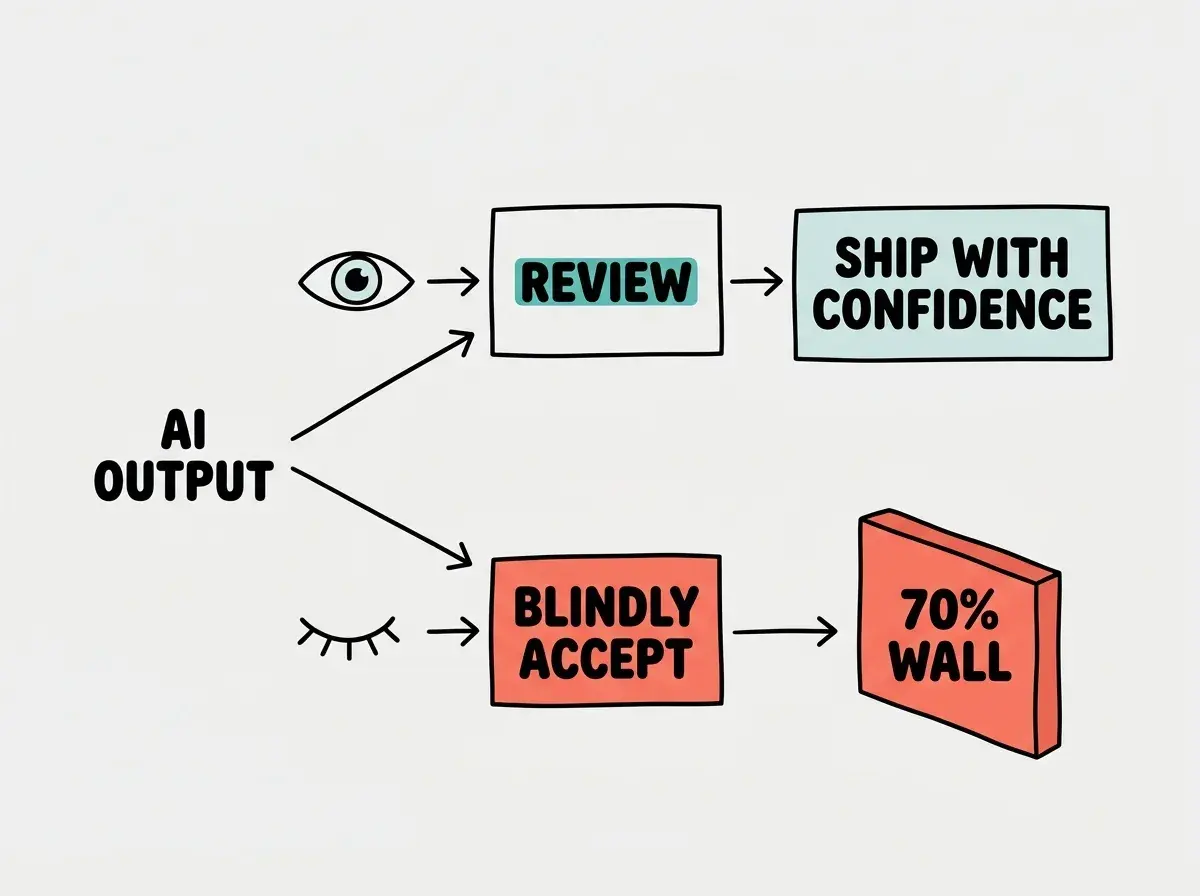
The builders who get stuck most often are the ones who treat AI like a magic box. They type a prompt, accept whatever comes back, and hit a wall when something breaks. They can't describe the problem to AI because they don't have the vocabulary to say what went wrong.
The builders who move fastest are the ones who understand the basics. Not the syntax. Not the languages. Just the concepts: what code is, what it does, and roughly how it is organized.
You don't need to read every line. But when AI shows you a file with 200 lines of JavaScript, knowing that the top section imports tools, the middle section defines what happens, and the bottom section runs the app, that rough mental map is enough to have a productive conversation with AI.
Common Misconceptions About Code
You might think code is math. But actually, most code reads more like a set of instructions in broken English. Yes, some code involves calculations, but the vast majority is just "do this, then do that, and if this happens, do something else." If you can write a detailed to-do list, you can understand what code does.
You might think there is one coding language. There are hundreds, but in vibe coding you will mostly encounter JavaScript (for web apps), Python (for data and AI tools), and SQL (for databases). AI handles the translation between your English and whatever language the app needs.
You might think you need to understand all of it. You don't. Even professional developers rarely understand every line in their own projects. What matters is understanding the shape of things: where the pieces are, what they do at a high level, and how they connect.
The biggest mistake new vibe coders make is accepting AI output without any review. You don't need to read the code line by line, but skimming it for obvious issues (like hardcoded passwords or missing error handling) takes 30 seconds and prevents hours of debugging later.
Is Coding Harder Than Math
This is one of the most common questions beginners ask, and the answer is almost always no. Coding is more like writing than math. You are giving instructions, not solving equations.
The part that trips people up is not difficulty; it is precision. Computers do exactly what you tell them. Miss a comma, and the whole thing breaks. But with AI tools writing the code for you, even that problem disappears. You describe what you want in plain English, and AI handles the precision.
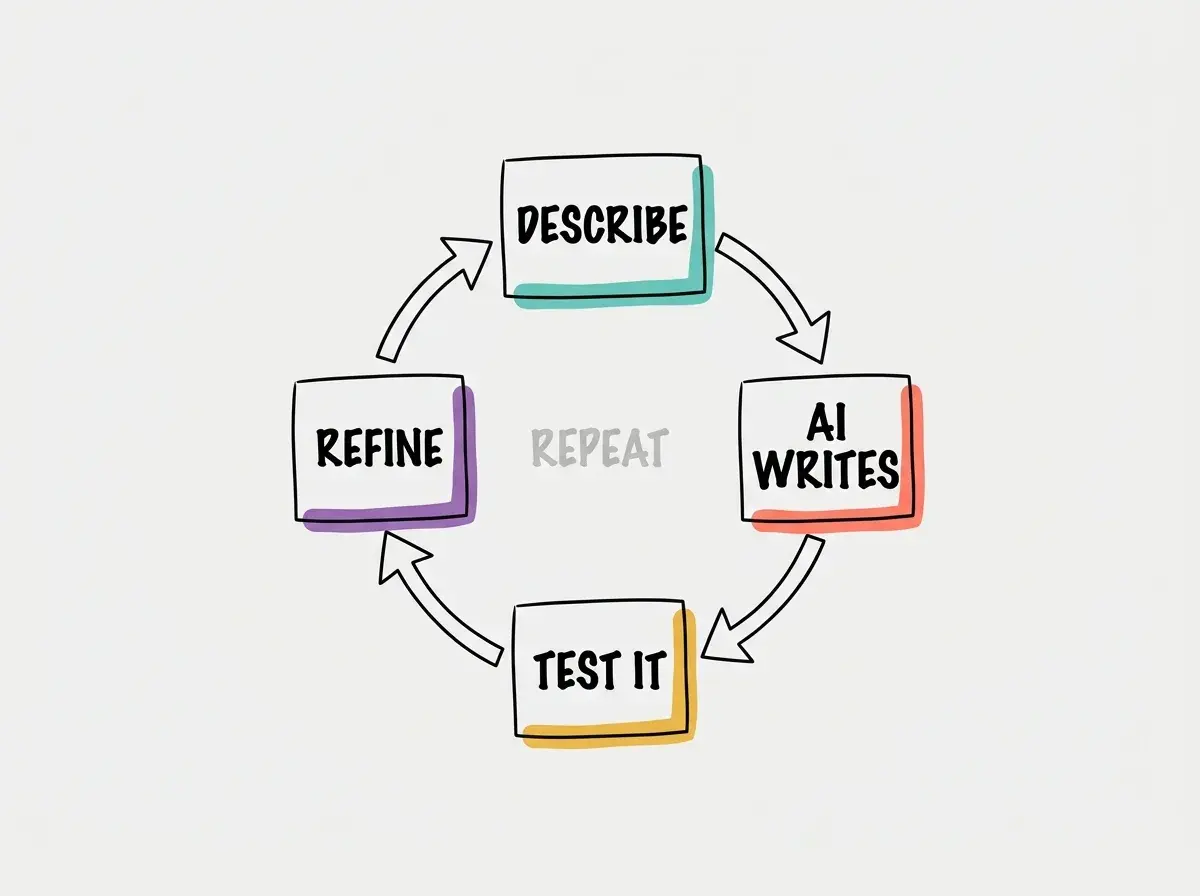
The real skill in vibe coding is clarity of thought. Can you describe what your app should do clearly enough that AI understands? Can you test whether it works? Can you describe what went wrong when it doesn't? Those are communication skills, not math skills.
What This Means For You
Understanding code at a conceptual level is the single highest-leverage thing you can do as a vibe coder. You don't need to learn a programming language. You need to learn what code is, roughly how it is organized, and what the basic building blocks do.
- If you're a founder: Understanding code helps you evaluate what AI builds, spot potential issues before users do, and communicate more precisely with any developers you hire later. Start with what a program is to see code in action.
- If you're changing careers: Your domain expertise is your superpower, and code knowledge multiplies it. Knowing what a database or API does helps you describe what you want AI to build. Check out frontend vs backend for the full picture.
- If you're a student: You are entering the workforce at the perfect moment. Understanding code fundamentals alongside AI tools gives you a combination most professionals don't have yet. Explore what a user interface is to get started.
The bottom line: code is just instructions. AI writes the instructions now. But the person who understands what those instructions do builds better apps, faster, with fewer dead ends.
Learn vibe coding from the ground up with our free guides.
Get started