To understand how universities are adapting to vibe coding in 2026, recognize the four adaptation patterns universities have developed (early integrators that have built AI coding into curriculum since 2023 producing graduates with strong AI fluency, cautious integrators that allow AI tools but with restrictions producing graduates with mixed AI fluency, traditional holdouts that prohibit AI tools producing graduates with strong fundamentals but weak AI fluency, and hybrid programs that emphasize fundamentals first then AI tools producing graduates with both), see what the patterns reveal about which programs serve students best for 2026 careers, and consider what current students should do given their program type. The university adaptation patterns reveal both opportunity and risk for students.
This piece walks through the four adaptation patterns, what they reveal, the implications for students and employers, and the four mistakes when interpreting university AI policies.
Why University Adaptation Matters
University adaptation matters for students choosing programs and for employers hiring graduates. The patterns vary dramatically across universities; understanding the patterns helps students choose programs and helps employers calibrate expectations about graduate skills.
The 2026 reality is that university adaptation lags industry adoption substantially. Many university programs developed before AI coding adoption now produce graduates whose skills do not match employer expectations. Other programs have rapidly adapted and produce graduates well prepared for current industry reality.
A 2025 university computer science program survey of 200 schools found that only 28 percent had substantially restructured curriculum to incorporate AI coding tools, while 41 percent had made minimal changes and 31 percent had explicitly restricted AI tool use in coursework. The variance produces dramatically different graduate skill profiles from different programs.
The pattern to copy is the way business schools adapted to internet business through the late 1990s. Some adapted early producing graduates ready for dot com era; others lagged producing graduates whose skills mismatched the changed business environment. University adaptation to vibe coding follows similar patterns; early adaptors produce graduates ready for current industry, while lagging adaptors produce graduates needing significant catch up.
The Four Adaptation Patterns
Four adaptation patterns characterize university responses to vibe coding.
Pattern 1, early integrators that built AI coding into curriculum since 2023. These programs explicitly teach AI tool use alongside traditional programming. Graduates leave with both fundamentals and AI fluency.
Pattern 2, cautious integrators that allow AI tools but with restrictions. AI tools allowed in some courses, prohibited in others. Graduates have mixed AI fluency depending on which courses they took.
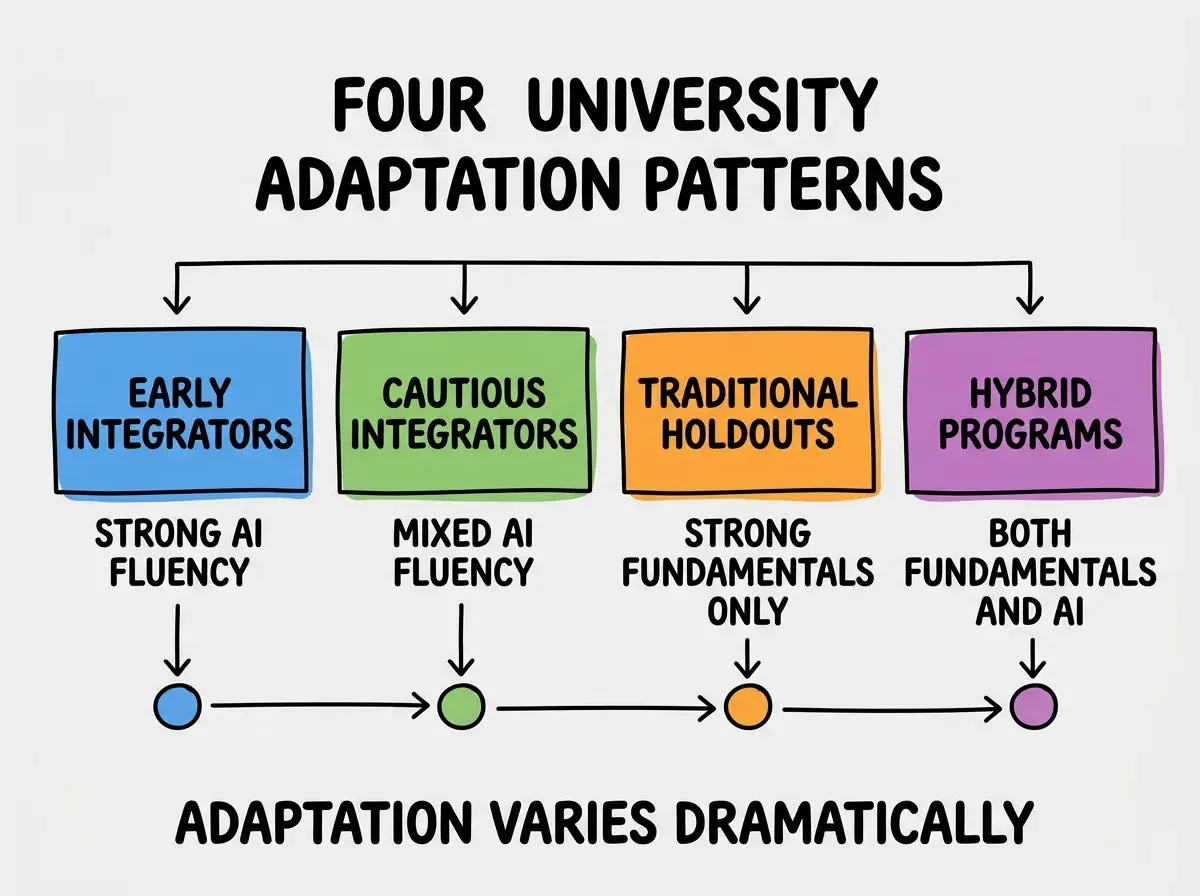
Pattern 3, traditional holdouts that prohibit AI tools. Some programs maintain that AI tools harm fundamental skill development. Graduates have strong fundamentals but weak AI fluency.
Pattern 4, hybrid programs that emphasize fundamentals first then AI tools. Early courses focus on fundamentals without AI tools; later courses introduce AI tools after fundamentals are established. Graduates have both strong fundamentals and AI fluency.
What the Patterns Reveal
Three patterns from university responses reveal industry employer implications.
Pattern 1, hybrid programs produce most employable graduates currently. Graduates with both fundamentals and AI fluency match current employer needs. The combination is rare enough that hybrid graduates command premium positions.
Browse more education analysis
Read more pulse articlesPattern 2, early integrators may have over rotated. Some early programs taught AI tools without sufficient fundamentals; the graduates struggle when AI tools fail or when problems require deep understanding.
Pattern 3, traditional holdouts produce graduates needing employer catch up. Employers must invest in AI fluency training for graduates from holdout programs. The investment produces good outcomes but adds onboarding cost.
What Students Should Do Given Their Program Type
Three application patterns help students navigate their specific program situation.
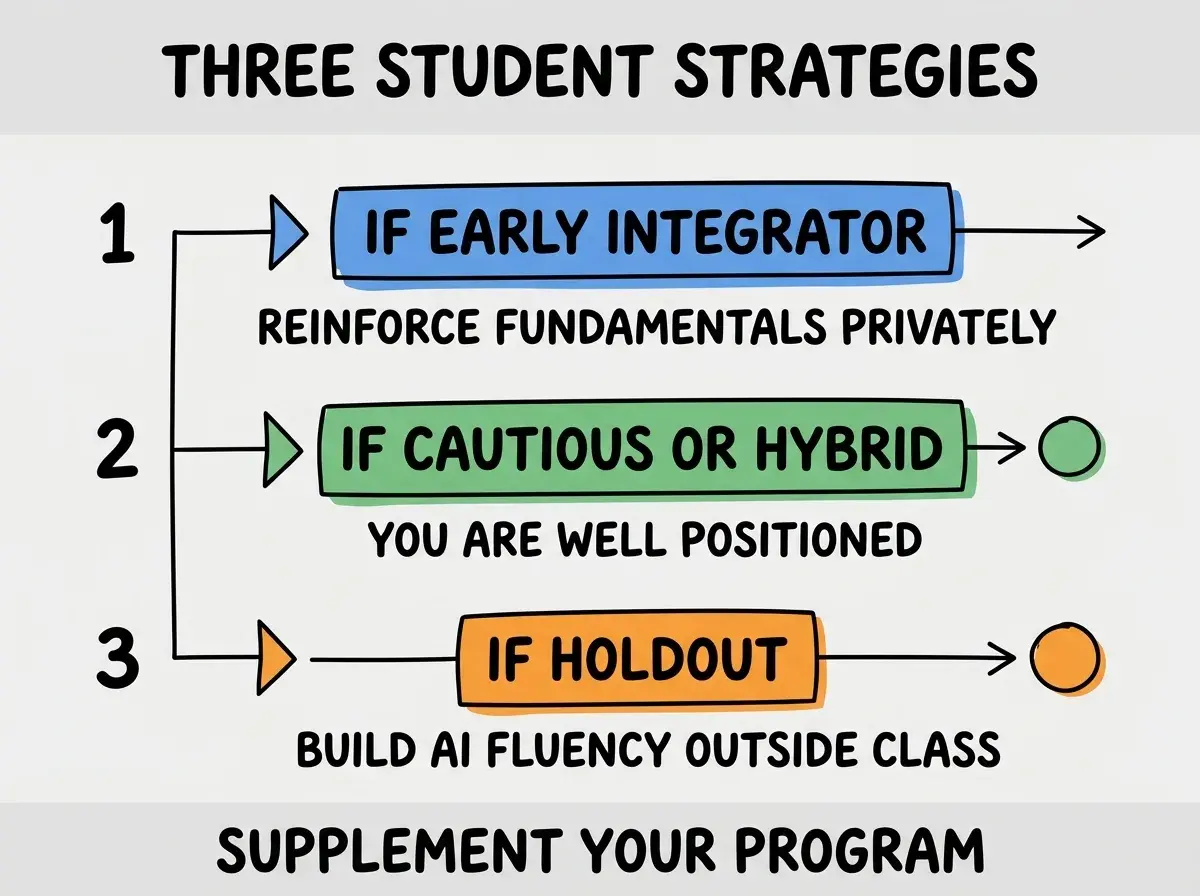
Strategy 1, if your program is an early integrator, reinforce fundamentals privately. Read classic computer science books, work through fundamentals exercises, build understanding beyond what coursework provides.
Strategy 2, if your program is cautious or hybrid, you are well positioned. Continue program work; supplement with personal AI tool use to deepen fluency beyond class.
Strategy 3, if your program is a holdout, build AI fluency outside class. Personal projects with AI tools, online courses on AI tool use, contribute to AI tool open source projects.
How Employers Should Calibrate Hiring Expectations
Three implications matter for employers thinking about graduate hiring.
Implication 1, ask about specific AI tool exposure during interviews. Generic computer science degree no longer signals AI fluency; specific questions reveal actual exposure.
Implication 2, budget AI tool training for new graduates from holdout programs. Holdout graduates need 1-3 months of AI fluency development to match early integrator graduates.
Implication 3, value hybrid program graduates highest currently. Both fundamentals and AI fluency produces best long term engineering performance. Pure AI fluency without fundamentals struggles when problems require deep understanding.
The most damaging student mistake is assuming program curriculum is sufficient regardless of program type. Programs of all types need supplementation; early integrators need fundamentals supplementation, holdouts need AI fluency supplementation, hybrid programs need both at least somewhat. The fix is to actively supplement your program based on what it does not cover; passive reliance on program curriculum produces graduates with skill gaps that competitors lack.
The other mistake is choosing programs based primarily on AI policy stance. Program quality, faculty expertise, peer quality, and resources matter more than AI policy for long term outcomes. The fix is to weight AI policy as one factor among many.
A third mistake is treating university adaptation as static. University programs adapt continuously; the patterns described may shift over the next 2-3 years. The fix is to consider current trajectory rather than just current state.
A fourth mistake is missing the economics dimension. AI tool subscriptions cost money; programs that require AI tools effectively raise tuition for students paying for tools. The fix is to consider tool cost in program comparisons.
How University Adaptation Will Likely Evolve
Three adaptation predictions matter for thinking about university direction over the next 3-5 years. First, the holdout segment will likely shrink as employers increasingly require AI fluency; programs producing graduates without AI fluency face declining placement rates that affect program enrollment. Second, hybrid programs will likely become majority approach as universities recognize the both fundamentals and AI fluency combination produces best graduate outcomes; current minority hybrid approach will likely become standard. Third, professional development programs for working developers will likely grow as career changers and existing developers seek AI fluency without full degree programs; this segment may grow faster than traditional university programs.
What This Means For You
The university adaptation patterns reveal both opportunity and risk for students choosing programs and pursuing degrees. The four patterns, student strategies, and employer implications produce framework for thinking about education direction.
- If you're a student: Your program type determines what supplementation you need. Identify your program type, identify your gaps, supplement deliberately. Passive reliance on program curriculum produces unwanted skill gaps.
- If you're a career changer considering university: Hybrid programs offer best outcomes currently. Choose hybrid programs over early integrator or holdout programs when possible.
- If you're an employer hiring graduates: Calibrate expectations by program type. Generic degree titles obscure dramatic skill differences across programs; specific questions reveal actual capability.
Browse more education analysis
Read more pulse articles