To understand the case study of CNBC journalists replicating Monday.com in under an hour with AI tools, recognize the four phase journey they navigated (defined the specific Monday.com features they wanted to replicate, scaffolded the app structure with AI tools in 20 minutes, refined the implementation through journalistic question asking, and shipped a working demo within their hour deadline), see what journalist perspective brought that engineering perspective might have missed, and consider how the patterns apply to other non technical professionals contemplating similar demonstrations. The case study shows how AI tools genuinely transform the entry barrier to building software.
This piece walks through the four phases, the journalist specific advantages, the specific tooling, and the four mistakes non technical builders make when attempting similar speed demonstrations.
Why Non Technical Build Demonstrations Matter
Non technical professionals using AI to build software demonstrate the broader transformation in who can ship products. The demonstrations matter; CNBC journalists building working apps in an hour show audiences what AI tools genuinely enable, beyond marketing claims from AI companies themselves.
The 2026 reality is that AI tools have transformed who can build software. The case study documents one specific demonstration; the pattern applies broadly to other non technical professionals contemplating their own builds.
A 2025 Stack Overflow developer survey found that 41 percent of professional developers reported working alongside non technical colleagues who shipped production code using AI tools in the previous year. The collaboration pattern has shifted dramatically; non technical building is no longer exceptional but increasingly normal in 2026.
The pattern to copy is the way amateur radio operators democratized communication in the early 20th century. The technology became accessible enough that hobbyists rather than professionals operated stations; the result was broader participation and unexpected innovations. AI tools play similar role for software building; democratization produces participation and innovation that gatekept access prevented.
The Four Phase Journey
Four phases characterized the journalists' under hour build.
Phase 1, defined the specific Monday.com features they wanted to replicate. Project board with cards, drag and drop status changes, basic comments. Narrow scope made the hour deadline achievable; comprehensive replication would have failed.
Phase 2, scaffolded the app structure with AI tools in 20 minutes. v0 generated initial UI; basic layout appeared in minutes. The scaffolding speed was the dominant factor enabling the hour deadline.
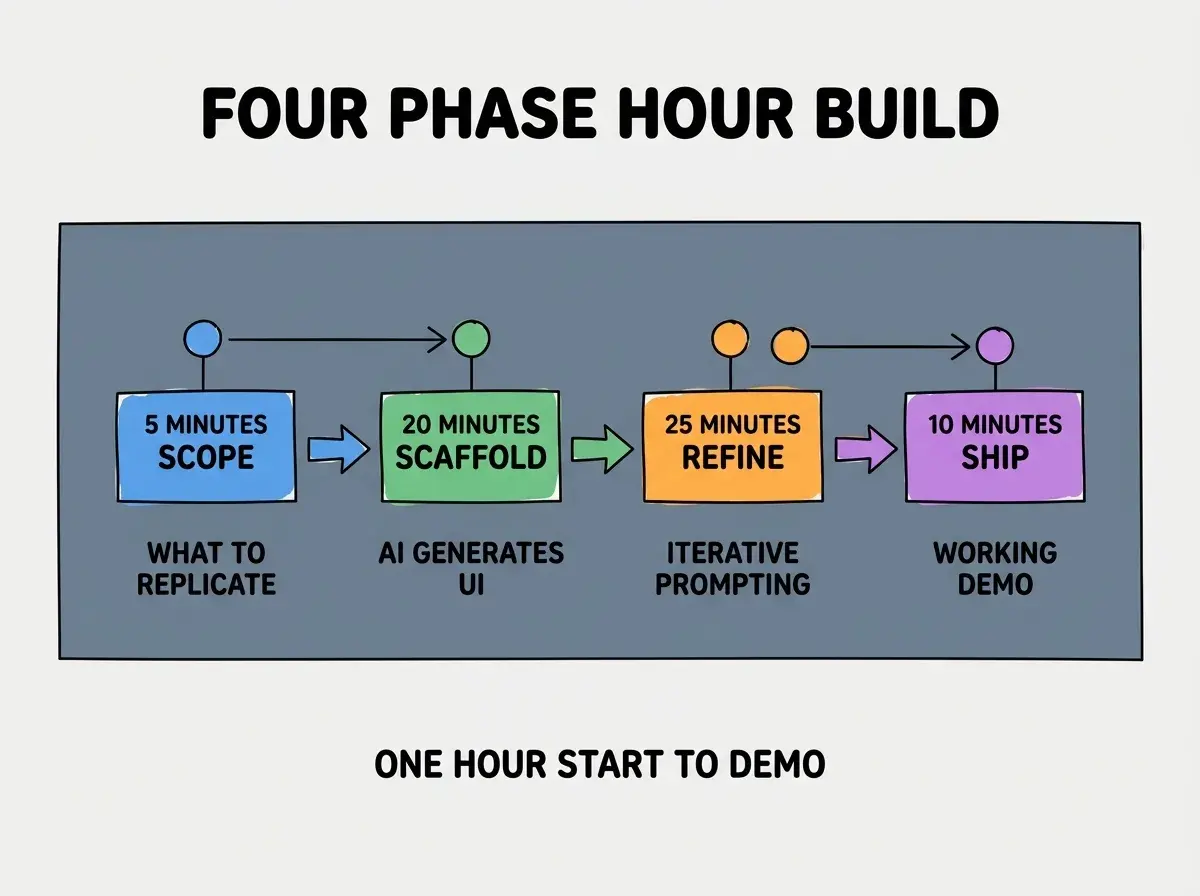
Phase 3, refined the implementation through journalistic question asking. Asked AI to add specific features one at a time. Each refinement took 1-3 minutes; cumulative refinement in 25 minutes produced working app.
Phase 4, shipped a working demo within the hour deadline. Final 10 minutes for deployment and testing. The demo worked end to end despite the speed; deployment friction was the smallest part of the build.
What Journalist Perspective Brought
Three patterns from journalism background produced advantages over typical engineering approaches for this demonstration.
Pattern 1, sharp question asking produced precise prompts. Journalists trained in interviewing translate their skill to AI prompting effectively. Specific questions produce specific answers; vague questions produce vague code.
Browse more case studies
Read more pulse articlesPattern 2, deadline focus prevented scope creep. Journalist deadline discipline meant accepting good enough rather than chasing perfect. The acceptance enabled shipping; perfectionism would have missed the hour.
Pattern 3, communication focus produced demoable result. Journalists know what makes a story compelling; they applied that knowledge to demo design. The demo communicated the capability clearly; less communication aware demos often fail to land.
The Specific Tooling That Worked
Three tool categories combined effectively for the under hour build.
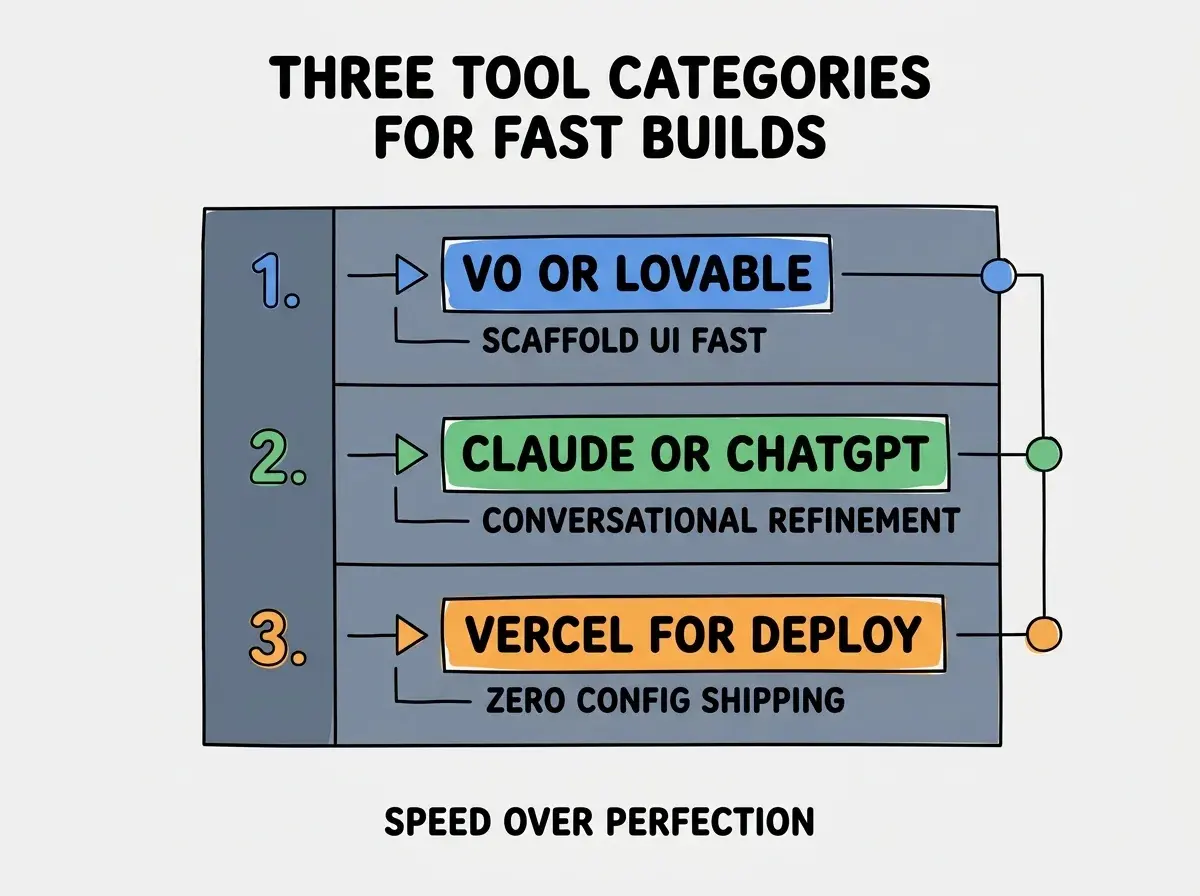
Tool 1, v0 or Lovable for fast scaffolding. Initial UI in minutes. Saved hours that traditional component building would have consumed.
Tool 2, Claude or ChatGPT for conversational refinement. Iterative back and forth as features grew. Conversational AI matches journalist working style.
Tool 3, Vercel for zero config deployment. Live demo URL without DevOps complexity. Working demo without infrastructure work.
What This Tells Us About Building Today
Three insights from the demonstration matter for understanding 2026 building.
Insight 1, the entry barrier to software building has dropped dramatically. What previously required professional developers and weeks of work now requires curious users and an hour. The shift is real, not marketing claim.
Insight 2, the demo gap between AI tools and production software remains. An hour build produces working demo; production reliable software still requires more time. The gap is smaller but exists.
Insight 3, the democratization will continue. Tools improve; what takes an hour today will take 15 minutes in 2027. The trajectory matters more than current state for thinking about the next few years.
How Non Technical Professionals Can Apply These Lessons
Three application patterns help non technical professionals attempt similar builds.
Pattern A, start with narrow scope, not impressive scope. Specific feature replication produces successful demos; comprehensive replication produces incomplete demos. Narrow wins.
Pattern B, accept that learning curve is real even with AI tools. First builds involve real friction. Plan for the friction; second builds go faster than first.
Pattern C, demo to communicate, not to impress. Demo design that communicates capability matters more than demo that shows complexity. Simple working demos beat complex partial demos.
The combination produces successful non technical builds. Without these patterns, professionals sometimes attempt builds, hit early friction, and conclude they cannot ship when patient deliberate execution would produce shipped demos.
The most damaging non technical builder mistake is treating AI tools as magical rather than as tools requiring skill. AI tools require prompting skill, iteration patience, and judgment about when to accept output. The fix is to invest time learning the tools deliberately; weekend learning compounds into building capability that ad hoc use does not produce. Tools without skill produce frustration; tools with skill produce shipped products.
The other mistake is choosing too ambitious a first project. Excited non technical builders often pick complex applications and burn out before shipping. The fix is to pick projects so simple they almost certainly ship; small wins compound into larger capability over time.
A third mistake is expecting production quality from one hour builds. Demo quality and production quality differ; setting expectations correctly preserves credibility. The fix is to label demos as demos; production work requires production time investment.
A fourth mistake is hiding the AI involvement in builds. Honesty about AI use builds trust; hiding AI use destroys it when discovered. The fix is to be transparent about AI tool use; transparency preserves credibility.
What This Means For You
The CNBC journalists replicating Monday.com in under an hour represents the new normal in 2026. The four phases, journalist patterns, and tool combinations produce successful demonstrations for committed non technical builders.
- If you're a creative: Try one demo build of an app you find interesting. The transition becomes career renewing if it works; the cost is one hour of focused effort.
- If you're a career changer: Non technical building paths exist now that did not exist before AI tools. The opportunity is real; deliberate execution produces results.
- If you're a senior dev: Non technical builders represent collaboration opportunity rather than competition. Their domain knowledge plus your engineering judgment often produces better products than either alone.
Browse more non technical case studies
Read more pulse articles