To understand the case study of a career changer landing her first tech job through vibe coding, recognize the four-phase transition she navigated (built foundational skills through structured learning over 3 months, shipped portfolio projects that demonstrated capability, networked through online communities and shared progress, and interviewed strategically for roles that valued AI fluency over traditional credentials), see what specific patterns shortened the typical career-change timeline, and consider how the patterns apply to your situation. The case study shows that AI-assisted development genuinely opens new entry paths for career changers who execute deliberately.
This piece walks through the four phases, the specific patterns that worked, the realistic timeline, and the four mistakes career changers make when attempting similar transitions.
Why Career Change Through Vibe Coding Matters
Traditional CS-to-job paths require 4-year degrees or expensive bootcamps. Vibe coding-to-job paths increasingly bypass both, opening tech careers to people who previously had no realistic entry point. The case study shows what one specific path looked like.
The 2026 reality is that career changers using vibe coding are landing jobs at increasing rates. The question is no longer whether the path works but how to execute it well. Specific patterns shorten the timeline and improve outcomes.
A 2025 Coursera career change report tracked 600 career changers entering tech via vibe coding paths. The median time-to-first-job was 7 months from start of structured learning. The case study documents one specific journey that landed in 6 months; faster than median but within the realistic range. The path is real and increasingly trodden; specific execution determines individual outcomes.
The pattern to copy is the way GED holders successfully transitioned to professional careers in past decades. They lacked traditional credentials but demonstrated capability through portfolio work and recommendations. The path worked but required deliberate execution; vibe coding career changers face similar dynamics.
The Four-Phase Transition
Four phases characterized the career changer's journey from start to first job.
Phase 1, foundational skills through structured learning, months 1-3. Online courses, AI tool fluency development, basic programming concepts. Structured rather than ad-hoc; the structure produced learning velocity that random tutorials would not have.
Phase 2, shipped portfolio projects, months 3-5. Three substantial projects with real users, live deployments, and clear documentation. The portfolio became the credential that traditional resumes could not provide.
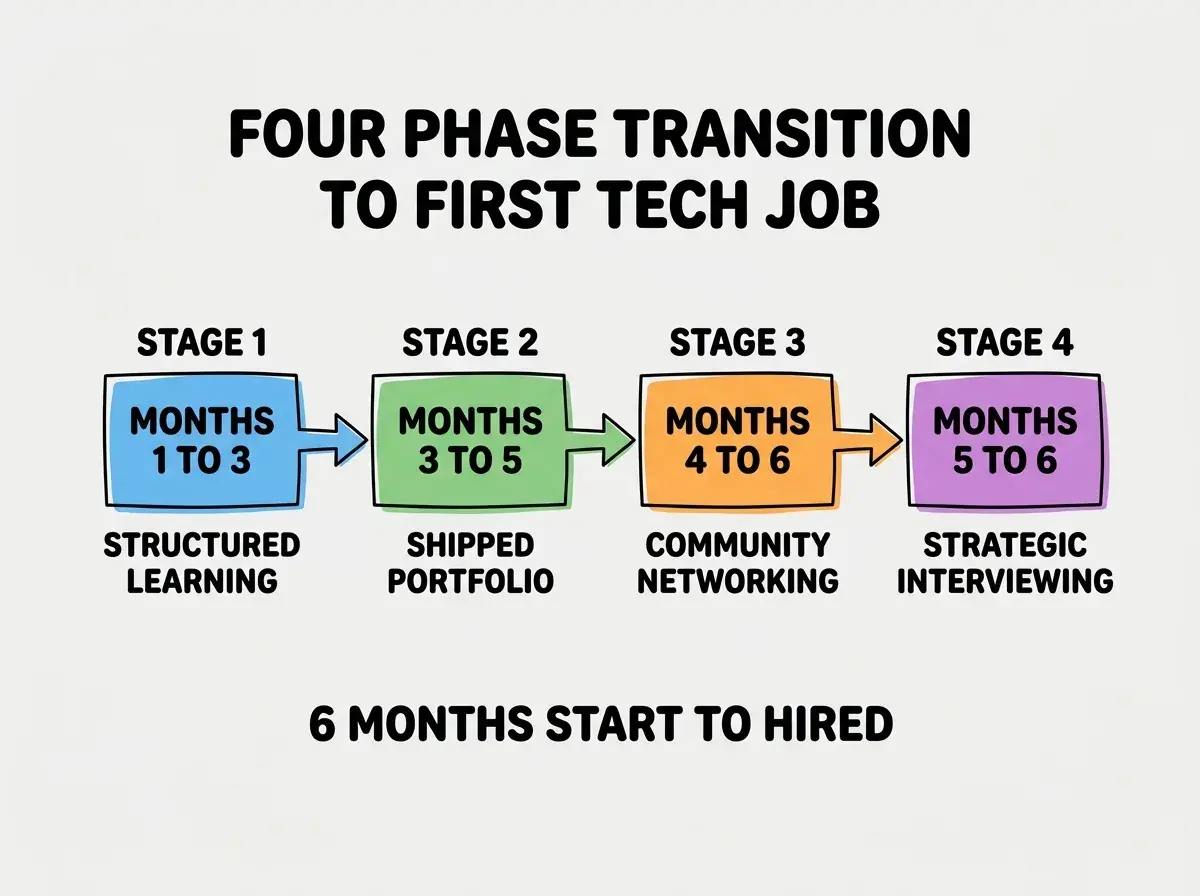
Phase 3, community networking, months 4-6. IndieHackers, Twitter, specific Discord communities. Built relationships with builders and hiring managers; shared progress publicly to build reputation.
Phase 4, strategic interviewing, months 5-6. Targeted companies that explicitly valued AI fluency. Avoided large tech companies that filter for traditional credentials; targeted smaller AI-native companies where her profile fit.
The Specific Patterns That Worked
Three specific patterns shortened the timeline below typical median.
Pattern 1, learning daily for the entire 6 months without breaks. Consistency mattered more than session length. 1-2 hours daily for 180 days produced learning that 8-hour weekends for 6 months would not have.
Browse more career change case studies
Read more pulse articlesPattern 2, every project had a real user, not just GitHub. Personal use, friend use, public deployment. Real users produced learning that toy projects could not.
Pattern 3, public progress sharing built reputation before applying. By interview time, hiring managers in her target companies had seen her name. The familiarity converted to favorable interview consideration.
The Realistic Timeline Behind the Headline
Three timeline realities matter for setting expectations.
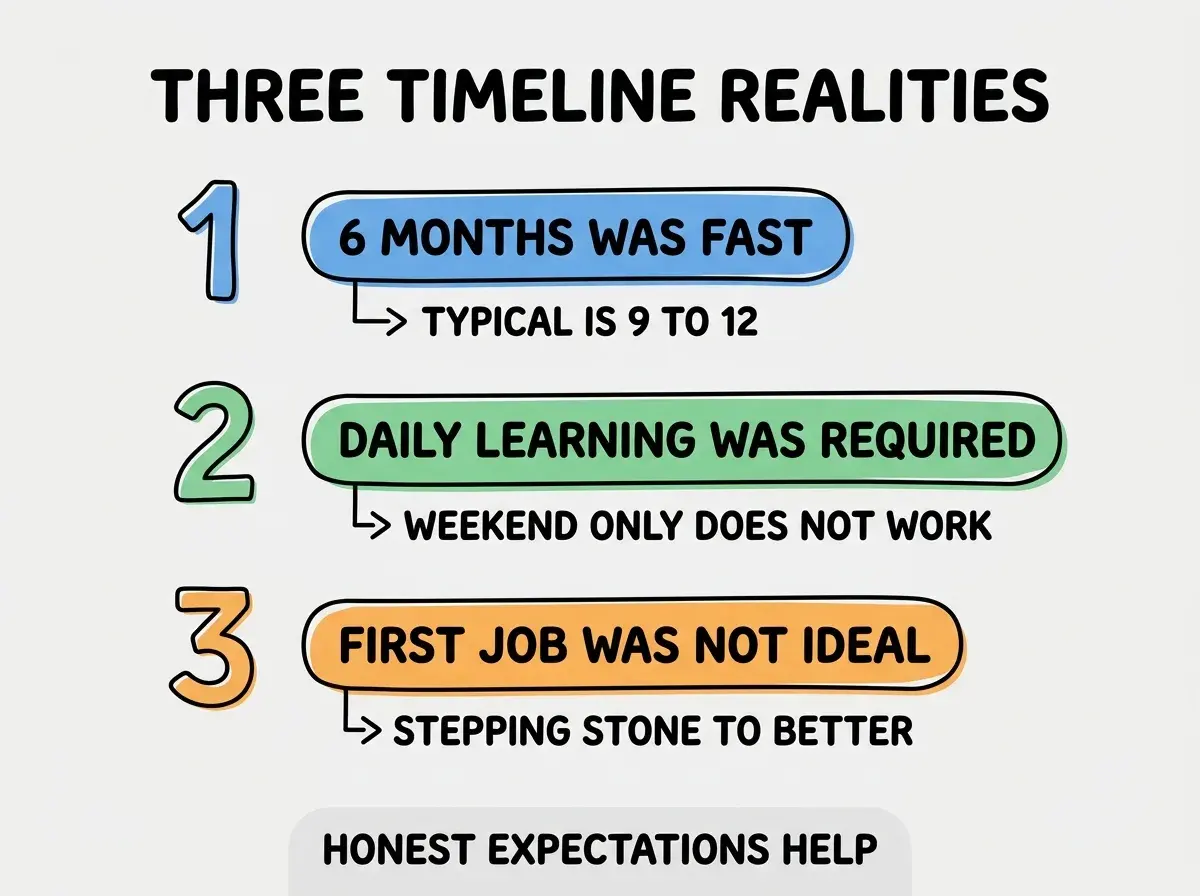
Reality 1, 6 months was fast; 9-12 is typical. Median time-to-first-job is closer to 9 months. Expecting 6 months when 9 is typical produces disappointment that sometimes ends transitions.
Reality 2, daily learning was required. Weekend-only learning rarely produces career-change velocity. The discipline of daily study compounds in ways inconsistent learning does not.
Reality 3, first job was not ideal job. First role was at smaller company at lower pay than career changer eventually wanted. Stepping stone strategy worked; expecting first role to be ideal produces frustration.
What the Career Changer Did Each Day
Three daily practices characterized her successful transition.
Practice 1, 2 hours of structured learning each morning. Same time daily, before other commitments. The morning slot meant the learning happened consistently regardless of how the day went.
Practice 2, building project work each evening. Different from learning; applying what she had learned to the portfolio projects. The application reinforced the morning learning.
Practice 3, 30 minutes of community engagement. Reading other builders' work, commenting thoughtfully, sharing her own progress. The engagement built relationships that produced opportunities later.
The combination produced 3-4 hours of daily transition work. Sustainable; not extreme; the consistency mattered more than intensity.
How to Apply These Lessons
Three application patterns help career changers attempting similar transitions.
Pattern A, commit to daily practice for the entire timeline. 1-2 hours daily, no breaks for at least 6 months. The consistency produces compound learning that intermittent effort cannot match.
Pattern B, ship at least 3 portfolio projects with real users. Real deployment, real users, documented decisions. The portfolio becomes the credential; without it, the transition stalls in the application phase.
Pattern C, build reputation publicly during the transition. Share what you are learning, building, and figuring out. Hiring managers seeing your name multiple times produces favorable bias when applications arrive.
The combination produces transitions that succeed at higher rates than passive application strategies. Without these patterns, career changers often complete the learning phase but struggle to convert to job offers.
The most damaging career change mistake is treating the transition as one-step (learn coding, get job). The reality is multi-step (learn fundamentals, ship portfolio, build network, target specific roles, interview strategically). The fix is to plan all four phases from the start rather than discovering them sequentially. Career changers who plan comprehensively shorten their timeline; career changers who plan only the first step often add months while figuring out subsequent steps.
The other mistake is targeting companies that explicitly require traditional credentials. Some companies filter resumes by university; others care about portfolio. The fix is to research target companies' actual hiring criteria; targeting companies that filter for credentials you do not have produces frustration regardless of capability.
A third mistake is comparing your timeline to outlier success stories. Some career changers land jobs in 3 months; most take 6-12. The fix is to compare to median outcomes rather than outliers; comparing to outliers produces unwarranted discouragement when your own progress is actually normal.
What This Means For You
The career change through vibe coding is real path in 2026. The four phases, specific patterns, and realistic timeline produce successful transitions for committed career changers.
- If you're a career changer: Plan all four phases from the start. Daily practice, portfolio projects, community presence, strategic interviewing. The compound effect produces results.
- If you're a founder: Career changers entering tech bring valuable diversity of perspective. Consider hiring them; their hunger and recent learning often produces better team fit than long-tenured engineers.
- If you're a student: Watch what works for career changers; you can apply the same patterns even within traditional CS programs to differentiate your candidacy.
Browse more career transition case studies
Read more pulse articles