Vibe coding for e-commerce stores requires PCI DSS compliance to handle payment card data legally. Four compliance domains matter: scope reduction (use Stripe, Shopify Payments to minimize PCI scope), data handling (never store raw card data), network security (TLS, secure infrastructure), and access controls (audit trails, principle of least privilege). Combined approach produces compliant stores; without compliance, payment processors block, regulators fine, customers lose trust.
This piece walks through the four domains, the implementation patterns, what makes PCI compliance sustainable, and the four mistakes vibe coders make on PCI compliance.
Why PCI DSS Matters For Vibe Coded Stores
PCI DSS matters because every store accepting cards must comply. Non compliance results in payment processor termination, fines, and breach liability. Vibe coded stores not exempt from compliance.
The 2026 reality is that payment processor abstractions (Stripe, Shopify Payments) reduce PCI scope dramatically; vibe coders can comply without becoming compliance experts.
A 2025 e-commerce compliance study of 600 indie stores found that stores using Stripe or Shopify Payments achieved PCI compliance 12x faster than stores attempting custom payment processing, primarily through scope reduction to SAQ A. Processor choice measurably affects compliance complexity.
The pattern to copy is the way restaurants handle health code through commercial kitchens and licensed staff rather than building food safety from scratch. Shared infrastructure handles compliance burden. Same patterns apply to PCI; payment processors handle PCI burden, vibe coders comply with thin layer.
The Four Compliance Domains
Four domains describe PCI compliance scope.
Domain 1, scope reduction. Use processors. Foundation for vibe coders.
Domain 2, data handling. Never store raw cards. Critical.
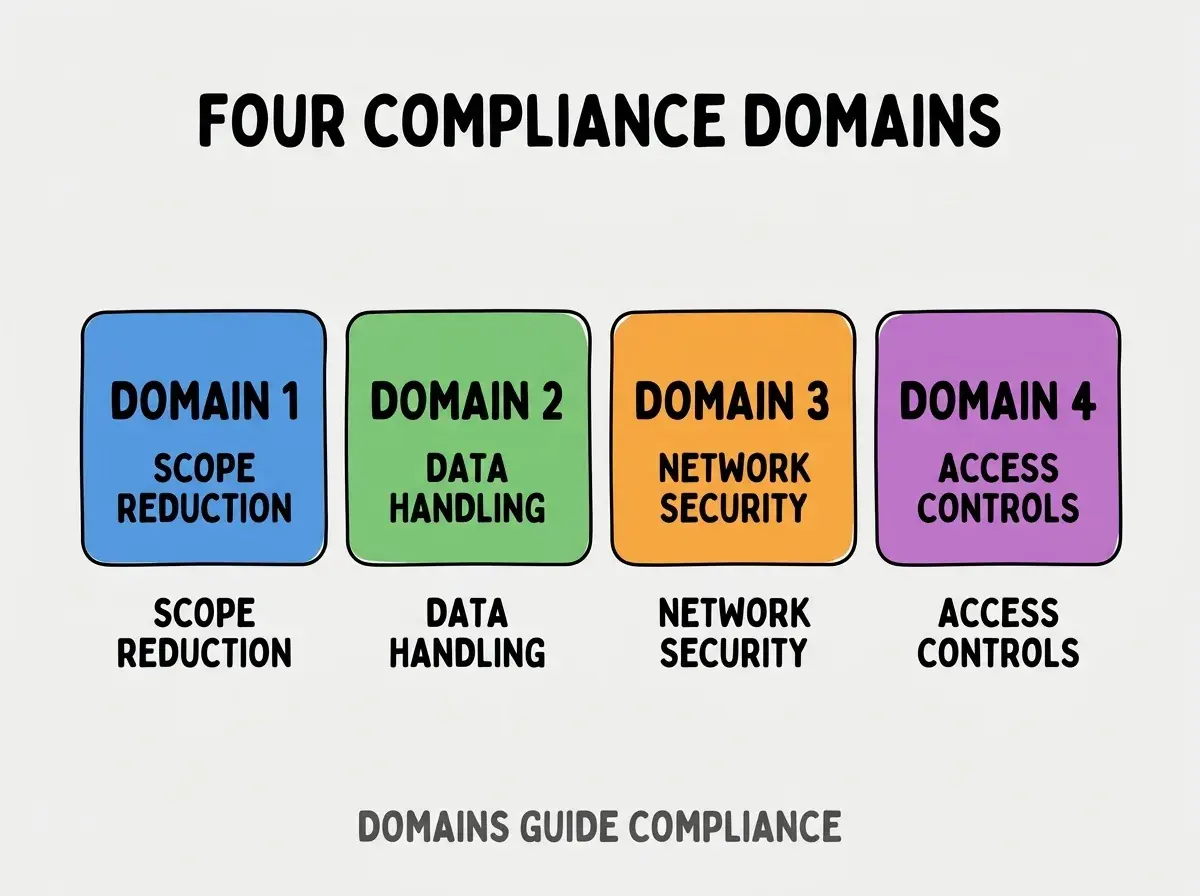
Domain 3, network security. TLS, infrastructure. Standard.
Domain 4, access controls. Audit trails, least privilege. Operations.
How To Implement Each Domain
Four implementation patterns address each domain.
Implementation 1, Stripe Elements or Shopify Payments. Card data hits processor not your server; SAQ A scope.
Browse more pulse
Read more pulseImplementation 2, never log card data. Audit logging excludes card; even partial card numbers risky.
Implementation 3, TLS everywhere with HSTS. Modern hosting defaults; verify in audit.
Implementation 4, role based access plus audit logs. Admin actions logged; access reviewed quarterly.
What Makes PCI Compliance Sustainable
Three patterns separate sustainable from one off compliance.
Pattern 1, processor abstraction maintained. Don't add custom card flows; processor handles.
Pattern 2, annual SAQ refresh. Self assessment questionnaire annually; scope verified.
Pattern 3, breach response plan documented. When breach happens, plan exists.
What Makes Compliance Strategy Effective
Three patterns separate effective from theatrical.
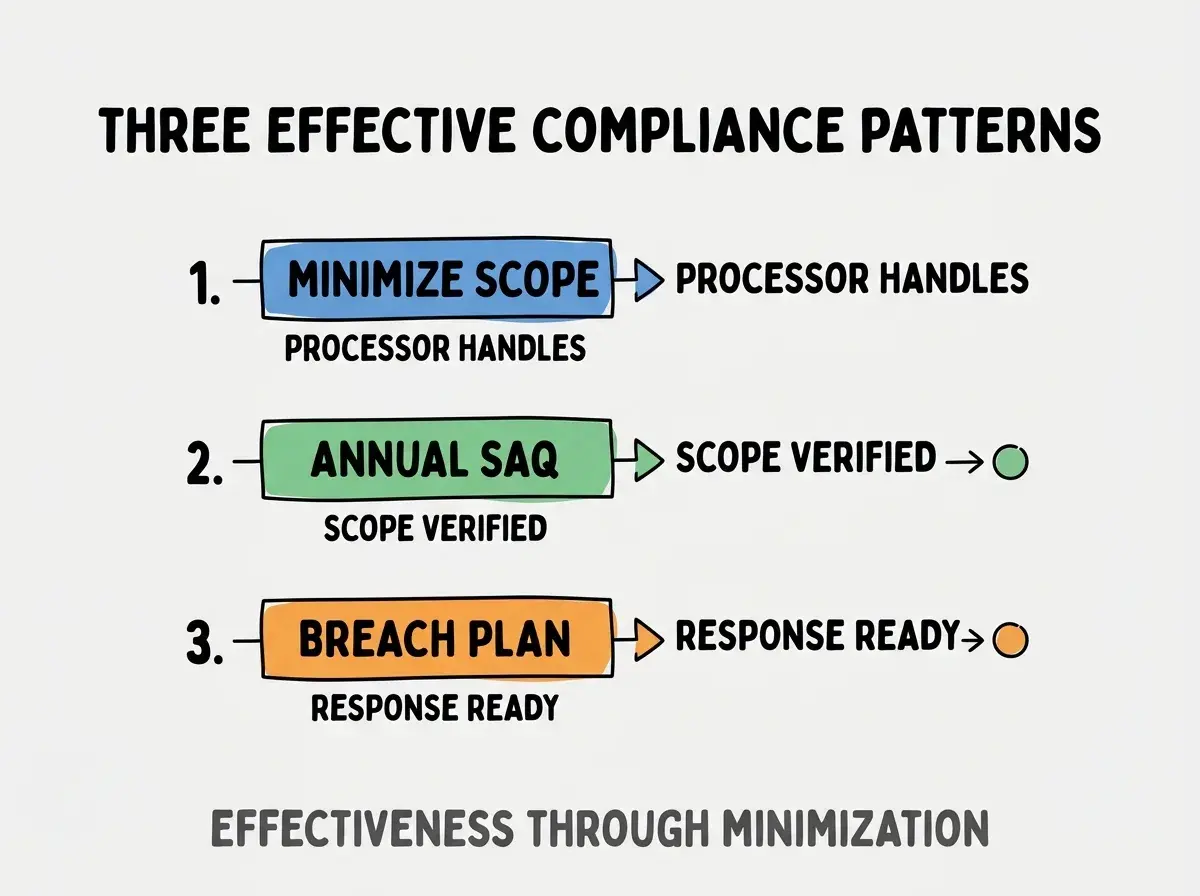
Pattern 1, minimize scope. Processor handles.
Pattern 2, annual SAQ. Scope verified.
Pattern 3, breach plan. Response ready.
The combination produces effective compliance. Without these patterns, compliance fragile.
How To Choose PCI Approach
Three patterns help approach choice.
Pattern A, Stripe for custom stores. Stripe Elements handle card collection; SAQ A.
Pattern B, Shopify Payments for Shopify stores. Built in compliance; SAQ A.
Pattern C, custom processor for high volume only. Custom processing increases scope dramatically; rarely worth it.
Common Questions About PCI DSS
PCI DSS raises questions worth addressing directly.
The first question is whether SAQ A is sufficient. For most vibe coded stores yes; high volume may need higher.
The second question is what happens if non compliant. Processor termination, fines, breach liability.
The third question is who validates compliance. Self assessment for SAQ A; QSA for higher levels.
The fourth question is whether tokens count as card data. Tokens scoped lower than raw; check processor docs.
How PCI Compliance Affects Operations
PCI compliance affects operations in compounding ways. Operations effects compound across audits.
The first compounding effect is processor relationship. Compliant stores stable; non compliant terminated.
The second compounding effect is breach risk reduction. Compliance reduces but not eliminates breach risk.
The third compounding effect is customer trust. Visible compliance builds trust.
The combination produces operations shaped by compliance discipline. Without discipline, operations vulnerable.
How To Document Compliance
Three patterns help documentation.
Pattern A, SAQ completed and stored. Annual SAQ archive.
Pattern B, network diagram current. Card data flow documented.
Pattern C, access control matrix. Who has what access; reviewed quarterly.
The combination produces documented compliance. Without documentation, compliance unverifiable.
The most damaging PCI compliance mistake is collecting card data in your own forms. Custom card forms expand PCI scope from SAQ A to SAQ D, multiplying compliance burden 100x. The fix is to use Stripe Elements, Shopify Payments, or similar; card data never touches your server. Vibe coders who delegate card collection comply easily; vibe coders who build custom forms create compliance disasters that often go unaddressed until processor audit terminates account.
The other mistake is missing the annual SAQ. SAQ lapses; compliance lapses.
A third mistake is logging card data in errors. Error logs leak card data; PCI violation.
A fourth mistake is treating PCI as one time. Compliance is ongoing operational discipline.
What This Means For You
Vibe coding for e-commerce with PCI DSS compliance protects payment card data and customer trust. The four domains, implementation patterns, and sustainability approaches produce compliance that compounds business stability through processor stability and breach reduction.
- If you're a founder: PCI compliance non negotiable for card accepting business; investment in compliance prevents existential risk.
- If you're a senior dev: PCI knowledge expected for ecommerce work; learn scope reduction patterns deeply.
- If you're changing careers: Compliance expertise valuable specialty; PCI knowledge transferable across regulated industries.
Browse more pulse
Read more pulse