The compliance checklist for shipping AI built products covers four compliance categories that affect most launches: data privacy compliance (GDPR, CCPA), AI specific disclosure requirements, security baseline compliance, and industry specific requirements. Each category has specific items that must be addressed before launch; missing items create launch risk and ongoing liability. The checklist takes hours to verify, days to implement, and prevents months of remediation work.
This piece walks through the four compliance categories, the specific items per category, what to verify before launch, and the four mistakes builders make with launch compliance.
Why Launch Compliance Matters
Launch compliance matters because compliance issues caught after launch cost dramatically more than compliance issues caught before launch. Pre launch fixes are cheap; post launch remediation is expensive.
The 2026 reality is that AI built products face increased regulatory scrutiny. Regulators specifically interested in AI use; AI built products attract attention.
A 2025 startup compliance survey of 400 AI built product launches found that products with pre launch compliance verification had 73 percent fewer post launch compliance incidents than products that addressed compliance reactively. Pre launch verification produces measurable risk reduction.
The pattern to copy is the way pharmaceutical companies handle drug launches. Compliance verified before launch, not after. Pre launch process catches issues when fixes are cheap. AI products benefit from same approach.
The Four Compliance Categories
Four categories form complete launch compliance.
Category 1, data privacy compliance. GDPR for EU users, CCPA for California, similar for other jurisdictions.
Category 2, AI specific disclosure requirements. AI use disclosed to users; AI generated content marked.
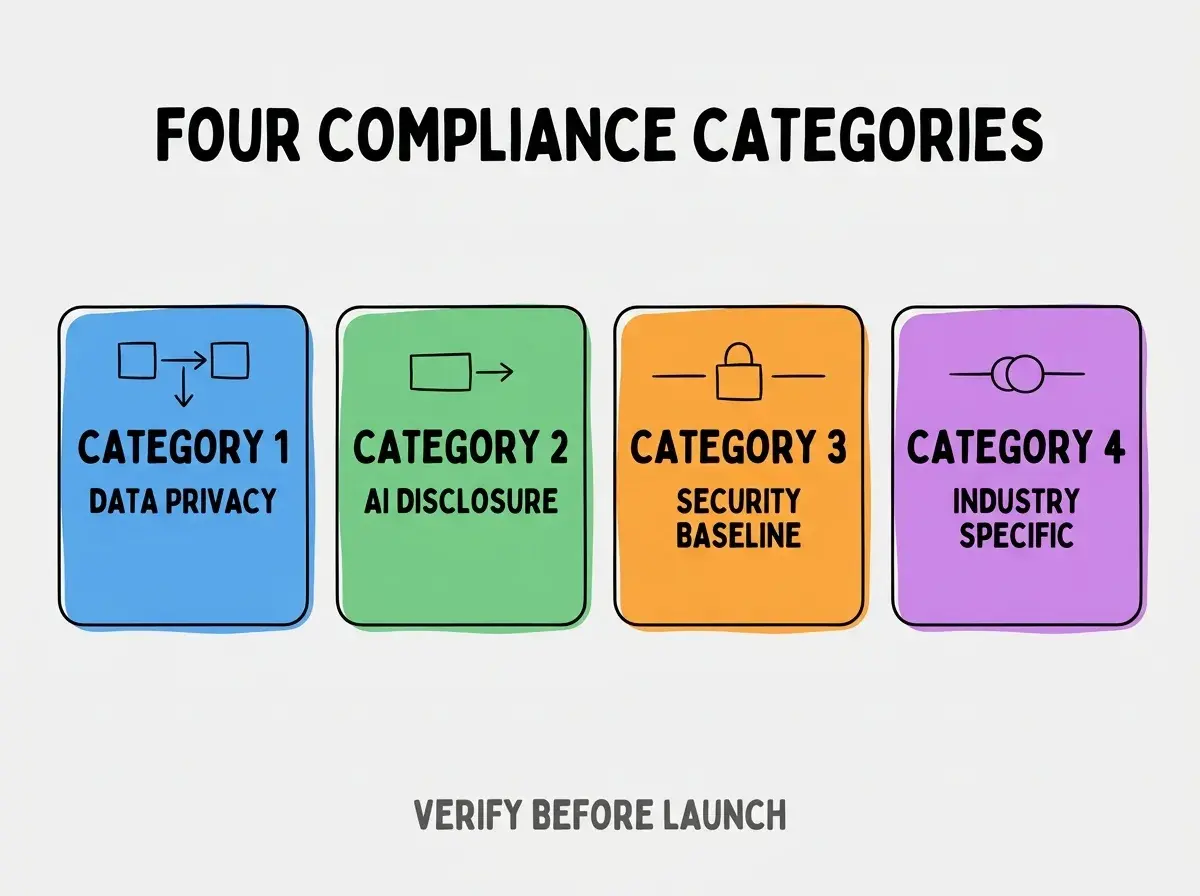
Category 3, security baseline compliance. SOC 2 type baseline; encryption, access controls, audit logging.
Category 4, industry specific requirements. Healthcare HIPAA, financial PCI DSS, government FedRAMP. Industry shapes additional requirements.
Specific Items Per Category
Four item lists describe each category in detail.
Items for data privacy. Privacy policy published, cookie consent implemented, data subject rights enabled (delete, export, opt out), data processing agreements with vendors.
Browse more pulse
Read more pulseItems for AI disclosure. Terms of service mentions AI use, UI labels AI generated content, AI tool privacy policies reviewed, training data sources documented.
Items for security. HTTPS everywhere, encrypted data at rest, access controls per user role, audit logging enabled, vulnerability scanning configured.
Items for industry specific. HIPAA Business Associate Agreement (healthcare), PCI DSS scope assessment (payments), FedRAMP authorization (government).
What To Verify Before Launch
Three verification approaches confirm compliance.
Approach 1, legal review of policies and disclosures. Lawyer review catches issues developers miss; investment justified for serious launches.
Approach 2, security audit by external party. External audit produces independent verification; verification reduces internal blindspots.
Approach 3, compliance team review for industry specific. Industry compliance specialist verifies industry requirements; specialist knowledge essential.
What Makes Launch Compliance Sustainable
Three patterns separate sustainable launch compliance from one off pre launch sprints.
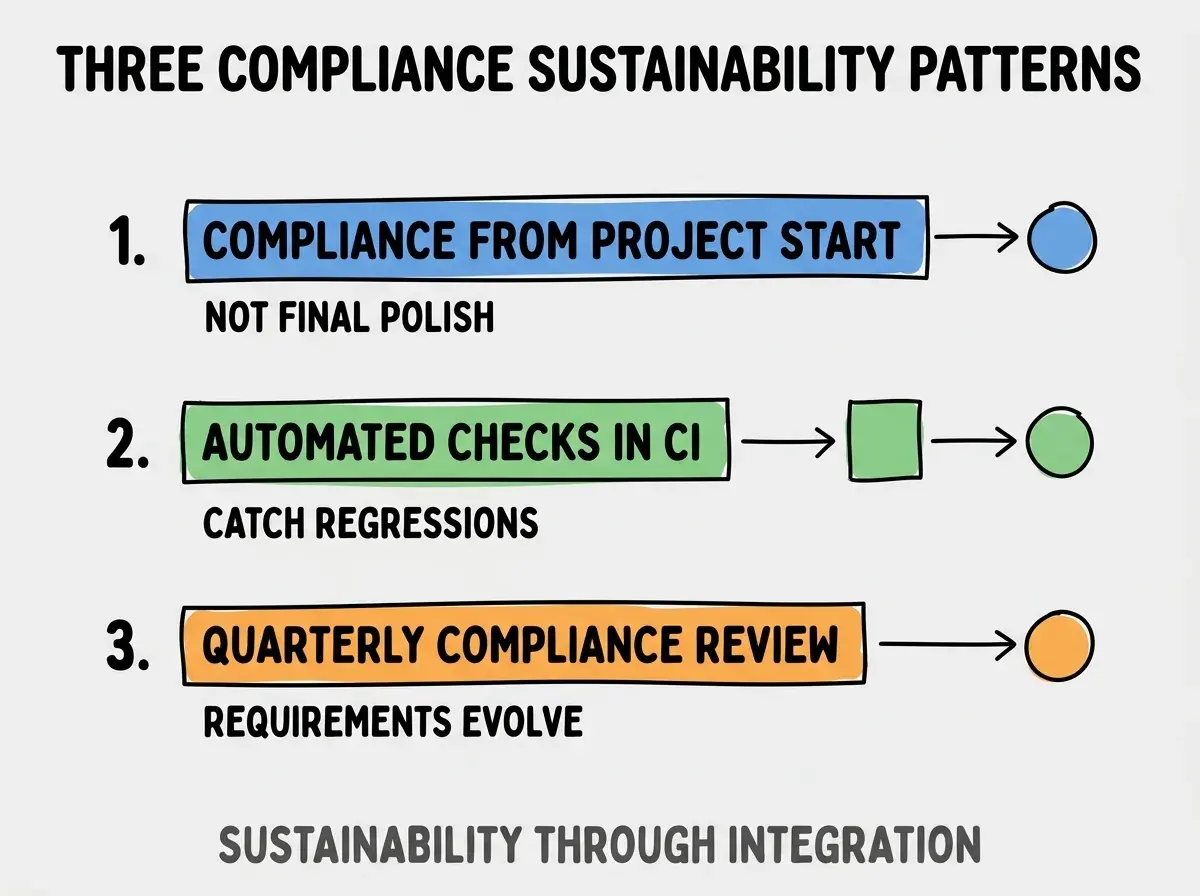
Pattern 1, compliance from project start. Retrofit compliance is expensive; integration from start cheap.
Pattern 2, automated checks in CI. CI checks catch compliance regressions; automation prevents drift.
Pattern 3, quarterly compliance review. Requirements evolve; review keeps compliance current.
The combination produces sustainable compliance. Without these patterns, launch compliance fades.
How To Adopt Compliance Progressively
Three adoption patterns help shift to compliance focused development.
Pattern A, address highest risk categories first. Privacy and security usually highest risk; address before others.
Pattern B, use compliance frameworks where possible. SOC 2, HIPAA, GDPR all have frameworks; frameworks reduce work.
Pattern C, partner with compliance experts. External experts accelerate compliance; partnership beats solo learning.
Common Questions About AI Product Launch Compliance
AI product launch compliance raises questions worth addressing directly.
The first question is whether small startups need full compliance. Yes for applicable categories; size does not exempt regulations.
The second question is whether compliance kills AI product velocity. Initial setup adds friction; ongoing operation affected minimally.
The third question is whether AI tool vendors handle compliance. Partially; vendor compliance helps but customer compliance separate.
The fourth question is when to engage compliance experts. Before launch; reactive engagement costs more than proactive.
How Launch Compliance Affects Business Outcomes
Launch compliance affects business outcomes in compounding ways. Outcome effects compound across business lifetime.
The first compounding effect is enterprise sales access. Enterprise customers require compliance; access compounds revenue.
The second compounding effect is regulatory risk reduction. Compliance reduces regulatory action risk; reduced risk preserves business.
The third compounding effect is brand trust. Compliance signals seriousness; trust translates to customer retention.
The combination produces business outcomes shaped by compliance investment. Without compliance, growth limits.
How To Use AI For Compliance Work
Three patterns help AI assist compliance work.
Pattern A, AI generates first drafts of compliance documents. Privacy policies, terms of service drafts. Human review essential.
Pattern B, AI reviews code for compliance patterns. AI catches some compliance issues; supplement to human review.
Pattern C, AI summarizes regulation changes. Regulations evolve; AI summary speeds awareness.
The combination produces AI assisted compliance work. Without AI assistance, compliance work scales poorly.
The most damaging launch compliance mistake is treating compliance as final pre launch checklist rather than design constraint. Compliance affects architecture; treating as checklist produces apps that cannot meet compliance without rebuild. The fix is to treat compliance as design constraint from project start; architecture supports compliance naturally when designed for it. Products designed for compliance launch smoothly; products bolted compliance later face rebuilds.
The other mistake is missing the AI specific requirements. AI products face additional requirements beyond standard product requirements; AI specific compliance matters.
A third mistake is treating compliance as one time event. Compliance requirements evolve; ongoing attention required.
A fourth mistake is missing the documentation requirement. Compliance requires documentation; documentation produces evidence for audits.
What This Means For You
The compliance checklist for shipping AI built products prevents post launch incidents that cost dramatically more than pre launch verification. The four categories, items, and verification approaches produce launch compliance that protects business.
- If you're a founder: Add compliance review to launch checklist; review prevents incidents.
- If you're a senior dev: Build compliance into architecture from start; retrofit costs more.
Browse more pulse
Read more pulse