Audit trails for AI generated code are increasingly required for compliance with healthcare, financial, and government regulations. Four components form complete audit trails: prompt history capturing what AI was asked, generation provenance tracking which AI tool produced what code, review documentation showing human oversight, and version control linking generated code to triggers. Combined they meet regulatory requirements that simple version control alone cannot satisfy.
This piece walks through the four audit trail components, why each matters for compliance, how to implement them, and the four mistakes builders make with audit trails.
Why Audit Trails Matter For AI Code
Audit trails for AI code matter because regulators increasingly require them. Healthcare HIPAA, financial PCI DSS, government FedRAMP all expanding requirements to address AI generation specifically.
The 2026 reality is that audit trail requirements have tightened in regulated industries. Organizations without audit trails face increased compliance risk and limited regulated industry market access.
A 2025 enterprise compliance survey of 400 organizations in regulated industries found that 73 percent now require AI generation audit trails for production code, up from 18 percent in 2024. Requirement growth signals regulatory direction; preparation is now competitive necessity.
The pattern to copy is the way pharmaceutical companies maintain manufacturing audit trails. Every batch traced to ingredients, processes, and operators. AI code audit trails follow same logic; every generation traced to prompts, tools, and reviewers.
The Four Audit Trail Components
Four components form complete AI code audit trails.
Component 1, prompt history capturing what AI was asked. What prompts produced what code; preservation enables review.
Component 2, generation provenance tracking which AI tool. Which AI model and version produced which code; enables specific accountability.
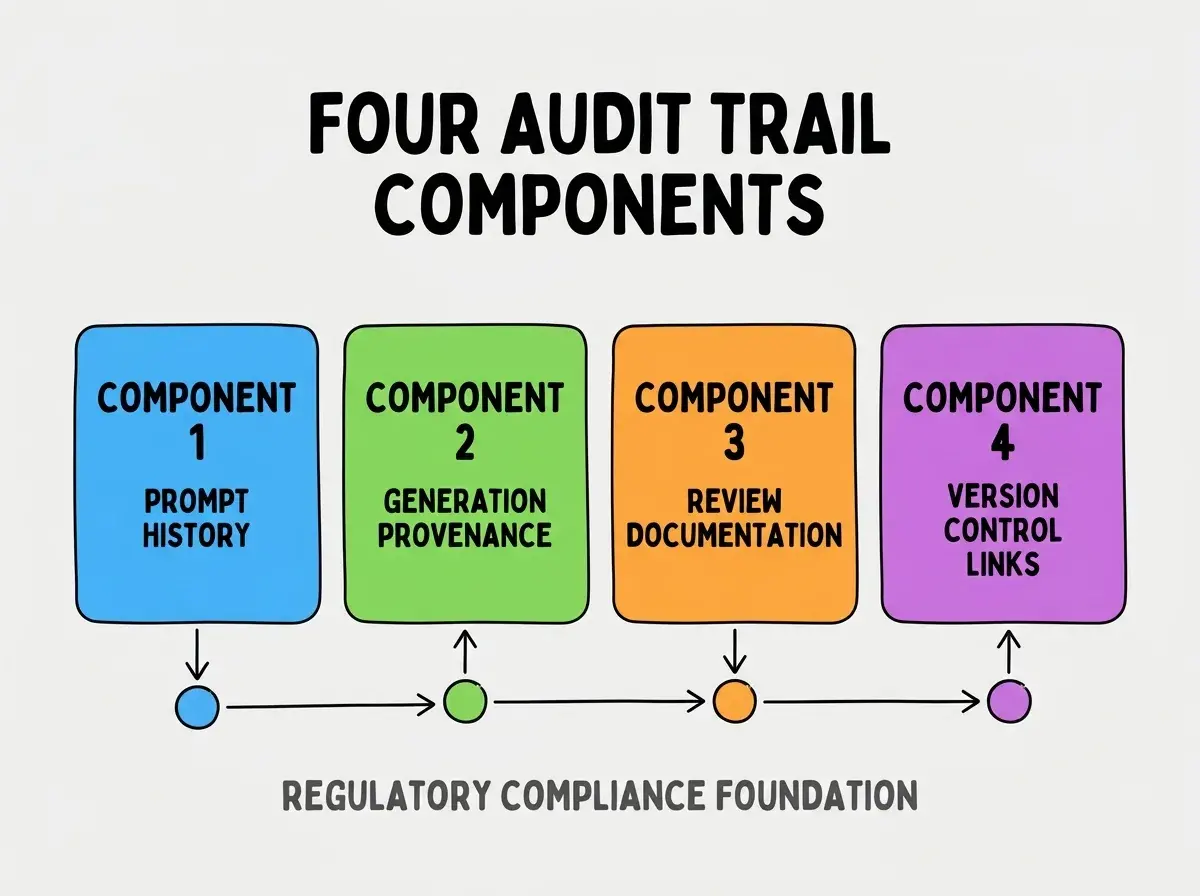
Component 3, review documentation showing human oversight. Human review evidence for generated code; documents accountability.
Component 4, version control linking generated code to triggers. Git commits link to prompts, reviews, and approvals.
Why Each Component Matters For Compliance
Four reasons explain component value for compliance.
Reason 1, prompt history demonstrates intent. Regulators want to see what was requested; intent matters for liability.
Browse more pulse
Read more pulseReason 2, generation provenance enables tool accountability. When AI tool produces vulnerable code, provenance enables traceability.
Reason 3, review documentation shows due diligence. Regulators expect human review; documentation proves it occurred.
Reason 4, version control links enable end to end traceability. From production bug back to prompt that generated it; full traceability required.
How To Implement Each Component
Four implementation approaches make components practical.
Implementation 1, AI tool prompt logging. Tools like Cursor support session export; logs go to compliance system.
Implementation 2, commit metadata for provenance. Commit messages include AI tool, model, version. Convention enables searching.
Implementation 3, PR templates for review documentation. PR template includes review checklist; checklist completion documents review.
Implementation 4, link conventions in commits. Commit message references prompt source and review link; links enable navigation.
What Makes Audit Trails Sustainable
Three patterns separate sustainable audit trails from one off compliance theater.
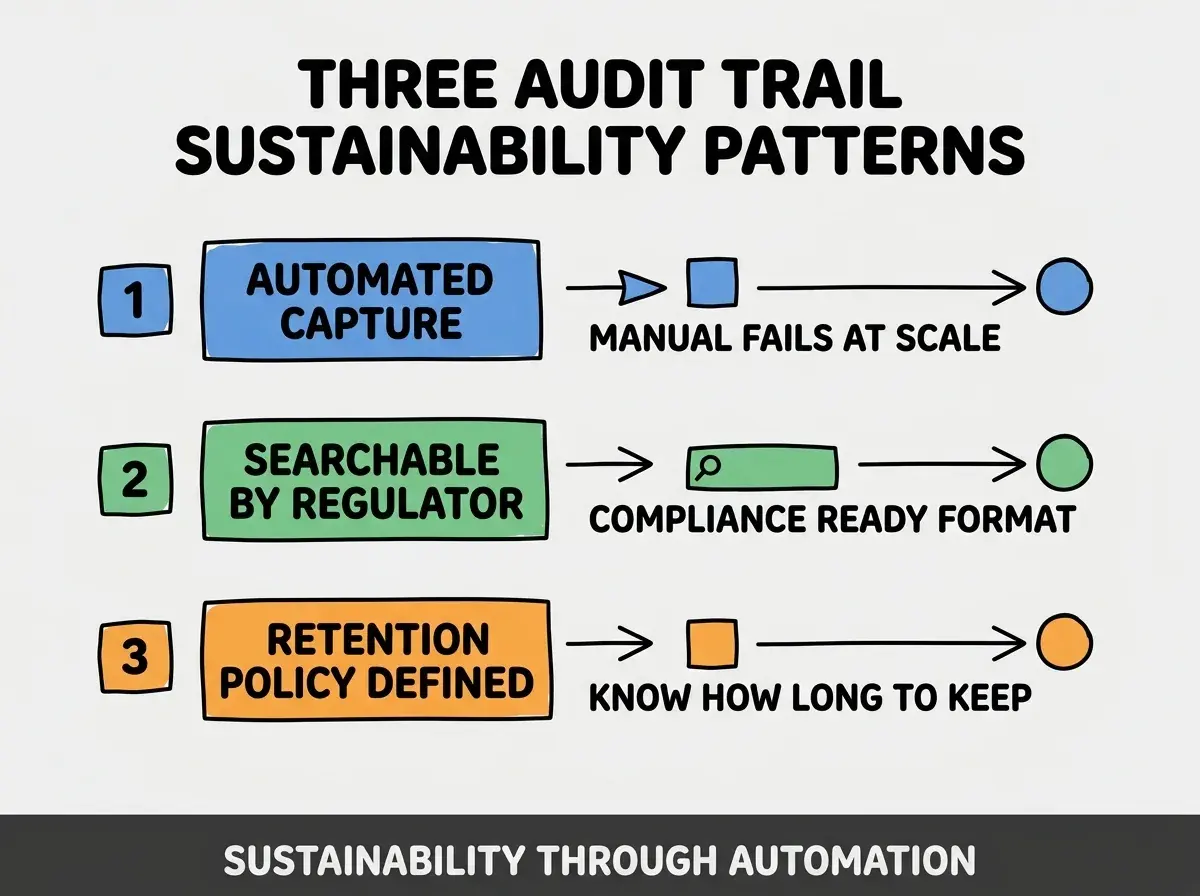
Pattern 1, automated capture. Manual capture fails at scale; automation ensures completeness.
Pattern 2, searchable format for regulators. Audit trails must be searchable in regulator's terms; format matters.
Pattern 3, retention policy defined. Regulations specify retention periods; policy ensures compliance.
The combination produces sustainable audit trails. Without these patterns, audit trails fail regulator scrutiny.
How To Adopt Audit Trails Progressively
Three adoption patterns help organizations add audit trails.
Pattern A, start with regulated code only. Healthcare or financial code first; expand to all code over time.
Pattern B, use existing tools where possible. Git plus PR templates plus AI tool logging cover most needs without new tools.
Pattern C, dedicate compliance review time. Quarterly review ensures audit trails meet evolving requirements.
Common Questions About AI Code Audit Trails
AI code audit trails raise questions worth addressing directly.
The first question is whether audit trails are required for non regulated industries. Not legally; increasingly market expected. Many enterprise customers require audit trails.
The second question is how long to retain audit trails. Depends on regulation; healthcare 6+ years, financial 7+ years, varies by jurisdiction.
The third question is whether audit trails slow development. Initial setup adds friction; ongoing development affected minimally.
The fourth question is whether AI tool vendors provide audit trail features. Some yes; many limited. Custom implementation often needed.
How Audit Trails Affect Industry Structure
Audit trails affect industry structure in compounding ways. Industry effects compound across years.
The first compounding effect is regulated industry market access. Audit capable organizations access more regulated markets; capability becomes moat.
The second compounding effect is enterprise sales velocity. Audit trails simplify enterprise security review; velocity compounds revenue.
The third compounding effect is incident response capability. Audit trails enable faster incident response; capability reduces incident cost.
The combination produces industry dynamics favoring audit capable organizations. Without audit capability, regulated market access limits.
How To Choose Audit Trail Tools
Three selection patterns guide tool choice.
Pattern A, integration with existing development tools. Audit tools that integrate with Git, AI tools, and PR processes work better.
Pattern B, regulator approval where possible. Tools approved by regulators reduce audit risk; approval matters in regulated contexts.
Pattern C, scaling considerations for organization size. Solo builder tools differ from enterprise tools; match to organization scale.
The combination produces tool selection matched to needs. Without selection thinking, tools may not meet actual requirements.
The most damaging audit trail mistake is implementing audit trails as compliance checkbox rather than operational tool. Compliance theater audit trails fail actual audits; operational audit trails meet compliance requirements while supporting development. The fix is to design audit trails for operational use; compliance becomes byproduct of operational design. Organizations using operational audit trails meet compliance; organizations using compliance theater fail audits.
The other mistake is missing the automation. Manual audit trail capture fails at scale; automation required.
A third mistake is treating audit trails as static. Regulations evolve; audit trails must evolve with them.
A fourth mistake is missing the retention policy. Without retention policy, audit trails grow unbounded; bounded retention requires policy.
What This Means For You
Audit trails for AI generated code are increasingly required for compliance and increasingly market expected. The four components, implementation approaches, and sustainability patterns produce audit trails that meet regulatory requirements.
- If you're a senior dev: Add audit trail patterns to your team's workflow; preparation matters before requirements arrive.
- If you're a founder: Audit trail capability opens regulated industry markets; capability is competitive advantage.
Browse more pulse
Read more pulse