To understand the case study of an ecommerce store built and launched in a weekend with AI tools, recognize the four phase journey the founder navigated (defined the specific product line and target customer in the first 4 hours, scaffolded the storefront and payment integration with AI tools during the next 12 hours, refined the design and tested the checkout flow over the following 16 hours, and shipped to live traffic with marketing in the final 16 hours), see what ecommerce perspective brought to the weekend timeline that traditional store building would have missed, and consider how the patterns apply to other founders contemplating similar speed launches. The case study shows how AI tools change the ecommerce launch math by changing the time per store equation.
This piece walks through the four phases, the ecommerce specific advantages, the launch metrics, and the four mistakes founders make when attempting weekend ecommerce launches.
Why Weekend Ecommerce Launches Matter
Weekend ecommerce launches demonstrate that the entry barrier to ecommerce has dropped dramatically. The demonstrations matter; founders contemplating ecommerce can validate ideas in weekends rather than months, and the validation cycles compound into faster product market fit discovery.
The 2026 reality is that AI tools enable solo founders to launch ecommerce stores at pace previously requiring agency engagements or significant solo time investment. The case study documents one specific weekend launch; the patterns apply broadly to other founders.
A 2025 Shopify Plus survey of 1,500 small ecommerce founders found that 41 percent had launched their store in under 7 days using AI tools heavily. The launch time compression has changed founder economics; what previously required months of investment now requires days, dramatically reducing the cost of testing ecommerce ideas.
The pattern to copy is the way blogging platforms transformed publishing in the 2000s. WordPress and similar tools enabled anyone to publish without web development expertise; the entry barrier dropped dramatically. AI tools play similar role for ecommerce; the entry barrier has dropped dramatically, and the pattern of more participation followed by emergent winners is repeating.
The Four Phase Journey
Four phases characterized the founder's weekend ecommerce launch.
Phase 1, defined the specific product line and target customer in the first 4 hours. Single product category, defined customer persona, basic pricing strategy. Clarity here made all subsequent phases deliberate rather than exploratory.
Phase 2, scaffolded the storefront and payment integration with AI tools during the next 12 hours. AI generated initial UI, Stripe integration, basic product pages. Most of the building velocity happened here; AI productivity was the enabler.
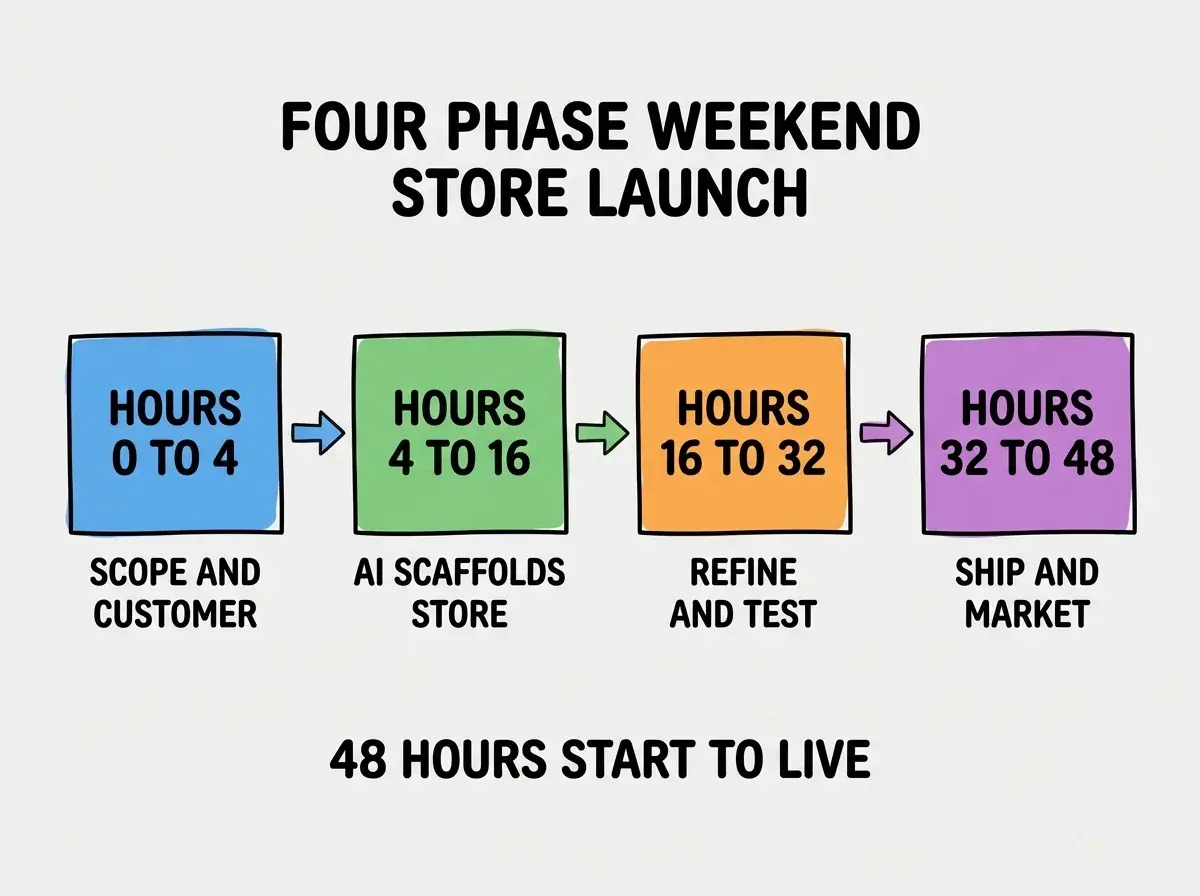
Phase 3, refined the design and tested the checkout flow over the following 16 hours. Design polish, checkout testing, edge case handling. Time investment in refinement matched scaffolding investment; over reliance on first AI output produces shipped bugs in checkout.
Phase 4, shipped to live traffic with marketing in the final 16 hours. Domain setup, social media announcements, first ad spend. Shipping work often gets underestimated; including it in the time budget produces shipped stores rather than almost shipped stores.
What Ecommerce Perspective Brought
Three patterns from ecommerce perspective produced advantages over generic weekend builds.
Pattern 1, focus on checkout flow quality from start. Ecommerce founders know checkout drives conversion; engineers without ecommerce experience often treat checkout as secondary. Checkout focus produced higher conversion rates.
Browse more ecommerce case studies
Read more pulse articlesPattern 2, mobile first design from start. Most ecommerce traffic is mobile; mobile first design produced better results than desktop first that mobilizes later. Industry experience informed the design choice.
Pattern 3, payment integration before fancy features. Payments work end to end before any nice to have feature. Engineers without ecommerce experience often build features before validating payments work.
The Launch Metrics That Mattered
Three patterns characterized the launch metrics.
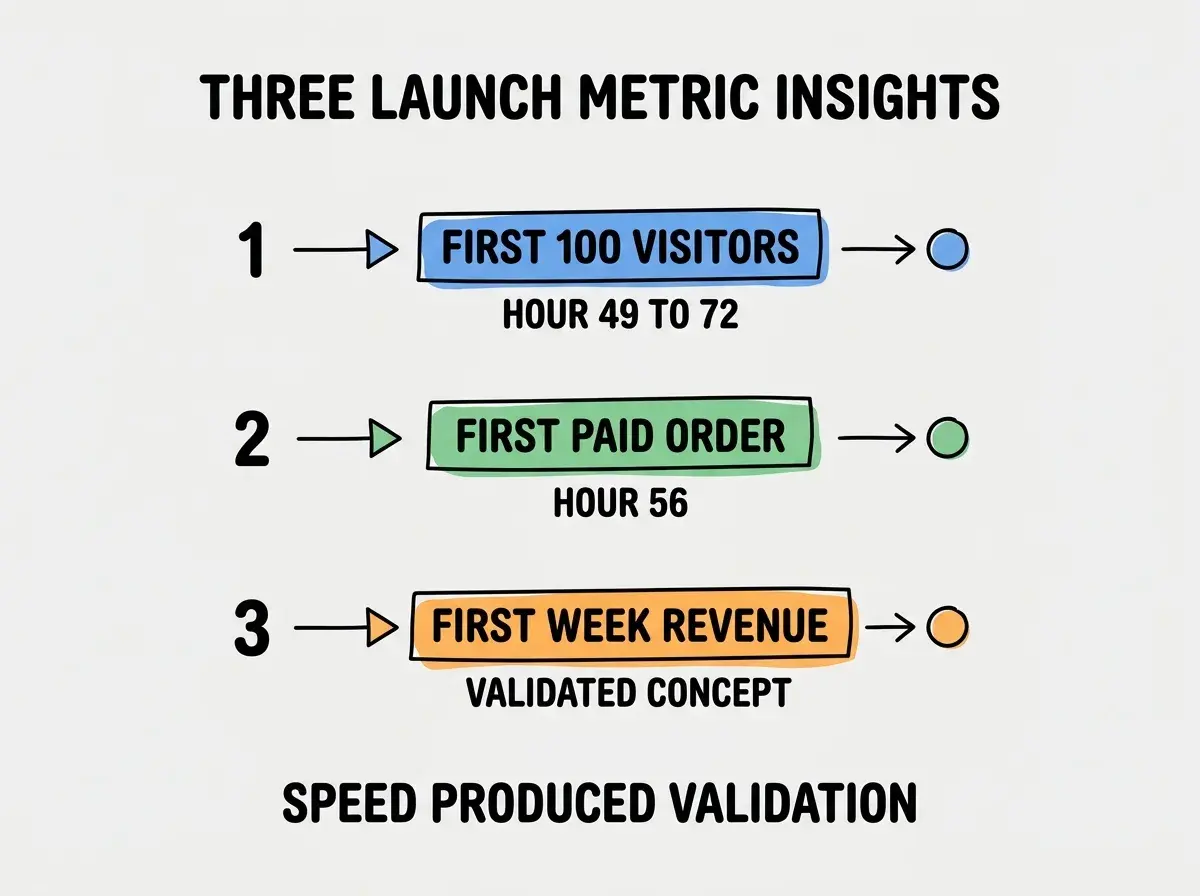
Insight 1, first 100 visitors arrived in hours 49-72. Marketing push during launch produced immediate traffic. Without marketing investment, even great stores produce no early traffic.
Insight 2, first paid order arrived at hour 56. Within 8 hours of launch. Validation that the checkout flow worked end to end with real customer.
Insight 3, first week revenue validated the concept enough to continue investing. Without revenue validation, the founder would have pivoted to different product. With validation, the founder doubled down on the working concept.
How Other Founders Can Apply These Lessons
Three application patterns help founders attempt similar weekend ecommerce launches.
Pattern A, scope so narrow the launch almost certainly ships. Single product line, single customer persona. Narrow scope produces successful launches; broad scope often produces incomplete launches.
Pattern B, prioritize checkout flow quality over store design. Checkout drives revenue; design drives engagement but not direct conversion. Engineering focus matters.
Pattern C, budget marketing time alongside building time. Built stores without marketing produce no traffic. Marketing budget includes time, not just money; reserve hours 32-48 for marketing investment.
The combination produces successful weekend ecommerce launches. Without these patterns, founders sometimes build stores, fail to drive traffic, and conclude weekend launches do not work when the marketing was the missing piece.
The most damaging weekend ecommerce mistake is launching without marketing budget allocation. Built stores without marketing produce no traffic; no traffic produces no validation regardless of store quality. The fix is to budget marketing time and money in the weekend plan; marketing is the work, not just building. Stores that ship without marketing become unvisited URLs that produce no learning; stores that ship with marketing produce the learning that drives next iterations.
The other mistake is choosing complex product lines for weekend launches. Complex products require complex stores; weekend launches favor simple products. The fix is to start with simple products and validate the launch approach before tackling complex products.
A third mistake is ignoring legal compliance during weekend builds. Privacy policy, terms of service, tax handling matter for ecommerce. The fix is to use template legal documents and basic tax setup; without compliance basics, stores risk problems that override the speed advantage.
A fourth mistake is failing to plan post launch operations. Customer service, fulfillment, returns all matter once orders arrive. The fix is to plan operations alongside store launch; operations failures hurt brand more than launch speed helped.
A fifth mistake is ignoring inventory management from the start. Sold out products that show as available produce angry customers; phantom inventory destroys trust. The fix is to integrate inventory tracking from launch; even simple inventory beats no inventory tracking.
Dig deeper
A few hand-picked sources if you want to go further.
What This Means For You
The weekend ecommerce store launch is increasingly viable in 2026. The four phases, ecommerce specific patterns, and launch metrics produce successful launches for prepared founders.
- If you're an ecommerce entrepreneur: Try a weekend launch for one specific product line. The exercise builds shipping discipline that compounds; weekend launches become testing platforms for product validation.
- If you're a founder: Weekend launches reveal which product ideas have legs faster than traditional approaches. Build prototypes in weekends rather than spending weeks; the validation cycles compound into faster product market fit discovery.
- If you're a senior dev: Ecommerce launches require domain expertise beyond pure engineering. Partner with ecommerce experienced founders for ecommerce builds; the domain expertise often determines success.
Browse more ecommerce case studies
Read more pulse articles