Vertical AI coding tools, domain specific solutions designed for particular industries or use cases, have emerged as a major 2026 trend differentiating from horizontal general purpose tools. Four vertical categories have reached commercial scale: healthcare specific tools handling HIPAA constraints, fintech tools encoding regulatory requirements, ecommerce tools optimized for store building, and game development tools for interactive content. Understanding the vertical trend helps founders and developers decide between vertical and horizontal tool choices.
This piece walks through the four vertical categories, why vertical AI emerged now, what verticals offer that horizontal tools cannot, and the four mistakes when interpreting vertical AI tool trends.
Why Vertical AI Coding Tools Matter
Vertical AI coding tools matter because horizontal tools require domain knowledge from users; verticals embed domain knowledge in tools. The shift changes who can build domain specific applications.
The 2026 reality is that vertical tools have matured to commercially viable products in multiple categories. Vertical AI is no longer experimental.
A 2025 enterprise AI tool adoption study of 500 companies found that 31 percent now use vertical AI coding tools alongside horizontal tools, up from 4 percent in 2024. Vertical adoption growth exceeds horizontal tool growth in same period.
The pattern to copy is the way industrial machinery evolved from general purpose to domain specific. General lathes gave way to specialized machine tools for automotive, aerospace, medical. Specialization enabled productivity that generalists could not match. Vertical AI coding follows the same pattern.
The Four Vertical Categories
Four vertical categories have reached commercial scale.
Vertical 1, healthcare specific tools. Build HIPAA compliant applications with privacy patterns built in; templates pre validated for healthcare workflows.
Vertical 2, fintech tools with regulatory awareness. Generate code that meets PCI DSS, SOC 2, and financial regulations; compliance built in.
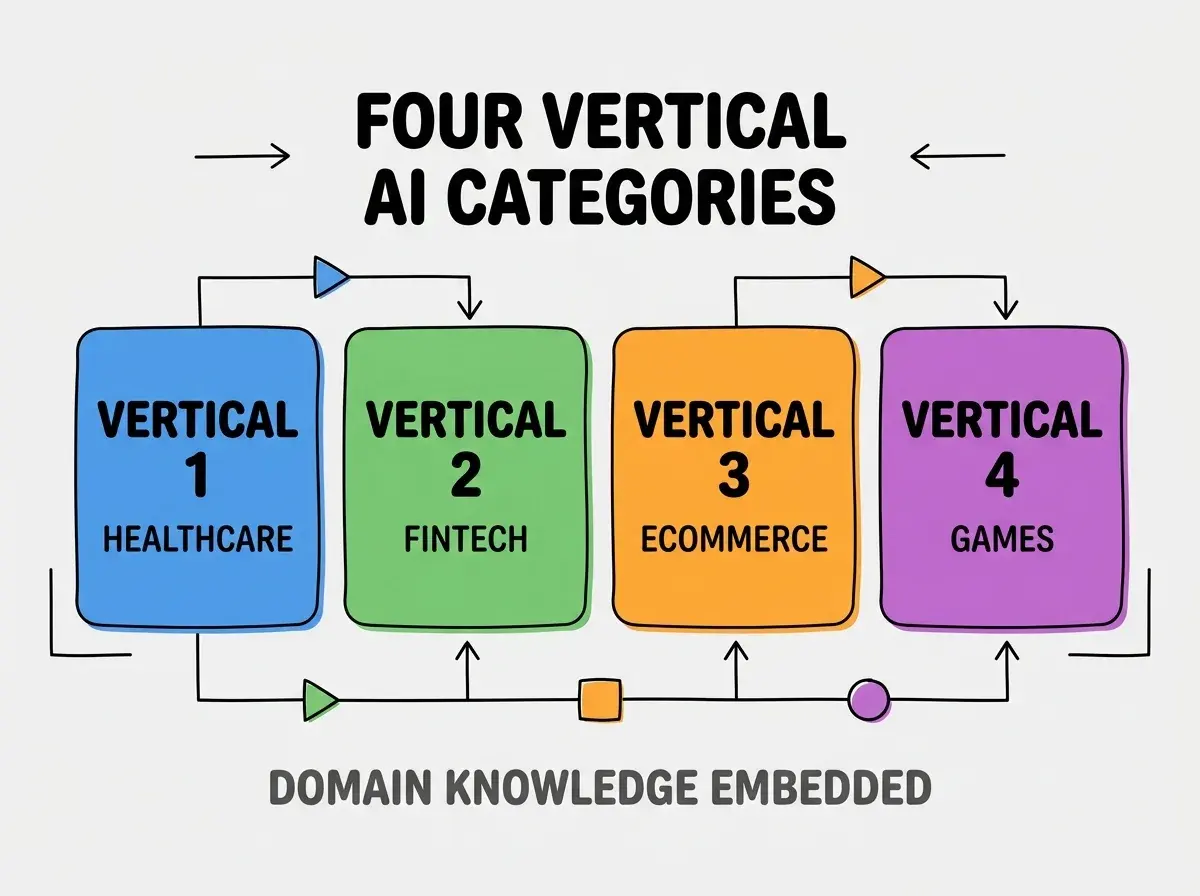
Vertical 3, ecommerce optimized tools. Build product catalogs, checkout flows, inventory systems with ecommerce best practices encoded.
Vertical 4, game development tools. Generate game logic, asset pipelines, multiplayer infrastructure with game industry patterns.
Why Vertical AI Emerged Now
Three factors enabled vertical AI emergence in 2025-2026.
Factor 1, horizontal tool capability commoditized. Horizontal tools became commodity; differentiation moved to vertical specialization.
Browse more pulse
Read more pulseFactor 2, domain training data became available. Domain specific code became available for training; previously, training data was generic.
Factor 3, vertical buyers willing to pay premium. Healthcare, fintech, and other verticals pay premium for domain fit; revenue justified development.
What Verticals Offer That Horizontal Cannot
Three offerings differentiate vertical from horizontal AI tools.
Offering 1, domain expertise built in. Vertical tools know domain rules; users do not need to teach tools.
Offering 2, regulatory compliance defaults. Generated code meets domain regulations by default; not afterthought.
Offering 3, faster time to working product. Domain templates compress build time; weeks become days for common patterns.
What Makes Vertical AI Sustainable
Three patterns separate sustainable vertical AI from temporary specialization.
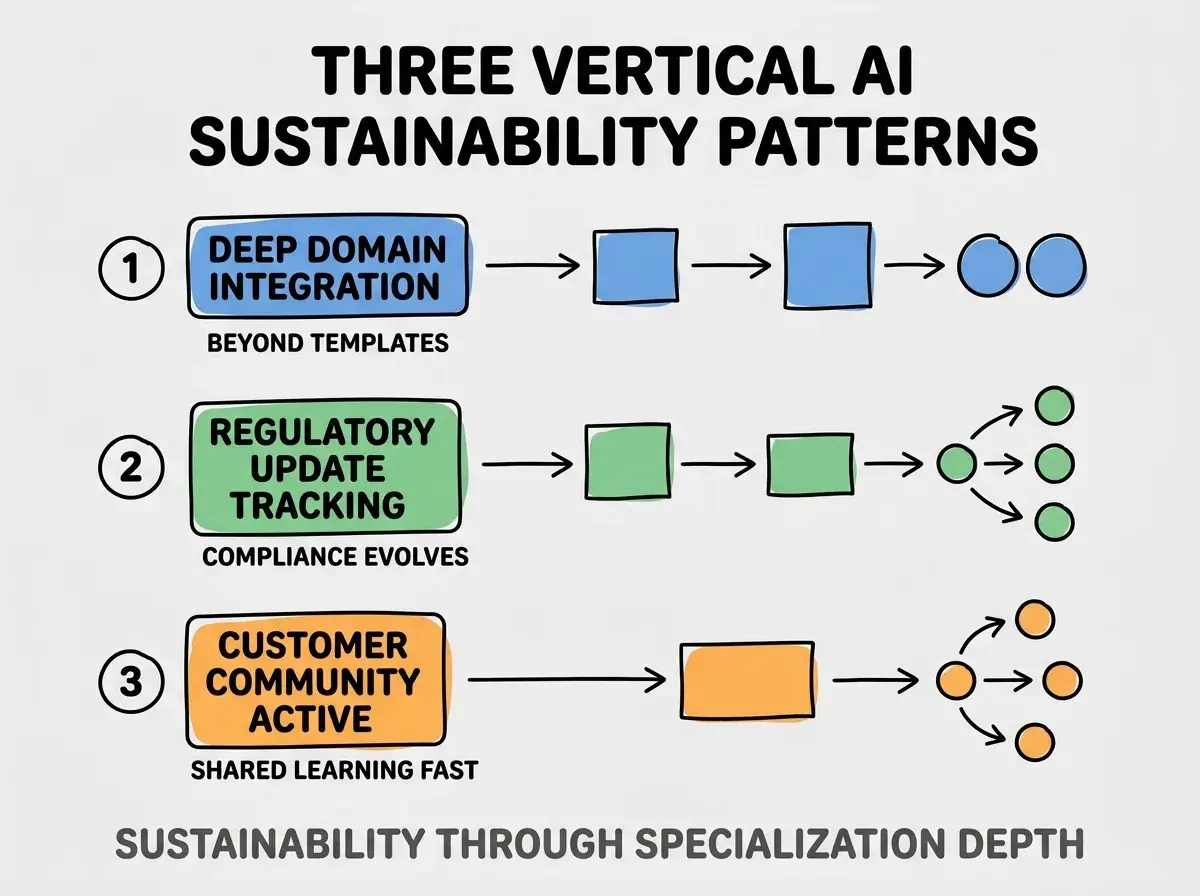
Pattern 1, deep domain integration beyond templates. Vertical tools must integrate domain knowledge deeply; surface templates get matched by horizontal tools.
Pattern 2, regulatory update tracking. Domain regulations change; vertical tools must update; staleness undermines compliance value.
Pattern 3, customer community active. Vertical communities share learning; sharing accelerates tool improvement.
The combination produces sustainable vertical AI. Without these patterns, vertical AI competitive advantage erodes.
How To Choose Between Vertical And Horizontal
Three selection patterns guide vertical vs horizontal tool choice.
Pattern A, evaluate domain depth needs. Deep domain (healthcare, finance) favors vertical; surface domain (general SaaS) favors horizontal.
Pattern B, calculate regulatory burden. High regulation favors vertical; regulatory compliance built in saves substantial work.
Pattern C, consider time to market priority. Speed favors vertical for in domain work; flexibility favors horizontal for cross domain work.
Common Questions About Vertical AI Tools
Vertical AI tools raise questions worth addressing directly.
The first question is whether vertical tools will replace horizontal. No; both will coexist. Different use cases favor different tools.
The second question is whether to wait for vertical maturity in your domain. Depends on horizontal alternative cost; vertical sometimes worth using before maturity if pain point is severe.
The third question is whether vertical tools lock you in. More than horizontal; switching cost higher. Worth tradeoff if vertical fit is strong.
The fourth question is whether to build internal vertical tools. Sometimes; if domain is unique and team has capacity, internal vertical tools possible.
How Vertical AI Affects Industry Structure
Vertical AI affects industry structure in compounding ways. Industry effects compound across years.
The first compounding effect is buyer segmentation. Domain buyers cluster around vertical tools; horizontal tools serve cross domain buyers.
The second compounding effect is vendor consolidation. Each vertical likely consolidates to 2-3 winners; consolidation affects choice.
The third compounding effect is regulatory simplification. Vertical tools handling regulations reduce regulatory burden for buyers; reduction enables more domain entrants.
The combination produces industry dynamics that benefit specialized work. Without vertical AI, domain specific work stays expensive.
How To Build Vertical AI Tools
Three patterns help teams build vertical AI tools.
Pattern A, deep domain partnership required. Tool teams must include domain experts; technical team without domain produces shallow tools.
Pattern B, regulatory expertise embedded. Domain regulations must be encoded; encoding requires legal and compliance expertise alongside engineering.
Pattern C, customer co development active. Build with customers; customer feedback shapes tool toward real needs.
The combination produces vertical tools that serve domains. Without these patterns, vertical tools become marketing rebrands of horizontal tools.
The most damaging vertical AI interpretation mistake is treating it as zero sum competition with horizontal tools. Vertical and horizontal serve different use cases; both growing simultaneously. The fix is to evaluate vertical and horizontal on use case fit, not on which category will win. Buyers who use both appropriately produce better outcomes than buyers who pick one category exclusively.
The other mistake is assuming all verticals develop equally. Different verticals have different economics; some mature faster than others.
A third mistake is missing the integration opportunity. Vertical tools that integrate with horizontal tools win more than vertical only tools.
A fourth mistake is treating vertical fit as permanent. Domains evolve; tools that do not evolve with domains lose fit.
What This Means For You
Vertical AI coding tools represent a major 2026 industry trend changing tool selection. The four categories, vertical advantages, and selection patterns produce framework for vertical vs horizontal tool decisions.
- If you're a founder: Evaluate verticals in your domain; vertical tools may dramatically accelerate your specific work.
- If you're a senior dev: Track vertical AI in your work area; vertical tools change what skills matter most.
Browse more pulse
Read more pulse