AI coding and the API economy reinforce each other in 2026. AI dramatically reduces integration cost; reduced integration cost makes API consumption rational where custom builds previously won. Four composability patterns characterize the convergence: API integration costs collapsing, API quality becoming differentiation, niche APIs proliferating, and composition replacing development. Understanding the patterns helps builders make build vs buy decisions that age well.
This piece walks through the four composability patterns, what changes for builders, what changes for API providers, and the four mistakes when interpreting AI plus API economy convergence.
Why AI And API Economy Convergence Matters
AI and API economy convergence matters because it shifts build vs buy economics fundamentally. Old defaults assumed integration cost; new economics make integration cheap. Cheap integration means more buy decisions, fewer build decisions.
The 2026 reality is that this convergence is accelerating. API providers benefit from AI making consumption easier; AI tools benefit from API ecosystem providing capabilities they orchestrate.
A 2025 enterprise tooling survey of 600 engineering teams found that teams using AI coding tools consumed 3.4x more APIs than equivalent teams without AI tools. AI dramatically expands API consumption; expansion compounds for both API providers and AI tool ecosystem.
The pattern to copy is the way Lego sets enable building complex creations from simple blocks. Standard blocks plus assembly capability produce limitless possibilities. APIs are standard blocks; AI is assembly capability; combination produces composable everything.
The Four Composability Patterns
Four patterns characterize AI plus API economy convergence.
Pattern 1, integration costs collapsing. AI generates integration code for any API quickly; cost approaches zero.
Pattern 2, API quality becoming differentiation. When integration is easy, API quality (docs, reliability, capability) matters more than integration ease.
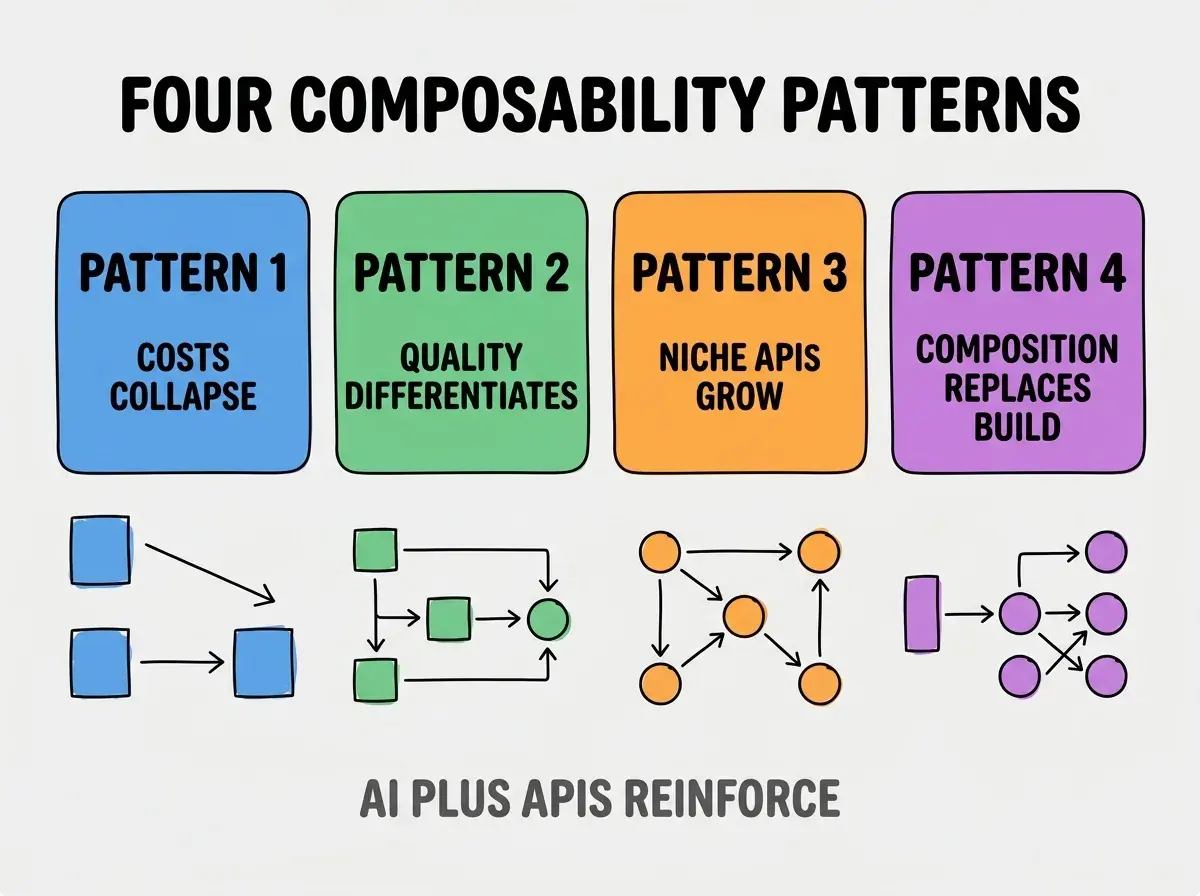
Pattern 3, niche APIs proliferating. Lower integration costs make narrow APIs viable; niches that could not justify custom development now have API options.
Pattern 4, composition replacing development. Building from APIs replaces building from scratch; composition becomes default approach.
What Changes For Builders
Three changes affect builder workflow.
Change 1, build vs buy defaults shift toward buy. Integration cost collapse changes economics; buy wins more often.
Browse more pulse
Read more pulseChange 2, API evaluation skills become primary. Choosing right API matters more than building right code; evaluation skill replaces development skill for many tasks.
Change 3, integration architecture becomes core competence. How APIs combine matters; architecture work replaces implementation work.
What Changes For API Providers
Three changes affect API provider strategy.
Change 1, documentation becomes primary product. AI consumes documentation; documentation quality determines AI consumption ease.
Change 2, machine readable specs matter more. OpenAPI specs, structured docs, examples all become more valuable.
Change 3, niche viability increases. Smaller addressable markets become viable as integration cost drops.
What Makes Composability Sustainable
Three patterns separate sustainable composability from API chaos.
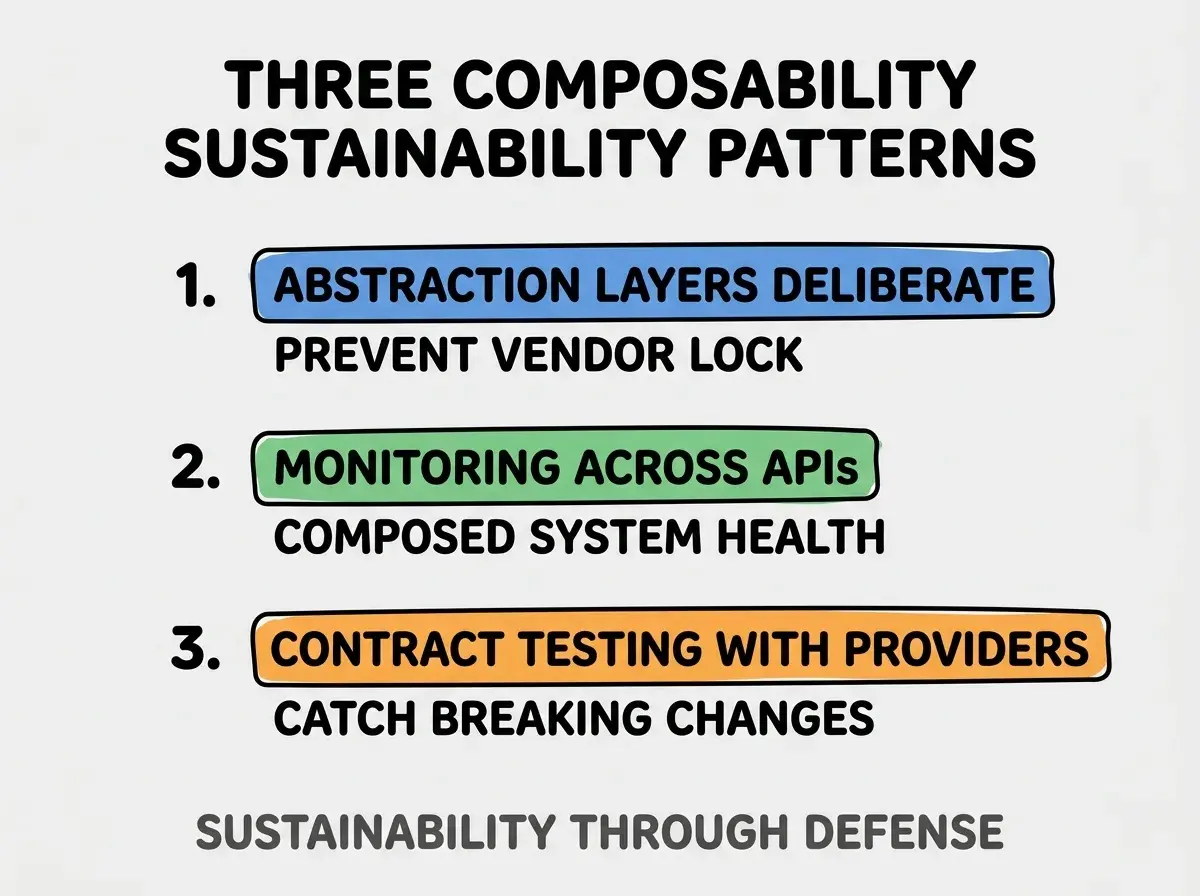
Pattern 1, abstraction layers between you and APIs. Direct API calls produce vendor lock; abstractions enable swapping providers.
Pattern 2, monitoring across all APIs. Composed systems fail in compound ways; monitoring needs to span APIs.
Pattern 3, contract testing with providers. API breaking changes destroy composed systems; contract tests catch breaks.
The combination produces sustainable composability. Without these patterns, composability becomes fragility.
How To Position For The Composable Future
Three positioning patterns help builders adapt.
Pattern A, evaluate before build. Default to evaluating APIs before building; build only when evaluation reveals no fit.
Pattern B, build composition skills. Architecture for composed systems differs from architecture for monoliths; learn composition patterns.
Pattern C, contribute to API ecosystem. Building APIs becomes leverage; ecosystem contribution opens revenue.
Common Questions About AI Plus API Economy
AI plus API economy convergence raises questions worth addressing directly.
The first question is whether everything will become API. Most things; deeply specialized work may stay custom. Custom work becomes premium niche.
The second question is whether to expose your own APIs. Yes if you have valuable data or capability; APIs build moats and revenue.
The third question is whether AI will replace API documentation reading. AI accelerates reading; complex APIs still need human understanding for architectural decisions.
The fourth question is whether composability has limits. Yes; tightly coupled requirements still need custom development. Loose coupling enables composability.
How Composability Affects Industry Structure
Composability affects industry structure in compounding ways. Structure effects compound across years.
The first compounding effect is API provider proliferation. Lower viability threshold means more API providers; proliferation continues.
The second compounding effect is integration tool growth. Tools that orchestrate APIs become valuable; orchestration tooling category grows.
The third compounding effect is custom development decline in commodity categories. Custom builds in categories with good APIs become wasteful; decline accelerates.
The combination produces industry structure favoring composability. Without composability skills, builders face structure shift unprepared.
How To Build Composition Architecture
Three patterns help build composed systems well.
Pattern A, isolate API calls in service layer. Service layer handles API calls; rest of code uses service interface.
Pattern B, handle API failures explicitly. Composed systems fail when any API fails; explicit failure handling required.
Pattern C, version pin API dependencies. API providers change; pinned versions prevent surprise breakage.
The combination produces robust composed systems. Without architecture, composability fragility dominates.
The most damaging composability mistake is treating composed systems as more complex than monoliths. Composed systems are different complex, not more complex; complexity moves from building to composing. The fix is to develop composition skills; composition complexity is manageable with right architecture. Builders who learn composition produce capabilities exceeding what they could build; builders who avoid composition stay limited to what they can build alone.
The other mistake is direct API calls without abstraction. Direct calls produce vendor lock; abstractions enable swapping.
A third mistake is missing the contract testing opportunity. Contracts catch breakage; without contracts, breakage produces production incidents.
A fourth mistake is treating composability as binary. Some things compose; some need custom. Hybrid approach beats pure composition or pure custom.
What This Means For You
AI coding and the API economy convergence shifts development economics toward composability. The four patterns, builder changes, and architecture approaches produce framework for composable era development.
- If you're a senior dev: Build composition architecture skills; skills become more valuable as integration costs collapse.
- If you're a founder: Default to evaluating APIs before building; build vs buy economics shifted toward buy.
Browse more pulse
Read more pulse