To understand the AI coding tool arms race in 2026 and who is winning by which metric, recognize the four competitive dimensions the race plays out across (model capability where Anthropic and OpenAI trade leads, developer experience where Cursor and Claude Code lead, enterprise distribution where GitHub Copilot leads through Microsoft channels, and price competition where multiple competitors race to lower price points), see what the patterns reveal about the market trajectory, and consider what the dynamics mean for builders choosing tools or building competing products. The arms race produces winners by category rather than single overall winner.
This piece analyzes the four competitive dimensions, the current leaders, the dynamics shaping competition, and the four mistakes builders make when interpreting tool competition.
Why the AI Coding Tool Arms Race Matters
The AI coding tool arms race matters for builders choosing tools today and considering competing products tomorrow. The race produces rapid capability improvements that benefit users; understanding who is winning by which metric helps builders choose appropriately and identify gaps for new entrants.
The 2026 reality is that no single AI coding tool dominates all dimensions. Multiple winners exist across different competitive dimensions; the fragmented winner picture creates opportunities for both incumbents and new entrants in specific niches.
A 2025 developer tools survey of 12,000 engineers found that no AI coding tool exceeded 35 percent market share in any single dimension. The fragmentation reveals that the market remains competitive rather than dominated by single winner; multiple tools win in different segments and use cases.
The pattern to copy is the way browser wars played out in the late 1990s and early 2000s. Multiple browsers competed across capability dimensions; eventual winners emerged but took years to consolidate. AI coding tools follow similar pattern; consolidation may eventually emerge but current state is multi winner across dimensions.
The Four Competitive Dimensions
Four competitive dimensions divide the AI coding tool race.
Dimension 1, model capability where Anthropic and OpenAI trade leads. Claude versus GPT versus Gemini for raw capability. The leadership has changed multiple times in 2024-2025; assuming permanent leadership in this dimension is risky.
Dimension 2, developer experience where Cursor and Claude Code lead. Editor integration, conversation patterns, productivity features. Developer experience often differentiates more than raw model capability for sustained adoption.
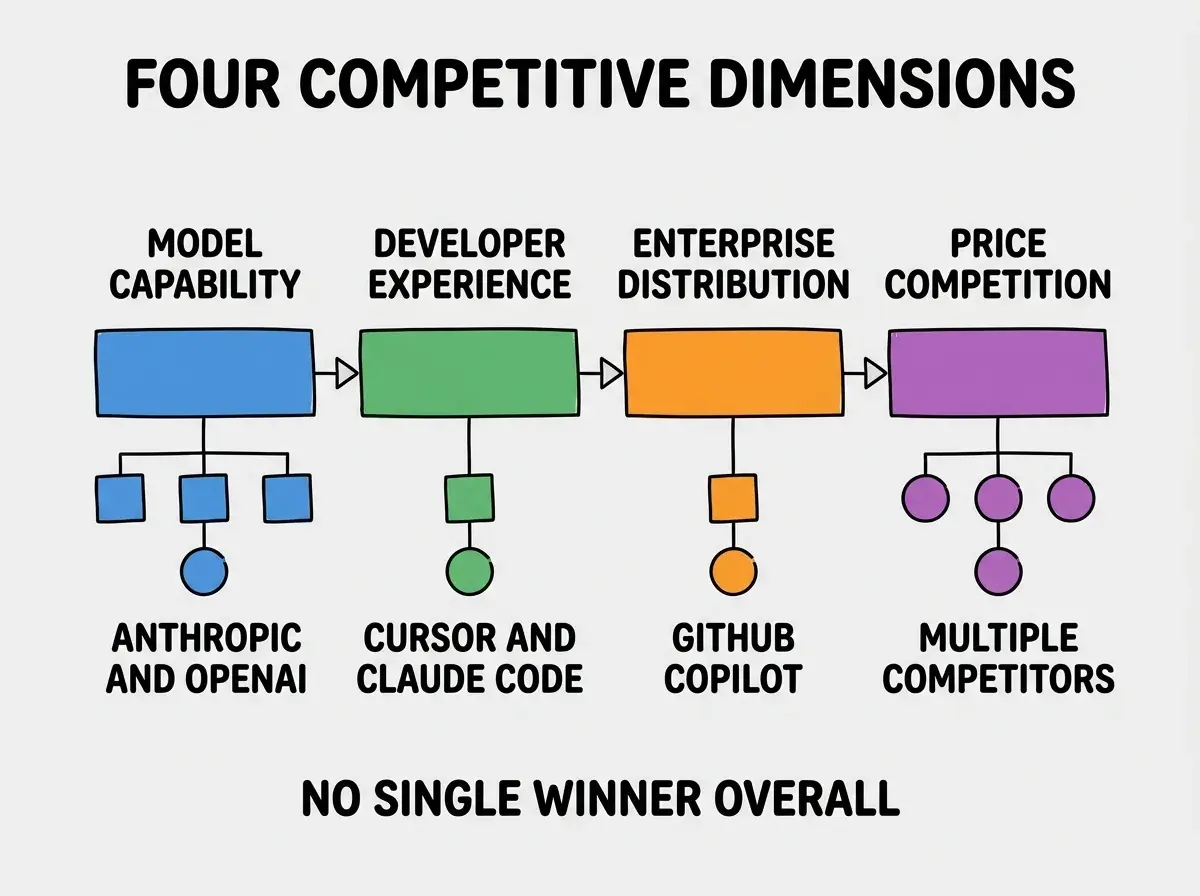
Dimension 3, enterprise distribution where GitHub Copilot leads through Microsoft channels. Enterprise sales, IT integration, security review acceptance. Distribution advantages often matter more than capability for enterprise adoption.
Dimension 4, price competition where multiple competitors race to lower price points. Free tiers, individual subscriptions, team pricing. Price competition produces consumer surplus while challenging vendor margins.
What the Current Leaders Reveal
Three patterns from current leaders reveal market dynamics.
Pattern 1, model capability leadership rotates frequently. Each major model release shifts leadership; permanent capability leadership has not emerged. Builders should not bet on permanent capability leadership of any specific provider.
Browse more market analysis
Read more pulse articlesPattern 2, developer experience differentiates sustainably. Cursor and Claude Code maintain experience leadership across model rotations. UX investments compound; capability investments depreciate as competitors catch up.
Pattern 3, distribution advantages persist across capability changes. GitHub Copilot enterprise penetration sustains regardless of model leadership rotations. Distribution moats matter more than capability moats for enterprise markets.
The Dynamics Shaping Competition
Three dynamics shape ongoing AI coding tool competition.
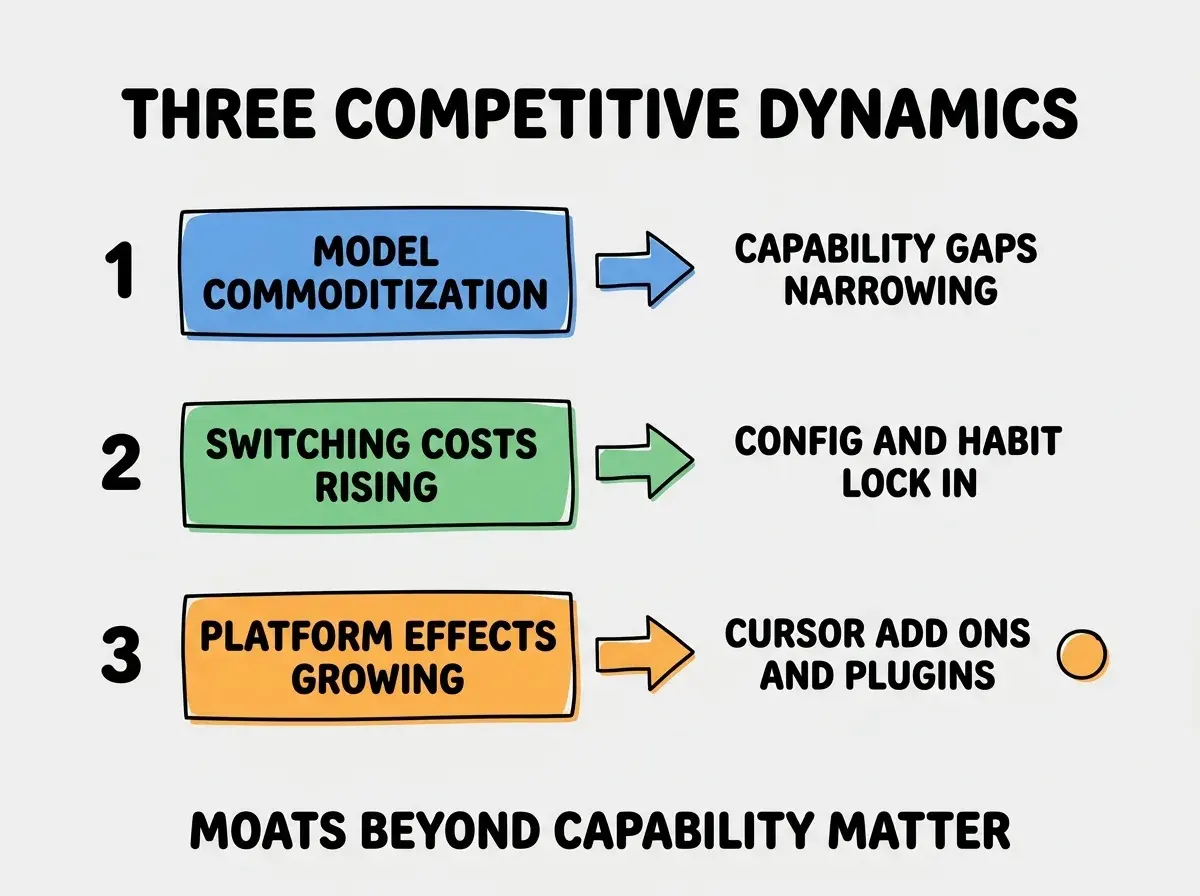
Dynamic 1, model commoditization narrows capability gaps over time. Models become increasingly similar in raw capability; differentiation shifts to other dimensions. Builders should not bet on permanent capability advantages.
Dynamic 2, switching costs rise as users invest in tool specific configurations. CLAUDE.md files, Cursor rules, custom prompts all create switching friction. The friction protects incumbents from new entrants.
Dynamic 3, platform effects grow as ecosystems develop. Cursor add ons, Claude Code plugins create platform dynamics. Platforms become harder to disrupt than standalone tools as ecosystems develop.
How Builders Can Apply These Insights
Three application patterns help builders navigate the AI coding tool landscape.
Pattern A, choose tools for sustained dimensions rather than capability of moment. Developer experience leaders sustain across model rotations; capability leaders rotate. Choose for the dimension that matters longest.
Pattern B, look for niche opportunities competition leaves uncovered. Specific languages, specific frameworks, specific industries get less attention from major tools. Niche opportunities sustain better than direct competition.
Pattern C, build adjacent products rather than direct competitors. Building tools that work with major AI coding tools often produces better outcomes than building competing tools. The adjacency benefits from market growth while avoiding direct competition with well funded incumbents.
The combination produces successful navigation of the AI coding tool landscape. Without these patterns, builders sometimes choose tools that lose leadership or build competing tools that fail against established players.
The most damaging arms race mistake is choosing tools based on current capability leadership without considering switching costs. Capability leadership rotates; tools you adopt today based on current capability may have lost capability leadership when you next make a tool decision. The fix is to choose for sustained dimensions like developer experience and platform investments; switching costs make these dimensions matter more than current capability over time. Building habits around any specific tool is costly; the habit reduces flexibility to switch when leadership rotates.
The other mistake is treating the arms race as zero sum where one winner emerges. The arms race appears to produce multiple winners in different dimensions; expecting single winner produces wrong predictions about market structure.
A third mistake is ignoring international dimensions of competition. Chinese AI coding tools, European tools, regional players all matter for international markets. The fix is to consider international dynamics; ignoring them misses competitive realities in specific geographic markets.
A fourth mistake is missing open source AI coding tools as competitive alternative. Open source models with good tooling provide alternatives to commercial tools. The fix is to track open source dynamics; ignoring them misses real competitive options.
What the Arms Race Means for the Next 12 Months
Three predictions matter for the next 12 months of competition. First, model capability gaps will continue narrowing as base models commoditize; differentiation will increasingly come from agent design and tool integration rather than raw model power. Second, vertical specialization will emerge as horizontal tools struggle to serve specific industries deeply; vertical AI coding tools for finance, healthcare, and gaming may carve substantial niches. Third, pricing pressure will intensify as enterprise procurement teams negotiate harder; vendors will need clear differentiation to maintain pricing power against commoditizing pressure.
What This Means For You
The AI coding tool arms race in 2026 produces winners by category rather than single overall winner. The four dimensions, current leaders, and competitive dynamics produce framework for thinking about tool choices and building decisions.
- If you're a senior dev choosing tools: Choose for sustained dimensions like developer experience rather than capability of moment. Capability leadership rotates; experience leadership sustains.
- If you're an indie hacker considering competing tools: Direct competition with major players is hard; adjacent products often outcompete direct competitors. Look for niches the major players leave uncovered.
- If you're a founder: Tool choices affect your team's productivity for years. Choose tools deliberately considering both current capability and sustained dimensions; the choice compounds across all engineering work.
Browse more market analysis
Read more pulse articles