To understand AI coding tool pricing trends in 2026, recognize the four pricing patterns the data reveals (per seat pricing pressure as tools commoditize, usage based pricing emerging as scale model, freemium tiers expanding to capture mass adoption, and enterprise pricing diverging from individual pricing), see what the patterns reveal about market dynamics, and consider what the patterns mean for individuals and companies making AI tool decisions. The pricing trends matter because they affect tool selection economics for years.
This piece walks through the four pricing patterns, what they reveal, the implications for buyers, and the four mistakes when interpreting pricing trends.
Why AI Coding Tool Pricing Matters
AI coding tool pricing matters as tools become essential infrastructure. The mattering increases; tools that consume meaningful budget percentage warrant pricing analysis.
The 2026 reality is that AI coding tool pricing has reached interesting inflection point. Initial premium pricing models facing competitive pressure; new pricing models emerging that may reshape market.
A 2025 SaaS pricing analysis of 50 major AI coding tools found that average per seat pricing decreased 23 percent year over year while usage based pricing models grew 67 percent in adoption. The simultaneous trends suggest fundamental pricing model shift rather than just price reduction.
The pattern to copy is the way cloud computing pricing evolved. Initial premium pricing gave way to commodity pricing as competition intensified; pricing models shifted from per server to per usage. AI coding tool pricing follows similar pattern; market dynamics produce predictable pricing evolution.
The Four Pricing Patterns
Four patterns characterize AI coding tool pricing trends.
Pattern 1, per seat pricing pressure as tools commoditize. Multiple tools competing on similar features; per seat pricing falls. Commoditization drives pricing pressure.
Pattern 2, usage based pricing emerging as scale model. Per token, per request, per generation pricing models. Usage based aligns cost with value better than per seat.
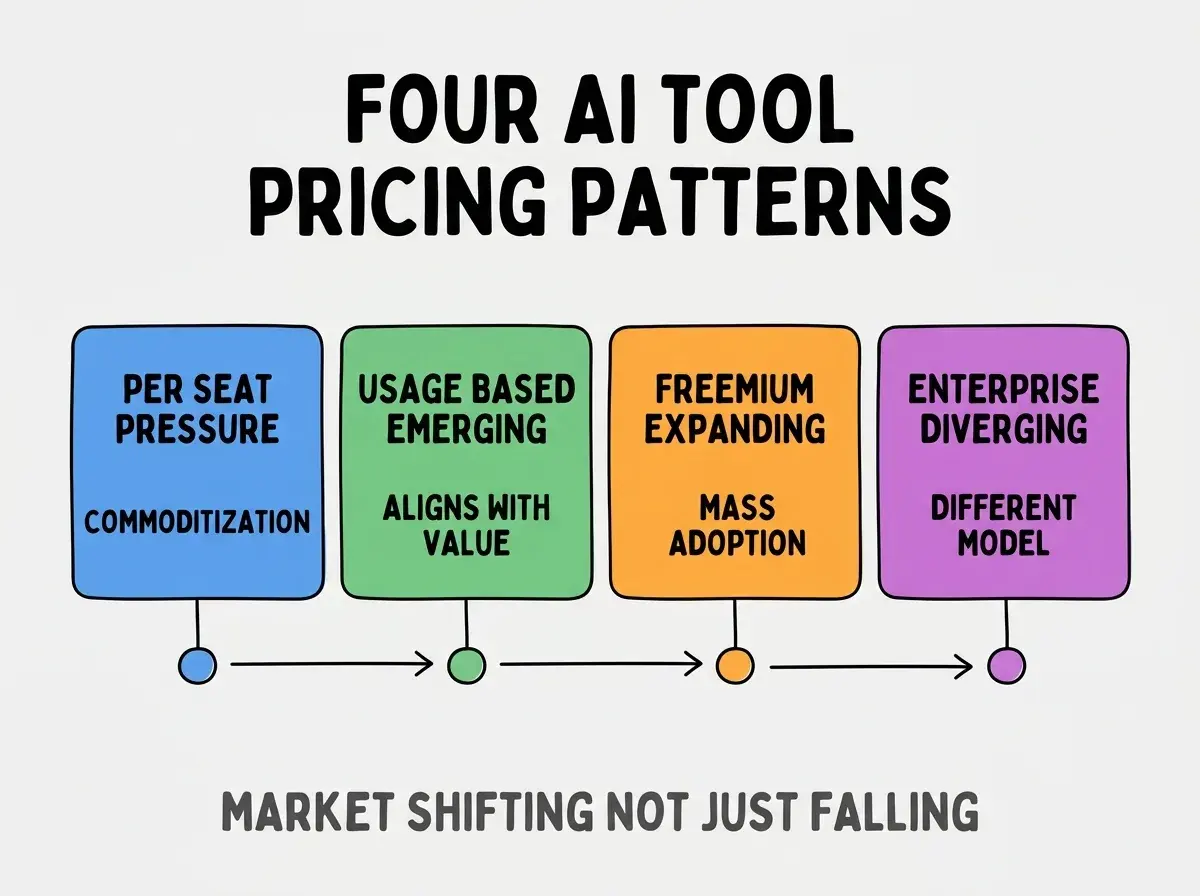
Pattern 3, freemium tiers expanding to capture mass adoption. Free tiers becoming more capable; conversion to paid happens at scale. Freemium captures market that pure paid models miss.
Pattern 4, enterprise pricing diverging from individual pricing. Enterprise features (security, compliance, support) priced separately from individual capability. Divergence reflects different value to different customer types.
What The Patterns Reveal
Three patterns reveal underlying market dynamics.
Pattern 1, market commoditization at individual tier. Individual developer tier becoming commodity; differentiation moves to other dimensions. Commoditization predictable for any maturing tool category.
Browse more pulse articles
Read more pulsePattern 2, value migration from access to enhancement. Access becoming commodity; enhancement (better models, more context, integrations) becoming premium. Value migration changes pricing logic.
Pattern 3, customer segmentation strengthening. Individual, team, enterprise customers requiring different pricing. Segmentation enables different pricing for different value.
What The Pricing Trends Mean For Buyers
Three implication patterns matter for AI coding tool buyers.
Implication 1, individual tier becoming buyer favorable. Falling per seat prices benefit individual buyers. Market dynamics work in individual buyer favor.
Implication 2, usage based pricing requires usage analysis. Per token pricing produces variable bills; analysis matters. Without analysis, usage based pricing produces budget surprises.
Implication 3, enterprise pricing requires different evaluation. Enterprise feature value differs from individual feature value. Evaluation must match customer segment.
How To Make Tool Decisions In Shifting Pricing Market
Three decision patterns help buyers make sustainable tool decisions.
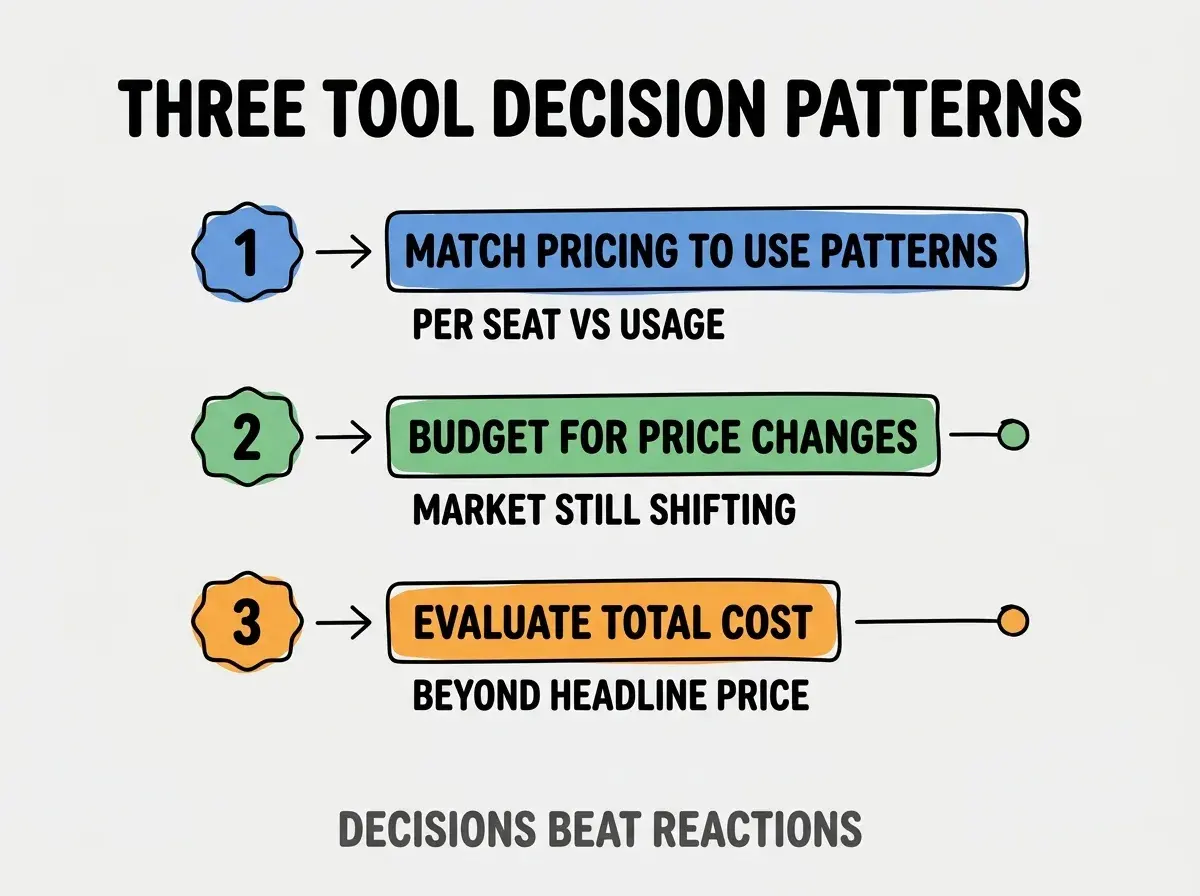
Pattern 1, match pricing model to actual use patterns. Heavy use favors per seat; variable use favors usage based. Pattern matching produces cost optimization.
Pattern 2, budget for ongoing price changes. Pricing still shifting; budget assumptions need flexibility. Without flexibility, budget surprises become incidents.
Pattern 3, evaluate total cost not just headline price. Switching costs, integration costs, training costs all matter. Total cost reveals true tool economics.
The combination produces tool decisions matched to current market reality. Without these patterns, decisions often match outdated market understanding.
The most damaging AI tool pricing interpretation mistake is assuming current pricing represents stable end state. Pricing continues shifting; decisions made on current pricing may not match future pricing. The fix is to evaluate tools on capability and switching cost rather than just current pricing; tools with low switching cost preserve flexibility as pricing shifts. Buyers locked into specific tools through high switching costs lose ability to benefit from market shifts that buyers with portable workflows capture.
The other mistake is treating freemium as free. Freemium has limits; production use often requires paid tiers. The fix is to evaluate paid tier pricing alongside freemium evaluation.
A third mistake is over indexing on per seat price comparison. Per seat price matters less when usage based pricing also available. The fix is to evaluate full pricing model.
A fourth mistake is missing enterprise pricing divergence. Enterprise pricing follows different logic than individual pricing. Mismatched analysis produces wrong conclusions.
How To Optimize AI Tool Costs
Three optimization patterns help buyers reduce AI tool costs.
Pattern A, tier matching for use patterns. Match tier to actual use; over tier wastes money. Without matching, costs exceed value.
Pattern B, regular pricing review cycles. Quarterly review of pricing changes. Without reviews, pricing changes go uncaptured.
Pattern C, multi tool strategy where appropriate. Different tools for different uses can reduce total cost. Single tool strategy may waste capabilities.
The combination produces cost optimization that matches market dynamics. Without optimization patterns, AI tool costs grow faster than value extracted.
How AI Coding Tool Pricing Will Likely Evolve
AI coding tool pricing will likely continue evolving as market matures.
The first likely evolution is per seat pricing continuing decline. Commoditization continues; per seat prices may approach commodity pricing for individual tier.
The second likely evolution is usage based pricing maturing. Better metering, predictable billing, enterprise usage pricing. Maturity reduces usage based friction.
The third likely evolution is enterprise pricing diverging further. Enterprise features commanding premium that individual features cannot. Divergence may produce two market segments with different dynamics.
The combination suggests pricing will continue shifting through 2026 and beyond. Buyers tracking dynamics build understanding that informs better decisions.
Common Questions About AI Tool Pricing
AI tool pricing raises questions worth addressing directly.
The first question is whether to delay tool purchases waiting for lower prices. No; competitive value of tools usually exceeds price reductions. Buy when value exists rather than timing pricing.
The second question is how to handle annual contracts in shifting market. Shorter terms preserve flexibility; longer terms lock in current pricing. Trade off depends on confidence in current tool fit.
The third question is whether free tiers are sustainable for production use. Often no; limits eventually constrain production use. Plan paid tier transition before hitting limits.
How To Forecast Tool Spending
Three forecasting patterns help predict AI tool spending over time.
Pattern 1, model usage growth over project lifetime. Usage typically grows; modeling growth prevents budget surprises. Without modeling, budgets stay static while costs grow.
Pattern 2, factor in pricing model evolution. Per seat to usage based shifts affect billing. Modeling shifts reveals long term cost trajectory.
Pattern 3, plan for tool addition over time. Stack typically expands; plan for additions in budget. Without planning, additions create budget pressure.
What This Means For You
AI coding tool pricing trends affect tool selection economics for years. The four patterns, decision approaches, and optimization strategies produce framework for navigating shifting pricing market.
- If you're a founder: Pricing trends affect tool budget for company growth. Plan tool spending with pricing trend awareness.
- If you're a senior dev: Pricing affects which tools team can use. Help team understand pricing implications of tool choices.
- If you're an indie hacker: Solo builders most price sensitive. Match pricing model to actual use patterns to optimize costs.
Browse more pulse articles
Read more pulse