To choose between Hotjar, FullStory, and session recording alternatives in 2026, evaluate four factors that matter most for the decision (pricing fit for your traffic volume, depth of analysis features beyond pure recording, privacy and compliance defaults, integration with your existing analytics stack), then pick Hotjar for budget-conscious teams that want recordings plus heatmaps in one tool, FullStory for enterprise teams that need sophisticated analysis on top of replays, or PostHog session replays for teams that want analytics and replays in one tool. All three approaches work; the right answer depends on team budget, scale, and existing tools.
This piece walks through the four decision factors, the realistic comparison across tools, the privacy considerations that affect which tools you can use, and the four mistakes teams make when choosing session recording tools.
Why Session Recording Matters for Product Decisions
Session recording shows what users actually do, not what they say they do. Watching real users navigate your product reveals friction, confusion, and unexpected behaviors that surveys and analytics alone cannot capture. The qualitative insight complements quantitative data.
The 2026 reality is that session recording has become standard for serious product teams. Tools have matured; privacy practices have improved; the question is no longer whether to use session recording but which tool fits your specific situation.
A 2025 ProductPlan survey of 1,800 product teams found that teams using session recordings made product decisions 40 percent faster than teams relying only on quantitative analytics. The mechanism was straightforward: replays surface root causes that data alone takes weeks to identify; the qualitative insight accelerates decision-making. Session recording is one of the highest-leverage investments for product teams that have meaningful user volume.
The pattern to copy is the way restaurant managers use security camera footage. The footage is not for catching theft (mostly); it is for understanding why customers behave certain ways at certain times. Session recording serves the same purpose for software products; the value is in pattern recognition, not in surveillance.
The Four Decision Factors
Four factors consistently determine the right session recording tool. Weigh them based on your specific situation.
Factor 1, pricing fit for your traffic volume. Hotjar is most affordable at low traffic; pricing for both Hotjar and FullStory scales with sessions captured. PostHog's session replays piggyback on its analytics pricing.
Factor 2, depth of analysis features. FullStory has the most sophisticated analysis (search-by-event, segmentation, conversion analysis on replays). Hotjar focuses on simpler workflows. PostHog leverages its analytics for event-driven replay finding.
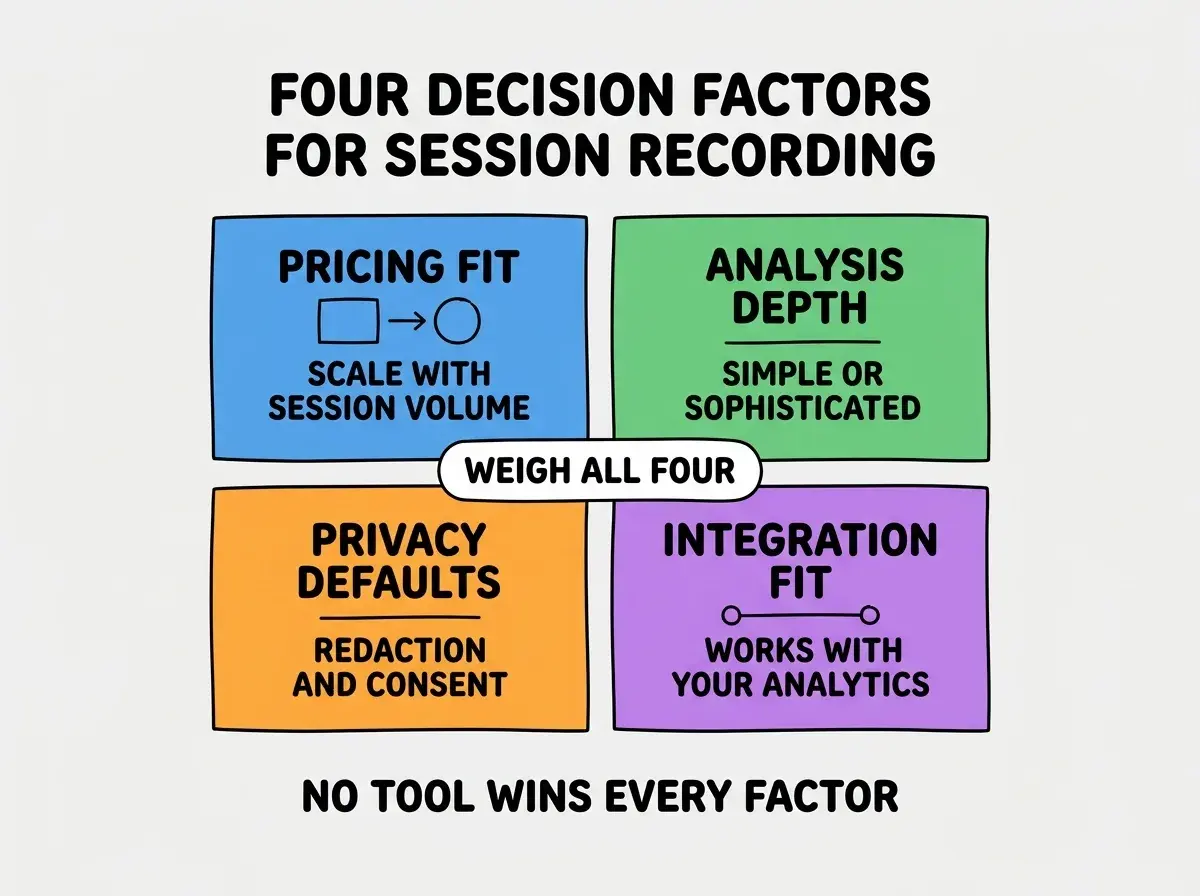
Factor 3, privacy defaults. Privacy regulations (GDPR, CCPA) require careful handling of recorded data. Tools differ in how aggressively they redact sensitive data by default.
Factor 4, integration with existing analytics. PostHog wins for teams already using PostHog analytics. FullStory integrates well with enterprise stacks. Hotjar is more standalone.
The Realistic Comparison Across Tools
Three comparisons help calibrate expectations across the major options.
Comparison 1, Hotjar. Affordable entry point ($32/month for 100 daily sessions), recordings plus heatmaps and surveys. Good for SMB and indie teams.
Browse more product analytics tools
Read more grow articlesComparison 2, FullStory. Enterprise pricing (typically $1K-10K+/month based on volume), sophisticated event-based search, deep analytics. Right for product teams with budget.
Comparison 3, PostHog session replays. Included with PostHog product analytics. Right for teams already using PostHog. Replays are good though not as polished as FullStory.
The Privacy Considerations
Three privacy patterns matter when implementing session recording. Getting these wrong creates compliance risks.
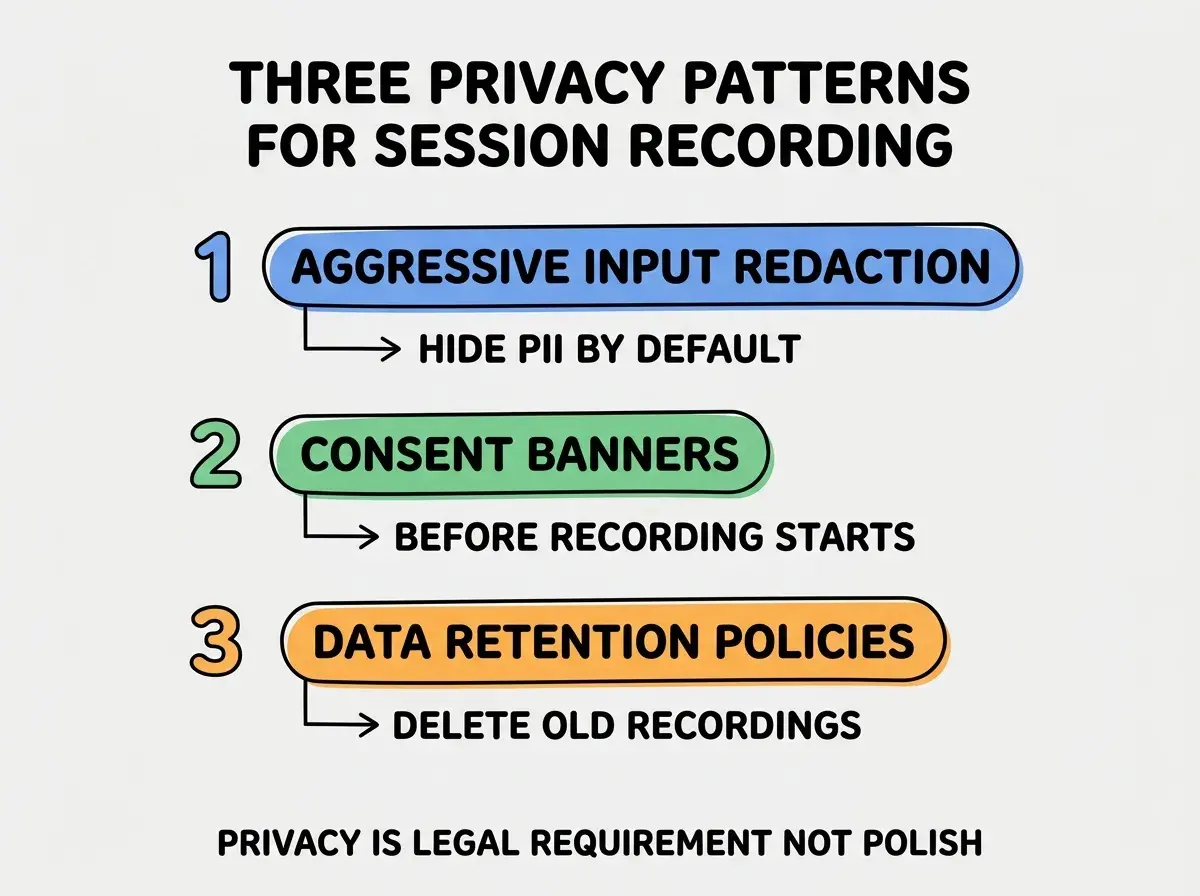
Pattern 1, aggressive input redaction. Hide form inputs, password fields, payment data by default. Better tools redact aggressively; weaker tools require explicit configuration to redact.
Pattern 2, consent banners before recording. GDPR requires consent for tracking; session recordings count. Use consent management tools to gate recording on user opt-in.
Pattern 3, data retention policies. Delete recordings after a defined window (typically 30-90 days). Indefinite retention creates risk; automatic deletion limits exposure.
How to Decide Which Tool Fits Your Stage
Three stage-based recommendations help most teams decide quickly.
Stage A, indie or pre-PMF. Hotjar at the entry tier. Affordable; covers basic needs; simple to use. Upgrade only when you outgrow the free or starter plans.
Stage B, post-PMF growth. PostHog if you already use PostHog; Hotjar if you want a dedicated tool. The integration with existing analytics matters at this stage.
Stage C, scale or enterprise. FullStory. Sophisticated analysis features justify the higher cost when product analytics maturity is high and the team can extract value from advanced features.
The stage-based heuristic works for most teams. Edge cases exist (an indie founder using FullStory because they came from FullStory work; an enterprise team using PostHog for cost reasons), but stage-based decisions produce reasonable results most of the time.
How to Use Session Recordings Effectively
Three usage patterns separate teams that get value from session recordings from teams that just collect them.
Pattern A, watch 10 sessions per week minimum. Below that frequency, you lose pattern recognition. The discipline of regular watching is what produces insights; sporadic watching produces sporadic value at best.
Pattern B, focus on specific funnel drop-off points. Random session viewing produces random insights; targeted viewing of users who dropped off at specific points produces actionable findings worth shipping fixes for.
Pattern C, share insights with the team in writing. A weekly "what we saw in session recordings" document propagates the insights beyond the person watching. Without sharing, insights stay siloed and the broader team continues making decisions on incomplete information.
The combination produces session recording usage that drives product decisions. Without these patterns, recordings accumulate but insights do not.
The most damaging session recording mistake is recording everything without a usage plan. Teams enable session recording, accumulate gigabytes of replays, and never watch them. The tool becomes expensive shelfware. The fix is to define before launch how you will use recordings (which sessions to watch, which questions to answer, which team members will review) and stick to the plan. Teams with clear usage plans report 5x more decisions influenced by session recording than teams without plans. Intentional usage produces value; passive collection does not.
The other mistake is sampling too few sessions to find patterns. Watching one user's session reveals one user's behavior; watching ten reveals patterns. The fix is to commit to 10-20 sessions per week minimum during active investigation periods. Statistical thinking applies even to qualitative data; small samples mislead while larger samples reveal truth.
A third mistake is failing to coordinate session recording with quantitative analytics. Recordings without context (which event triggered them, what the user did before, what funnel stage they were in) produce isolated insights. The fix is to use tools that integrate session recordings with analytics events, then watch sessions filtered by specific events or funnel positions. The combination produces dramatically more useful insights than either tool alone.
A fourth mistake is recording all users without filtering for relevant cohorts. Recording everyone produces too much footage; recording specific cohorts (new signups, paid users, high-intent visitors) produces focused insight. Cohort filtering preserves the qualitative depth while making the volume manageable.
What This Means For You
Session recording is high-leverage product investment in 2026 when used with discipline. The four decision factors and three privacy patterns produce reasonable tool selection and implementation.
- If you're a founder: Set up session recording once you have meaningful product traffic (typically 1K daily users minimum). Below that, the privacy overhead exceeds the insight value.
- If you're changing careers into product or design: Session recording fluency is increasingly expected for product roles. Practice on your own products to build the skill.
- If you're a student: Study how products like Linear and Figma use session recordings (their teams have published case studies). The patterns generalize.
Browse more product analytics comparisons
Read more grow articles