User feedback collection through surveys, NPS, and in-app prompts produces signal that retention metrics alone cannot. Four channels matter: NPS surveys for relationship strength signals, post action surveys for specific feature feedback, in-app prompts for moment specific reactions, and customer interviews for deep understanding. Each channel produces different signal quality; combined they triangulate user experience. Builders without feedback systems guess at user reality; builders with feedback build what users actually want.
This piece walks through the four feedback channels, the implementation patterns, what makes feedback actionable, and the four mistakes builders make on user feedback.
Why Feedback Collection Matters
Feedback collection matters because metrics reveal what but not why. Without feedback, builders guess at why; with feedback, decisions improve.
The 2026 reality is that user feedback tools have matured (Typeform, SurveyMonkey, in-app embeds) to make collection cheap. Maturation removes excuse for not collecting.
A 2025 SaaS product study of 400 vibe coded products found that products with structured feedback collection retained users 34 percent better than products relying on metrics alone, primarily through faster identification of churn drivers. Feedback measurably affects retention.
The pattern to copy is the way restaurants ask "how was everything" mid meal. Mid meal feedback enables service recovery; post meal feedback retrospective. Same pattern applies to product feedback timing.
The Four Feedback Channels
Four channels form complete feedback collection.
Channel 1, NPS surveys. Net Promoter Score; overall relationship strength. Quarterly cadence typical.
Channel 2, post action surveys. After feature use; specific feature feedback. Triggered by behavior.
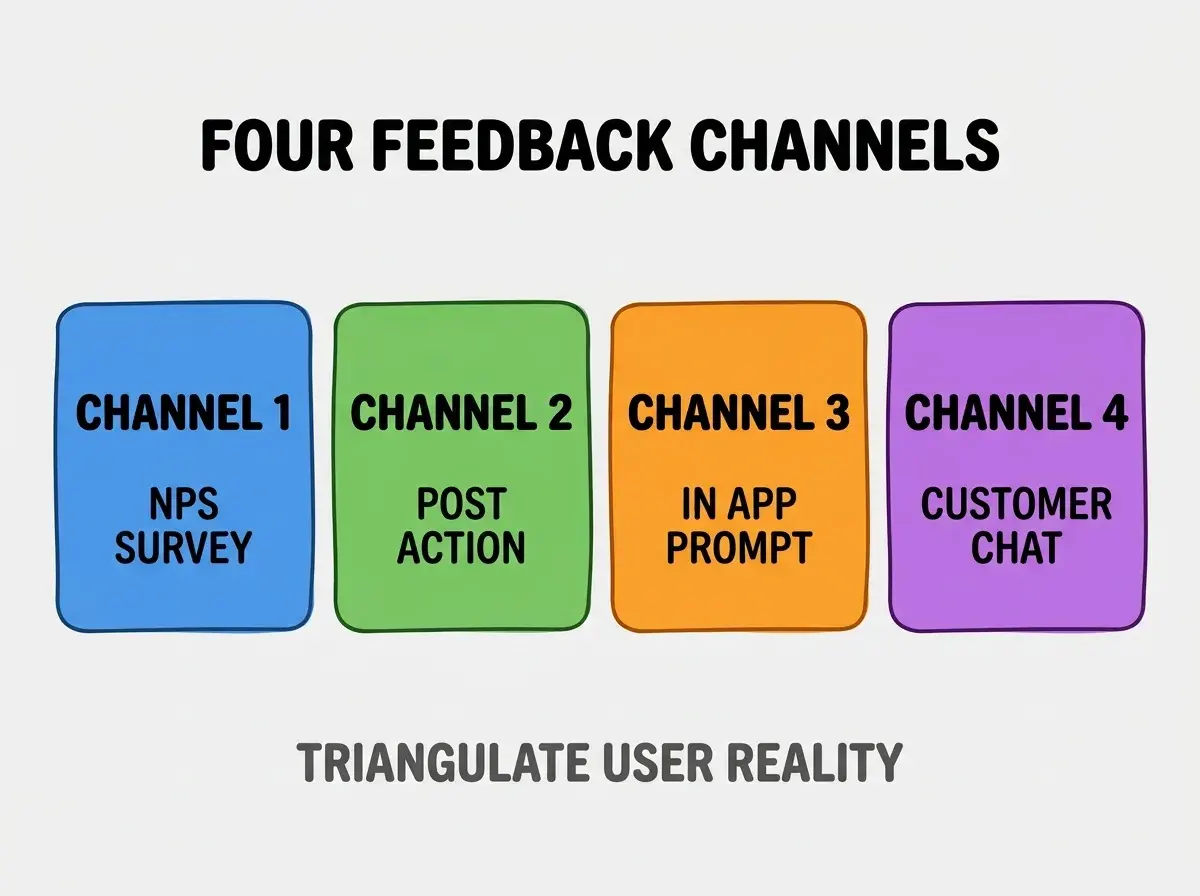
Channel 3, in-app prompts. Real time reactions; moment specific. Short prompts that do not interrupt.
Channel 4, customer interviews. Deep understanding; qualitative depth. Monthly to quarterly cadence.
How To Implement Each Channel
Four implementation patterns address each channel.
Implementation 1, NPS via dedicated tool. Delighted, Wootric, simple Typeform; tools handle calculation.
Browse more grow
Read more growImplementation 2, post action via in-app modal. Modal after feature use; one or two questions max.
Implementation 3, in-app prompts via micro surveys. 1-2 question prompts; non blocking. Sample, not all users.
Implementation 4, customer interviews scheduled monthly. Calendly or similar; structured questions with open exploration.
What Makes Feedback Actionable
Three patterns separate actionable feedback from data accumulation.
Pattern 1, themes extracted from raw feedback. Themes inform action; raw feedback overwhelms.
Pattern 2, feedback closed loop. Respond to feedback; closing loop builds trust and produces more feedback.
Pattern 3, integrated with product roadmap. Feedback shapes roadmap; without integration, feedback ignored.
What Makes Feedback Programs Sustainable
Three patterns separate sustainable programs from initial collection.
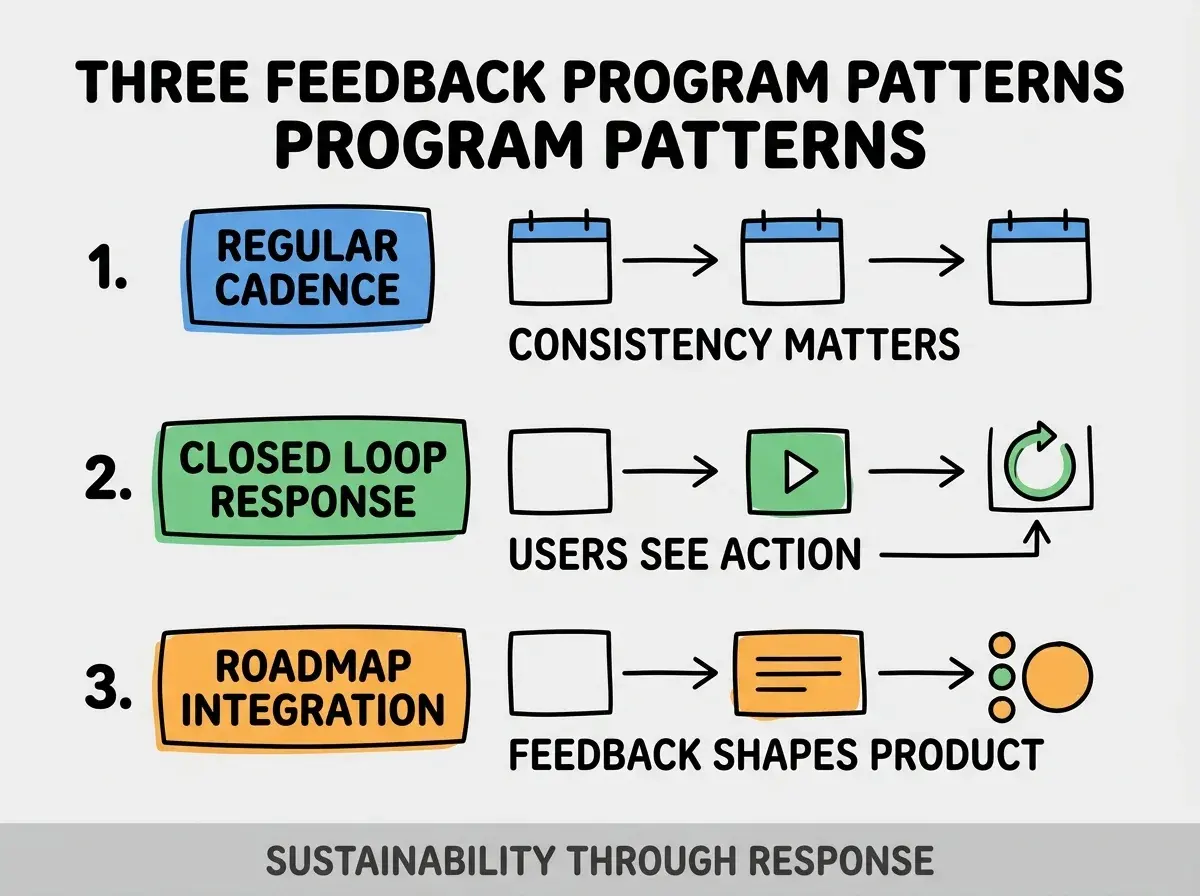
Pattern 1, regular cadence. Consistency builds expectation; without cadence, programs decay.
Pattern 2, closed loop response. Response builds trust; trust produces more feedback.
Pattern 3, roadmap integration. Feedback shapes roadmap; integration justifies collection.
The combination produces sustainable feedback. Without these patterns, feedback programs decay.
How To Increase Response Rates
Three patterns help increase response rates.
Pattern A, short surveys. 1-3 questions; longer surveys reduce response.
Pattern B, time surveys to engagement. Engaged users respond; disengaged ignore. Timing matters.
Pattern C, incentive for completion. Discount, credit, drawing entry; small incentive boosts response.
Common Questions About User Feedback
User feedback raises questions worth addressing directly.
The first question is whether to act on every feedback. No; themes matter more than individual feedback. Outliers ignore.
The second question is how to handle negative feedback. Respond, fix when possible, learn always. Negative feedback most valuable.
The third question is whether to make feedback public. Sometimes; transparency builds trust. Some feedback private.
The fourth question is what NPS score is good. 30+ good for SaaS; varies by industry. Trend matters more than absolute.
How Feedback Affects Product Quality
Feedback affects product quality in compounding ways. Quality effects compound across product life.
The first compounding effect is reduced churn. Better product retains users; retention compounds revenue.
The second compounding effect is faster product market fit. Feedback accelerates fit discovery; speed matters in market.
The third compounding effect is roadmap accuracy. Feedback informed roadmap matches user needs; matching compounds adoption.
The combination produces product quality shaped by feedback discipline. Without feedback, quality depends on assumptions.
How To Use AI For Feedback Analysis
Three patterns help AI assist feedback analysis.
Pattern A, AI extracts themes from raw feedback. Theme extraction tedious manually; AI accelerates.
Pattern B, AI sentiment analysis. Sentiment patterns reveal trends; AI handles scale.
Pattern C, AI suggests responses for common feedback. AI drafts; human reviews. Combination scales response.
The combination produces AI assisted feedback analysis. Without AI, analysis hits manual limits.
The most damaging feedback mistake is collecting without acting. Surveys with no follow up train users that feedback wastes time; future surveys ignored. The fix is to close the loop visibly; respond to feedback, ship improvements, communicate the connection. Builders who close loops build engaged user bases; builders who collect without response train users to ignore.
The other mistake is treating NPS as goal. NPS measures relationship; relationship requires more than NPS optimization.
A third mistake is missing the qualitative component. Quantitative reveals what; qualitative reveals why. Both required.
A fourth mistake is asking too often. Survey fatigue produces non response; balance matters.
What This Means For You
User feedback collection through surveys, NPS, and in-app prompts produces signal that drives product decisions. The four channels, implementation patterns, and sustainability approaches produce feedback systems that compound product quality.
- If you're a founder: Feedback systems early enable rapid iteration; build collection from day one.
- If you're a product manager: Feedback informs roadmap; integration multiplies feedback value.
- If you're a student: Product management skills include feedback fluency; learn collection patterns early.
Browse more grow
Read more grow