To choose uptime monitoring tools effectively, evaluate the four criteria that matter for production deployments (check frequency and global location coverage, alerting capabilities and response time, status page and customer communication features, and pricing relative to monitoring needs), recognize what each tool category does well, and apply the patterns that produce informed uptime tool choice. The choice matters because uptime monitoring affects how fast you respond to outages.
This piece walks through the four evaluation criteria, what tool categories do well, the operational patterns, and the four mistakes when choosing uptime monitoring.
Why Uptime Monitoring Choice Matters
Uptime monitoring choice matters as production reliability requirement. The matter; choice affects detection speed, response time, customer communication.
The 2026 reality is that uptime monitoring has become commoditized with multiple strong options. Choice now matters less for capability, more for fit with specific deployment patterns.
A 2025 reliability tools survey of 600 production deployments found that organizations using purpose fit uptime monitoring detected outages 3.4x faster than organizations using mismatched tools. Tool fit matters dramatically more than tool quality for outcomes.
The pattern to copy is the way restaurants choose POS systems. Different restaurants need different POS features; matching system to restaurant matters more than choosing best POS overall. Uptime tools follow similar pattern; matching tool to deployment matters more than absolute capability.
The Four Evaluation Criteria
Four criteria characterize uptime monitoring evaluation.
Criterion 1, check frequency and global location coverage. How often checks happen, from where. Coverage determines detection completeness.
Criterion 2, alerting capabilities and response time. How alerts route, how fast they reach responders. Alerting determines response speed.
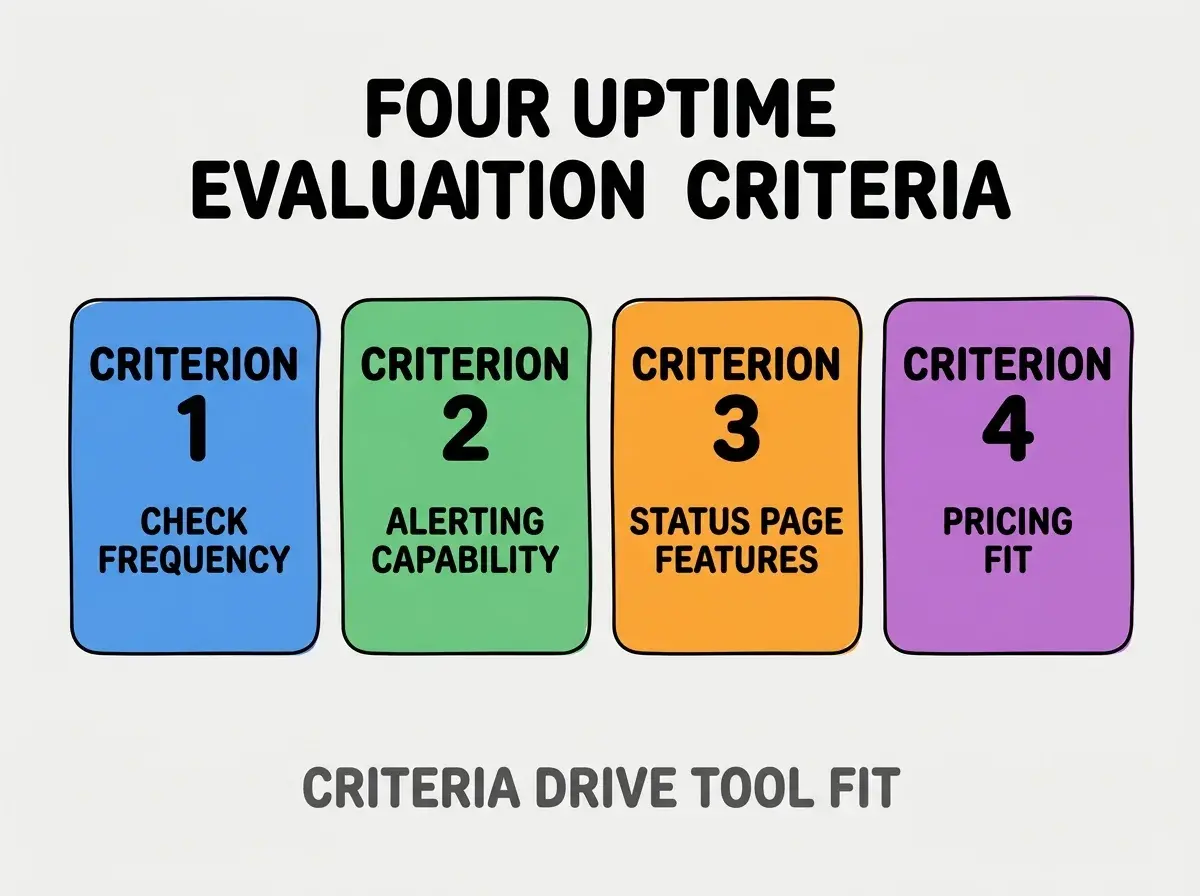
Criterion 3, status page and communication features. Customer facing status pages, communication automation. Communication determines customer experience.
Criterion 4, pricing relative to monitoring needs. Per check, per location, feature based pricing. Pricing must fit budget while covering needs.
What Tool Categories Do Well
Three tool categories handle different uptime needs.
Pattern 1, premium platforms like Datadog Synthetics or New Relic. Comprehensive monitoring within broader observability. Best for teams already using these platforms.
Browse more grow articles
Read more growPattern 2, dedicated uptime tools like Pingdom or UptimeRobot. Focused uptime monitoring at lower cost. Best for teams wanting focused tool.
Pattern 3, modern alternatives like BetterStack or Better Uptime. Modern UX, status page integration, transparent pricing. Best for teams wanting modern experience.
The Operational Patterns That Work
Three patterns produce effective uptime monitoring operationally.
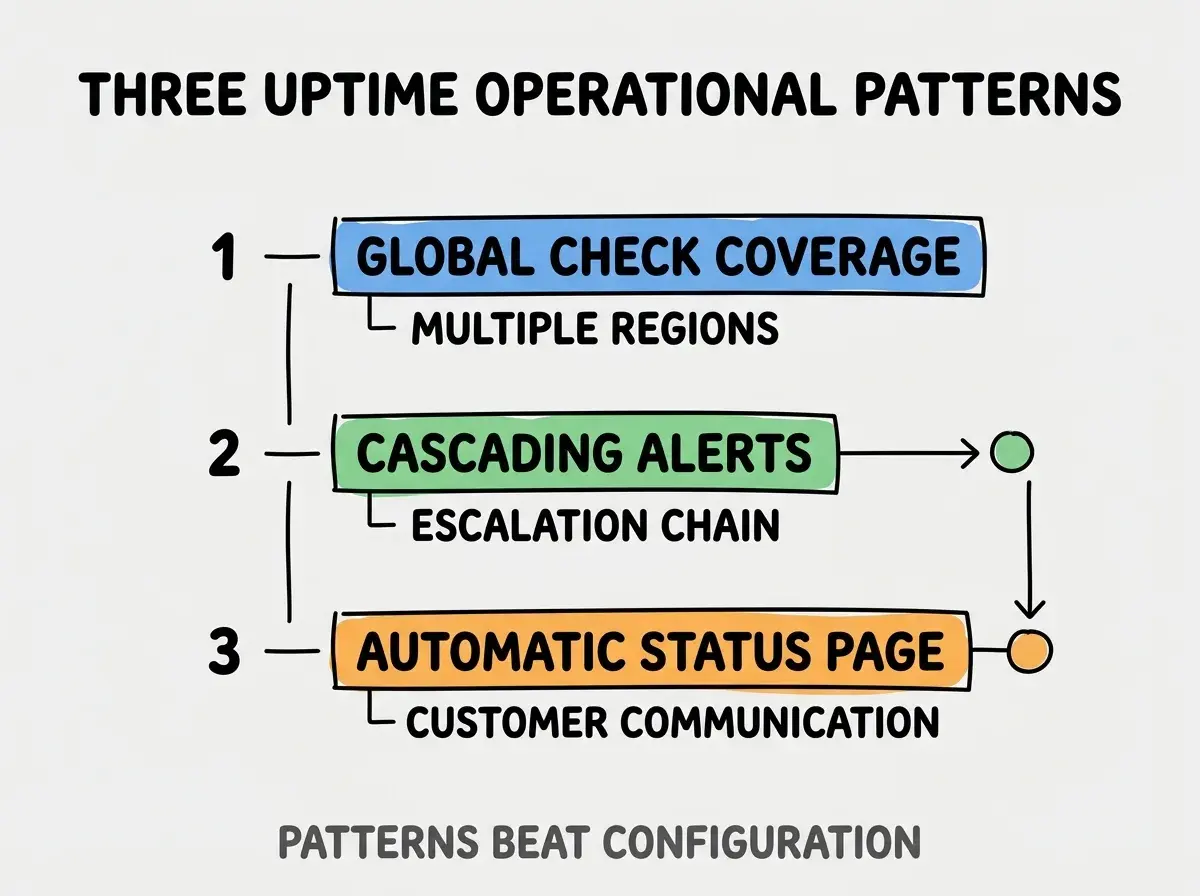
Pattern 1, global check coverage from multiple regions. Regional issues invisible without regional checks. Coverage matters dramatically.
Pattern 2, cascading alerts with escalation chain. Primary on call, backup, manager. Cascading prevents missed alerts.
Pattern 3, automatic status page updates during incidents. Customer communication automated when possible. Communication maintains trust.
What Makes Uptime Tool Choice Sustainable
Three patterns separate sustainable uptime tool choice from problematic patterns.
Pattern 1, choice matches actual monitoring needs. Over featured tools waste budget; under featured tools miss issues. Match matters.
Pattern 2, regular review of tool effectiveness. Quarterly review catches drift from needs. Without review, tool fit erodes.
Pattern 3, tool integration with broader observability stack. Standalone tools produce silos; integration produces broader value. Stack consideration matters.
The combination produces tool choice that ages well. Without these patterns, tool choice often becomes regret within months.
How To Choose Initial Uptime Monitoring
Three choice patterns help initial selection.
Pattern A, start with free tier of one tool. Free tier validates approach. Without validation, paid commitments may not fit.
Pattern B, monitor critical endpoints first. Critical endpoints get monitoring; expand from there. Without prioritization, monitoring spreads thin.
Pattern C, evaluate alerting integration with team workflow. Alerts must reach responders effectively. Without integration, alerts fail at routing.
The combination produces initial choice that establishes monitoring baseline. Without choice patterns, initial choice often misses important considerations.
The most damaging uptime monitoring tool mistake is choosing based on feature comparison rather than actual usage patterns. Feature rich tools often go underused; usage matches needs better than feature lists. The fix is to evaluate based on actual deployment needs; teams choosing for needs produce better outcomes than teams choosing for features. Most deployments use small subset of features available; matching to actual usage prevents overpayment for unused capability.
The other mistake is missing status page integration. Customer communication during incidents matters; status page integration handles communication automatically. Without integration, communication burden falls on team during incidents.
A third mistake is over relying on synthetic checks alone. Real user monitoring complements synthetic checks; combination beats either alone.
A fourth mistake is treating uptime monitoring as set and forget. Tools require ongoing tuning; without tuning, effectiveness drifts.
How To Configure For Specific Deployment Patterns
Three deployment patterns deserve specific approaches.
Pattern A, single region deployments. Local checks plus global verification. Single region simpler than multi region.
Pattern B, multi region deployments. Per region checks, region specific alerting. Multi region requires regional treatment.
Pattern C, serverless deployments. Function level checks plus endpoint checks. Serverless monitoring differs from server monitoring.
The combination produces deployment specific configuration. Without specific approaches, generic configuration produces blind spots.
How Uptime Monitoring Will Likely Evolve
Uptime monitoring will likely continue evolving as deployment patterns mature.
The first likely evolution is edge native monitoring. Monitoring designed for edge deployments. Edge native handles modern deployment patterns.
The second likely evolution is AI assisted incident classification. AI categorizing incidents automatically. Automation reduces manual classification.
The third likely evolution is integration with deployment tools. Deploy aware monitoring that correlates incidents with deploys. Integration accelerates incident attribution.
The combination suggests uptime monitoring will become more capable. Engineers learning patterns now build skills that remain valuable.
Common Questions About Uptime Monitoring
Uptime monitoring raises questions worth addressing directly.
The first question is what check frequency to use. 1 minute for critical endpoints; 5 minutes for less critical. Frequency matches criticality.
The second question is whether to monitor internal endpoints. Yes for critical internal services; same patterns as external.
The third question is whether status pages should be hosted internally or externally. External often better; status page must be reachable when main service down.
The fourth question is whether to migrate uptime tools when needs change. Yes when needs change substantially; migration cost worth long term fit. Keep migration cost in mind.
How Uptime Monitoring Affects Customer Trust
Uptime monitoring affects customer trust beyond pure detection. Trust effects compound over time and shape customer retention.
The first compounding effect is incident communication speed. Fast detection enables fast communication; communication maintains trust during incidents.
The second compounding effect is uptime statistics for customer transparency. Public uptime metrics signal reliability commitment. Without statistics, customers cannot evaluate reliability.
The third compounding effect is reduced customer support load during incidents. Status pages reduce support inquiries during incidents. Reduction enables team focus on resolution.
The combination produces customer trust outcomes that monitoring quality drives. Without monitoring investment, customer trust erodes invisibly.
What This Means For You
Uptime monitoring tool choice affects production reliability outcomes. The four criteria, tool categories, and operational patterns produce framework for informed tool choice.
- If you're a senior dev: Match tool to deployment patterns; mismatched tools produce monitoring that does not catch deployment specific issues.
- If you're an indie hacker: Solo deployments need uptime monitoring most; without monitoring, solo response cannot match user expectations.
- If you're a founder: Help engineering team prioritize monitoring; uptime affects user trust that growth depends on.
Browse more grow articles
Read more grow