To set up error rate monitoring that catches issues before users notice, follow the four monitoring patterns (baseline error rate measurement establishing what normal looks like, anomaly detection alerting when rates exceed normal, error categorization grouping similar errors for prioritization, and alert routing matching urgency to response capability), recognize what makes monitoring effective versus noise generating, and apply the patterns that produce sustainable monitoring. The error rate monitoring matters because production issues compound when caught late.
This piece walks through the four monitoring patterns, what makes monitoring effective, the specific tooling, and the four mistakes that produce monitoring that does not actually catch issues.
Why Error Rate Monitoring Matters
Error rate monitoring matters because production issues affect users immediately when they happen. The matter; faster detection enables faster response that limits user impact.
The 2026 reality is that AI built apps experience errors at higher rates than human written apps. Monitoring matters more for AI built apps because error patterns differ from human written app patterns.
A 2025 production reliability study of 400 apps found that apps with structured error rate monitoring resolved incidents 4.7x faster and reduced user impact 73 percent compared to apps relying on user reports for incident detection. Monitoring produces dramatic incident outcome differences.
The pattern to copy is the way smoke detectors changed fire response. Smoke detectors catch fires before they spread; monitoring catches errors before they cascade. Detection speed matters more than detection sophistication for both fires and errors.
The Four Monitoring Patterns
Four patterns produce effective error rate monitoring.
Pattern 1, baseline error rate measurement. Know normal error rate; deviations from normal trigger alerts. Without baseline, deviations invisible.
Pattern 2, anomaly detection beyond simple thresholds. Statistical anomaly detection catches patterns simple thresholds miss. Anomaly detection produces fewer false alerts.
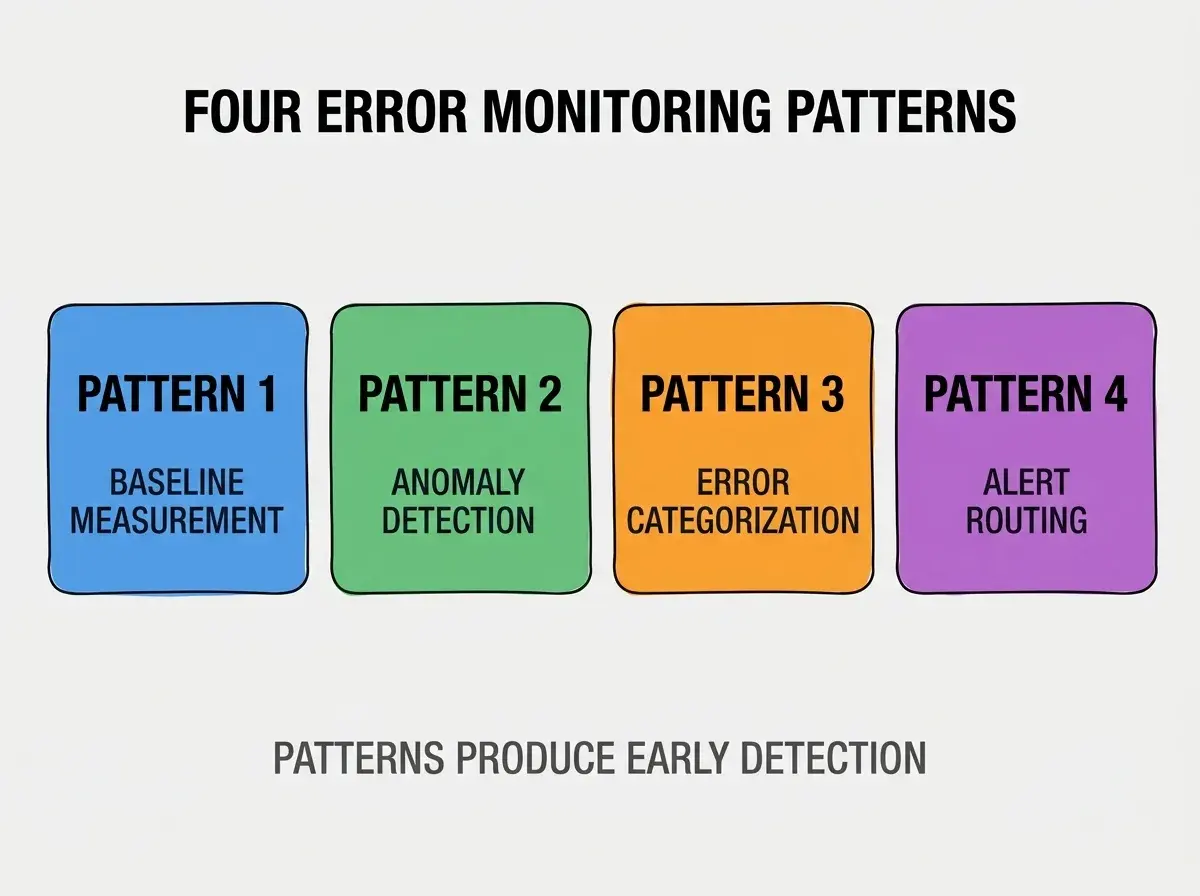
Pattern 3, error categorization for prioritization. Group similar errors; prioritize by impact. Without categorization, error noise overwhelms.
Pattern 4, alert routing matching urgency. Critical errors page on call; minor errors batch to dashboard. Routing matches response to severity.
What Makes Monitoring Effective
Three patterns characterize effective monitoring.
Pattern 1, signal to noise ratio prioritized. High signal alerts get responded to; noise alerts get ignored. Ratio matters dramatically.
Browse more grow articles
Read more growPattern 2, alerts include context for response. Alerts with stack traces, recent deploys, affected users enable response. Without context, alerts produce investigation overhead.
Pattern 3, regular monitoring tuning catches drift. Error patterns change; tuning maintains effectiveness. Without tuning, monitoring drifts to noise.
The Specific Tooling That Works
Three tool categories combine effectively for error monitoring.
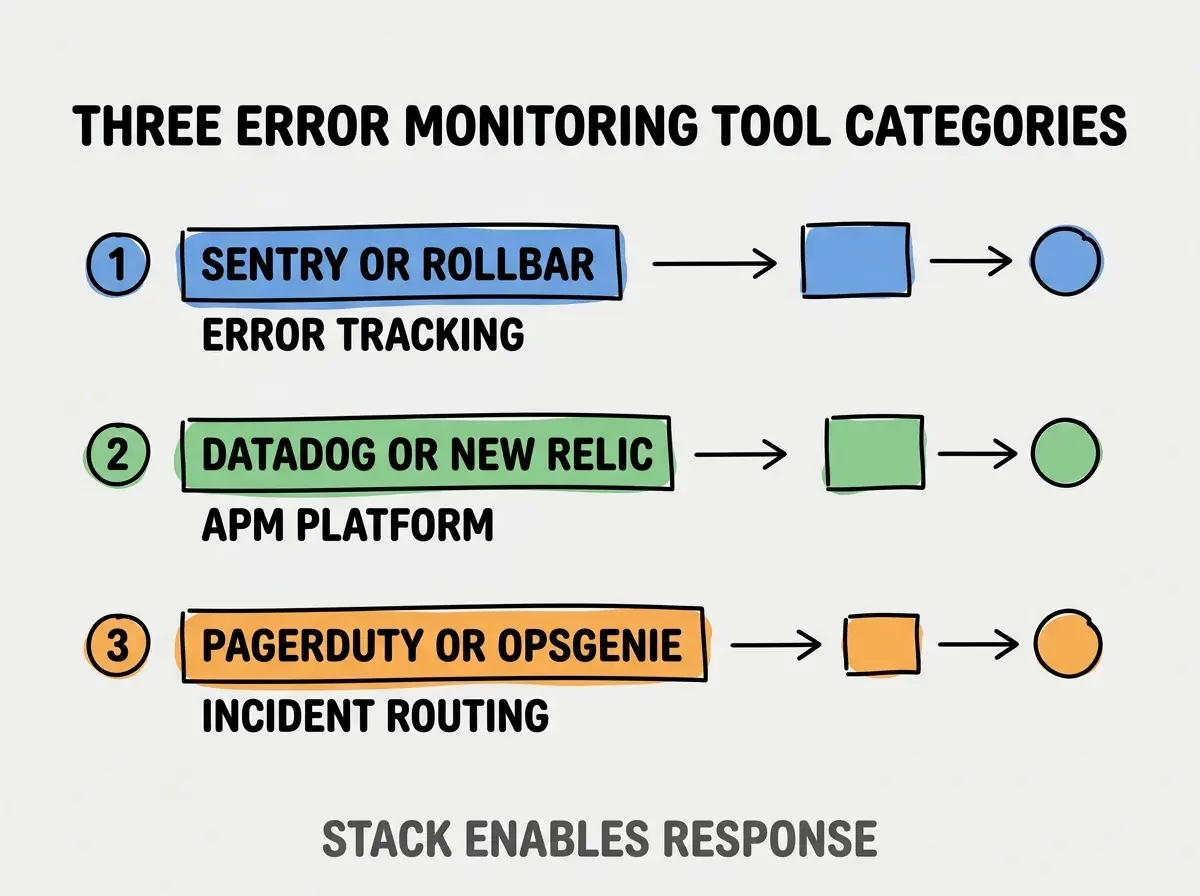
Tool 1, Sentry or Rollbar for error tracking. Detailed error context, stack traces, user impact. Error tracking provides incident foundation.
Tool 2, Datadog or New Relic for APM platform. Application performance, infrastructure context, user experience. APM provides broader context.
Tool 3, PagerDuty or Opsgenie for incident routing. Alert routing, on call rotation, escalation. Routing connects monitoring to response.
What Makes Monitoring Sustainable
Three patterns separate sustainable monitoring from problematic patterns.
Pattern 1, alert volume manageable for response capacity. Alerts beyond capacity produce alert fatigue. Without volume management, monitoring becomes ignored.
Pattern 2, regular review of alert quality. Periodic review identifies low value alerts. Without review, alert quality drifts.
Pattern 3, on call practices sustainable for team. On call burden affects retention. Sustainability matters for long term.
The combination produces monitoring that actually catches issues. Without these patterns, monitoring exists but does not catch issues effectively.
How To Set Initial Thresholds
Three threshold patterns help initial monitoring setup.
Pattern A, start conservative and tune from data. Initial thresholds based on guesses; tune based on actual patterns. Without tuning, thresholds stay wrong.
Pattern B, separate critical from informational thresholds. Different urgency levels need different routing. Without separation, all alerts get same urgency.
Pattern C, test alerts to verify they fire correctly. Untested alerts may not fire when needed. Without testing, alert reliability uncertain.
The combination produces threshold setup that catches issues. Without patterns, thresholds may not match actual error patterns.
The most damaging error monitoring mistake is alert fatigue from too many alerts. When all alerts feel equally important, none feel important; team starts ignoring all alerts including critical ones. The fix is to ruthlessly prioritize alert severity; only critical issues should page on call, everything else goes to dashboards or batched reports. Teams that prioritize alerts respond effectively; teams with alert fatigue miss critical issues despite having monitoring.
The other mistake is missing context in alerts. Alerts without context require investigation that delays response. The fix is to include relevant context automatically.
A third mistake is treating monitoring as one time setup. Monitoring requires ongoing tuning as application evolves; without tuning, effectiveness erodes.
A fourth mistake is over reliance on monitoring without instrumentation. Monitoring catches what is instrumented; gaps in instrumentation produce monitoring blind spots.
How To Handle Specific Error Patterns
Three error patterns deserve specific approaches.
Pattern A, transient errors from external services. Group and rate limit alerts; full rate alerting produces noise. Pattern matches external service variability.
Pattern B, errors specific to user actions. Track per user; identify users experiencing issues. User specific context enables targeted response.
Pattern C, errors from recent deploys. Correlate with deploy time; rollback if deploy correlated. Deploy correlation enables fast incident resolution.
The combination produces pattern specific approaches. Without specific approaches, generic monitoring produces suboptimal outcomes.
How Error Monitoring Will Likely Evolve
Error monitoring will likely continue evolving as AI capabilities mature.
The first likely evolution is AI assisted incident analysis. AI suggesting probable causes from error patterns. AI assistance accelerates incident response.
The second likely evolution is predictive monitoring. Detecting issues before they reach error thresholds. Prediction enables prevention beyond detection.
The third likely evolution is integrated remediation. Automated remediation for known error patterns. Automation reduces manual response burden.
The combination suggests monitoring will become more capable. Engineers learning patterns now build skills that remain valuable.
Common Questions About Error Monitoring
Error monitoring raises questions worth addressing directly.
The first question is whether to monitor every error. No; monitor errors affecting users or indicating systemic issues. Monitoring everything produces noise.
The second question is how often to review monitoring effectiveness. Monthly minimum; effectiveness drift faster than annual review captures.
The third question is whether to use multiple monitoring tools. Often yes; different tools have different strengths. Combination often beats single tool.
The fourth question is how to handle alert noise during high traffic. Adaptive thresholds; raise during expected high traffic. Without adaptation, expected traffic produces alert noise.
How Monitoring Affects Engineering Culture
Monitoring affects engineering culture beyond technical metrics. Culture effects compound over time and shape organizational reliability.
The first compounding effect is incident response confidence. Teams with good monitoring respond confidently; teams with poor monitoring respond reactively. Confidence affects retention.
The second compounding effect is on call burden distribution. Good monitoring makes on call sustainable; poor monitoring makes on call exhausting. Sustainability matters for team health.
The third compounding effect is customer trust through incident transparency. Monitoring enables status pages and communication; communication maintains trust during incidents.
What This Means For You
Error rate monitoring determines incident detection speed. The four patterns, tool combinations, and threshold approaches produce framework for sustainable monitoring.
- If you're a senior dev: Monitoring quality affects production reliability dramatically. Invest in monitoring practices; they pay back through reduced incidents.
- If you're an indie hacker: Solo developers cannot monitor manually; tools matter dramatically. Without tools, issues affect users before detection.
- If you're a founder: Help engineering team prioritize monitoring investment. Monitoring affects user experience that growth depends on.
Browse more grow articles
Read more grow