University professors teaching computer science in the age of AI coding have made four pedagogical shifts that reshape how the next generation of developers learn. The shifts include moving from syntax memorization to systems thinking, from solo work to AI collaboration, from theory first to practice first, and from grading code to grading judgment. Understanding these shifts helps students prepare for the workforce that employers actually want to hire.
This piece walks through the four pedagogical shifts, what professors are saying about effectiveness, what the shifts mean for student career preparation, and the four mistakes when interpreting university computer science evolution.
Why University Teaching Changes Matter For Career Preparation
University teaching changes matter for career preparation because employers hire based on what universities produce. Mismatch between what universities teach and what employers want produces graduate underemployment.
The 2026 reality is that the gap between traditional CS curriculum and industry needs has widened with AI tools. Universities are responding; response speed varies dramatically.
A 2025 academic survey of 200 computer science professors at major universities found that 71 percent had substantially restructured their courses in the past 18 months in response to AI coding tools. Restructuring rate exceeds previous technology shifts including the cloud transition and mobile transition.
The pattern to copy is the way medical schools shifted from memorization to clinical reasoning when reference materials became universally available. Memory of facts mattered less when facts were always accessible; reasoning mattered more. CS education is making the equivalent shift.
The Four Pedagogical Shifts
Four shifts characterize how university CS education is evolving.
Shift 1, syntax memorization to systems thinking. Less time on language specifics; more time on architecture, design, system interaction.
Shift 2, solo work to AI collaboration. Assignments now expect AI use; grading evaluates how well students collaborate with AI rather than whether they used AI.
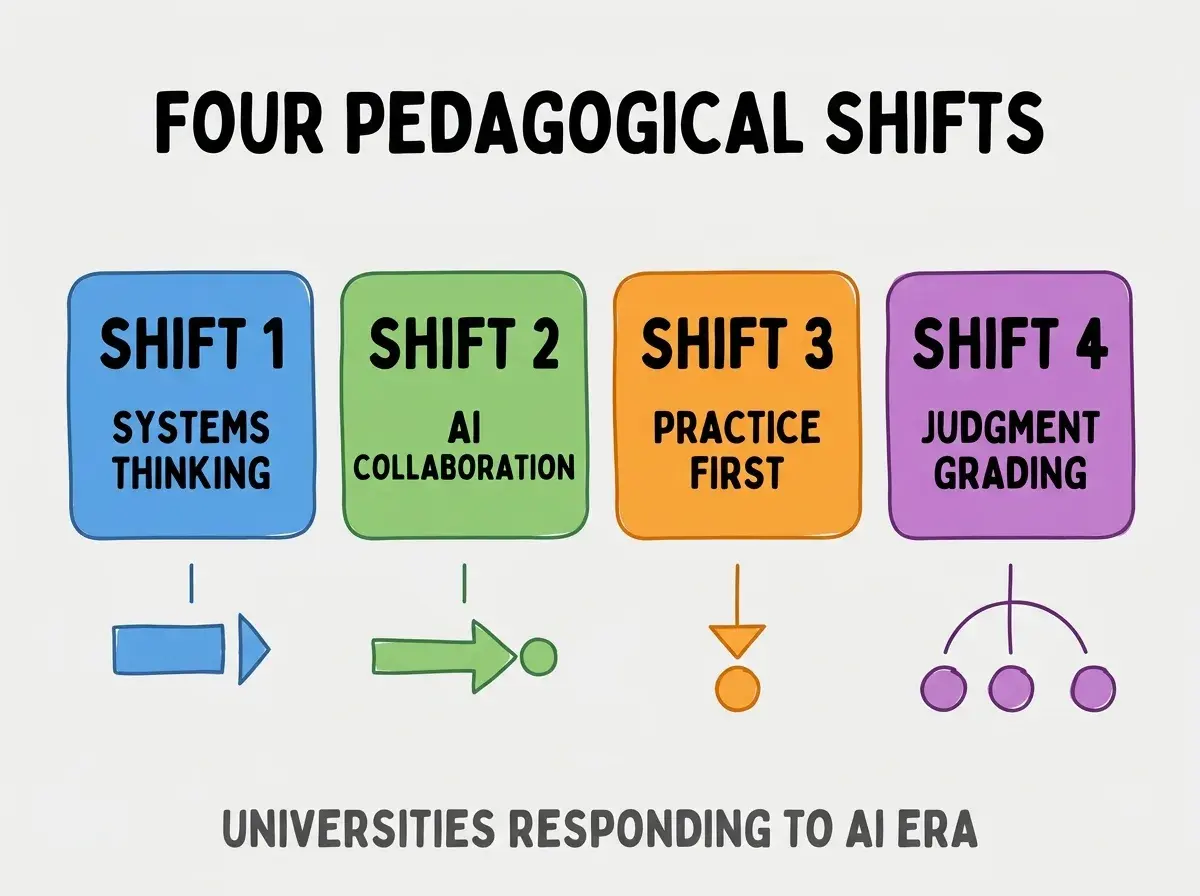
Shift 3, theory first to practice first. Less time on theoretical foundations early; more time on building actual systems with theory taught when needed.
Shift 4, grading code to grading judgment. Final code matters less; the judgment behind decisions matters more. Process documentation often required.
What Professors Are Saying About Effectiveness
Three findings emerge from professor reports on the shifts.
Finding 1, students learn faster with AI tools. When AI handles syntax, students spend cognitive budget on systems and design; learning accelerates.
Browse more pulse
Read more pulseFinding 2, fundamentals still matter despite AI. Students who skip fundamentals plateau quickly; AI amplifies fundamentals rather than replacing them.
Finding 3, peer learning dynamics changed. AI collaboration is more individual; peer learning patterns are evolving with reduced clear advantage from peer help.
What The Shifts Mean For Student Career Preparation
Three implications matter for students navigating university in AI era.
Implication 1, build systems thinking deliberately. Universities teaching systems thinking align with employer needs; students should engage with this curriculum fully.
Implication 2, develop AI collaboration patterns. Workplace AI use will be expected; university time builds collaboration patterns that transfer.
Implication 3, document judgment in projects. Portfolio code matters less than judgment behind code; document why decisions were made.
What Makes The University Response Sustainable
Three patterns separate sustainable university adaptation from temporary changes.
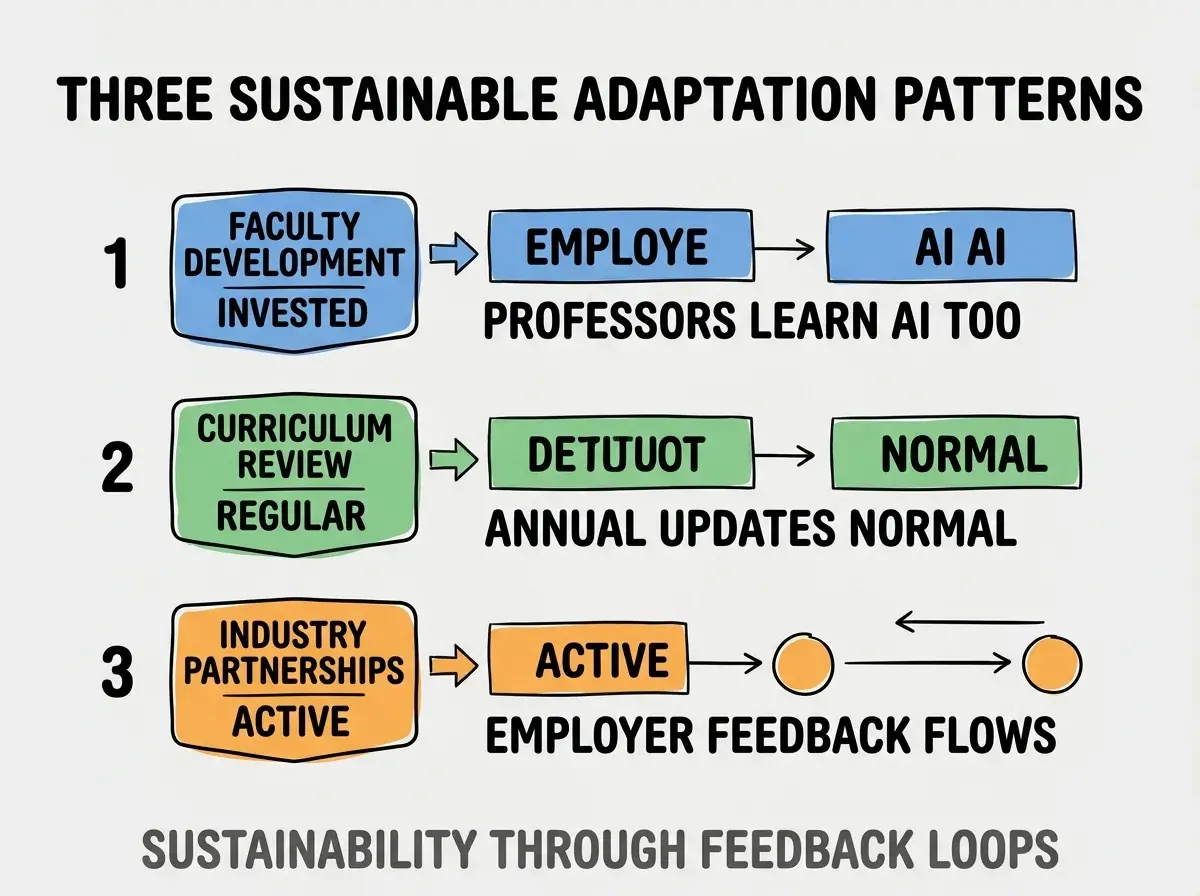
Pattern 1, faculty development investment. Professors learn AI tools alongside students; faculty knowledge sustains pedagogical change.
Pattern 2, curriculum review regular. Annual curriculum updates become normal; static curriculum becomes obsolete fast.
Pattern 3, industry partnerships active. Employer feedback flows into curriculum; partnerships keep teaching current.
The combination produces sustainable university adaptation. Without these patterns, response is temporary surface change.
How To Choose Universities For AI Era CS Education
Three selection patterns help students choose CS programs for AI era.
Pattern A, evaluate AI integration in curriculum. Programs that integrated AI tools into curriculum have responded; programs that ban AI have not adapted.
Pattern B, look for faculty AI tool usage. Faculty using AI in their own work bring authenticity to teaching; faculty avoiding AI teach outdated patterns.
Pattern C, check industry partnership activity. Partnerships indicate pipeline to jobs; absence indicates academic isolation.
The combination produces program selection that matches AI era needs. Without selection criteria, students enroll in programs misaligned with career outcomes.
Common Questions About University AI Era Education
University AI era education raises questions worth addressing directly.
The first question is whether to skip university for self study with AI. Sometimes; depends on signaling needs. Self study works for portfolio focused fields; degree signaling matters in some hiring.
The second question is whether some universities are still teaching outdated curriculum. Yes; adoption varies dramatically. Research before enrolling.
The third question is whether AI integration in education will continue evolving. Yes; current state is mid trajectory. Continued evolution expected.
The fourth question is how to evaluate professor AI integration before enrolling. Read syllabi, watch course videos, ask current students. Information available with research.
How Education Changes Affect Industry Hiring
Education changes affect industry hiring in compounding ways. Hiring effects compound across years.
The first compounding effect is graduate quality variance. Graduates from adapted programs differ from graduates from traditional programs; variance affects starting positions.
The second compounding effect is hiring signal evolution. Old hiring signals (algorithm whiteboard, syntax knowledge) decline; new signals (judgment, AI collaboration) rise.
The third compounding effect is internship redesign. Internships restructure to test AI era skills; structure affects student experience.
The combination produces hiring landscape that rewards AI era preparation. Without preparation, students enter hiring market mismatched.
How Students Should Engage With AI Era CS
Three engagement patterns help students maximize AI era CS education.
Pattern A, embrace AI tools fully in coursework. AI use is professional norm; embracing in coursework builds professional patterns.
Pattern B, build personal projects beyond coursework. Coursework demonstrates assignment completion; personal projects demonstrate initiative and depth.
Pattern C, document decision making in all projects. Decision documentation differentiates students; documentation skill compounds across career.
The combination produces students prepared for AI era careers. Without engagement, university time produces credentials without skill.
The most damaging student mistake regarding AI era CS education is choosing programs based on rankings rather than AI adaptation. Top ranked programs often adapt slowly due to entrenched curriculum; mid ranked programs sometimes adapt faster. The fix is to evaluate adaptation independent of ranking; some traditional rankings reward what no longer matters. Students who evaluate adaptation produce better career outcomes than students who follow rankings.
The other mistake is treating AI tools as banned in academic contexts. Most programs now permit or require AI use; permission varies by course but not by program.
A third mistake is assuming university AI education matches industry use. Universities lag industry by 6-18 months even when adapting; supplement with industry following.
A fourth mistake is missing the systems thinking emphasis. Systems thinking is the highest leverage skill; courses teaching it deserve maximum engagement.
What This Means For You
University professors teaching in the age of AI coding have responded with substantial pedagogical shifts. The four shifts, professor findings, and student implications produce framework for university selection and engagement.
- If you're a student: Choose programs and courses that have integrated AI; integration teaches AI era skills that traditional programs do not.
Browse more pulse
Read more pulse