The impact of AI on computer science education in 2026 reshapes what students learn, how they learn, what employers expect, and how institutions adapt. Four impact patterns characterize the shift: curriculum focus moving from syntax to systems, assignment design moving from solo to AI collaboration, hiring standards evolving from algorithm tests to judgment evaluation, and credential value diverging based on adaptation. Understanding the patterns helps students and educators navigate the AI era of CS education.
This piece walks through the four impact patterns, what students should know, what educators face, and the four mistakes when interpreting AI impact on CS education.
Why CS Education Impact Matters
CS education impact matters because CS graduates supply the workforce that builds software. Education changes affect workforce; workforce changes affect industry.
The 2026 reality is that CS education impact is uneven; some institutions adapted aggressively, others minimally. Adaptation gap produces graduate quality variance.
A 2025 academic survey of 200 computer science programs found 68 percent had substantially restructured curriculum in response to AI tools, while 32 percent maintained traditional structure. Variance produces dramatically different graduate experiences from institutions that look similar from outside.
The pattern to copy is the way medical education shifted when reference materials became universally available. Memorization mattered less, reasoning mattered more. CS education is making the equivalent shift; some institutions faster than others.
The Four Impact Patterns
Four patterns characterize AI impact on CS education.
Pattern 1, curriculum focus shifting from syntax to systems. Less time on language details; more time on architecture, design, system interaction.
Pattern 2, assignment design shifting from solo to AI collaboration. Assignments evaluate AI use rather than ban AI use.
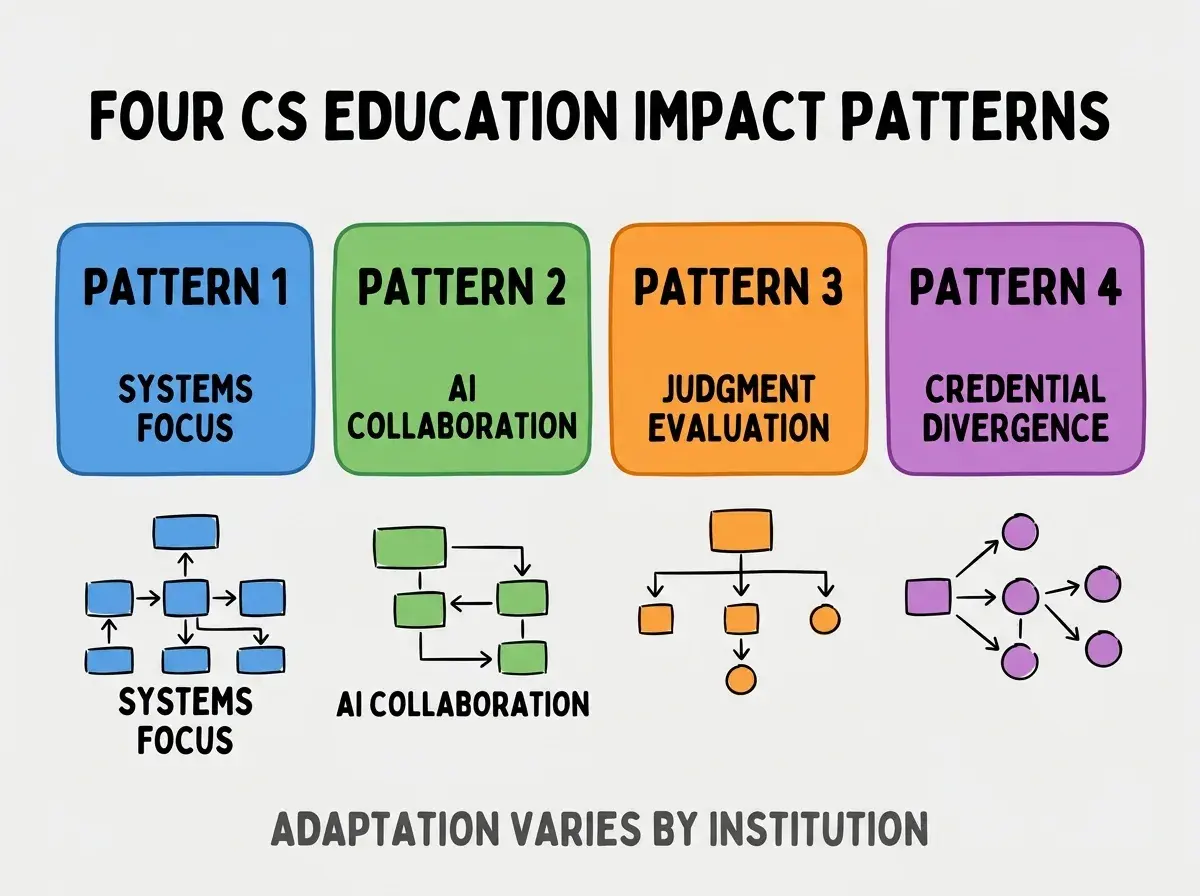
Pattern 3, hiring standards evolving from algorithm tests to judgment evaluation. Employers now hire for judgment, not memorized algorithms.
Pattern 4, credential value diverging based on adaptation. Adapted programs command premium; unadapted programs lose value.
What Students Should Know
Three things matter for current CS students.
Knowledge 1, AI integration in your program matters. Programs that integrated AI prepare for current job market; programs that ban AI prepare for outdated market.
Browse more pulse
Read more pulseKnowledge 2, fundamentals matter more, not less. AI amplifies fundamentals; weak fundamentals limit AI productivity.
Knowledge 3, portfolio shipping matters more than degree alone. Shipped projects demonstrate judgment; demonstration matters in hiring.
What Educators Face
Three challenges face CS educators in AI era.
Challenge 1, curriculum currency. Curriculum that lagged industry is obsolete fast; rapid update needed.
Challenge 2, assignment integrity. Old assignment formats easily completed by AI; new formats needed.
Challenge 3, faculty AI fluency. Faculty who teach AI must use AI; fluency gap affects teaching quality.
What Makes CS Education Adaptation Sustainable
Three patterns separate sustainable adaptation from one off changes.
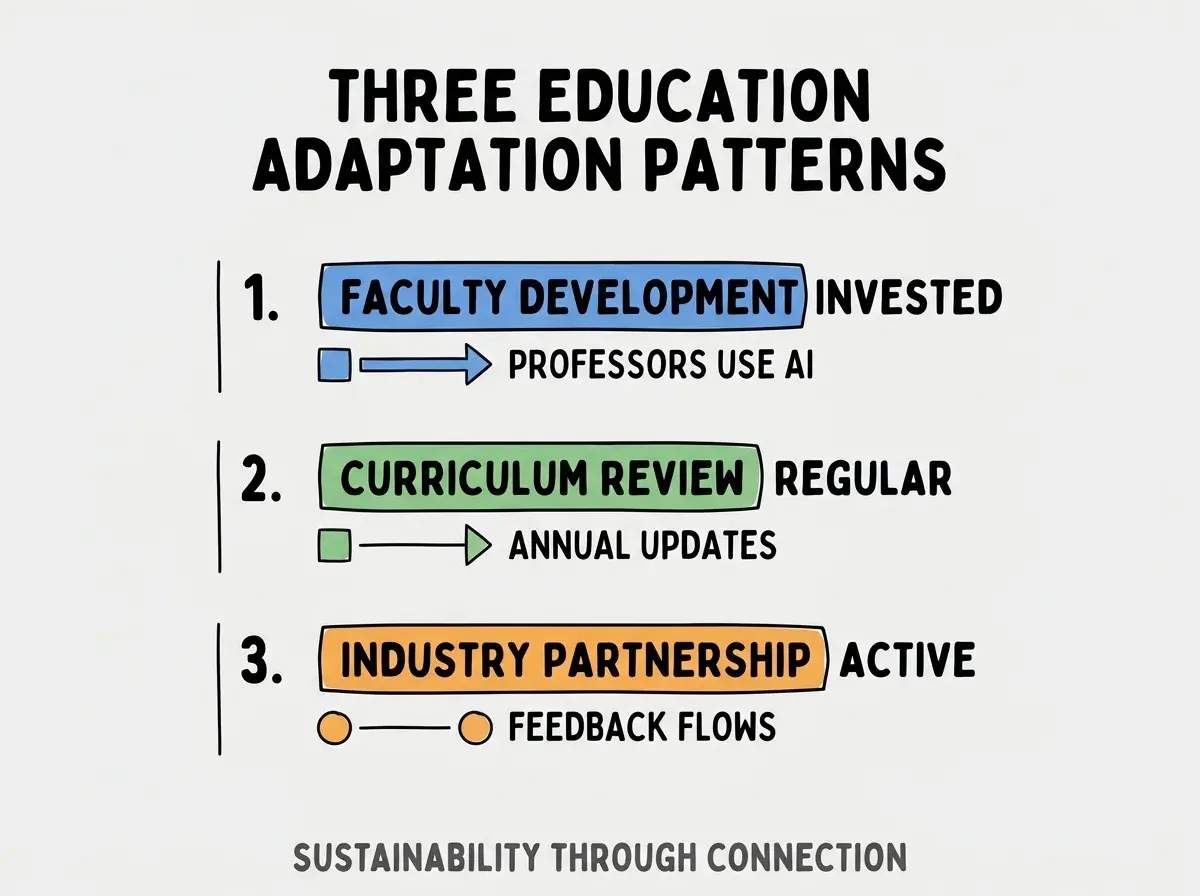
Pattern 1, faculty development invested. Faculty learn AI; faculty knowledge enables sustained teaching evolution.
Pattern 2, curriculum review regular. Annual review catches drift; static curriculum becomes obsolete fast.
Pattern 3, industry partnership active. Partnerships keep curriculum aligned with industry; alignment keeps graduates employable.
The combination produces sustainable adaptation. Without these patterns, adaptation is one event.
How To Choose CS Programs For AI Era
Three patterns help students choose programs.
Pattern A, evaluate AI integration in current curriculum. Programs that integrated AI signal adaptation.
Pattern B, look at recent graduate outcomes. Recent graduates reveal program effectiveness; old graduates reveal nothing about current state.
Pattern C, check faculty publications and projects. Active faculty using AI in own work brings authenticity.
Common Questions About CS Education AI Impact
CS education AI impact raises questions worth addressing directly.
The first question is whether to skip CS degree for self study. Sometimes; depends on hiring market in your region and field. Self study works for portfolio focused fields.
The second question is whether bootcamps adapted faster than universities. Generally yes; shorter cycles enable faster adaptation. Bootcamps quality varies dramatically.
The third question is whether AI tools should be allowed on exams. Most programs moving toward yes; exams that ban AI prepare for jobs that allow AI.
The fourth question is whether CS degrees lose value. Adapted CS degrees gain value; unadapted CS degrees lose value. Variance is the trend.
How Education Changes Affect Industry Hiring
Education changes affect industry hiring in compounding ways. Hiring effects compound across years.
The first compounding effect is graduate quality variance. Adapted graduates outperform unadapted; gap widens across cohorts.
The second compounding effect is hiring signal evolution. Old signals (whiteboard algorithms) decline; new signals (judgment, AI fluency) rise.
The third compounding effect is alternative credential growth. Bootcamps, self study, portfolios gain hiring credibility; degree monopoly weakens.
The combination produces hiring landscape shaped by education evolution. Without awareness, students enter hiring market mismatched.
How Students Should Engage With CS Education
Three patterns help students maximize CS education in AI era.
Pattern A, embrace AI tools in coursework. AI use is professional norm; embracing builds professional patterns.
Pattern B, build portfolio beyond required projects. Required work demonstrates compliance; portfolio demonstrates initiative.
Pattern C, contribute to open source for credibility. OSS contributions outweigh degree alone in many hiring decisions.
The combination produces students prepared for AI era careers. Without engagement, education produces credentials without skill.
The most damaging student mistake regarding CS education AI impact is choosing programs based on rankings rather than adaptation. Top ranked programs sometimes adapted slowly due to entrenched curriculum; mid ranked sometimes adapted faster. The fix is to evaluate adaptation independent of ranking; some traditional rankings reward what no longer matters. Students who evaluate adaptation produce better outcomes than students following rankings.
The other mistake is treating AI as cheating. Industry expects AI use; treating as cheating prepares for jobs that do not exist.
A third mistake is skipping fundamentals because AI handles them. Fundamentals determine AI productivity ceiling; skipping limits career.
A fourth mistake is missing the systems thinking emphasis. Systems thinking is highest leverage skill; courses teaching it deserve maximum engagement.
What This Means For You
The impact of AI on computer science education reshapes what students learn and what employers value. The four patterns, student knowledge, and engagement approaches produce framework for navigating CS education in AI era.
- If you're a student: Choose programs and courses that integrate AI; integration teaches AI era skills.
Browse more pulse
Read more pulse