To understand the AI coding trust paradox in 2026, recognize the four paradox patterns the data reveals (adoption metrics rising across all developer segments simultaneously, trust metrics declining across the same segments, productivity claims diverging between vendors and users, and quality concerns growing alongside productivity gains), see what the patterns reveal about AI coding maturity, and consider what the patterns mean for individual developers and companies. The trust paradox matters because it determines whether AI coding sustains as long term tool or experiences trust collapse.
This piece walks through the four paradox patterns, what they reveal, the implications for individuals and companies, and the four mistakes when interpreting the trust paradox.
Why The Trust Paradox Matters
The trust paradox matters for understanding AI coding trajectory in 2026. The matter; trust trends predict adoption sustainability that pure adoption metrics miss.
The 2026 reality is that AI coding adoption continues growing while trust metrics decline simultaneously. The combination produces paradox that defies simple explanation; both trends are real and persistent.
A 2025 Stack Overflow developer survey of 90,000 developers found that AI coding tool adoption increased 31 percent year over year while reported trust in AI generated code declined 19 percent. The simultaneous trends produce paradox that requires understanding both adoption pressure and trust erosion forces.
The pattern to copy is the way historians analyze technology adoption paradoxes. Some technologies show rising adoption with rising trust; some show rising adoption with declining trust. Adoption with declining trust historically signals coming inflection points that pure adoption metrics miss.
The Four Paradox Patterns
Four patterns characterize the AI coding trust paradox.
Pattern 1, adoption rising across all developer segments. Senior, junior, frontend, backend, all increasing AI tool use. Adoption pattern uniform across segments.
Pattern 2, trust declining across same segments. Same developers using AI tools more report less trust in AI output. Trust pattern uniform across segments.
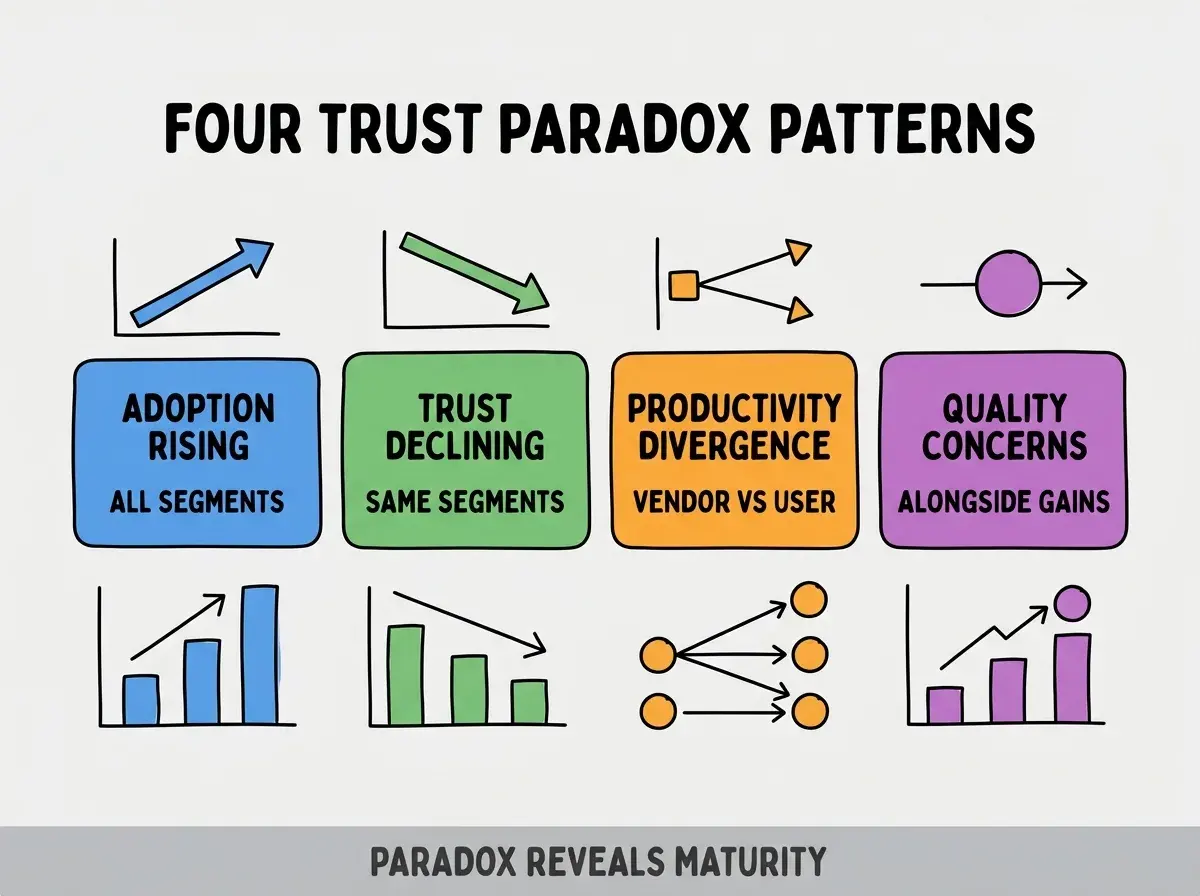
Pattern 3, productivity claims diverging between vendors and users. Vendors claim large productivity gains; users report smaller gains. Divergence reveals measurement issues.
Pattern 4, quality concerns growing alongside productivity gains. Same teams reporting productivity gains also reporting quality concerns. Concerns persist despite adoption growth.
What The Patterns Reveal
Three patterns reveal underlying AI coding maturity dynamics.
Pattern 1, adoption driven by competitive pressure not pure preference. Developers adopt because peers adopt; not adopting feels risky. Pressure adoption differs from preference adoption.
Browse more pulse articles
Read more pulsePattern 2, trust erosion driven by repeated AI failures. Real failures accumulate; trust erodes from repeated experience. Trust requires consistent positive experience.
Pattern 3, productivity measurement differs between marketing and lived experience. Marketing measures features shipped; users measure features shipped minus debt accumulated. Different measurement produces different conclusions.
What The Paradox Means For Individuals
Three implication patterns matter for individual developers.
Implication 1, adoption pressure does not equal value. Adopting because peers adopt may not produce personal value. Evaluate value independently.
Implication 2, trust calibration matters more than tool choice. Knowing when to trust AI and when not matters more than which AI tool used. Calibration produces value.
Implication 3, productivity measurement should include quality dimension. Pure feature shipping metrics miss debt accumulation. Quality inclusive metrics reveal real productivity.
How Companies Should Adapt
Three application patterns help companies adapt to trust paradox.
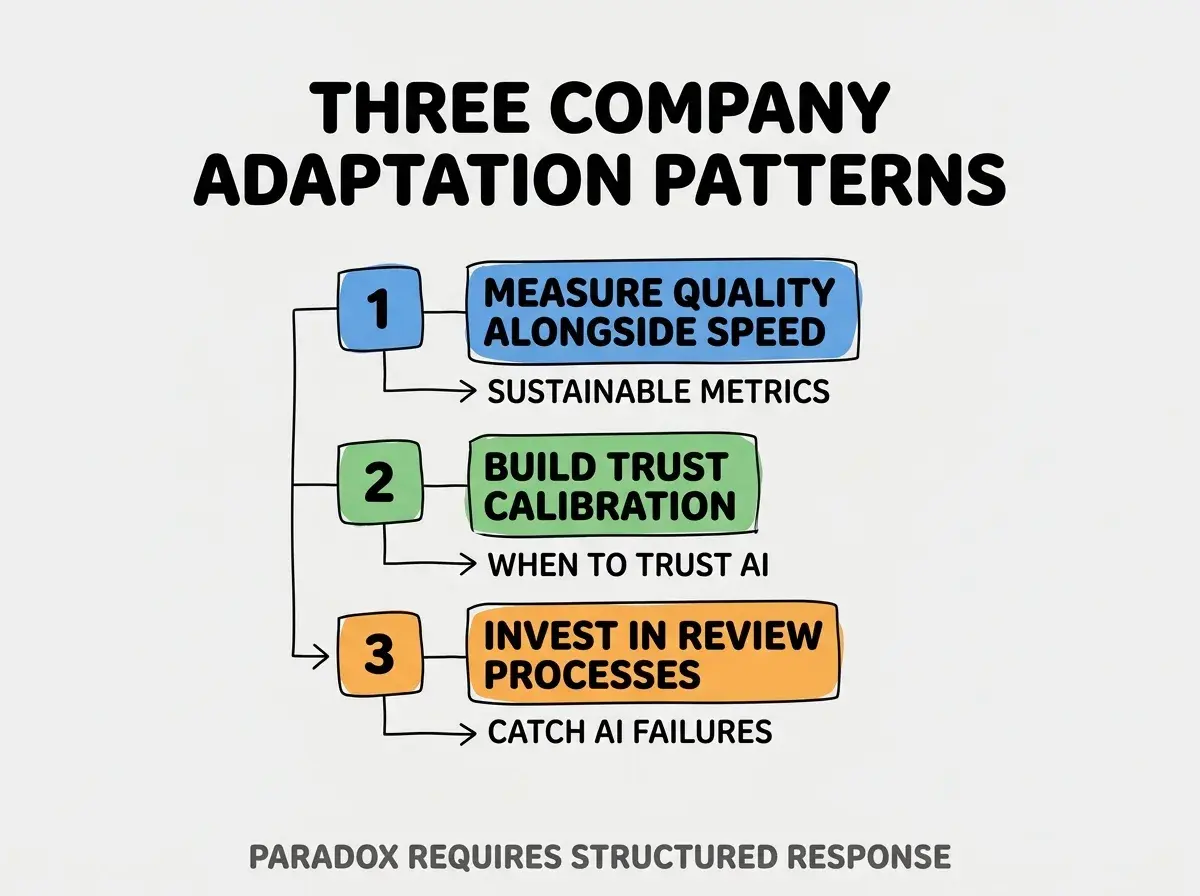
Pattern 1, measure quality alongside speed. Pure speed metrics produce trust erosion outcomes. Quality inclusive metrics produce sustainable outcomes.
Pattern 2, build trust calibration practices. Help developers know when to trust AI. Calibration prevents over trust that produces failures.
Pattern 3, invest in review processes catching AI failures. Review catches what AI misses; without review, AI failures reach production. Investment in review reduces failure rates.
The combination produces adaptation matching paradox dynamics. Without adaptation, trust paradox eventually produces adoption collapse that adaptation could prevent.
The most damaging trust paradox interpretation mistake is assuming adoption growth proves trust health. Adoption growth happening simultaneously with trust decline does not indicate trust health; it indicates adoption pressure operating despite trust concerns. The fix is to measure both adoption and trust separately; adoption alone tells incomplete story. Companies that monitor both produce better long term outcomes than companies that monitor only adoption metrics.
The other mistake is assuming trust will recover automatically as AI improves. Trust erosion compounds; recovery requires deliberate action not just AI improvement. The fix is to plan trust restoration practices.
A third mistake is dismissing trust concerns as unsophisticated. Trust concerns reflect real failure experiences; dismissing concerns misses important signal.
A fourth mistake is treating productivity and trust as independent. Productivity that erodes trust is unsustainable; productivity must serve trust to sustain.
How To Calibrate Trust Effectively
Three calibration patterns help individuals calibrate AI trust.
Pattern 1, build mental model of where AI excels. Boilerplate, common patterns, narrow well defined tasks. Mental model enables appropriate trust.
Pattern 2, build mental model of where AI struggles. Novel problems, ambiguous requirements, complex context. Mental model enables appropriate skepticism.
Pattern 3, validate AI output proportional to risk. High risk changes get deep validation; low risk changes get appropriate validation. Risk based validation matches calibration to consequences.
The combination produces trust calibration that scales sustainably. Without calibration, developers either over trust producing failures or under trust producing waste.
How The Trust Paradox Will Likely Evolve
The trust paradox will likely resolve through one of several paths over coming years.
The first possible evolution is AI improvement closing trust gap. AI capability improvements may reduce failures enough to restore trust. Improvement requires sustained capability progress.
The second possible evolution is industry standardization improving trust measurement. Standard metrics for AI productivity and quality enabling better evaluation. Standardization may reveal trust dynamics more clearly.
The third possible evolution is adoption plateau as trust constraints catch up. Trust concerns may eventually limit adoption growth. Plateau would resolve paradox through adoption decline.
The combination suggests trust paradox is transient state that resolves through one path or another. Engineers tracking dynamics build understanding that informs better decisions.
Common Questions About The Trust Paradox
The trust paradox raises questions worth addressing directly.
The first question is whether AI coding will reach trust crisis. Possible but not certain; depends on AI improvement rate and review practice spread. Crisis prevention requires proactive practices.
The second question is whether to delay AI adoption until trust matures. No; competitive disadvantage outweighs trust concerns for most contexts. Adopt with trust calibration practices rather than delay.
The third question is whether trust paradox is unique to AI coding. No; technology adoption paradoxes have historical precedents. Pattern repeats across technology adoption cycles.
How To Build Trust Through Practices
Three practice patterns help individuals and teams build trust appropriately.
Practice 1, document AI failures alongside successes. Failure documentation builds calibration; without documentation, failures forgotten. Documentation enables learning.
Practice 2, share calibration learnings across team. Team sharing accelerates collective calibration. Without sharing, calibration stays individual.
Practice 3, evolve trust calibration as AI improves. AI changes; calibration must change too. Without evolution, calibration becomes stale.
What This Means For You
The trust paradox reveals AI coding at maturity inflection point. The four patterns, calibration approaches, and adaptation strategies produce framework for navigating paradox.
- If you're a senior dev: Trust calibration matters more than tool choice. Invest in calibration practices that scale across tools.
- If you're a founder: Trust paradox affects company AI coding programs. Plan for trust calibration practices alongside adoption push.
- If you're an indie hacker: Solo builders face concentrated trust calibration burden. Build practices early; without team forcing structure, calibration easily slips.
Browse more pulse articles
Read more pulse