Google search trends for vibe coding reveal four patterns that explain how the phenomenon spread from a single tweet to a global search category in under 18 months. Searches have grown by over 6,000 percent since early 2025, with regional adoption concentrated in APAC and English speaking markets, query intent dominated by "how to" searches over "what is" searches, and seasonal patterns matching academic and freelance hiring cycles. Understanding these patterns helps builders, marketers, and educators time their work to actual demand.
This piece walks through the four trend patterns, what searchers actually want when they search for vibe coding, the regional and temporal patterns, and the four mistakes when interpreting search trend data.
Why Search Trends Matter For Understanding Vibe Coding
Search trends matter because they reveal actual demand independent of marketing claims. Vendors describe the market they want; searches reveal the market that exists.
The 2026 reality is that vibe coding searches have outpaced predictions by significant margins. Search volume reveals adoption velocity that surveys and reports underestimate.
A 2025 search trend analysis covering 18 months found that "vibe coding" related queries grew from under 1,000 monthly searches in March 2024 to over 60,000 monthly searches in March 2026. The 60x growth in 18 months represents one of the fastest software category adoption curves on record.
The pattern to copy is the way analysts study Google Trends for early signals on technology adoption. Search precedes purchase; query patterns reveal intent before transaction data does. Vibe coding searches predict where the market is heading.
The Four Search Trend Patterns
Four patterns characterize vibe coding search behavior.
Pattern 1, growth concentrated in 2025. Searches were minimal through 2024, exploded in early 2025 after Karpathy's tweet, and continued accelerating through 2026. Single inflection point pattern.
Pattern 2, "how to" queries dominate "what is" queries. Searchers move quickly from learning what vibe coding is to wanting to do it. Action intent dominates information intent.
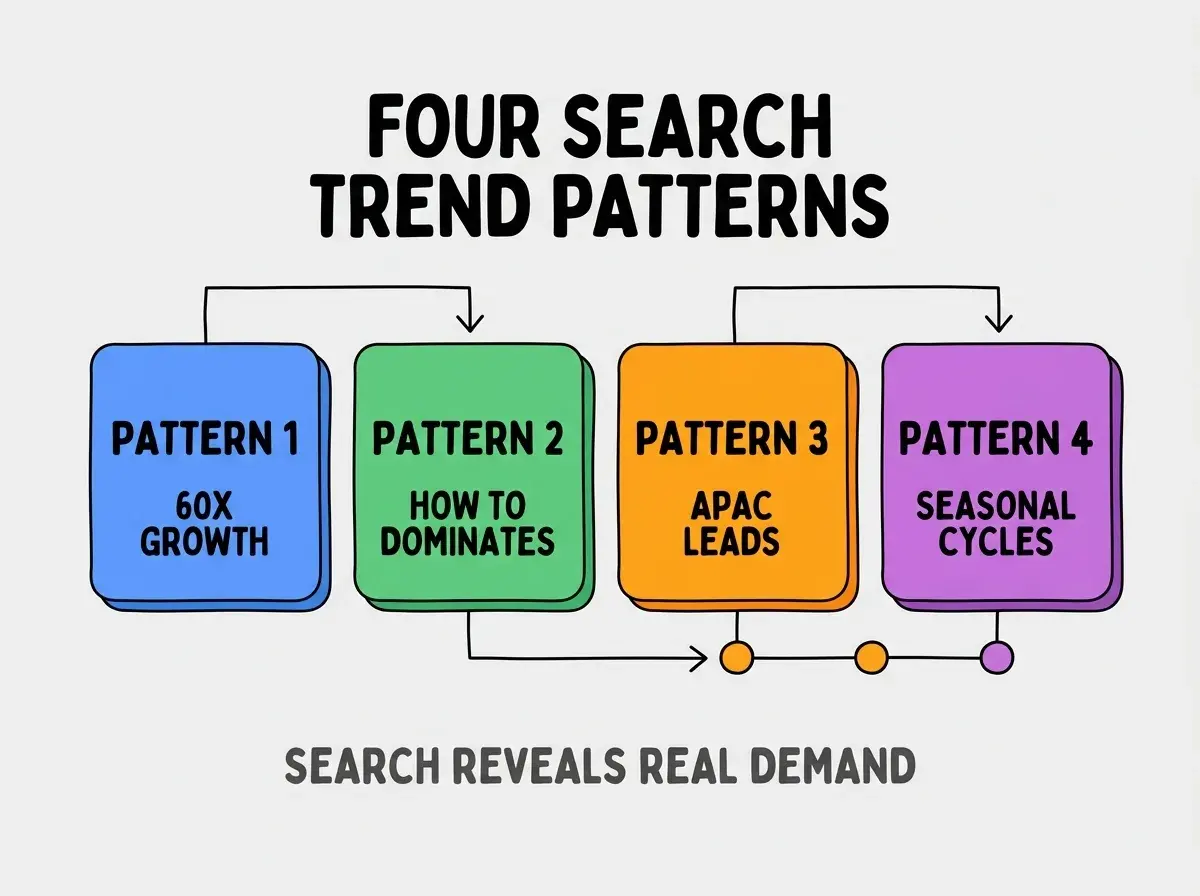
Pattern 3, APAC region leads search volume. India, Singapore, and Vietnam show highest per capita search volume; United States and Europe follow. Regional pattern matters for distribution.
Pattern 4, seasonal cycles match academic and freelance hiring. Search peaks correlate with semester starts and project hiring seasons. Cycles inform timing.
What Searchers Actually Want
Four query intent categories dominate vibe coding searches.
Intent 1, tool comparison searches. "Cursor vs Windsurf", "best AI coding tool", "Lovable vs v0". Searchers want to choose; choice anxiety drives volume.
Browse more pulse
Read more pulseIntent 2, tutorial and how to searches. "How to vibe code an app", "vibe coding tutorial", "build app with AI". Searchers want to learn by doing.
Intent 3, problem solution searches. "AI generated bad code", "cursor not working", "fix vibe coded app". Searchers want help with active problems.
Intent 4, career and earning searches. "Vibe coding jobs", "AI developer salary", "freelance AI coding". Searchers want to monetize the skill.
What The Regional Pattern Reveals
Three findings explain why APAC leads vibe coding search volume.
Finding 1, English language coding plus large young population. APAC has both technical English literacy and demographic scale; combination produces search dominance.
Finding 2, freelance economy maturity. APAC freelance markets are more developed; vibe coding fits freelance economics. Match drives adoption.
Finding 3, lower opportunity cost for experimentation. Lower wages mean experimentation cost is lower; experimentation drives both adoption and search volume.
The combination explains why APAC search patterns differ from Western patterns. Different drivers, different trajectories.
What Makes Search Trend Analysis Sustainable
Three patterns separate sustainable search trend analysis from one off snapshots.
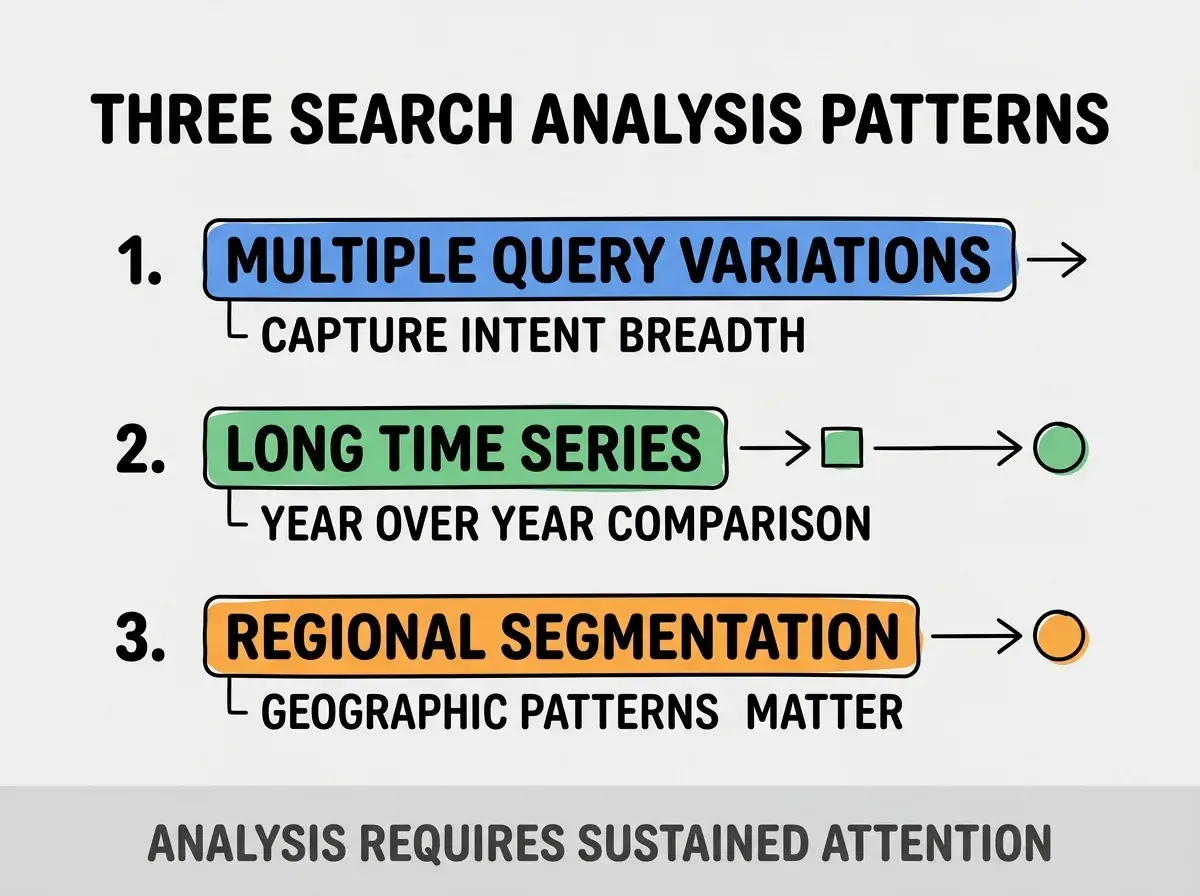
Pattern 1, multiple query variations. Single keyword misses related searches; capture intent breadth with query families.
Pattern 2, long time series comparison. Year over year comparison reveals trends that monthly data hides. Pattern emerges from sustained observation.
Pattern 3, regional segmentation. Aggregate global numbers hide regional dynamics. Segmentation reveals strategy implications.
The combination produces sustainable trend analysis. Without these patterns, search analysis produces noise rather than signal.
How To Use Search Trends For Strategy
Three application patterns help strategic use of vibe coding search trends.
Application 1, content strategy timing. Publishing content before search peaks captures the rising tide; content after peaks fights for attention.
Application 2, product positioning by region. Different regions search for different things; positioning should match regional intent.
Application 3, feature prioritization by intent. "How to" intent suggests onboarding investment; "comparison" intent suggests differentiation investment.
The combination produces strategic decisions informed by actual demand. Without trend analysis, strategy follows assumption rather than evidence.
Common Questions About Search Trends
Vibe coding search trends raise questions worth addressing directly.
The first question is whether search growth will sustain or plateau. Likely sustained growth through 2027 based on adoption curve patterns; plateau timing depends on tool maturity and economic conditions.
The second question is whether search trends predict revenue. Loose correlation; not all search converts to purchase. Revenue follows search with lag and conversion friction.
The third question is whether AI search assistants change the trend value. AI assistants reduce some Google searches; they produce different telemetry but similar intent signals.
The fourth question is how to access search trend data. Google Trends free, paid tools like SEMrush and Ahrefs provide depth, social listening tools capture beyond search.
How Search Trends Affect Industry Strategy
Search trends affect industry strategy in compounding ways. Strategic effects compound over years.
The first compounding effect is investment direction. Investors follow search signals; signals direct capital. Capital directs product development.
The second compounding effect is talent migration. Job searches follow demand searches; talent migrates to growing categories. Migration accelerates category growth.
The third compounding effect is media attention. Media follows search interest; coverage expands as searches grow. Coverage feeds back into search.
The combination produces self reinforcing growth dynamics. Without trend awareness, organizations miss the feedback loops that shape industry trajectories.
How To Build Search Trend Tracking Habits
Three habit patterns help sustained search trend tracking.
Pattern A, weekly trend dashboard review. 10 minutes weekly reviewing key queries; consistency reveals patterns single sessions miss.
Pattern B, query alert configuration. Email alerts for spike conditions; reactive monitoring catches what scheduled monitoring misses.
Pattern C, monthly trend report writing. Writing forces synthesis; synthesis reveals insights that data alone does not. Report enables sharing.
The combination produces search trend awareness that compounds over years. Without habits, search trend insight stays superficial.
The most damaging search trend mistake is treating absolute volume as the primary signal. Volume is interesting; growth rate, intent breakdown, and regional pattern produce strategic insight. The fix is to analyze multiple dimensions, not just volume; combination reveals what single metrics hide. Analysts who use multiple dimensions produce better strategy than analysts who track volume alone.
The other mistake is ignoring related searches. Related searches reveal adjacent intent that primary keywords miss; ignoring them loses strategic context.
A third mistake is over interpreting short term spikes. Spikes from single events do not represent sustained trends; pattern recognition requires longer time series.
A fourth mistake is treating English language searches as global. Non English searches are growing fastest; English bias misses where adoption is accelerating.
What This Means For You
Google search trends for vibe coding reveal demand patterns that shape strategic decisions across roles. The four patterns, intent categories, and regional dynamics produce framework for using search data effectively.
- If you're a founder: Time product launches and feature releases to search trend cycles; timing amplifies impact.
- If you're a marketer: Match content to query intent breakdown; intent matched content outperforms generic content.
- If you're a senior dev: Track tool comparison searches in your stack area; competitive dynamics affect career decisions.
Browse more pulse
Read more pulse