Vibe coding tool stack evolution typically follows $0 to $50 to $200 to $500 monthly progression as builders scale. Four evolution stages matter: $0 free tier (GitHub free, Cursor trial, free AI tier), $50 individual essentials (Cursor Pro, Vercel hobby, paid AI), $200 productive solo (multiple AI subscriptions, premium hosting, paid tooling), and $500 small team or scaled solo (enterprise tier AI, dedicated infrastructure, advanced tooling). Each stage justified by specific productivity needs.
This piece walks through the four evolution stages, the upgrade triggers, what justifies each stage, and the four mistakes builders make on stack evolution.
Why Stack Evolution Matters
Stack evolution matters because spending right amount at right time maximizes ROI. Spending too early wastes; spending too late loses opportunities.
The 2026 reality is that vibe coding tools span free to expensive; stack composition affects productivity substantially.
A 2025 vibe coder economics study of 800 builders found that builders matching tool stack to revenue stage achieved 47 percent higher productivity per dollar than builders with mismatched stacks, primarily through avoiding both under investment and over investment. Match measurably affects ROI.
The pattern to copy is the way photographers upgrade equipment as career advances. Beginner cameras work for beginners; pro cameras justify cost for pros. Same patterns apply to vibe coding tools; stage matters.
The Four Evolution Stages
Four stages describe stack evolution.
Stage 1, $0 free tier. GitHub free, Cursor trial, free AI tier. Learning stage.
Stage 2, $50 individual essentials. Cursor Pro, Vercel hobby, paid AI. Production capable.
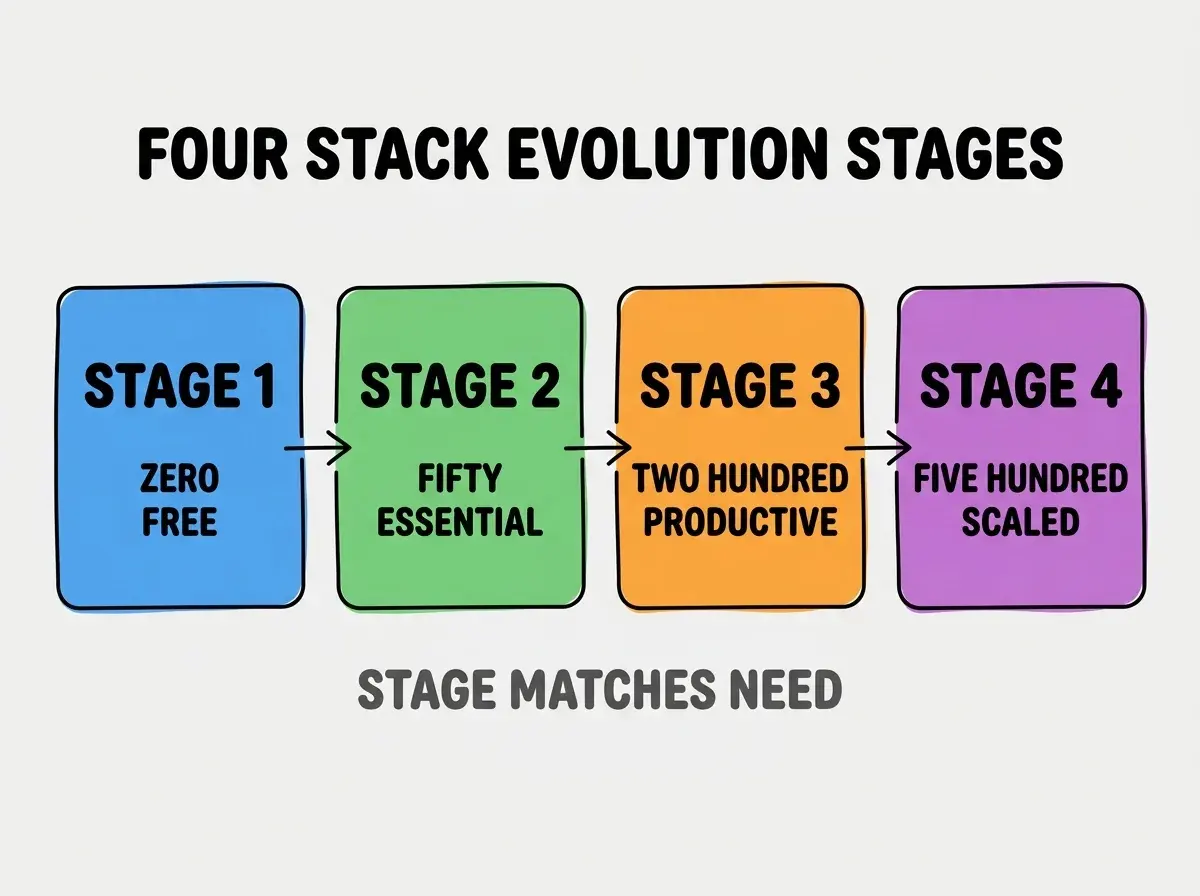
Stage 3, $200 productive solo. Multiple AI subscriptions, premium hosting, paid tooling. Solo scale.
Stage 4, $500 small team or scaled solo. Enterprise tier AI, dedicated infrastructure, advanced tooling. Scale.
How To Compose Each Stage
Four implementation patterns address each stage.
Implementation 1, $0 stack composition. GitHub, free tier of Cursor or Cline, free tier of OpenAI/Anthropic.
Browse more tools
Read more toolsImplementation 2, $50 stack composition. Cursor Pro $20, Vercel Hobby $0, Claude Pro $20, plus small tooling.
Implementation 3, $200 stack composition. Cursor Pro plus Claude Code plus v0 plus paid hosting plus tooling.
Implementation 4, $500 stack composition. Enterprise AI tier, dedicated VPS, advanced tooling, premium services.
What Triggers Stack Upgrades
Three patterns trigger upgrades.
Pattern 1, productivity ceiling reached. Free tier limits productivity; upgrade enables.
Pattern 2, revenue justifies investment. Revenue exceeds investment threshold; investment justified.
Pattern 3, capability gap matters. Specific capability needed; investment provides.
What Makes Stack Upgrades Sustainable
Three patterns separate sustainable upgrades from over investment.
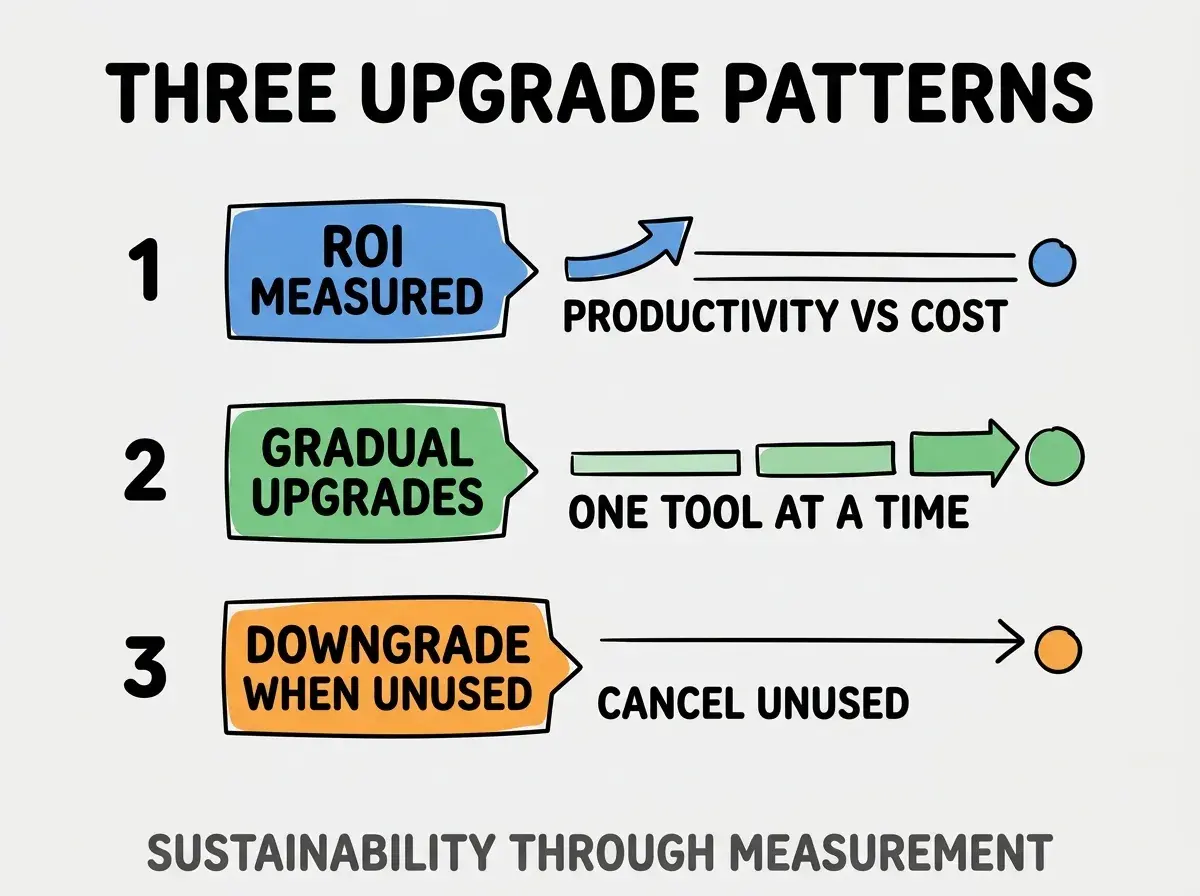
Pattern 1, ROI measured. Productivity vs cost; measure both.
Pattern 2, gradual upgrades. One tool at a time; reveals impact.
Pattern 3, downgrade when unused. Cancel unused; cancellation matters.
The combination produces sustainable upgrades. Without these patterns, costs grow without ROI.
How To Decide Stage Transitions
Three patterns help transition decisions.
Pattern A, time saved exceeds cost. Tool saves hour weekly; cost worth it.
Pattern B, capability unlocks revenue. Tool enables product feature; revenue justifies.
Pattern C, downgrade test. Cancel for week; if missed, restore. If not missed, save.
Common Questions About Stack Evolution
Stack evolution raises questions worth addressing directly.
The first question is whether to start at $0 or invest immediately. Start free; upgrade when ceiling reached.
The second question is whether multiple AI subscriptions worth it. Sometimes; complementary capabilities (Cursor plus Claude Code).
The third question is when to add hosting cost. Free tier exceeded; production launch typical.
The fourth question is whether to use credits. AI credits often cheaper than subscriptions; depends on usage.
How Stack Affects Productivity Trajectory
Stack affects productivity trajectory in compounding ways. Trajectory effects compound across years.
The first compounding effect is daily output. Better tools enable more output; output compounds.
The second compounding effect is capability ceiling. Stack capabilities determine output ceiling.
The third compounding effect is competitive position. Stack matches competitor stack at minimum.
The combination produces productivity shaped by stack. Without thoughtful stack, productivity bounded.
How To Audit Existing Stack
Three patterns help stack audits.
Pattern A, list all subscriptions monthly. Visible list reveals scope.
Pattern B, mark used vs unused. Unused subscriptions cancel candidates.
Pattern C, calculate ROI per tool. ROI calculation reveals value.
The combination produces stack audits. Without audits, costs grow invisible.
The most damaging stack mistake is upgrading too early. $200 stack on $50 monthly revenue produces negative ROI; upgrade waits for revenue. The fix is to match stack to revenue stage; revenue justifies investment. Builders who match maintain margins; builders who upgrade prematurely burn savings on unjustified tools.
The other mistake is opposite: upgrading too late. Productivity ceiling persists; upgrade should follow ceiling reach.
A third mistake is missing the cancellation discipline. Subscriptions accumulate; without cancellation, costs grow invisibly.
A fourth mistake is treating stack as static. Stack evolves with career; ongoing evaluation matters.
What This Means For You
Tool stack evolution from $0 to $500 monthly matches productivity needs across stages. The four stages, implementation patterns, and sustainability approaches produce stack progression that maximizes ROI.
- If you're a senior dev: Stack evolution informs personal investment; match stage to career.
- If you're an indie hacker: Stack discipline preserves runway; cancel unused.
- If you're a founder: Stack scales with team; evolution informs hiring tooling.
Browse more tools
Read more tools