The best tool stack for freelancers vibe coding in 2026 balances client deliverable quality with personal productivity. Four components matter: AI coding tool (Cursor or Claude Code for primary work), client communication (Slack or Discord per client preference), project management (Linear or Notion for tracking), and deployment (Vercel or Cloudflare for shipping client work). Total monthly cost typically $50-150 across all tools. Freelancers with solid stack ship faster, maintain reputation, and scale revenue without hiring.
This piece walks through the four stack components, the implementation patterns, what makes stacks sustainable, and the four mistakes freelancers make on tool stacks.
Why Freelancer Tool Stacks Matter
Freelancer tool stacks matter because freelancers cannot afford tool friction; friction costs billable time. Smooth stacks compound earnings; rough stacks compound stress.
The 2026 reality is that freelancers competing on quality and speed need tool stacks tuned for both. Stack quality affects deliverable quality and turnaround time directly.
A 2025 freelance developer survey of 800 vibe coding freelancers found that freelancers with optimized tool stacks billed 41 percent more annual revenue than freelancers using ad hoc tooling, primarily through faster delivery and higher quality enabling premium rates. Stack matters measurably for freelance income.
The pattern to copy is the way professional photographers select equipment systematically. Cameras, lenses, lighting, editing software all chosen deliberately; freelance developer tool stack benefits from same approach.
The Four Stack Components
Four components form complete freelancer stack.
Component 1, AI coding tool. Cursor or Claude Code for primary development. Choice depends on workflow style; both excellent.
Component 2, client communication. Slack, Discord, or email per client preference. Match client where they are.
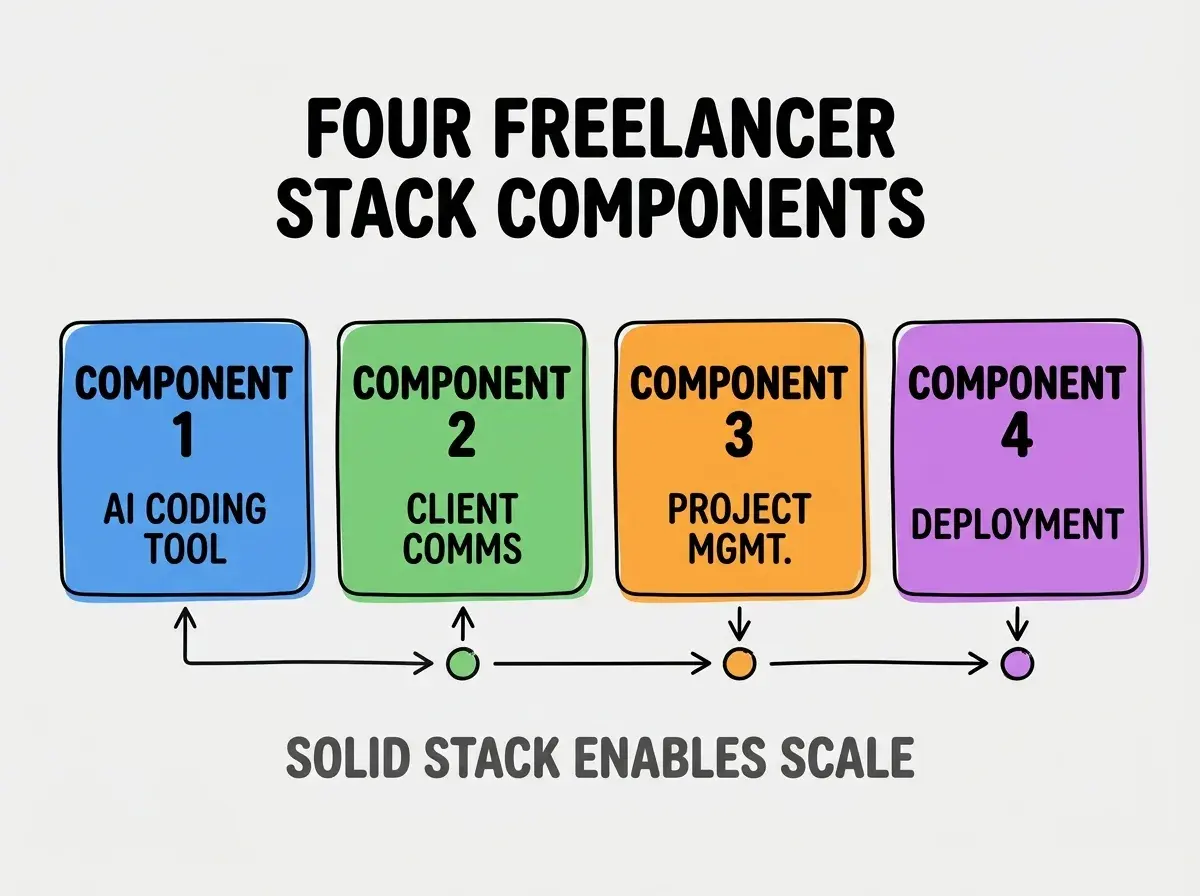
Component 3, project management. Linear or Notion for tracking project status. Personal preference more than client requirement.
Component 4, deployment. Vercel or Cloudflare for client deployments. Both reliable; choose based on client app needs.
How To Implement Each Component
Four implementation patterns address each component.
Implementation 1, choose AI tool by workflow style. Cursor for IDE workflow; Claude Code for terminal workflow. Both worth fluency.
Browse more tools
Read more toolsImplementation 2, separate client comms per client. Mixing clients invites mistakes; separation maintains professionalism.
Implementation 3, project board per client. Per client board enables clear status; mixed board confuses tracking.
Implementation 4, deployment matches client app needs. Static sites Cloudflare; complex apps Vercel. Match tool to need.
What Makes Stacks Sustainable
Three patterns separate sustainable stacks from constant tool churning.
Pattern 1, stable core with peripheral experimentation. AI coding and deployment stable; communication and PM can rotate. Stability where it matters.
Pattern 2, monthly cost monitoring. Costs creep; monthly review prevents bloat. $200/month easily becomes $500 unmonitored.
Pattern 3, integration testing before client adoption. Test new tools on personal projects before client work; client work no place for experimentation.
What Makes Freelancer Stacks Resilient
Three patterns separate resilient stacks from fragile ones.
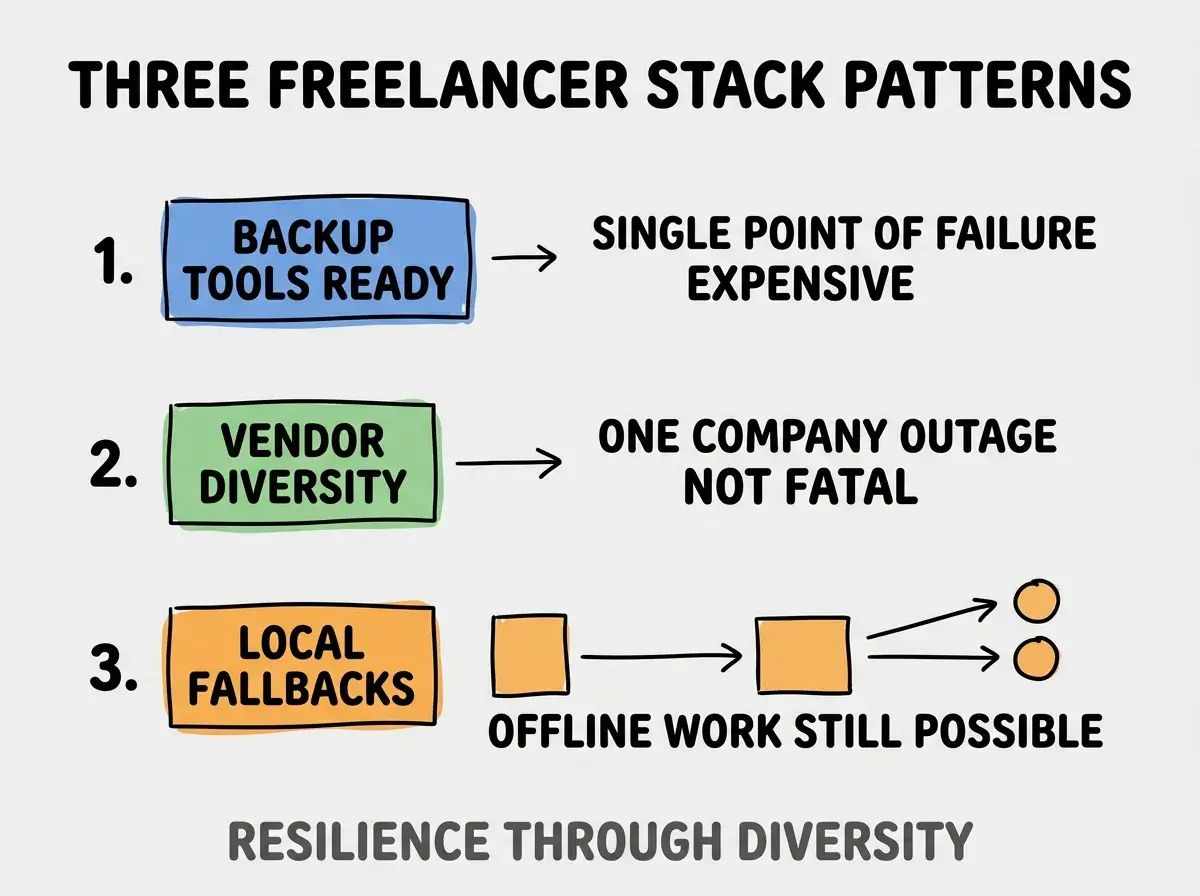
Pattern 1, backup tools ready. Single point of failure expensive for freelancers; backups maintain work continuity.
Pattern 2, vendor diversity. All tools from one vendor risky; outages compound. Diversity protects.
Pattern 3, local fallbacks. Internet outage stops cloud only stacks; local fallbacks enable continuation.
The combination produces resilient freelancer stacks. Without these patterns, stack issues stop billable work.
How To Choose AI Coding Tool
Three patterns help freelancers choose AI coding tool.
Pattern A, trial both Cursor and Claude Code for week. Try both; intuition emerges. Choice often becomes obvious.
Pattern B, match tool to common client work. Client work patterns inform tool choice; web work different from CLI work.
Pattern C, factor in subscription cost vs productivity gain. $20-100/month tools that save hour weekly easily worth it.
Common Questions About Freelancer Stacks
Freelancer stacks raise questions worth addressing directly.
The first question is whether to bill clients for tool costs. Sometimes; depends on engagement model. Project work absorbs costs; ongoing work bills separately.
The second question is whether to use client provided tools. When required; otherwise your stack faster. Client tools learning curve costly.
The third question is what total stack cost reasonable. $50-150 monthly typical; over $300 needs justification.
The fourth question is whether to standardize across all client work. Mostly yes; some client tools required. Standardization compounds productivity.
How Stack Choices Affect Earnings
Stack choices affect earnings in compounding ways. Earnings effects compound across years.
The first compounding effect is delivery speed. Fast stacks enable more projects; more projects more revenue.
The second compounding effect is quality reputation. Quality work attracts premium rates; premium compounds.
The third compounding effect is client retention. Smooth delivery keeps clients; retention compounds revenue without selling.
The combination produces freelancer earnings shaped by stack quality. Without optimization, earnings depend on hours alone.
How To Migrate Tools Without Disruption
Three patterns help freelancers migrate tools safely.
Pattern A, migrate during low client volume. Migration during high volume risky; low volume enables safer migration.
Pattern B, parallel run for two weeks. Old and new tools parallel; comparison reveals gaps.
Pattern C, document new tool patterns. Documentation enables future you; documented patterns compound.
The combination produces safe tool migration. Without patterns, migration disrupts client work.
The most damaging freelancer stack mistake is constant tool switching. Each switch costs days of learning and migration; benefits rarely justify costs. The fix is to optimize stack quarterly, not monthly; stability compounds productivity. Freelancers with stable stacks ship more; freelancers always switching ship less and earn less.
The other mistake is treating client tools as own stack. Client tools are temporary; your stack is permanent.
A third mistake is missing the backup component. When primary tool down, freelance work stops; backups prevent.
A fourth mistake is over investing in tools without revenue. $500/month stack on $2000/month revenue ratio wrong; revenue should support stack.
What This Means For You
Best tool stack for freelancers vibe coding in 2026 balances quality and productivity. The four components, sustainability patterns, and resilience approaches produce stacks that compound freelance earnings.
- If you're an indie hacker: Solid freelance stack also serves your products; investment compounds across both.
- If you're changing careers: Freelance vibe coding viable career; right stack accelerates first year revenue.
- If you're a founder: Freelancer stacks inform team tool selection; freelance constraints sharpen choices.
Browse more tools
Read more tools