Toast notifications and feedback patterns confirm user actions and surface system events. Four feedback types matter: success notifications (action completed), error notifications (action failed with reason), info notifications (status updates), and warning notifications (action needs attention before proceeding). Combined patterns inform users without interrupting; missing patterns leave users guessing whether actions worked.
This tutorial walks through the four feedback types, the implementation patterns, what makes notifications sustainable, and the four mistakes builders make on toast notifications.
Why Toast Notifications Matter
Toast notifications matter because users need confirmation actions worked. Without confirmation, users repeat actions or wonder if they worked.
The 2026 reality is that toast libraries (Sonner, react-hot-toast) make implementation accessible. Maturation removed barrier.
A 2025 UX study of 600 vibe coded apps found that apps with consistent toast notifications reduced user confusion by 47 percent compared to apps without, primarily through immediate action confirmation. Notifications measurably affect user clarity.
The pattern to copy is the way restaurants confirm orders verbally. Confirmation reduces uncertainty. Same patterns apply to apps; toasts provide app confirmation.
The Four Feedback Types
Four types form complete feedback strategy.
Type 1, success. Action completed. Foundation.
Type 2, error. Action failed with reason. Recovery info.

Type 3, info. Status updates. Awareness.
Type 4, warning. Action needs attention. Caution.
How To Implement Each Type
Four implementation patterns address each type.
Implementation 1, Sonner for React. Standard toast library; mature.
Browse more build
Read more buildImplementation 2, error toasts with retry action. Action embedded in error.
Implementation 3, info toasts with optional dismiss. Less urgent; dismissible.
Implementation 4, warning before destructive actions. Confirmation flow.
What Makes Notifications Sustainable
Three patterns separate sustainable notifications from spam.
Pattern 1, used for important only. Spam dilutes value.
Pattern 2, dismissible appropriately. Persistent for critical; auto for routine.
Pattern 3, position consistent. Same place each time; predictable.
What Makes Toast Strategy Effective
Three patterns separate effective from theatrical.
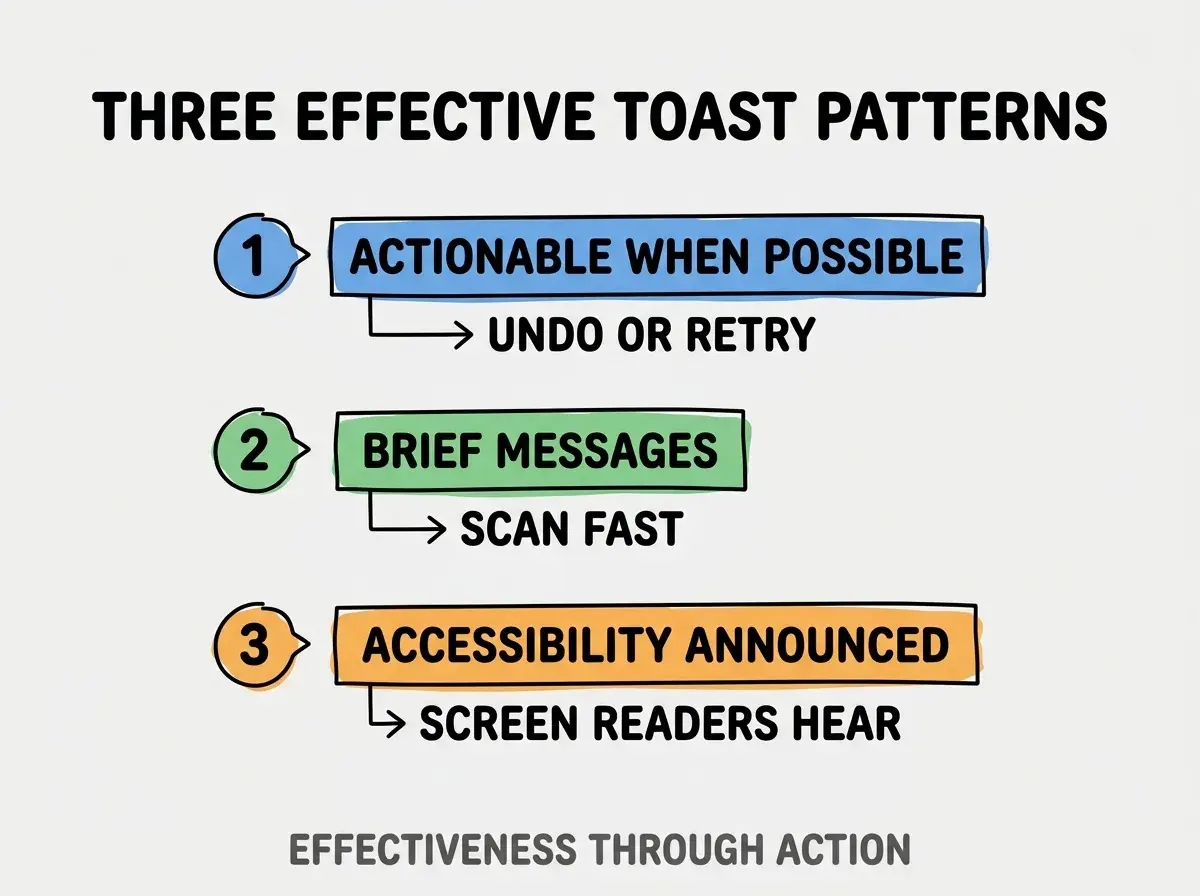
Pattern 1, actionable when possible. Undo or retry; user can act.
Pattern 2, brief messages. Scan fast; long messages ignored.
Pattern 3, accessibility announced. Screen readers hear.
The combination produces effective toast strategy. Without these patterns, toasts become noise.
How To Choose Toast Position
Three patterns help position.
Pattern A, top right desktop standard. Common position.
Pattern B, bottom mobile standard. Mobile bottom less obstructive.
Pattern C, consistent across app. Predictability matters.
Common Questions About Toast Notifications
Toast notifications raise questions worth addressing directly.
The first question is which library. Sonner React; vue-sonner Vue; etc. Standard libraries work.
The second question is how long to show. 3-5 seconds typical; critical longer.
The third question is whether to allow stacking. Yes; multiple notifications stack.
The fourth question is how to handle errors with stack traces. Brief in toast; details in error log.
How Notifications Affect User Confidence
Notifications affect confidence in compounding ways. Confidence effects compound across actions.
The first compounding effect is action confidence. Confirmed actions feel reliable.
The second compounding effect is error recovery. Clear errors enable recovery.
The third compounding effect is trust. Reliable feedback builds trust.
The combination produces confidence shaped by notifications. Without notifications, confidence eroded.
How To Avoid Notification Fatigue
Three patterns help avoid fatigue.
Pattern A, suppress duplicates. Same notification not repeated.
Pattern B, batch related notifications. Multiple events in one toast.
Pattern C, allow user preferences. Let users adjust.
The combination prevents fatigue. Without prevention, users dismiss all.
The most damaging toast notification mistake is over notifying. Too many toasts dilute value; users dismiss without reading. The fix is to notify only when value justifies; routine actions sometimes need no toast. Apps with selective notifications retain user attention; apps with constant notifications train users to ignore.
The other mistake is missing the accessibility component. Screen readers need announcements.
A third mistake is errors without recovery action. Action helps user.
A fourth mistake is treating notifications as one off. Notification strategy evolves.
What This Means For You
Toast notifications and feedback patterns confirm user actions and surface events. The four types, implementation patterns, and sustainability approaches produce notifications that compound user confidence.
- If you're a senior dev: Notification fluency expected; learn patterns deeply.
- If you're a designer: Notification design affects perceived quality; design matters.
- If you're changing careers: UX feedback patterns valuable; specialty.
Browse more build
Read more build