Adding AI powered form autofill to your app reduces user effort by intelligently completing fields based on context. Four implementation patterns matter: data extraction (extract from documents, emails, profiles), field mapping (AI identifies which extracted data goes which field), confidence scoring (UI shows AI certainty for review), and review workflow (user confirms or corrects AI suggestions). Autofill works for forms with multiple fields traditional autofill cannot handle.
This tutorial walks through the four implementation patterns, the technical approaches, what makes autofill useful, and the four mistakes builders make on AI autofill.
Why AI Form Autofill Matters
AI form autofill matters because complex forms (job applications, medical history, financial) consume user time. Autofill reduces friction; reduced friction increases conversions.
The 2026 reality is that AI capable of extracting structured data from unstructured sources. Capability enables autofill from documents, emails, profiles.
A 2025 product UX study of 300 vibe coded apps with AI autofill found that apps achieved 64 percent higher form completion rates than apps with traditional autofill, primarily through reducing data entry friction for complex forms. AI autofill measurably affects conversions.
The pattern to copy is the way medical offices use intake apps that pull from health records. Records source pre fills forms; user confirms. Same patterns apply to broader forms; AI extends pull source flexibility.
The Four Implementation Patterns
Four patterns form complete AI autofill.
Pattern 1, data extraction. Extract from documents, emails, profiles. Source.
Pattern 2, field mapping. AI identifies extracted to field. Mapping.
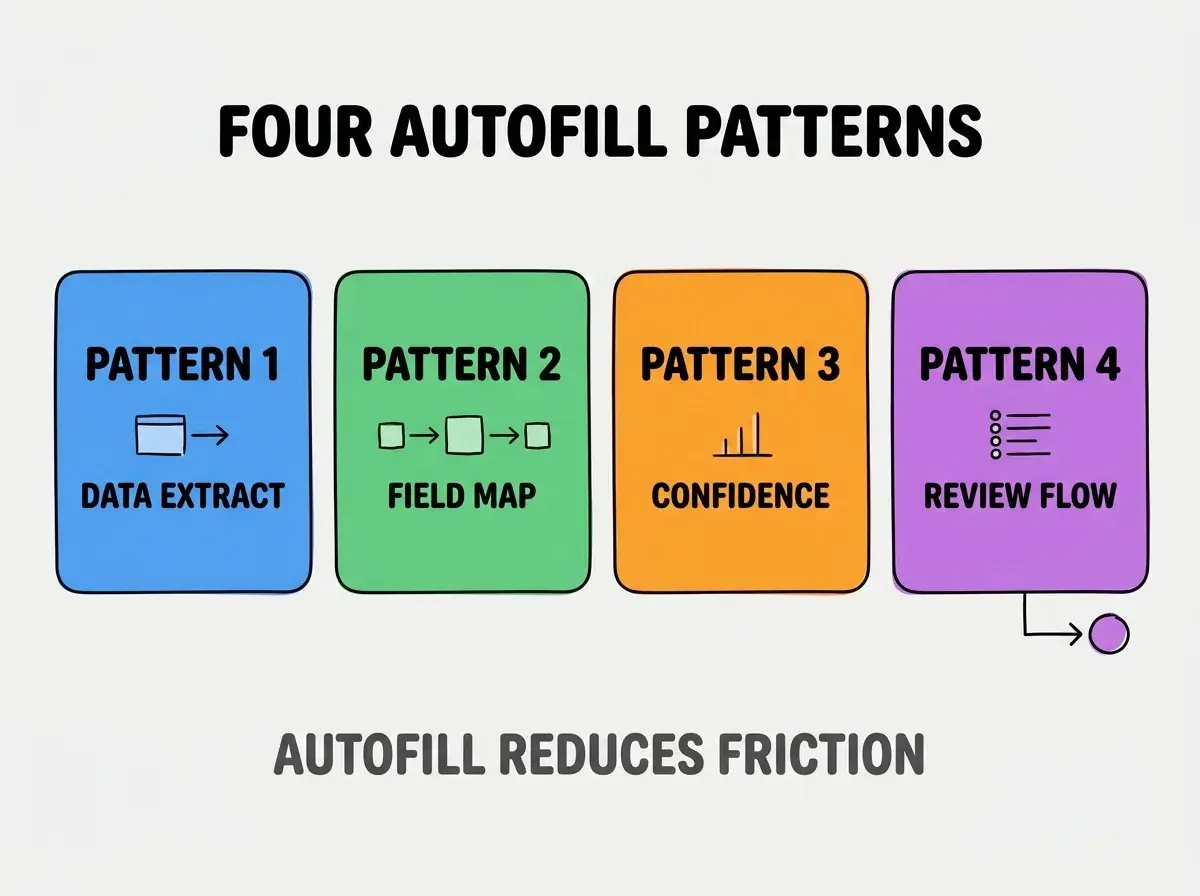
Pattern 3, confidence scoring. UI shows AI certainty. Trust.
Pattern 4, review workflow. User confirms or corrects. Verification.
How To Implement Each Pattern
Four implementation patterns address each.
Implementation 1, GPT-4 or Claude for extraction. Strong models extract well; structured output.
Browse more build
Read more buildImplementation 2, JSON schema for mapping. Schema defines fields; AI maps to schema.
Implementation 3, confidence display via UI. Highlight uncertain fields; visual cue.
Implementation 4, inline review with edit. Fields editable; review built into form.
What Makes Autofill Useful
Three patterns separate useful autofill from frustrating.
Pattern 1, accuracy high. Wrong autofill worse than no autofill; accuracy critical.
Pattern 2, easy correction. Wrong fields easy to fix; correction friction matters.
Pattern 3, transparent about source. User knows where data came from; trust.
What Makes AI Autofill Sustainable
Three patterns separate sustainable autofill from initial wow factor.
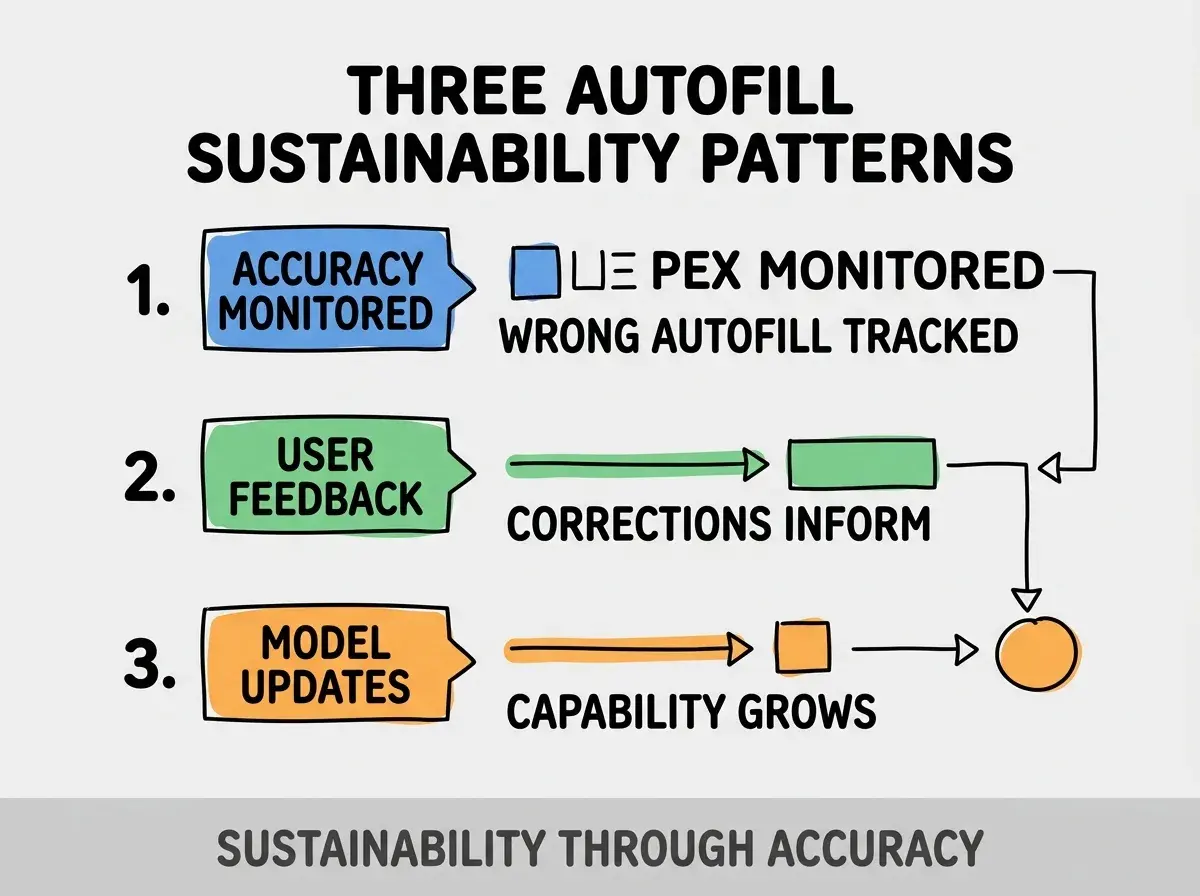
Pattern 1, accuracy monitored. Wrong autofill tracked; tracking informs.
Pattern 2, user feedback. Corrections inform improvements.
Pattern 3, model updates. Capability grows; update integration matters.
The combination produces sustainable autofill. Without these patterns, autofill frustrates.
How To Handle Sensitive Data
Three patterns help sensitive data.
Pattern A, on device extraction when possible. Local processing for sensitive.
Pattern B, encryption in transit. Data to AI encrypted.
Pattern C, audit trail of autofill use. Who autofilled what; audit possible.
Common Questions About AI Autofill
AI autofill raises questions worth addressing directly.
The first question is privacy concerns. Sensitive data needs care; transparent privacy.
The second question is whether to use cloud or local AI. Cloud accurate; local privacy. Tradeoff.
The third question is what about errors. Easy correction essential; errors guaranteed.
The fourth question is whether user can disable. Yes; respect user choice.
How Autofill Affects Conversions
Autofill affects conversions in compounding ways. Conversion effects compound.
The first compounding effect is form completion. Higher completion drives revenue.
The second compounding effect is user satisfaction. Smooth flow delights users.
The third compounding effect is data quality. AI extracted often more consistent than typed.
The combination produces conversions shaped by autofill quality. Without quality, autofill damages.
How To Build Trust In Autofill
Three patterns help trust building.
Pattern A, show source clearly. Where data came from; transparency.
Pattern B, easy review interface. Review natural in flow.
Pattern C, undo always available. Wrong autofill recoverable.
The combination produces trust in autofill. Without trust, users disable.
The most damaging AI autofill mistake is auto submitting without review. Auto submit sends wrong data; wrong data damages trust and creates issues. The fix is to always require user review before submit; review preserves user agency. Autofill helps not replaces user; helping respects, replacing damages.
The other mistake is over indexing on accuracy without UX. Accurate but confusing UX fails.
A third mistake is missing the privacy disclosure. Users need to understand data flow.
A fourth mistake is treating autofill as magic. Autofill assists; user remains in control.
What This Means For You
Adding AI powered form autofill reduces user friction for complex forms. The four patterns, implementation approaches, and sustainability practices produce autofill that compounds conversions.
- If you're a founder: Autofill differentiates conversion; investment justified for form heavy products.
- If you're a senior dev: Autofill builds AI integration skills; valuable specialty.
- If you're a student: Autofill projects demonstrate AI capability; portfolio piece.
Browse more build
Read more build