Testing third party integrations with mocks and stubs lets vibe coders verify integration behavior without depending on external services. Four mocking patterns matter: HTTP mocking (intercept HTTP calls, return fake responses), service stubs (replace service with test double), contract testing (verify integration contract holds), and recorded fixtures (capture real responses for replay). Combined patterns enable fast reliable integration tests; without mocking, tests slow and flaky.
This tutorial walks through the four patterns, the implementation approaches, what makes integration testing sustainable, and the four mistakes builders make on integration testing.
Why Integration Testing Matters
Integration testing matters because integration breakage hard to debug in production. Without tests, integration bugs surface as user complaints.
The 2026 reality is that mocking tools (MSW, nock, custom) make integration testing accessible. Maturation removed barrier.
A 2025 integration testing study of 400 vibe coded apps found that apps with comprehensive integration tests caught 78 percent more integration issues before production than apps relying on manual testing, primarily through automated verification. Tests measurably affect integration reliability.
The pattern to copy is the way auto manufacturers test cars in wind tunnels before road testing. Wind tunnels simulate; road tests verify. Mocks simulate; integration tests verify; together they catch issues.
The Four Mocking Patterns
Four patterns form complete integration testing.
Pattern 1, HTTP mocking. Intercept HTTP. Foundation.
Pattern 2, service stubs. Replace services. Isolation.
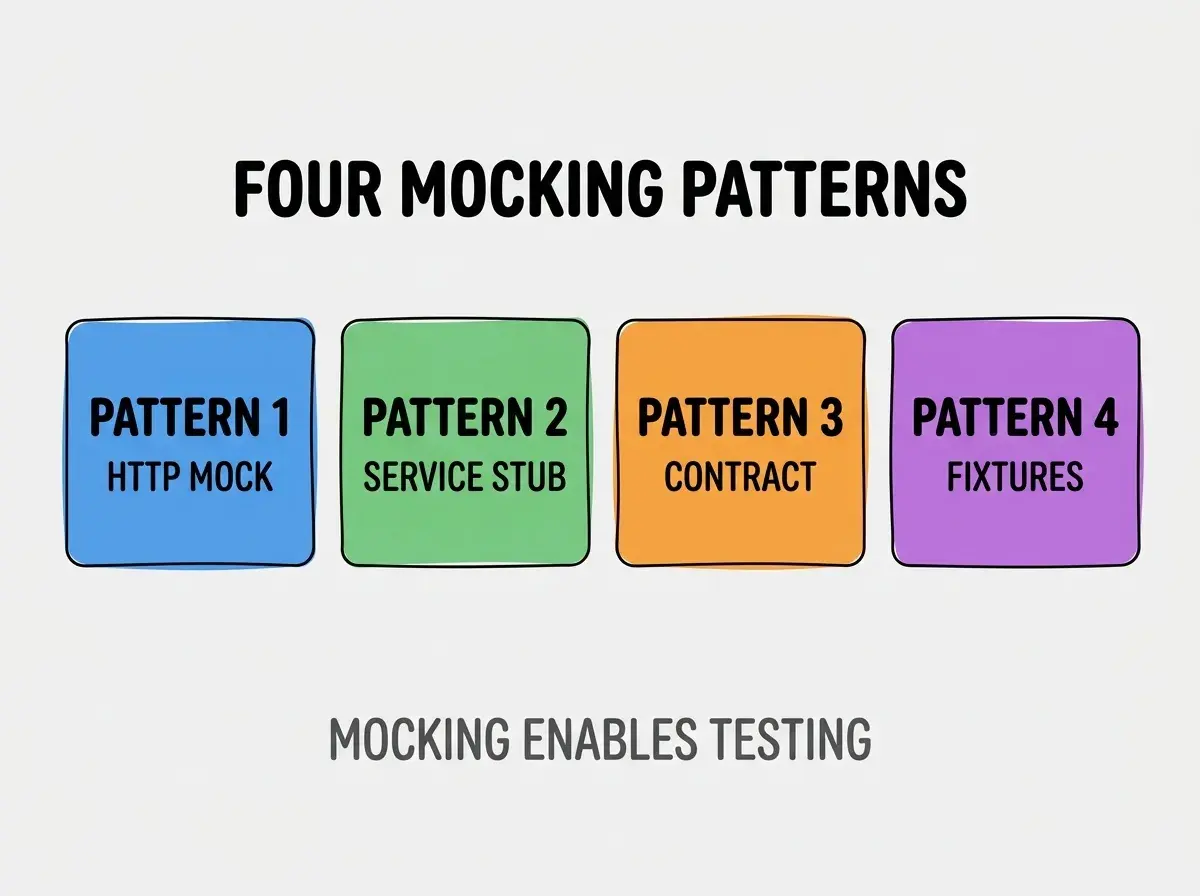
Pattern 3, contract testing. Verify contract. Compatibility.
Pattern 4, fixtures. Recorded responses. Realistic.
How To Implement Each Pattern
Four implementation patterns address each pattern.
Implementation 1, MSW for HTTP mocking. Service worker; standard.
Browse more ship
Read more shipImplementation 2, dependency injection for stubs. Inject test versions.
Implementation 3, Pact for contract testing. Pact standard tool.
Implementation 4, capture and replay. Record real; replay in tests.
What Makes Integration Testing Sustainable
Three patterns separate sustainable from operational pain.
Pattern 1, fast tests. Slow tests skip; fast maintains use.
Pattern 2, realistic mocks. Realistic catches more; over simplified misses.
Pattern 3, mock updates with API. API changes; mocks update.
What Makes Testing Strategy Effective
Three patterns separate effective from theatrical.
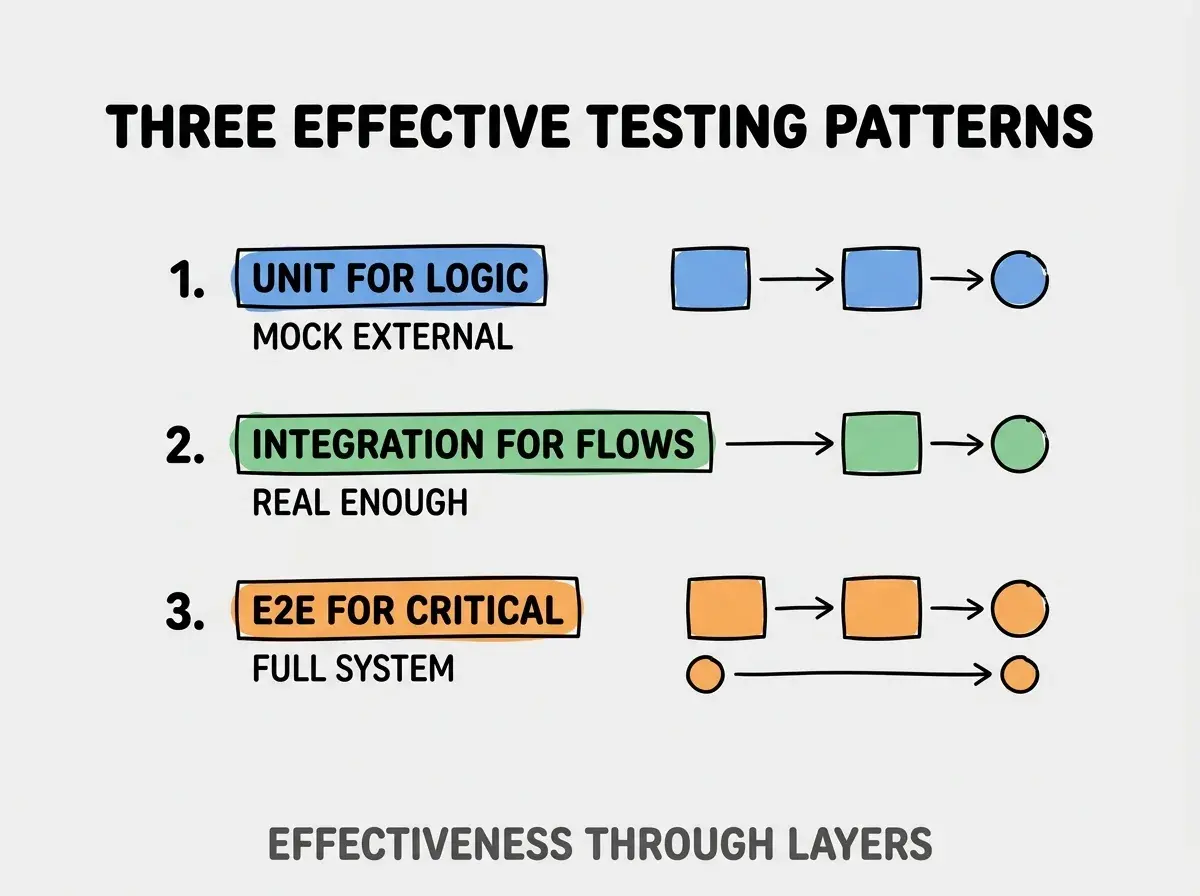
Pattern 1, unit for logic. Mock external; test logic.
Pattern 2, integration for flows. Real enough mocks.
Pattern 3, E2E for critical. Full system; critical paths.
The combination produces effective testing. Without layers, tests too narrow or too broad.
How To Choose Mocking Tool
Three patterns help choice.
Pattern A, MSW for browser and Node. MSW works both.
Pattern B, nock for Node only. Standard Node mocking.
Pattern C, custom mocks for specific. Sometimes simpler.
Common Questions About Integration Testing
Integration testing raises questions worth addressing directly.
The first question is whether to mock or use real. Mock for unit; real for E2E.
The second question is what about API key during testing. Mock keys; never real in tests.
The third question is how to handle webhooks. Mock incoming; verify outgoing.
The fourth question is whether to test third party errors. Yes; error paths matter.
How Integration Testing Affects Reliability
Testing affects reliability in compounding ways. Reliability effects compound across deploys.
The first compounding effect is regression catching. Tests catch regressions.
The second compounding effect is contract awareness. Tests document contract.
The third compounding effect is refactoring confidence. Tests enable refactoring.
The combination produces reliability shaped by testing. Without testing, reliability fragile.
How To Maintain Mocks With API Changes
Three patterns help maintenance.
Pattern A, API change tracker. Watch for changes.
Pattern B, contract tests catch breaking. Pact reveals.
Pattern C, periodic re record fixtures. Fresh fixtures match reality.
The combination produces maintained mocks. Without maintenance, mocks drift.
The most damaging integration testing mistake is mocks too simple. Simplified mocks miss real edge cases; tests pass while production fails. The fix is to use realistic mocks; fixtures from real responses. Builders who use realistic mocks catch real issues; builders with simplified mocks ship integration bugs that production reveals expensively.
The other mistake is testing only happy path. Errors and edge cases matter.
A third mistake is over indexing on E2E. E2E slow; mock based faster.
A fourth mistake is treating tests as one off. Tests evolve with integration.
What This Means For You
Testing third party integrations with mocks and stubs verifies behavior without external dependencies. The four patterns, implementation approaches, and sustainability practices produce integration testing that compounds production reliability.
- If you're a senior dev: Integration testing fluency expected; learn patterns deeply.
- If you're a founder: Integration reliability affects user trust; investment justified.
- If you're changing careers: Testing expertise valuable; specialty differentiates.
Browse more ship
Read more ship